
Every year, millions of households set up a beautifully decorated Christmas tree—only to find it wobbling, shedding ornaments, and eventually toppling over thanks to an enthusiastic feline climber. Cats are naturally curious, agile, and drawn to vertical spaces, making the Christmas tree an irresistible jungle gym. While their antics can be amusing, they also pose safety risks to both pets and property. The good news: with thoughtful preparation and some clever strategies, you can enjoy a cat-safe holiday season without banning your furry friend from the festivities.
This guide dives into practical, humane, and creative solutions that go beyond simply saying “no.” From structural stabilization to behavioral redirection, these methods work together to protect your tree and keep your cat engaged in safer ways.
Secure the Tree Structure First
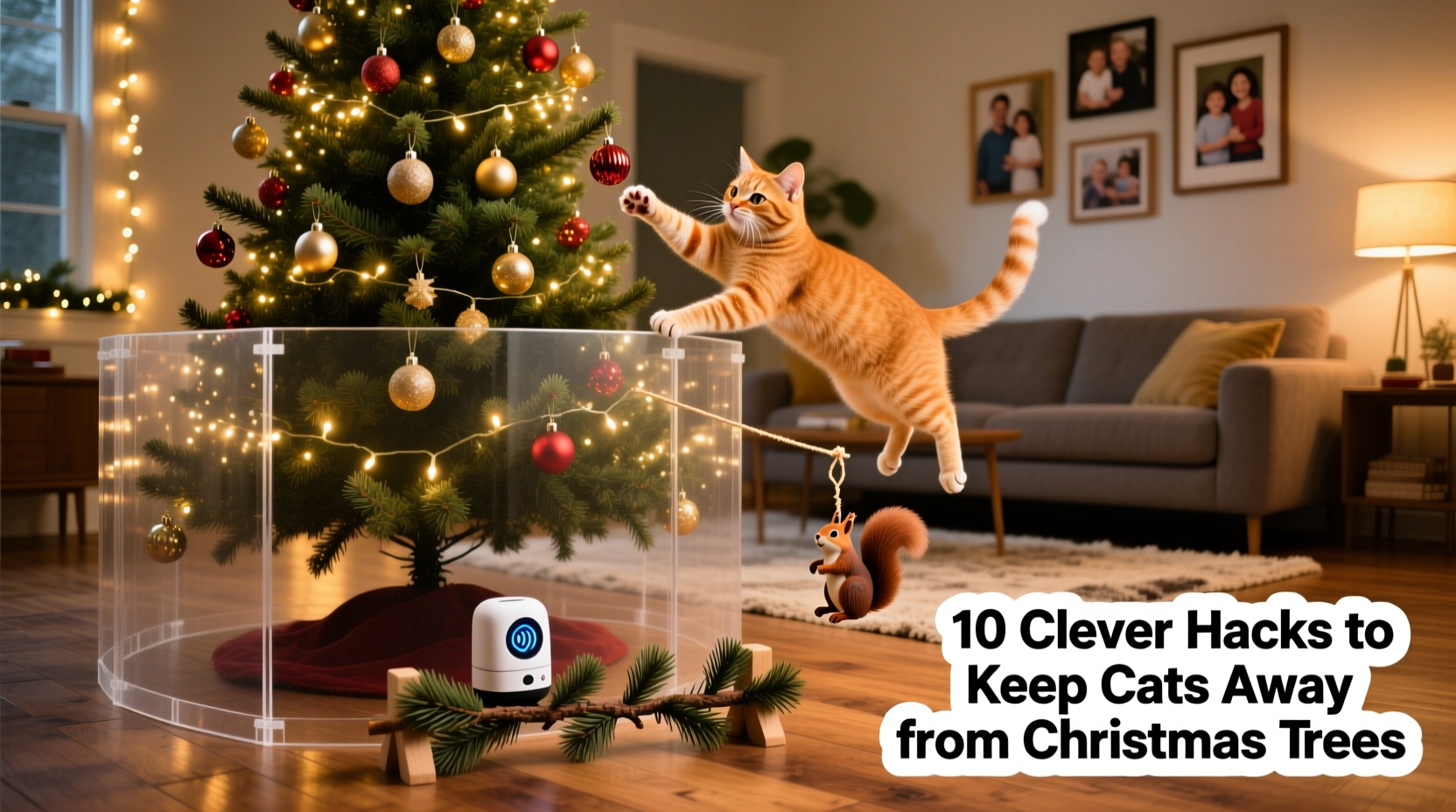
The foundation of any cat-proofing strategy is ensuring the tree itself is physically stable. A loose or poorly anchored tree isn’t just vulnerable to cats—it’s a hazard for everyone in the home. Start by choosing the right location: avoid placing the tree near furniture your cat can use as a launchpad, such as sofas, bookshelves, or side tables.
Next, anchor the tree securely. Freestanding floor stands often aren’t enough when a 10-pound cat decides to scale the branches. Use hidden support lines attached to wall brackets or ceiling hooks (if possible) to stabilize taller trees. For artificial trees, consider using zip ties to connect trunk sections tightly. Live trees benefit from water-filled stands with built-in anti-tip mechanisms.
Tip: Test stability by gently shaking the base—if it moves more than an inch, reinforce it further.Use Texture Deterrents the Cat Dislikes
Cats rely heavily on touch and texture when exploring. You can use this to your advantage by lining the base of the tree with materials they instinctively avoid. Aluminum foil, double-sided tape, or plastic carpet runners with nubby surfaces create uncomfortable footing, discouraging approach.
Foil crinkles loudly under paw, which most cats find unsettling. Carpet runners with the plastic spikes facing up (commonly sold as \"cat deterrent mats\") are especially effective because they feel unpleasant but cause no harm. These can be placed around the entire perimeter of the tree stand.
Another option is citrus-scented sprays. While not toxic in small amounts, the smell of lemon, orange, or grapefruit repels many cats. Spray lightly around the base—not directly on the tree or ornaments—to create an invisible boundary. Reapply every few days or after vacuuming.
“Cats respond strongly to environmental cues. A mildly unpleasant texture or scent at ground level can redirect their attention before they even consider climbing.” — Dr. Lena Torres, Feline Behavior Consultant
Create Alternative Climbing Zones
Instead of trying to eliminate climbing behavior—which is natural and healthy—redirect it. Provide appealing alternatives nearby. Tall cat trees with perches, hanging toys, and cozy hideaways satisfy the same instincts that draw them to the Christmas tree.
Place the cat tree within sight of the holiday display so your pet still feels included in the activity. Add new toys or treats to the structure during setup to spark interest. Some owners even drape lightweight garlands (non-toxic and breakaway-style) over their cat trees for festive flair.
If space allows, install wall-mounted shelves or ledges along adjacent walls. Known as “catwalks,” these turn empty vertical space into engaging territory. Position one slightly higher than the lowest tree branches to give your cat a sense of elevation without risking collision.
Step-by-Step Guide: Building a Festive Cat-Friendly Zone
- Choose a location near the Christmas tree but outside its immediate radius (at least 3 feet).
- Select a tall cat tree (minimum 5 feet) with multiple levels and scratching posts.
- Add motion-based toys like dangling feathers or motorized mice to attract attention.
- Incorporate warmth with a heated pad or blanket to make it cozier than the tree.
- Introduce gradually—sprinkle catnip or place familiar items on it before decorating the main tree.
- Reward visits with treats or praise whenever your cat uses the alternative zone.
Modify Tree Design for Safety and Deterrence
What you hang—and where—makes a big difference. Avoid dangling ribbons, tinsel, or string-like decorations. These mimic prey movement and entice batting and grabbing, often leading to upward pursuit. Tinsel is particularly dangerous if ingested, causing intestinal blockages.
Opt for lightweight, unbreakable ornaments made of fabric, felt, or soft plastic. Keep fragile or sentimental pieces high up, above cat-reach level (typically above 4–5 feet). Fill lower branches with pinecones, popcorn strings (unsalted/unbuttered), or DIY paper chains—items less tempting to swat.
Consider going light—or no lights—on the lower third of the tree. Cords pose chewing hazards, and flickering lights may trigger predatory instincts. If you do use lights, secure all wires behind cord covers or inside tubing, and unplug them when unsupervised.
| Decoration Type | Safety Level | Cat Risk Factor | Recommendation |
|---|---|---|---|
| Tinsel/ribbon | Low | High | Avoid completely |
| Glass ornaments | Medium | Medium | Hang above 5 ft |
| Felt/fabric shapes | High | Low | Safer for lower branches |
| Edible garlands (popcorn) | Medium | Medium | Use plain, unsalted; remove after 2 days |
| Twinkling LED lights | High | Medium | Secure cords; unplug when away |
Real Example: The Johnson Family’s Trial-and-Error Success
The Johnsons had given up on Christmas trees for three years after their tabby, Milo, knocked one over twice—once while chasing an ornament, another time while attempting a summit. Determined to bring back the tradition, they redesigned their approach entirely.
They purchased a 7-foot pre-lit artificial tree and secured it with aircraft cable anchored to two wall studs. Around the base, they laid a plastic carpet runner (spikes up) covered partially by a narrow fabric skirt—just enough to hide the spikes but leave the outer edge exposed.
Nearby, they assembled a new 6-foot cat tree wrapped with a single strand of battery-powered micro-lights and hung with feather toys. They rubbed catnip on the top perch and placed Milo’s favorite blanket there before introducing the Christmas tree.
During setup, they kept Milo in another room, then let him explore under supervision. He sniffed the tree, pawed once at the runner, then jumped onto his own structure. Within two days, he was sleeping on the top shelf nightly. The Christmas tree remained untouched throughout the season.
“We stopped seeing it as a battle,” said Sarah Johnson. “It was about giving him something better, not just saying ‘don’t.’”
Smart Supervision and Training Techniques
While physical barriers help, consistent supervision during the first few days is crucial. Monitor how your cat reacts to the new setup. If they attempt to climb, interrupt gently—clap once or say “hey” calmly—but avoid yelling or punishment, which can increase anxiety.
Positive reinforcement works far better. When your cat sniffs the tree but walks away, reward immediately with a treat or play session. Over time, they learn that ignoring the tree leads to good outcomes.
Some owners use remote deterrents like motion-activated air sprayers (e.g., Ssscat) placed near the tree. These release a quick burst of unscented air when movement is detected. It startles but doesn’t harm, helping create a negative association with approaching the area.
For multi-cat homes, remember that social dynamics matter. One bold climber may inspire others to follow. Address the leader first, and the rest often fall in line.
Essential Pre-Tree Checklist
- ✅ Choose a safe location away from jump points
- ✅ Anchor the tree to wall or ceiling for stability
- ✅ Install texture deterrents around the base
- ✅ Set up an attractive alternative climbing structure
- ✅ Use only pet-safe ornaments on lower branches
- ✅ Secure all electrical cords in protective tubing
- ✅ Remove or cover the water reservoir (cats may drink it)
- ✅ Perform a test shake to confirm sturdiness
- ✅ Introduce the cat gradually with supervision
- ✅ Stock up on treats for positive reinforcement
Frequently Asked Questions
Can I use essential oils to keep my cat away from the tree?
No. Many essential oils—including citrus, pine, and peppermint—are toxic to cats, even in small amounts through inhalation or skin contact. Stick to physical deterrents or food-safe citrus peels placed out of reach instead.
Will covering the tree at night help?
Yes. Using a large mesh tree cover or repurposed tomato cage draped with breathable fabric when you're asleep or away adds a physical barrier. Just ensure it’s removed during supervised times so your cat doesn’t associate the tree with being “off-limits” only part-time, which can increase curiosity.
Are real trees more tempting than artificial ones?
Often, yes. Real trees have interesting smells, sap, and sometimes residual insects that attract cats. They’re also less rigid, making them easier to destabilize. If opting for live, choose a species with strong scent (like fir) which may naturally deter some cats, and ensure it's extremely well-secured.
Final Thoughts: Harmony Over Conflict
Preventing cats from climbing Christmas trees isn’t about restricting their nature—it’s about guiding it wisely. With a blend of smart design, behavioral understanding, and proactive planning, you can preserve both your holiday decor and your pet’s well-being.
The goal isn’t a perfect, untouched tree. It’s a joyful, shared space where traditions thrive alongside whiskers and paws. By meeting your cat’s needs for exploration and height, you reduce conflict and build trust. A stable tree, unbroken ornaments, and a happy cat aren’t mutually exclusive—they’re achievable with a little creativity and consistency.
💬 Have a clever hack that saved your holiday tree? Share your story in the comments—your solution might help another pet-loving family celebrate safely!








