Anime marathons are more than binge-watching—they’re immersive emotional journeys. A 12-episode arc of My Hero Academia triggers adrenaline and catharsis; a quiet evening with Barakamon invites reflection and gentle warmth; a late-night dive into Paranoia Agent leaves you unsettled, contemplative, slightly breathless. Wine, when chosen intentionally, doesn’t just complement the snack tray—it deepens the narrative resonance. It bridges sensory experience and storytelling psychology. This isn’t about “what’s popular” or “what’s expensive.” It’s about aligning wine’s structural elements—acidity, tannin, alcohol, fruit intensity, and aromatic complexity—with the tonal architecture of anime genres. Done well, the pairing transforms passive viewing into a curated, multi-sensory ritual.
Why Genre Tone Matters More Than Studio or Title
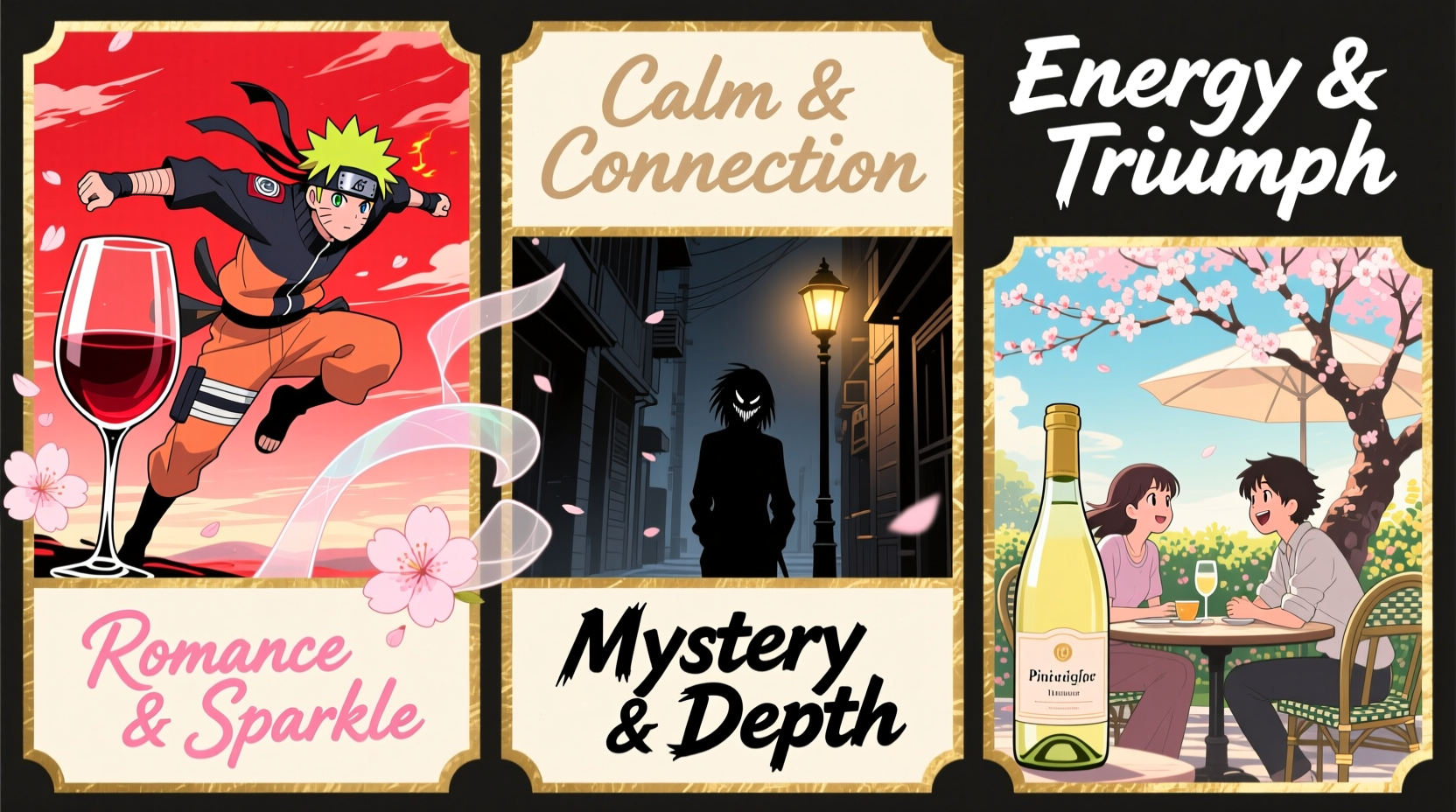
Wine pairing for anime isn’t about matching labels to logos. It’s about decoding emotional cadence. A shonen battle scene isn’t just action—it’s rhythmic escalation: buildup, release, aftermath. That mirrors the structure of a high-acid, medium-bodied red like Barbera d’Alba: bright cherry acidity cuts through tension, moderate tannins ground the intensity without overwhelming, and a clean finish resets the palate before the next fight. Conversely, a slow-burn psychological thriller like Monster demands wines with layered ambiguity—think aged Rioja Reserva, where tertiary notes of leather and dried fig echo the show’s moral gray zones and long silences. The key insight comes from sommelier and media scholar Dr. Lena Torres, who co-leads the Sensory Narrative Lab at UC Davis:
“Viewers don’t taste wine in isolation—they taste it *within* the emotional field of the story. A sharp, citrusy Sauvignon Blanc can feel jarring during a melancholic scene in Clannad, but it becomes electrifying during the frantic pacing of Steins;Gate’s time-loop sequences. Tone is the conductor; wine is the instrument.”
Genre-Tone Pairing Framework: Matching Structure to Story
Forget “red with meat, white with fish.” Here, we map five core anime genre tones to wine profiles using three objective criteria: acidity (perceived brightness or sharpness), body (weight and texture on the palate), and aromatic persistence (how long flavor lingers, and whether it evolves). Each genre’s emotional rhythm dictates which elements should dominate—or recede.
Tip: Serve all wines slightly cooler than room temperature (13–16°C / 55–61°F) for optimal aroma expression and balance—especially important during extended viewing sessions where palate fatigue sets in.1. Shonen & Action: High Energy, Rapid Pacing, Cathartic Release
Tone profile: Fast cuts, escalating stakes, triumphant climaxes, emotional whiplash. Requires wines that energize without exhausting—bright acidity to mirror urgency, moderate tannin or alcohol to anchor excitement, and a clean, refreshing finish to reset before the next episode.
- Top pick: Barbera d’Asti (Piedmont, Italy) — Vibrant red cherry, low tannin, zesty acidity, subtle earthiness. Cuts through hype without demanding attention.
- Alternative: Dry Riesling (Germany, Kabinett or Spätlese level) — Lime zest, green apple, steely minerality. Its electric acidity mirrors rapid dialogue and fight choreography.
- Avoid: Heavy, oaky Cabernet Sauvignon (overpowers subtlety); sweet Moscato (clashes with dramatic weight).
2. Slice-of-Life & Iyashikei (Healing): Calm, Observational, Warmly Intimate
Tone profile: Gentle pacing, emphasis on small moments, tactile detail (steam rising from tea, rain on tatami), understated emotion. Wines should feel like a soft sigh—medium body, round texture, low acidity, aromatic gentleness, and no aggressive tannin or alcohol heat.
- Top pick: Pinot Noir (Burgundy, France – Bourgogne Rouge or basic Village level) — Red strawberry, forest floor, silky tannins, supple mouthfeel. Evokes quiet companionship and seasonal change.
- Alternative: Vinho Verde (Portugal, Alvarinho-dominant) — Lightly spritzy, peach-and-lime, delicate floral notes, low alcohol (9–11%). Feels like sunlight through rice paper.
- Avoid: High-alcohol Zinfandel (disrupts serenity); heavily oaked Chardonnay (too assertive for minimalism).
3. Psychological Thriller & Dark Fantasy: Ambiguity, Moral Complexity, Lingering Unease
Tone profile: Slow-burn tension, unreliable narration, atmospheric dread, unresolved endings. Wines need depth, evolution in the glass, and layered aromas that reveal themselves gradually—like clues in a mystery. Medium-plus body, firm but integrated tannin or structure, and complex secondary/tertiary notes are essential.
- Top pick: Rioja Reserva (Spain, Tempranillo-based, 3+ years aging) — Dried cherry, leather, tobacco, cedar, subtle vanilla. Develops nuance as you watch—just like character motives unfold.
- Alternative: Cru Beaujolais (Morgon or Fleurie, 2–3 years old) — Savory blackberry, iron, violet, granite minerality. Less fruity, more cerebral—mirrors the genre’s restraint.
- Avoid: Simple, fruit-forward Beaujolais Nouveau (lacks depth); unoaked Sauvignon Blanc (too linear for layered unease).
4. Romantic Comedy & Coming-of-Age: Playful, Awkward, Hopeful, Slightly Nostalgic
Tone profile: Lighthearted friction, emotional vulnerability masked by humor, bittersweet growth. Wines should balance freshness and charm—bright but not sharp, fruity but not cloying, with a touch of whimsy or nostalgic familiarity.
- Top pick: Rosé de Loire (Cabernet Franc-based, France) — Wild strawberry, rose petal, wet stone, crisp acidity, dry finish. Elegant yet approachable—like a well-timed confession scene.
- Alternative: Lambrusco Grasparossa di Castelvetro (Italy, dry, frizzante) — Black raspberry, violet, gentle effervescence, refreshing bitterness. Feels spontaneous and joyful without being childish.
- Avoid: Overly sweet White Zinfandel (undermines sincerity); austere, lean Chenin Blanc (too serious for levity).
5. Mecha & Sci-Fi Epic: Grand Scale, Technological Wonder, Existential Weight
Tone profile: Vast settings, philosophical questions, awe-inspiring visuals, emotional gravity beneath spectacle. Wines need presence and gravitas—full body, structured tannin or acidity, layered complexity, and a long, resonant finish that echoes thematic scale.
- Top pick: Aglianico del Vulture (Basilicata, Italy) — Black plum, licorice, volcanic ash, firm tannins, powerful structure. Feels ancient and monumental—like gazing at a starship graveyard.
- Alternative: Condrieu (Rhone Valley, France, Viognier) — Apricot nectar, honeysuckle, ginger, lush texture, surprising acidity. Captures both technological opulence and fragile humanity.
- Avoid: Light, simple Pinot Grigio (vanishes against scale); overly jammy Shiraz (lacks intellectual nuance).
Practical Pairing Checklist for Your Next Marathon
Before you press play, run through this actionable checklist—designed for real-world execution, not theoretical perfection:
- Identify the dominant tone of the first 2–3 episodes—not just the genre label. Is Ghost in the Shell feeling more procedural (lean toward Rioja) or more metaphysical (shift toward Condrieu)?
- Check your wine’s serving temperature. Chill reds 15 minutes in the fridge; let whites sit 10 minutes out of the fridge. Precision matters for perception.
- Open and decant 20 minutes ahead if choosing a young, tannic red (Aglianico, Rioja). Let it breathe while you prep snacks.
- Pour 125ml (4 oz) per glass—enough to taste fully, not so much that alcohol builds up over 4+ hours.
- Keep water and plain crackers nearby to cleanse the palate between episodes, especially during tonal shifts (e.g., a comedic interlude in a dark series).
- Reserve one “reset wine”—a neutral, refreshing option like dry sparkling cider or chilled Albariño—to sip during commercial breaks or intermissions.
Real-World Example: The March Comes in Like a Lion Marathon
Maya, a 28-year-old graphic designer in Portland, hosts monthly anime nights. For her November marathon of March Comes in Like a Lion, she initially chose a bold Malbec—thinking “Japanese drama = serious red.” Within Episode 3, she noticed the wine’s jammy fruit and heavy oak clashed with Rei’s quiet grief and the muted palette of snowy Tokyo apartments. It felt emotionally dissonant, like shouting in a library. She switched mid-marathon to a 2020 Bourgogne Rouge (Domaine Jean-Claude Rateau). Its delicate red fruit, earthy undertones, and silky texture mirrored the show’s restrained beauty—the way Rei’s hands tremble while making tea, the weight of silence between characters. “It didn’t distract,” she shared later. “It *accompanied*. Like the wine understood the ache wasn’t loud—it was held, close to the chest.” Her guests reported deeper immersion, fewer pauses to “reset” emotionally between episodes. The shift wasn’t about prestige—it was about fidelity to tone.
Wine & Anime Pairing Do’s and Don’ts
| Scenario | Do | Don’t |
|---|---|---|
| Watching late at night (post-midnight) | Choose lower-alcohol wines (11–12.5% ABV) like Vinho Verde, Txakoli, or light Gamay | Select high-alcohol Zinfandel (14.5%+) or fortified wines—increases fatigue and disrupts sleep architecture |
| Snacking heavily (ramen, takoyaki, spicy chips) | Prioritize higher acidity wines (Sauvignon Blanc, Barbera) to cut through fat and spice | Choose low-acid, oaky Chardonnay—it will taste flat and flabby next to bold flavors |
| Marathon includes tonal whiplash (e.g., JoJo’s Bizarre Adventure) | Have two wines ready: a vibrant, playful option (Lambrusco) for absurdity + a structured, savory option (Cru Beaujolais) for emotional gravity | Stick to one wine throughout—you’ll lose resonance during abrupt shifts from comedy to tragedy |
| Sharing with non-wine drinkers or beginners | Offer a dry, aromatic, low-tannin option like Grüner Veltliner or dry Rosé—accessible but still tonally precise | Start with tannic Nebbiolo or funky natural wine—creates unnecessary barrier to entry |
Frequently Asked Questions
Can I use sake instead of wine?
Absolutely—and often more authentically. Junmai Daiginjo (polished to 50% or less) pairs exquisitely with delicate iyashikei or historical dramas like Rurouni Kenshin. Its clean, floral, umami-rich profile mirrors Japanese aesthetic values. For shonen, try a lively, unpasteurized Nama-zake—its effervescence and bright acidity parallel anime’s kinetic energy. Just ensure it’s served at the recommended temperature (chilled for Daiginjo, room temp for earthy Kimoto styles).
What if I only have one bottle but am watching multiple genres?
Choose a versatile, medium-bodied, low-tannin red like a 2021 Loire Valley Cabernet Franc. Its herbal freshness works for shonen pacing, its earthy depth supports psychological layers, and its gentle structure won’t overwhelm slice-of-life intimacy. Or go with a dry, textured white like Vermentino from Sardinia—crisp enough for action, round enough for romance, saline enough for sci-fi vastness.
Does vintage really matter for this kind of pairing?
Yes—but differently than in fine dining. For anime marathons, younger vintages (0–3 years old) excel in vibrancy and primary fruit—ideal for shonen, rom-com, or mecha. Older vintages (5+ years for reds like Rioja or Nebbiolo) gain complexity and softness, perfect for psychological or historical epics where nuance deepens over time—much like rewatching Neon Genesis Evangelion decades later. Don’t chase rarity; chase alignment with the story’s temporal feel.
Conclusion: Raise Your Glass to Intentional Immersion
Pairing wine with anime by genre tone isn’t indulgence—it’s attention. It’s the deliberate choice to honor how deeply stories move us, and to meet that movement with equal care. When the final credits roll on Fullmetal Alchemist: Brotherhood, and you’re sitting with the quiet weight of sacrifice and redemption, a glass of mature Rioja doesn’t just taste good—it feels like a silent acknowledgment of the journey. When you laugh until you cry during K-On!’s cultural festival arc, that dry, floral Rosé de Loire isn’t just refreshment—it’s shared joy, crystallized. This practice cultivates presence. It trains you to listen—not just to dialogue, but to pacing, silence, color grading, and emotional subtext—and then to respond with sensory harmony. You don’t need a cellar or a sommelier’s diploma. You need curiosity, a willingness to taste thoughtfully, and respect for the art form’s emotional intelligence. So tonight, choose not just what to watch—but how to feel it, deeply, completely, and with intention.
💬 Your turn. Which anime genre has surprised you with a wine pairing? Did a bold Aglianico deepen the awe of Legend of the Galactic Heroes? Did a whisper-soft Pinot Noir make Honey and Clover feel even more tender? Share your most resonant pairing in the comments—let’s build a living guide, one episode, one sip, at a time.








