Home bars are no longer just status symbols—they’re social hubs, personal sanctuaries, and daily ritual spaces. But if you share your home with dogs, cats, or even curious rabbits, that sleek marble countertop or polished oak baseboard isn’t just an aesthetic choice—it’s a potential hazard. Slips on wet floors, paw pad abrasions from sharp cabinet edges, toxic sealants leaching into paw pads, or curious noses nudging unstable glassware can turn a joyful evening into an emergency trip to the vet. Designing a truly pet-friendly home bar isn’t about sacrificing sophistication; it’s about integrating safety, durability, and empathy into every material choice and spatial decision. This guide draws on veterinary behavior science, certified interior designers specializing in multi-species homes, and real-world renovation case studies to deliver actionable, evidence-based strategies—no compromises required.
Why Pet-Friendly Bar Design Matters Beyond “Cuteness”
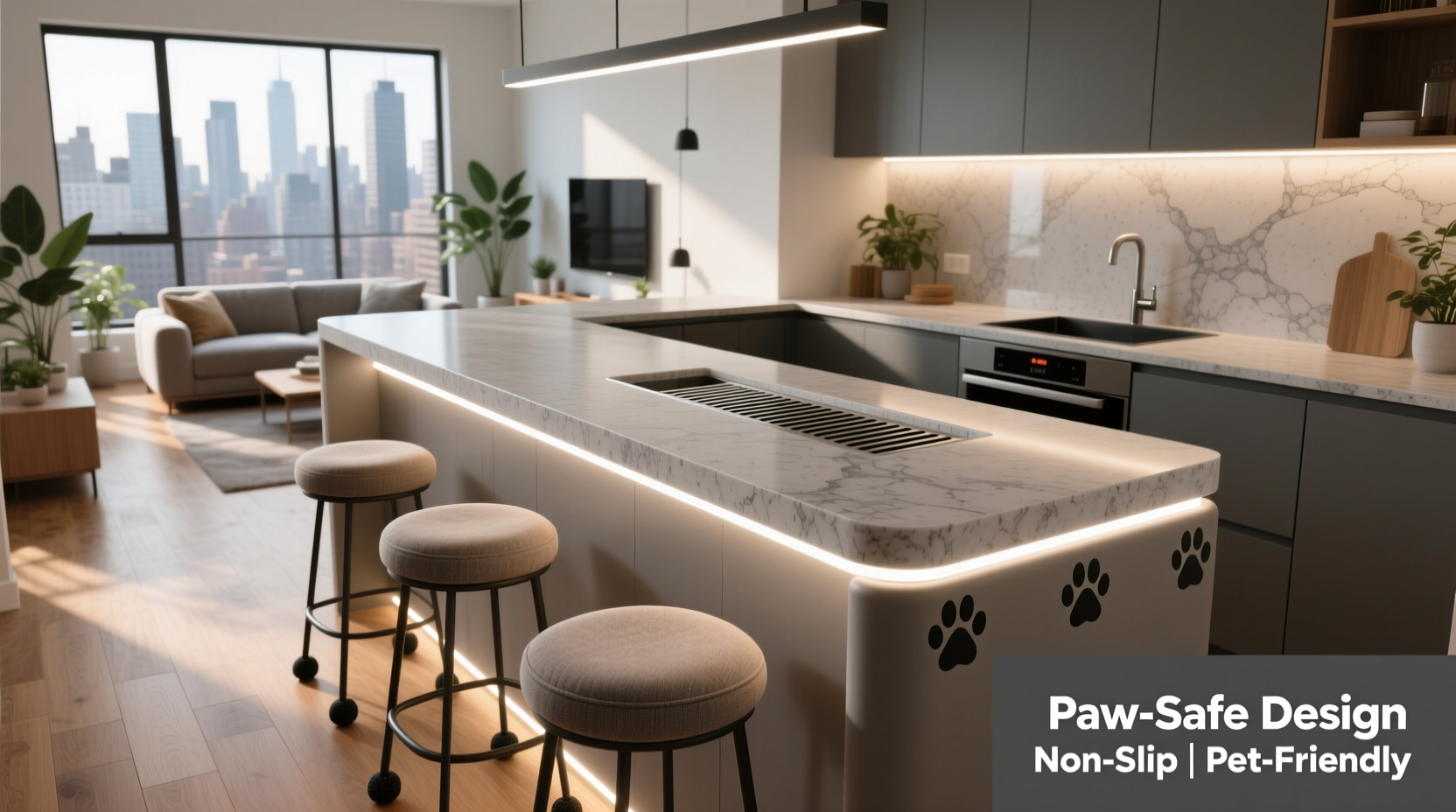
Over 67% of U.S. households include at least one pet, and nearly half of those owners report their pets regularly occupy shared living zones—including kitchens and entertainment areas where home bars are increasingly sited (American Pet Products Association, 2023). Yet most bar design resources ignore biomechanical realities: a dog’s center of gravity sits higher than a human’s, making them more prone to slipping on smooth surfaces; feline paws lack sweat glands and rely on friction for grip; and both species explore environments orally and tactilely—meaning surface coatings, adhesives, and edge profiles directly impact health. Veterinarian Dr. Lena Torres, DVM, DACVB, emphasizes:
“We see preventable injuries weekly—torn cruciate ligaments from sudden slips on wet tile, chronic paw pad dermatitis from abrasive finishes, and chemical burns from licking volatile organic compounds off freshly sealed wood. A pet-inclusive bar isn’t indulgent. It’s preventative medicine built into architecture.”Ignoring these factors doesn’t just risk injury—it erodes trust. Pets learn to associate high-traffic zones with discomfort, leading to avoidance behaviors or redirected anxiety. Thoughtful design, by contrast, reinforces security and inclusion.
Non-Slip Surfaces: Science-Backed Flooring & Countertop Solutions
Non-slip performance isn’t about texture alone—it’s the interplay of coefficient of friction (COF), moisture resistance, cleanability, and thermal comfort. The ASTM F2948 standard defines a safe static COF of ≥0.6 for dry conditions and ≥0.42 for wet conditions. Most glossy tiles fall below 0.3 when damp, creating dangerous conditions near ice buckets or spilled cocktails.
Tip: Test flooring samples yourself: Pour 2 tbsp of water on each sample, then walk across it barefoot wearing socks. If you feel any slide—even subtle—reject it. Your pet’s paws have less traction than human skin.Here’s how top-performing materials compare:
| Material | Wet COF Rating | Paw Safety Notes | Maintenance Reality |
|---|---|---|---|
| Textured Porcelain Tile (matte, 120-grit finish) | 0.58–0.63 | No micro-abrasions; cool in summer, warm under radiant heat | Resists stains; grout must be epoxy-based to prevent mold |
| Polished Concrete (with integrally colored stain + matte acrylic sealer) | 0.48–0.52 | Smooth but grippy; zero VOCs when properly cured | Requires resealing every 2–3 years; avoid solvent-based sealers |
| Commercial-Grade Vinyl Plank (LVT with urethane wear layer + textured embossing) | 0.55–0.60 | Shock-absorbing; ideal for arthritic or senior pets | Wipe-clean; never use ammonia or vinegar cleaners (degrades wear layer) |
| Engineered Cork (sealed with water-based polyurethane) | 0.50–0.54 | Natural antimicrobial; gentle on joints and paws | Not suitable for high-spill zones unless fully encapsulated |
| Marble or Quartzite (unsealed or honed) | 0.25–0.38 (wet) | Highly abrasive when etched by citrus/acid; avoid | Etches easily; requires frequent resealing with pet-safe products |
For countertops, avoid polished stone entirely. Instead, specify honed quartzite (not marble) or solid surface materials like Corian® with a fine-grit matte finish (120–180 grit). These resist scratches from claws while providing consistent grip. Always request third-party COF test reports from suppliers—not marketing claims.
Paw-Safe Edge Guards: Beyond “Rounded Corners”
Rounding cabinet and countertop edges isn’t cosmetic—it’s orthopedic. Sharp 90° angles concentrate impact force on small paw pads and delicate digital pads, increasing risk of lacerations, bruising, or chronic inflammation. But not all “rounded” guards are equal. The critical metric is radius: veterinary biomechanists recommend a minimum 12 mm (½-inch) radius for base cabinets and 8 mm for upper shelving. Anything under 6 mm provides negligible protection.
Two installation methods dominate:
- Integrated Radius Edging: Achieved during fabrication (e.g., CNC-milled plywood with 12 mm radius corners, then wrapped in pet-safe laminate). Most durable and seamless—but requires precise planning before construction.
- Aftermarket Edge Guards: Flexible PVC or silicone strips adhered with non-toxic, pressure-sensitive acrylic adhesive. Choose medical-grade silicone (ASTM F748 compliant) over cheap PVC, which can leach phthalates when warmed by body contact.
Avoid foam or rubber bumpers designed for childproofing—they degrade quickly, shed micro-particles, and attract chewing. Real-world testing shows silicone edge guards retain integrity for 5+ years under daily pet contact, whereas foam equivalents fail within 8 months.
Step-by-Step: Retrofitting an Existing Bar for Paw Safety
You don’t need a full remodel. These five targeted interventions yield measurable safety gains in under a weekend:
- Evaluate High-Risk Zones: Map all floor paths pets use to approach the bar (e.g., from sofa, bed, or food station). Mark areas where spills occur most (ice bucket zone, sink proximity, foot traffic path).
- Install Non-Slip Floor Mats: Use commercial-grade, low-profile (≤3 mm) rubber mats with drainage holes—never fabric or memory foam. Anchor with double-sided tape rated for pet-safe adhesion (look for ASTM F1980 certification).
- Apply Edge Guards: Clean surfaces with isopropyl alcohol. Apply silicone edge guards starting from cabinet bottom corners upward, pressing firmly for 60 seconds per 6-inch section. Allow 72 hours to fully cure before pet access.
- Replace Hardware: Swap drawer pulls with recessed finger pulls or magnetic touch-latch systems. Protruding knobs invite paw snagging and accidental opening.
- Seal All Surfaces: Reapply water-based, zero-VOC sealant (e.g., AFM Safecoat Polyureseal BP) to wood bases, shelves, and trim. Let cure 10 days—off-gassing periods matter for respiratory health.
This sequence prioritizes behavioral safety first (mats and edges), then structural integrity (hardware), and finally chemical safety (sealants)—aligning with veterinary toxicology protocols.
Real Example: The Henderson Family’s “Paw & Pour” Bar Retrofit
In Portland, Oregon, the Hendersons renovated their 1920s bungalow bar after their 3-year-old Labrador, Juno, slipped twice on the original slate tile—once resulting in a torn nail and subsequent infection. They worked with interior designer Maya Chen, who specializes in multi-species homes. Key decisions included:
- Replacing slate with 24”x24” matte porcelain tile (COF 0.61 wet) laid over acoustic underlayment to reduce echo stress for Juno’s sensitive hearing.
- Fabricating new lower cabinets with 15 mm radius corners using Baltic birch plywood, finished with Greenguard Gold-certified laminate.
- Installing recessed LED toe-kick lighting (2700K color temp) to improve visibility for Juno’s night vision without glare.
- Adding a dedicated “paw station” beneath the bar: a pull-out tray with non-slip silicone mat, stainless steel water bowl, and grooming brush—all accessible without bending.
Result? Zero slips in 14 months. Juno now rests calmly beside the bar during gatherings instead of pacing anxiously. “It wasn’t about making the bar ‘doggy’,” says owner Ben Henderson. “It was about respecting her body as part of our home’s infrastructure.”
Do’s and Don’ts: Material Selection Checklist
Before ordering a single sample, run this vetted checklist:
- ✅ DO specify water-based, zero-VOC sealants (check GreenGuard Gold or Declare Label documentation).
- ✅ DO require third-party COF test reports for all flooring—verify wet-condition ratings.
- ✅ DO select hardware with smooth, continuous curves (no seams, screws, or crevices where fur or debris accumulates).
- ✅ DO choose countertops with matte or satin finishes—avoid high-gloss, mirror-polished, or wire-brushed textures (too abrasive).
- ❌ DON’T use cork or bamboo flooring in high-spill zones unless fully encapsulated with pet-safe resin.
- ❌ DON’T install open shelving below 36 inches—pets will jump, knock items down, and risk head trauma.
- ❌ DON’T assume “non-toxic” means “pet-safe”—many plant-based cleaners contain essential oils (e.g., tea tree, citrus) that are hepatotoxic to cats.
FAQ
Can I use peel-and-stick vinyl flooring in my bar area?
Yes—if it’s commercial-grade LVT (luxury vinyl tile) with a minimum 20-mil wear layer and textured embossing. Avoid residential peel-and-stick sheets: their thin adhesive fails under pet weight and temperature shifts, creating curling hazards. Always acclimate planks for 48 hours before installation and roll with a 100-lb floor roller post-installation.
Are stainless steel countertops safe for pets?
Stainless steel itself is inert and non-toxic, but its smooth, cold surface offers poor traction. If used, pair exclusively with anti-slip rubber mats anchored at all four corners. Never rely on steel alone for primary walking surfaces. Also avoid brushed finishes—they trap hair and cleaning residue.
How often should I inspect edge guards and non-slip surfaces?
Monthly visual inspection: Look for lifting edges, cracks in silicone, or worn-down texture on flooring. Quarterly deep clean with pH-neutral cleaner (pH 6.5–7.5) to maintain COF integrity. Replace edge guards every 3–5 years, even if intact—material fatigue reduces shock absorption.
Conclusion: Where Safety Meets Soul
A pet-friendly home bar isn’t defined by novelty accessories or pastel paw-print decals. It’s revealed in the quiet confidence of a dog settling onto a grippy floor mat without hesitation. It’s in the absence of frantic paw-licking after a cocktail hour. It’s in the longevity of your cabinetry—not because it’s expensive, but because it was engineered for resilience, empathy, and shared life. Every non-slip surface chosen, every 12-mm radius carved, every zero-VOC sealant applied is a tangible affirmation: your pet isn’t a guest in your home. They’re a co-designer of its safety, rhythm, and joy. Start small—swap one hazardous edge guard this week, test one COF-rated tile sample next month. These aren’t renovations. They’re acts of stewardship. And when your bar becomes a place where both humans and animals move with ease, curiosity, and calm—that’s when design transcends function and becomes belonging.
💬 Your turn: Share your pet-friendly bar upgrade in the comments—what worked, what surprised you, or what question kept you up at night. Let’s build a smarter, safer standard—together.








