For many, a pen is more than a tool—it's an extension of thought, a companion in daily tasks, and sometimes even a statement of personal style. Among the various types available, oil-based ballpoint pens stand out for their reliability, consistent ink flow, and resistance to smudging. Unlike water-based or gel pens, they use a viscous oil-based ink that dries quickly and performs well on a wide range of paper types. But not all oil-based ballpoints are created equal. Choosing the right one involves balancing factors like tip size, barrel design, ink formulation, and build quality.
The ideal oil-based ballpoint delivers effortless gliding across the page without skipping, offers comfort during extended writing sessions, and lasts through months—or even years—of regular use. This guide breaks down what truly matters when selecting a high-performance oil-based pen, helping you make an informed decision based on real-world needs rather than marketing hype.
Understanding Oil-Based Ballpoint Technology
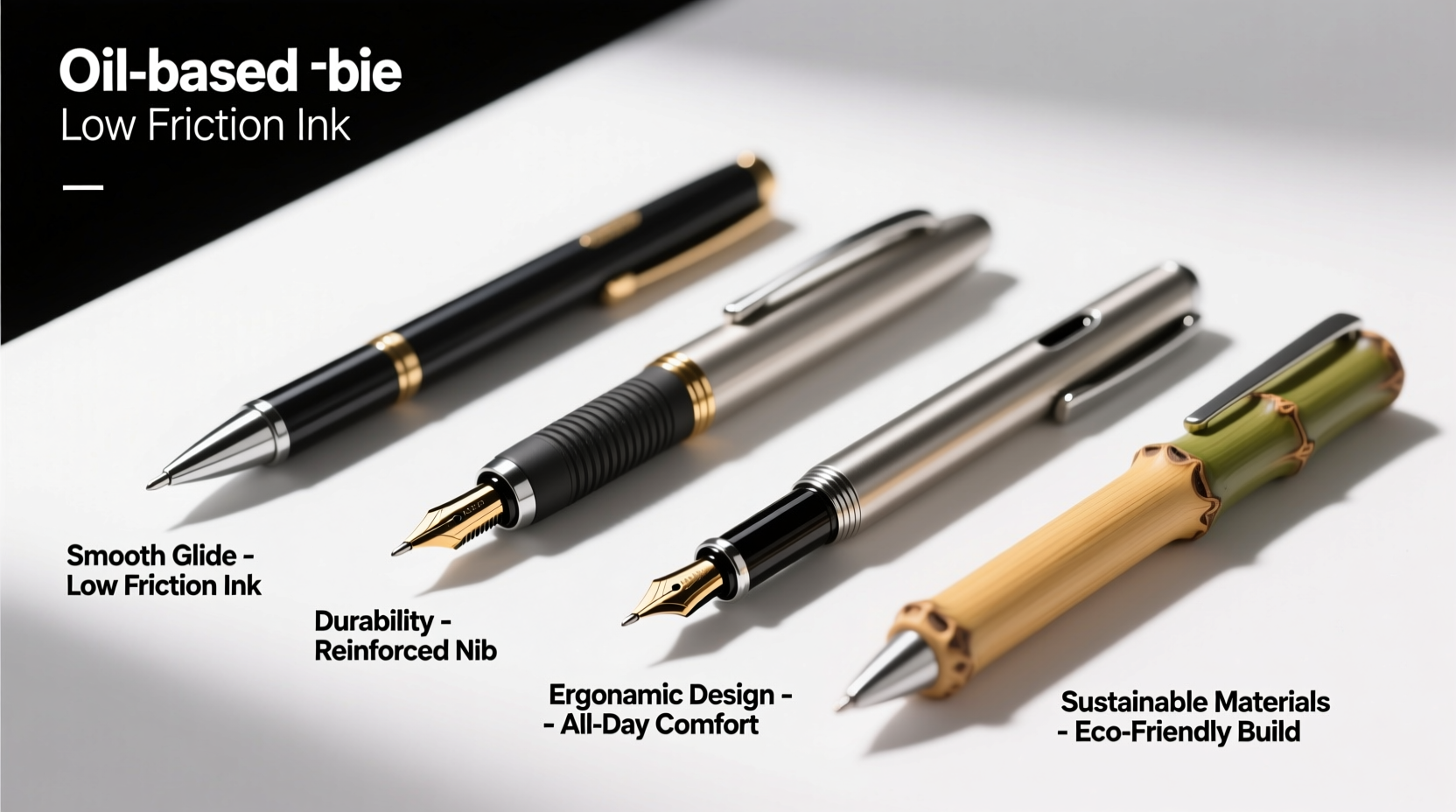
Oil-based ballpoint pens operate using a small rotating ball at the tip that picks up ink from a reservoir and deposits it onto paper as you write. The ink itself is formulated with dye suspended in a thick oil solvent, typically benzyl alcohol or phenoxyethanol. This composition allows for controlled flow, minimal evaporation, and excellent archival qualities.
Compared to gel or rollerball pens, oil-based models are less prone to leaking, especially at high altitudes or in fluctuating temperatures. They also resist feathering and bleed-through better on lower-quality paper. However, because the ink is thicker, early versions were often criticized for requiring more pressure to write, leading to hand fatigue. Modern advancements have largely overcome this issue through precision engineering of the ball mechanism and refined ink chemistry.
“Today���s best oil-based pens offer near-gel smoothness while retaining the longevity and reliability ballpoints are known for.” — Daniel Park, Stationery Product Designer at InkFlow Labs
Key Factors to Consider When Choosing a Pen
Selecting the right oil-based ballpoint isn’t just about brand reputation. Several measurable and experiential elements influence performance and satisfaction over time.
1. Tip Size and Precision
The diameter of the ball tip directly affects line width and writing feel. Common sizes include:
- 0.5 mm: Fine, precise lines ideal for detailed notes or small handwriting.
- 0.7 mm: Balanced between clarity and speed; most popular for everyday use.
- 1.0 mm: Bold, visible strokes suited for signatures or quick jotting.
A 0.7 mm tip often provides the best compromise between smoothness and control, especially for general writing tasks.
2. Ink Quality and Flow Consistency
High-quality oil-based ink should deliver uniform coverage without skipping or blobbing. Look for pens advertised as “skip-free” or “glide-engineered.” Some brands use micro-filtered ink to prevent clogs and ensure steady delivery over thousands of meters of writing.
Tip: Test the pen on multiple paper types—printer paper, notebook stock, and recycled sheets—to assess ink consistency and drying time.3. Barrel Design and Ergonomics
A comfortable grip reduces strain during long writing sessions. Cylindrical barrels may roll off desks, while triangular or contoured grips improve stability and finger placement. Materials matter too: aluminum or brass bodies add weight for balance but increase cost; polycarbonate resins offer durability at lower prices.
4. Refillability vs. Disposability
Refillable pens support sustainability and long-term savings. A well-built refillable model can last decades with proper care. Disposable pens, though convenient, contribute to waste and often sacrifice structural integrity for low production costs.
Comparison Table: Top Features Across Pen Types
| Feature | Disposable Oil-Based | Refillable Oil-Based | Gel Pen (Oil-Based Ink) |
|---|---|---|---|
| Ink Longevity | Moderate (2–3 km) | High (5+ km with refills) | Low to Moderate (1–2 km) |
| Writing Smoothness | Good | Excellent (premium models) | Very High |
| Durability | Fair (plastic construction) | High (metal/alloy builds) | Moderate |
| Eco-Friendliness | Poor | Excellent | Fair |
| Cost Over 5 Years | $$$ (frequent replacements) | $ (one-time + refills) | $$ |
Step-by-Step Guide to Selecting Your Ideal Pen
Follow this practical sequence to narrow down your options and find the perfect fit:
- Define your primary use: Is it for note-taking, journaling, signing documents, or sketching? Each task favors different tip sizes and grip styles.
- Set a budget: Decide whether you're investing in a single premium refillable pen or prefer affordable disposables for frequent replacement.
- Test grip comfort: Hold sample pens (or read verified user feedback) to evaluate ergonomics. Avoid overly slippery or rigid barrels.
- Check refill availability: For refillable models, confirm that replacement cartridges are readily available and reasonably priced.
- Assess ink performance: Write a full paragraph on standard paper. Check for skips, smudging, and drying time. The ink should dry within 3–5 seconds.
- Evaluate pocket safety: Retractable pens should click securely; capped ones must seal tightly to prevent leaks.
- Review warranty and brand reputation: Premium brands often back their products with lifetime warranties against mechanical defects.
Real-World Example: The Architect’s Daily Companion
James R., a practicing architect in Vancouver, switched from gel pens to a refillable oil-based ballpoint after years of frustration with smudged blueprints and dried-out refills. He needed a pen that could keep up with rapid annotations on vellum and trace paper without bleeding or skipping. After testing several models, he settled on a brass-bodied pen with a 0.7 mm precision tip and slow-dry oil-based ink designed for technical drawing.
“I was skeptical at first,” James admits. “But within a week, I noticed less hand fatigue and zero smearing on overlays. It’s now my go-to for site visits and client meetings. I’ve had the same pen body for two years—just swapped the refill twice.” His experience underscores how matching pen specifications to actual usage leads to lasting satisfaction.
Essential Checklist Before You Buy
✅ Final Purchase Checklist:- ✔ Tip size matches intended writing style (0.5–1.0 mm)
- ✔ Ink flows smoothly without skipping on test paper
- ✔ Grip feels comfortable after 5 minutes of continuous writing
- ✔ Retraction or cap mechanism operates reliably
- ✔ Refill is available and reasonably priced (if applicable)
- ✔ Body material resists wear (e.g., metal > thin plastic)
- ✔ Dries quickly (< 5 seconds) and doesn’t smear
Frequently Asked Questions
Are oil-based ballpoint pens suitable for left-handed writers?
Yes, especially those with fast-drying ink. Oil-based formulas dry quicker than water-based alternatives, reducing smudge marks as the hand moves across freshly written text. Look for models specifically labeled “smudge-resistant” or “lefty-friendly.”
Why do some oil-based pens skip or start inconsistently?
Skipping usually occurs due to air bubbles in the ink reservoir, debris around the ball tip, or poor manufacturing tolerances. Storing the pen tip-down for a few minutes before first use can help prime the ink flow. Regular rolling between palms can also redistribute internal lubricants.
Can I replace a disposable pen’s refill with a third-party cartridge?
Rarely. Most disposable pens integrate the refill into the barrel design, making replacement impractical. True refillable models feature standardized or proprietary cartridges designed for repeated insertion. Stick to manufacturer-recommended refills for best results.
Final Thoughts: Invest in Writing Excellence
Choosing the perfect oil-based ballpoint pen isn’t about chasing trends or flashy designs—it’s about finding a reliable instrument that enhances your daily productivity and writing pleasure. Whether you opt for a minimalist refillable model or a dependable disposable, prioritize function, comfort, and consistency. A great pen doesn’t just write words; it makes the act of writing something you look forward to.
💬 Have a favorite oil-based ballpoint that’s stood the test of time? Share your experience in the comments and help others discover their next trusted writing companion.








