
Building a strong, well-developed chest isn't just about aesthetics—it enhances upper-body power, improves posture, and boosts athletic performance. Yet many people spend years pushing weight without seeing the growth they expect. The reason? Inconsistent programming, poor form, or lack of strategic progression. To maximize chest development, you need more than just bench presses. You need a structured, intelligent approach that combines biomechanics, progressive overload, recovery, and nutrition.
Step 1: Understand Chest Anatomy and Muscle Activation
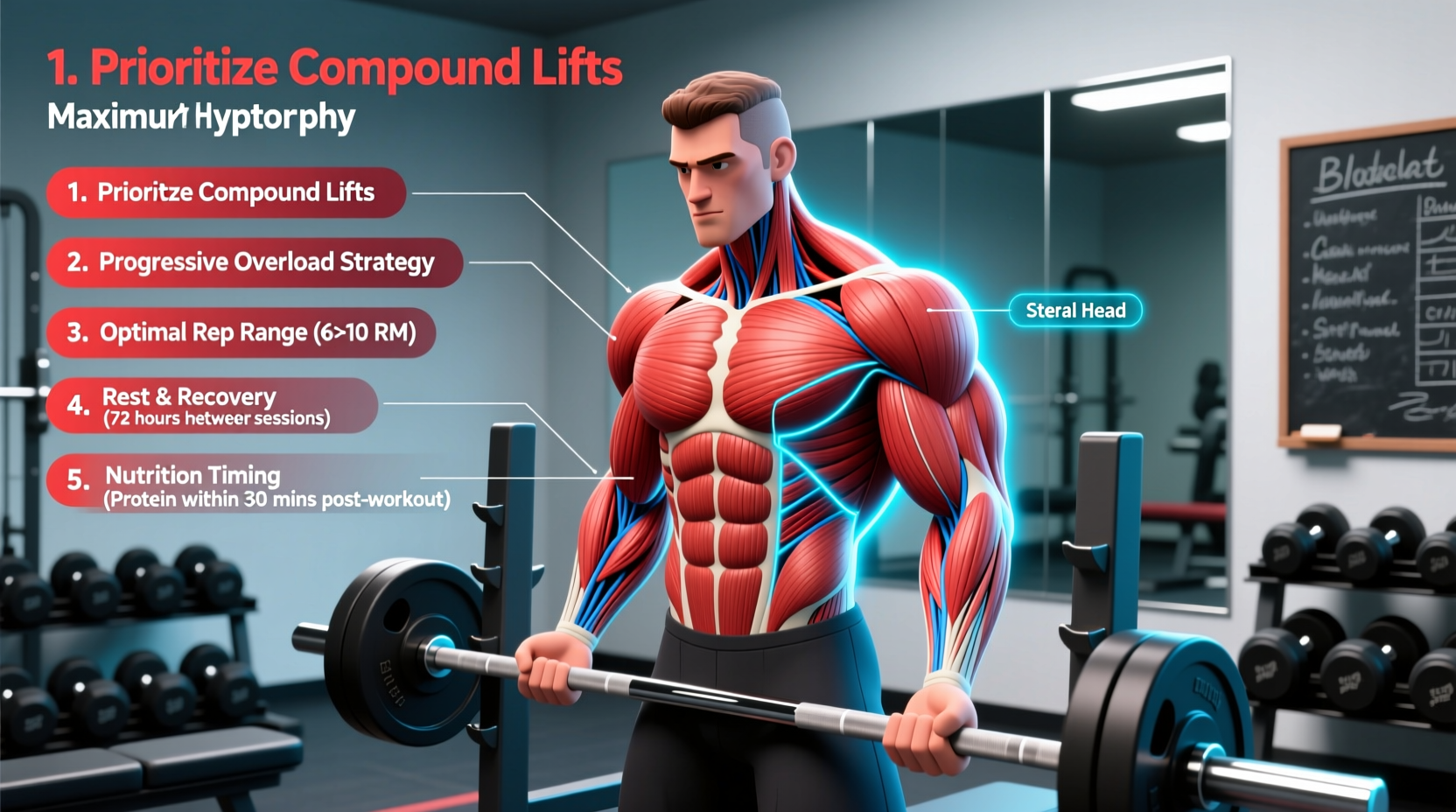
The pectoralis major is the primary muscle group in the chest, divided into two main regions: the clavicular (upper) head and the sternal (lower and middle) head. The pectoralis minor lies beneath and assists in shoulder movement. For balanced development, all areas must be targeted through varied angles and movements.
Effective chest training requires not just moving weight, but feeling the muscle work. This is called the mind-muscle connection. Research shows that lifters who focus on contracting the target muscle during an exercise can increase muscle activation by up to 15%.
Tip: Before each rep, pause and visualize your chest fibers shortening. Lightly touch your pecs to reinforce the connection.Step 2: Build a Science-Based Training Program
A successful chest routine follows key principles: frequency, volume, intensity, and exercise variation. Aim to train the chest 2–3 times per week with at least 48 hours of recovery between sessions.
Each workout should include 12–20 total sets per week, distributed across sessions. A mix of compound and isolation movements ensures full development. Prioritize compound lifts early in your workout when energy levels are highest.
Recommended Weekly Chest Split Example
- Day 1 (Heavy Strength): Flat Barbell Bench Press, Incline Dumbbell Press, Weighted Dips
- Day 2 (Hypertrophy Focus): Incline Barbell Press, Flat Dumbbell Flyes, Cable Crossovers
- Optional Day 3 (Pump & Isolation): Machine Press, Pec Deck, Push-Ups with Resistance Band
“Muscle growth happens when mechanical tension, metabolic stress, and muscle damage are all optimized over time.” — Dr. Brad Schoenfeld, PhD, leading researcher in hypertrophy
Step 3: Master Key Exercises for Maximum Growth
Not all chest exercises are created equal. Some provide superior activation and joint safety. Below is a comparison of top chest builders based on EMG studies and biomechanical efficiency.
| Exercise | Chest Activation | Best For | Form Tip |
|---|---|---|---|
| Barbell Bench Press (Flat) | High (Sternal Head) | Strength & Mass | Retract scapula, arch slightly, drive through heels |
| Incline Dumbbell Press | High (Clavicular Head) | Upper Chest Development | Set bench at 30–45°, lower dumbbells to nipple line |
| Cable Crossover | Moderate-High (Peak Contraction) | Muscle Squeeze & Definition | Keep slight bend in elbows, squeeze at bottom |
| Weighted Dip (Chest Leaning) | High (Lower Chest) | Functional Mass | Lean forward, descend until shoulders are below elbows |
| Pec Deck Machine | Moderate (Isolation) | Finishing Pump | Avoid using momentum; control the negative |
Step 4: Apply Progressive Overload Systematically
Growth doesn’t come from simply going to the gym—it comes from consistently challenging your muscles beyond their current capacity. Progressive overload means gradually increasing demand via weight, reps, sets, tempo, or reduced rest time.
Track your workouts. If you bench 185 lbs for 8 reps this week, aim for 9 reps next, or add 5 lbs once you hit the top of your rep range.
Progression Framework
- Choose a target rep range (e.g., 6–10 reps for strength/hypertrophy).
- Use a weight that allows you to hit the top end of the range with good form.
- Once you complete all sets at the top of the range, increase the load by 2.5–5%.
- If unable to increase weight, add reps, then sets, then reduce rest intervals.
Deload every 6–8 weeks to allow connective tissue recovery and prevent burnout.
Step 5: Optimize Nutrition and Recovery
No amount of training will build muscle without proper fuel and rest. Muscle grows during recovery, not in the gym.
Consume at least 0.8–1 gram of protein per pound of body weight daily. High-quality sources like chicken, eggs, Greek yogurt, and whey support muscle repair. Distribute protein intake across 4–5 meals to maximize synthesis.
Sleep is non-negotiable. Aim for 7–9 hours per night. Studies show that lifting weights while sleep-deprived reduces testosterone and increases cortisol—both detrimental to muscle growth.
Nutrition Checklist for Chest Growth
- ✅ 1.0–1.2g protein per pound of bodyweight daily
- ✅ Calorie surplus of 250–500 kcal/day for mass gain
- ✅ Complex carbs pre/post-workout (oats, rice, sweet potatoes)
- ✅ Healthy fats (avocado, nuts, olive oil) for hormone balance
- ✅ Hydration: At least 3 liters of water daily
Real Example: From Flat to Defined – Mark’s 12-Week Journey
Mark, a 29-year-old software developer, had been doing the same chest routine for two years: flat bench press, flyes, and push-ups. Despite consistent effort, his chest looked flat, especially from the side.
After consulting a strength coach, he revamped his approach:
- Added incline pressing twice weekly to target upper chest
- Introduced slow eccentrics (3-second lowering phase) on flyes
- Increased protein intake from 60g to 110g daily
- Started tracking workouts and added 5 lbs to bench press every two weeks
Within 12 weeks, Mark gained 4 lbs of lean mass and noticed visible fullness in his upper chest. His bench press jumped from 185x8 to 205x8. The change wasn’t magic—it was method.
Frequently Asked Questions
How often should I train my chest?
Twice per week is optimal for most lifters. More frequent training may be effective for advanced lifters using split volume (e.g., upper chest one day, lower the next), but ensure adequate recovery.
Why isn’t my chest growing despite regular training?
Likely causes include insufficient volume, lack of progressive overload, poor nutrition, or inadequate sleep. Also, if you’re only doing flat bench, you may be neglecting the upper chest, creating a flat appearance. Add incline work and track your food intake.
Are push-ups enough for chest development?
Push-ups are excellent for beginners and endurance, but they lack the progressive loading needed for maximal hypertrophy. Once you can do 20+ clean push-ups, add resistance via weighted vests or bands to continue growth.
Final Steps to Take Action Today
Building an impressive chest is within reach—but it demands consistency, intelligence, and patience. Start now by auditing your current routine: Are you hitting all areas of the chest? Are you progressively getting stronger? Is your diet supporting growth?
Revise your program using the steps above. Track every workout. Eat with purpose. Recover like an athlete. In 8–12 weeks, you’ll see changes not just in the mirror, but in your strength and confidence.
🚀 Ready to transform your chest? Print this guide, update your training log, and commit to one new action today—whether it’s adding incline presses or increasing protein intake. Growth starts with the next rep.