Staying fit doesn’t require a gym membership or expensive equipment. With thoughtful planning and consistent effort, you can build a highly effective workout routine entirely at home using only your body weight. This approach is not only cost-effective but also flexible, scalable, and sustainable for long-term health. Whether you're new to fitness or looking to maintain strength during travel or tight schedules, mastering the art of equipment-free training empowers you to stay active anytime, anywhere.
Assess Your Fitness Goals and Current Level
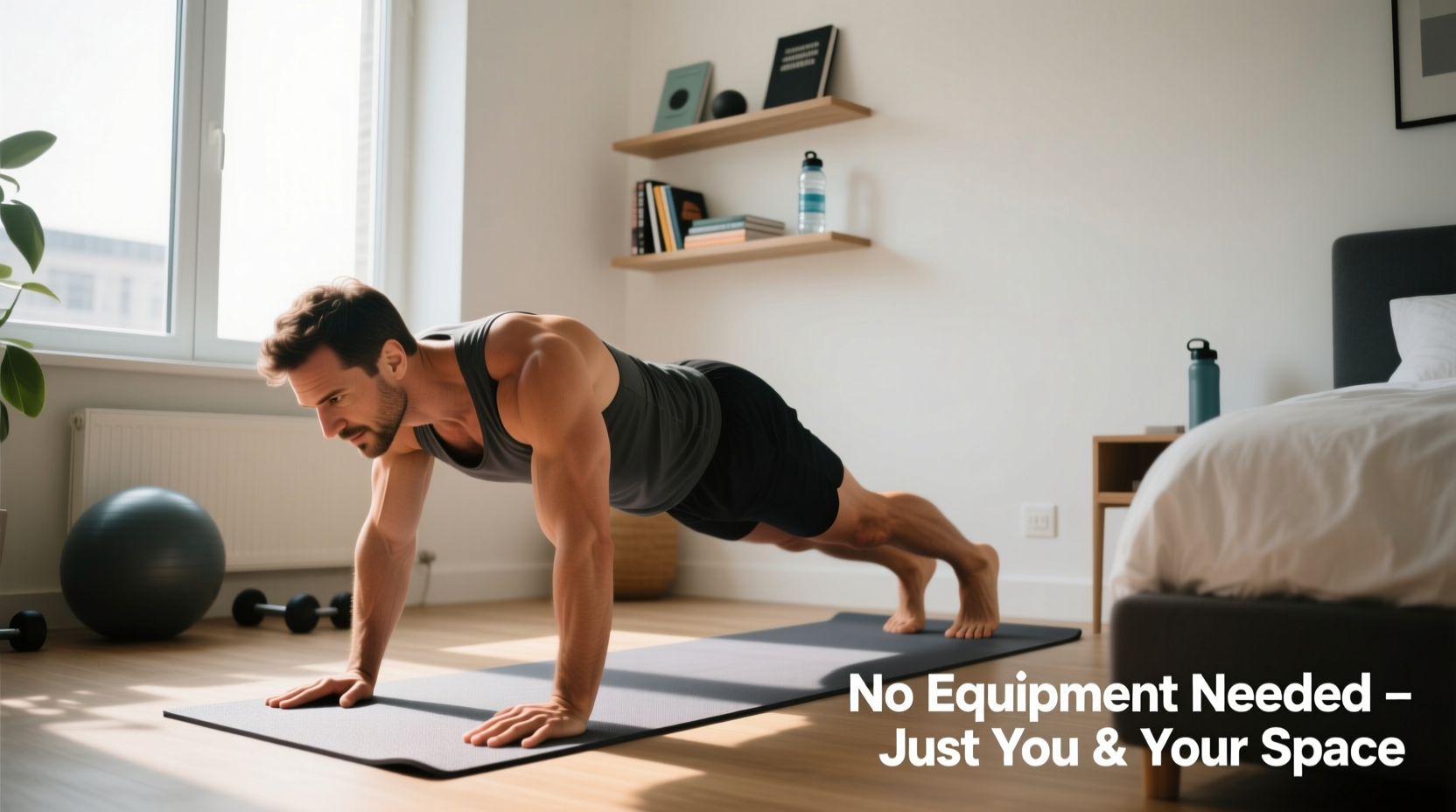
Before designing any routine, it’s essential to define what you want to achieve. Common goals include building strength, improving endurance, increasing flexibility, losing fat, or enhancing overall fitness. Each objective influences the structure of your workouts.
Equally important is assessing your current fitness level. An honest self-evaluation helps prevent injury and ensures gradual progression. Ask yourself:
- Can I perform 10 consecutive push-ups?
- Can I hold a plank for one minute?
- How’s my stamina during brisk walking or stair climbing?
- Do I have any physical limitations or injuries to consider?
If you struggle with basic movements, start with foundational variations—like knee push-ups or wall planks—and gradually increase intensity. Pushing too hard too soon leads to burnout or setbacks.
Tip: Take photos or videos of your form during exercises to track progress and correct posture over time.Select Effective Bodyweight Exercises
The foundation of any no-equipment routine lies in compound movements that engage multiple muscle groups. These maximize efficiency and deliver full-body results in minimal time. Focus on mastering these core exercises before adding complexity.
Upper Body
- Push-ups – Target chest, shoulders, and triceps. Modify by dropping to your knees if needed.
- Triceps dips (using a chair or low surface) – Isolate the back of the arms.
- Plank shoulder taps – Combine core stability with dynamic upper-body movement.
Lower Body
- Squats – Work quads, glutes, and hamstrings. Keep your chest up and knees aligned with toes.
- Lunges (forward, reverse, or walking) – Improve balance and unilateral leg strength.
- Glute bridges – Activate the posterior chain, especially beneficial for those who sit often.
- Calf raises – Strengthen lower legs and improve ankle stability.
Core & Stability
- Planks (front, side) – Develop deep core endurance.
- Bicycle crunches – Engage obliques and rectus abdominis.
- Leg raises – Challenge lower abs with controlled motion.
- Dead bugs – Enhance coordination and spinal stability.
Cardio & Conditioning
- Jumping jacks – Elevate heart rate quickly.
- High knees – Boost cardiovascular output and coordination.
- Mountain climbers – Combine cardio with core engagement.
- Butt kicks – Warm up joints and increase circulation.
“Bodyweight training, when done with proper form and progressive overload, can build significant strength and endurance.” — Dr. Lena Patel, Exercise Physiologist
Create a Weekly Routine Template
A well-balanced weekly plan includes strength, mobility, and recovery. Aim for 3–5 sessions per week, alternating focus areas to allow muscles time to recover.
| Day | Workout Focus | Sample Exercises | Duration |
|---|---|---|---|
| Monday | Full Body Strength | Squats, Push-ups, Plank, Glute Bridges, Mountain Climbers | 25 min |
| Tuesday | Active Recovery / Mobility | Yoga flow, stretching, walking | 20 min |
| Wednesday | Lower Body + Core | Lunges, Calf Raises, Bicycle Crunches, Dead Bugs | 20 min |
| Thursday | Cardio & Endurance | High Knees, Jumping Jacks, Butt Kicks, Fast Feet | 15–20 min HIIT-style |
| Friday | Upper Body + Core | Push-ups, Triceps Dips, Plank Shoulder Taps, Leg Raises | 25 min |
| Saturday | Optional: Long Walk or Stretch Routine | Light activity to promote circulation | 30 min |
| Sunday | Rest | No structured exercise | - |
This template balances frequency and recovery while ensuring all major muscle groups are trained. Adjust based on your energy levels and schedule. As you grow stronger, increase volume (more reps or sets) or intensity (shorter rest, harder variations).
Progressive Overload Without Weights
One common misconception is that strength gains require external resistance. In reality, progressive overload—the principle of gradually increasing demand on the body—can be achieved through bodyweight alone.
Use these strategies to keep challenging your muscles:
- Increase Repetitions: Move from 3 sets of 8 squats to 3 sets of 15 as strength improves.
- Add Sets: Progress from 2 to 3 or 4 sets per exercise.
- Reduce Rest Time: Cut rest between sets from 60 seconds to 30 to increase intensity.
- Slow Down Tempo: Perform each rep with control—e.g., 3 seconds down, 1 second up—to increase time under tension.
- Advance Exercise Variations: Shift from standard push-ups to decline, diamond, or plyometric versions.
Real Example: Maria’s 6-Week Transformation
Maria, a 38-year-old teacher, wanted to regain strength after maternity leave but had limited time and no access to a gym. She committed to a 20-minute daily routine at home using only her body weight.
Her first-week plan included modified push-ups (on knees), assisted squats holding a counter, and 30-second planks. She worked out four days a week and walked on off-days.
By week three, she progressed to full push-ups (5 reps), 15 air squats, and 45-second planks. She introduced lunges and mountain climbers for added challenge.
At six weeks, Maria completed a full circuit of 10 push-ups, 20 squats, 1-minute plank, and 30 seconds of high knees—three rounds with minimal rest. Her energy improved, clothes fit better, and she reported feeling “stronger than before pregnancy.”
Her success came not from complexity, but from consistency, tracking progress, and incremental challenges.
Essential Tips for Long-Term Success
Building a sustainable routine goes beyond choosing exercises. Lifestyle integration determines whether you stick with it.
- Schedule workouts like appointments. Treat them as non-negotiable time blocks.
- Wear workout clothes during the day if possible—it reduces friction to starting.
- Pair exercise with a habit you already have, like doing squats during TV commercials or planks after brushing your teeth.
- Focus on form over speed. Poor technique undermines results and increases injury risk.
- Warm up and cool down. Spend 5 minutes mobilizing joints before and stretching after.
Checklist: Building Your No-Equipment Routine
- Define your primary fitness goal (strength, endurance, etc.)
- Assess your current fitness level honestly
- Choose 4–6 bodyweight exercises per session
- Create a weekly schedule (3–5 days recommended)
- Plan progression: track reps, sets, and difficulty
- Add warm-up and cool-down routines
- Review and adjust every 2–3 weeks
Common Mistakes to Avoid
Even well-intentioned routines fail due to preventable errors. Watch out for these pitfalls:
| Mistake | Why It’s Harmful | How to Fix It |
|---|---|---|
| Skipping warm-up | Increases injury risk and limits performance | Do 5 minutes of dynamic movement: arm circles, leg swings, torso twists |
| Doing the same routine every day | Leads to plateaus and overuse strain | Vary focus (upper/lower/core) and exercise selection weekly |
| Prioritizing quantity over quality | Poor form reduces effectiveness and causes joint stress | Start with fewer reps and perfect technique first |
| Ignoring recovery | Muscles need rest to repair and grow | Include rest days and prioritize sleep and hydration |
Frequently Asked Questions
Can you build muscle without weights?
Yes. Muscle growth occurs when muscles are challenged beyond their usual capacity—a concept called hypertrophy. With progressive overload techniques like increasing reps, slowing tempo, or advancing to harder variations (e.g., pistol squats), bodyweight training can effectively stimulate muscle development, especially for beginners and intermediates.
How long should a home workout be?
Aim for 20���30 minutes of focused effort. Short, intense sessions are more sustainable than hour-long routines you’re unlikely to complete. Include 5 minutes for warm-up and cool-down, leaving 15–25 minutes for the main workout.
What if I don’t have space?
You need less than you think—about 3x3 feet. Most bodyweight exercises (squats, push-ups, planks) require minimal room. Clear a corner, use a hallway, or do seated/lying moves on a mat. Even apartment dwellers can train effectively with smart planning.
Final Thoughts: Start Where You Are
You don’t need a gym, special gear, or hours of free time to get stronger and healthier. The most powerful tool you own is your body—and your commitment. By building a simple, structured routine grounded in consistency and gradual progression, you create lasting change. Focus on showing up, moving with purpose, and celebrating small wins. Over time, those efforts compound into real transformation.
💬 Ready to begin? Choose three exercises today, set a 20-minute timer, and move. Share your first routine in the comments or with a friend to stay accountable.








