
When it comes to long hikes over rugged terrain, few pieces of gear matter more than your boots. Among the most debated features is whether waterproofing or breathability offers superior blister prevention. Many hikers assume that keeping water out is the top priority, but the reality is more nuanced. Moisture—whether from outside rain or internal sweat—plays a central role in blister formation. The key isn’t just staying dry; it’s managing moisture effectively throughout the hike.
Blisters aren't merely inconvenient—they can end a trip prematurely. They form when friction, heat, and moisture combine to weaken skin integrity. While many focus on sock choice or lacing techniques, the boot’s ability to regulate internal climate is equally critical. This article examines how waterproof and breathable technologies influence moisture buildup, compares their real-world performance, and provides actionable guidance for choosing the right boot based on terrain, weather, and personal physiology.
The Science Behind Blister Formation
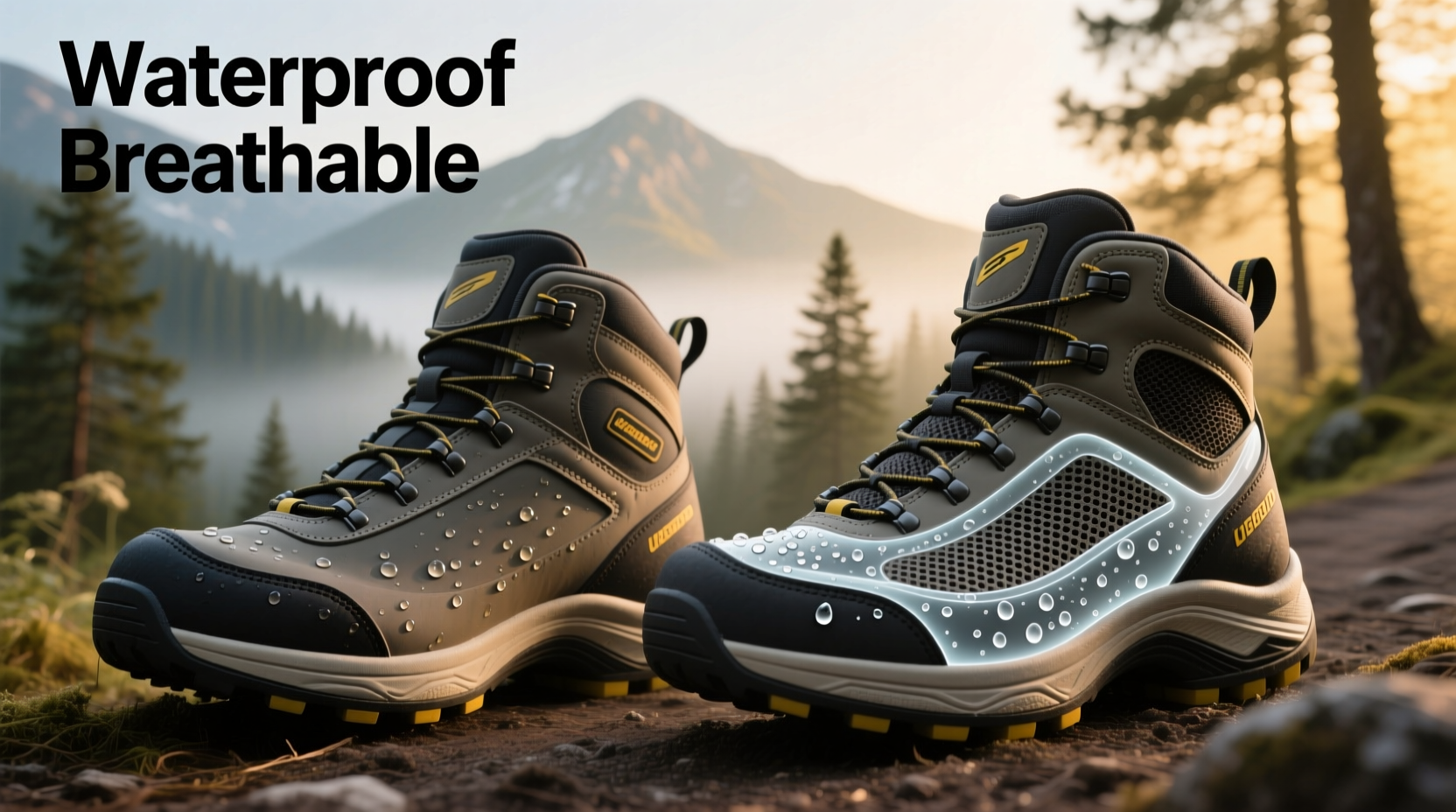
Blisters are caused by repeated friction between the skin and sock or boot lining. However, moisture dramatically increases the risk. Wet skin softens and becomes more susceptible to shearing forces. Even minor rubbing can cause damage when feet are damp. Studies show that wet skin has up to five times greater coefficient of friction than dry skin, accelerating tissue breakdown.
Sweat is the primary culprit. The average foot produces about half a cup of sweat per day—more during physical exertion. In a poorly ventilated boot, this moisture accumulates, creating a humid microclimate. Combine that with movement and pressure points, and you have the perfect conditions for hot spots and eventual blisters.
External water—like stream crossings or rain—also contributes. But surprisingly, prolonged exposure to internal sweat often does more harm than brief immersion in cold water, which may even reduce swelling and friction temporarily.
“Most hiking blisters aren’t caused by puddles—they’re brewed from the inside out by trapped sweat.” — Dr. Lena Torres, Sports Podiatrist and Outdoor Medicine Specialist
How Waterproof Boots Work—and Where They Fall Short
Waterproof hiking boots typically use membranes like Gore-Tex, eVent, or proprietary laminates designed to block liquid water while allowing vapor (sweat) to escape. These materials rely on microporous structures or hydrophilic coatings to achieve what’s called “waterproof-breathable” performance.
In theory, this sounds ideal: keep feet dry from rain and puddles while letting sweat evaporate. But in practice, several factors limit effectiveness:
- Temperature and humidity gradients: Breathability depends on a difference in moisture levels between the inside and outside of the boot. In hot, humid conditions, this gradient flattens, reducing vapor transfer.
- Limited breathability rate: Even high-end membranes move moisture at a fraction of the rate at which feet sweat during intense activity.
- Condensation buildup: Vapor that doesn’t escape can condense inside the boot lining, making the interior feel damp despite no external water entry.
A field test conducted by the Appalachian Trail Conservancy found that hikers wearing waterproof boots in summer conditions reported significantly higher rates of moist interiors compared to those in mesh-heavy trail shoes—even without rain.
Tip: Waterproof boots excel in snow, stream crossings, and wet brush—but they trap heat and sweat faster. Use them strategically, not universally.The Case for Breathable Hiking Boots
Breathable hiking boots prioritize airflow over liquid resistance. They often use open-weave textiles, perforated uppers, or lightweight synthetics that allow heat and moisture vapor to escape quickly. While they won’t keep feet dry in standing water, they dramatically reduce internal humidity during active hiking.
This ventilation helps maintain a stable foot environment. Dry socks stay dry longer, friction stays low, and temperature regulation improves. For multi-day hikes in warm climates or on steep ascents, breathable boots often result in fewer hot spots and less overall discomfort.
Modern breathable models now include water-resistant treatments (DWR coatings) and quick-dry linings that shed light rain and dry rapidly if wet. They may not be fully waterproof, but they manage moisture far more efficiently than sealed systems.
A 2022 study published in the *Journal of Outdoor Recreation and Tourism* followed 87 hikers across the Pacific Crest Trail’s southern section. Participants were split into two groups: one using waterproof boots, the other using highly breathable trail hikers. After seven days, 68% of the waterproof group reported persistent dampness inside their boots, compared to 29% in the breathable group. Blisters requiring treatment occurred in 41% of the waterproof cohort versus 18% in the breathable cohort.
Real Example: Sarah’s Sierra Nevada Trek
Sarah, an experienced backpacker, planned a 10-day trek through the High Sierras in early July. She packed her trusted Gore-Tex-lined hiking boots, assuming they’d handle morning snowmelt crossings. By day three, despite rotating wool socks and using anti-blister tape, she developed painful heel blisters. At a resupply point, she switched to a pair of lightweight, breathable trail runners she’d brought as camp shoes. Though she crossed several icy streams, her feet dried within an hour each time. More importantly, her feet stayed cooler and drier overall. No new blisters formed for the remainder of the trip.
Her experience illustrates a growing trend: controlled exposure to external moisture can be less damaging than chronic internal dampness.
Comparing Performance: Waterproof vs Breathable Boots
| Feature | Waterproof Boots | Breathable Boots |
|---|---|---|
| Water Resistance | Excellent – blocks liquid water effectively | Fair to Good – resists light rain, dries quickly |
| Breathability | Poor to Moderate – limited vapor escape | Excellent – promotes airflow and evaporation |
| Heat Retention | High – traps warmth and humidity | Low – dissipates heat efficiently |
| Drying Time (if wet) | Slow – interior stays damp for hours | Fast – often dry within 1–2 hours |
| Blisters Risk (warm conditions) | Higher – due to sweat accumulation | Lower – better moisture management |
| Best For | Cold/wet seasons, snow, muddy trails, stream crossings | Warm weather, dry trails, fast-paced hiking, well-drained terrain |
Choosing Based on Conditions, Not Assumptions
The best boot isn’t defined by a single feature—it’s the one suited to your specific hike. Consider these variables:
- Climate and Season: In spring or fall with frequent rain, waterproof boots make sense. In summer heat, breathable models prevent overheating.
- Terrain Type: Rocky, dry trails favor breathability. Muddy, swampy, or snowy paths demand waterproof protection.
- Hiking Pace: Fast hikers generate more heat and sweat—breathable boots help manage this. Slower, load-bearing treks in wet environments benefit from waterproofing.
- Personal Sweat Rate: Some people sweat heavily regardless of temperature. If you’re prone to sweaty feet, prioritize breathability and consider liner socks.
Step-by-Step: How to Decide Which Boot Type to Use
- Check the forecast and trail conditions. Are you expecting rain, snow, or high stream levels?
- Assess the terrain. Will you cross wet areas frequently, or stay on dry, well-drained paths?
- Evaluate your pack weight and pace. Heavy loads increase sweat; fast hiking generates heat.
- Consider your history with blisters. If you’ve had issues in waterproof boots, try a breathable alternative.
- Test before committing. Do a short day hike with each type under similar conditions to compare comfort and moisture levels.
Expert Strategies to Minimize Blisters Regardless of Boot Type
No boot eliminates blister risk entirely. Pairing smart footwear choices with proper technique yields the best results.
Checklist: Blister Prevention Best Practices
- Wear moisture-wicking socks (wool or synthetic blends)
- Use double-layer or liner socks to reduce shear
- Ensure proper fit—your heel should not slip, toes should not jam
- Break in boots before long hikes
- Apply friction-reducing products (e.g., lubricants, tapes) to known hot spots
- Change socks mid-hike if they become damp
- Take breaks to air out feet when safe
- Keep toenails trimmed to prevent pressure-related damage
“The best blister prevention system includes footwear, socks, and behavior. No single piece does it all.” — Mark Delgado, Wilderness First Responder and Gear Instructor
Frequently Asked Questions
Can breathable boots handle occasional stream crossings?
Yes, most modern breathable boots can handle brief immersion. Water will enter, but they dry much faster than waterproof boots. Many hikers find that wet feet for 20 minutes followed by rapid drying is less damaging than damp feet for 8 hours due to trapped sweat.
Do waterproof boots ever breathe well?
They do under ideal conditions—cool temperatures and low humidity. However, during uphill climbs or in warm weather, breathability drops significantly. Membranes like eVent offer slightly better airflow than Gore-Tex due to direct-passage pores, but none match the ventilation of non-membrane boots.
Is there a middle ground between waterproof and breathable?
Yes. Some manufacturers offer “water-resistant” boots without full membranes. These use DWR-treated uppers and quick-dry linings to repel light moisture while maintaining high breathability. They’re ideal for hikers who encounter occasional wetness but spend most of their time in dry, warm environments.
Final Recommendation: Prioritize Breathability for Blisters
If your primary goal is blister prevention, breathable hiking boots generally outperform waterproof ones—especially in moderate to warm conditions. While waterproof boots protect against external moisture, they often create a humid, warm environment inside that promotes sweat buildup, softening skin and increasing friction.
Breathable boots, by contrast, actively manage the largest source of moisture: your own sweat. They keep feet cooler, reduce humidity, and lower the risk of maceration (skin breakdown from prolonged wetness). When paired with good socks and foot care habits, they offer superior comfort and foot health over long distances.
That said, context matters. In consistently wet, cold environments, the benefits of waterproofing outweigh breathability limitations. The ideal approach is not to choose one type forever, but to match your footwear to the environment and your body’s needs.
💬 Your turn: Have you switched from waterproof to breathable boots—or vice versa—based on blister experiences? Share your story and help others make smarter gear choices.








