Selecting the right baseball bat for a 9-year-old player is more than just a gear decision—it’s an investment in their confidence, technique, and long-term enjoyment of the game. At the 9u (9-and-under) level, players are still developing strength, coordination, and swing mechanics. A poorly chosen bat can hinder progress, cause frustration, or even increase injury risk. The ideal bat balances lightweight construction, appropriate length, legal compliance, and durability. With so many options on the market, parents and coaches need clear, practical advice to make informed choices.
Understanding 9u Player Needs
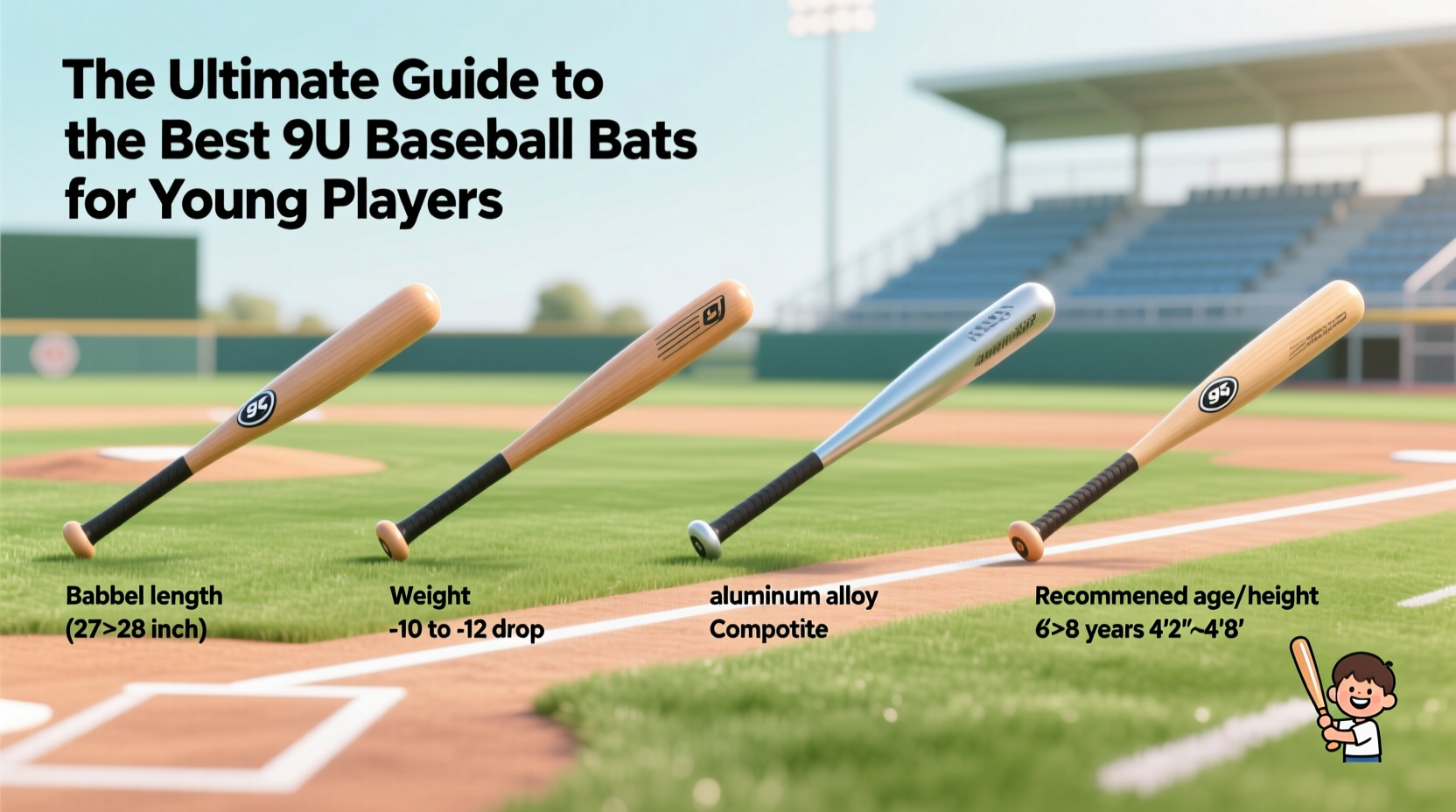
Players at the 9u level typically range from 4'0\" to 4'8\" in height and weigh between 50 and 90 pounds. Their physical development varies widely, so bat selection must be personalized rather than one-size-fits-all. At this age, most leagues—including Little League, PONY Baseball, and USSSA—use youth bat standards governed by USA Baseball, which replaced the older BBCOR and BPF regulations in 2018. These standards ensure that non-wood bats perform similarly to wood, promoting safety and fair play.
The focus should be on control and consistent contact rather than raw power. A lighter bat allows faster swing speeds, better timing, and improved hand-eye coordination. Overly heavy or long bats may lead to \"casting\" the bat (swinging with arms extended too early), reducing accuracy and increasing strain on young shoulders and wrists.
Tip: Let your child swing potential bats at a store or demo event. If their swing slows noticeably or they struggle to keep the bat level, it's too heavy.Key Factors When Choosing a 9u Bat
Not all youth bats are created equal. Several technical factors influence performance and suitability for 9u players:
- Length-to-Weight Ratio (Drop Weight): Youth bats typically have drop weights ranging from -10 to -13. For 9u players, a drop of -10 or -11 offers a good balance of lightness and barrel size. Lower drops (-12 or -13) are extremely light but often used by younger or smaller players.
- Material: Most youth bats are made from aluminum or composite materials. Aluminum bats are durable, affordable, and ready to use immediately. Composite bats offer better vibration dampening and a larger sweet spot but require a break-in period and are more expensive.
- Barrel Diameter: Standard youth bats have a 2⅝-inch barrel, which is league-compliant and provides a larger hitting surface than the 2¼-inch option found on some advanced models.
- Grip and Handle Design: Look for padded grips and thinner handles that suit small hands. Some bats feature flexible inserts to reduce sting on mishits.
- League Compliance: Ensure the bat carries the USA Baseball stamp. This certification is mandatory for most recreational leagues across the U.S.
Real Example: Choosing the Right Fit for Emma
Emma, a 9-year-old player standing 4'4\" and weighing 68 pounds, was struggling at the plate despite solid fundamentals. Her coach noticed she was dropping the barrel during her swing and missing pitches consistently. After testing several bats, her dad switched her from a 29\" -10 model to a 28\" -11. The lighter bat allowed her to maintain proper swing path and improved her contact rate by over 40% in the next five games. The change wasn’t about power—it was about timing and control.
“Bat weight affects swing mechanics more than any other factor in youth baseball. A well-matched bat helps players develop muscle memory correctly.” — Dr. Mark Rivera, Pediatric Sports Biomechanist
Top Recommended 9u Baseball Bats in 2024
Based on performance reviews, durability, and coach feedback, here are five top-rated bats suitable for 9u players:
| Model | Material | Drop Weight | Length Range | Best For |
|---|---|---|---|---|
| Marucci CAT 9 Connect Youth | Aluminum | -11 | 27\"–30\" | Balanced feel, excellent pop, low vibration |
| DeMarini Voodoo One Youth | Hybrid (Composite handle + Alloy barrel) | -10 | 28\"–31\" | Power hitters needing control |
| Easton Ghost X Hyperlite Youth | Composite | -11 | 27\"–30\" | Maximized sweet spot, premium feel |
| Rawlings Quatro Pro Youth | Two-piece alloy | -11 | 26\"–29\" | Beginners and contact hitters |
| Louisville Slugger Select 719 Youth | Composite | -11 | 27\"–30\" | Smooth swing, elite vibration control |
The Marucci CAT 9 Connect stands out for its consistency and affordability, making it a favorite among travel ball teams. The DeMarini Voodoo One offers a stiffer feel preferred by slightly stronger players, while the Easton Ghost X Hyperlite delivers one of the largest sweet spots available—ideal for players refining their contact skills.
Step-by-Step Guide to Sizing the Right Bat
Choosing the correct bat length and weight involves more than guessing based on age. Follow this proven method:
- Use the Chest Test: Have the player stand upright in cleats. Place the bottom of the bat against their chest, just below the neck. If the barrel reaches the center of their palm when they extend their arm, the length is likely appropriate.
- Perform the Elbow Test: With the player holding the bat straight out in front, the knob should reach the center of their chest when their elbow is bent at 90 degrees. If it falls short, the bat is too long.
- Assess Swing Control: Observe three to five dry swings. The bat should move fluidly without the player dipping their shoulder or stepping out of the box.
- Check League Rules: Confirm the bat has the USA Baseball certification stamp and meets diameter requirements (usually 2⅝\").
- Allow Trial Swings: Whenever possible, let the player test multiple bats during practice or at a batting cage to compare feel and balance.
Common Mistakes to Avoid
- Buying a Bat “to Grow Into”: Oversized bats compromise swing speed and form. Players grow quickly, but poor habits take longer to correct.
- Ignoring Balance: Two bats of the same length and weight can feel drastically different due to balance (end-loaded vs. balanced). Choose balanced models for young players.
- Skipping the USA Stamp: Using a non-compliant bat can result in disqualification during games. Always verify certification before purchasing.
- Overinvesting Too Early: High-end composite bats cost $150+. For casual players, a quality alloy bat under $100 performs just as well and lasts longer with less maintenance.
Frequently Asked Questions
How do I know if a bat is USA Baseball approved?
All USA-approved bats display a permanent “USA Baseball” logo along with the sanctioning body (e.g., Little League, PONY). The stamp is usually on the barrel near the midsection. Avoid bats with only USSSA 1.15 BPF markings—they are not legal in USA Baseball-sanctioned leagues.
Should my 9u player use a two-piece or one-piece bat?
Two-piece bats (like the Easton Ghost or Louisville Slugger Select) separate the handle and barrel, reducing vibration and offering more flex. They’re ideal for players sensitive to sting. One-piece bats (like the Marucci CAT 9) are stiffer and transfer more energy, favored by stronger hitters. For most 9u players, a two-piece design enhances comfort and consistency.
How long does a youth baseball bat last?
A well-maintained youth bat typically lasts 2–3 seasons. Aluminum bats tend to outlast composites, especially if not used in temperatures below 55°F (which can damage composite fibers). Store bats indoors and avoid using them in batting cages with yellow dimpled balls, which accelerate wear.
Final Checklist Before Buying
- ✅ Confirm the bat has the USA Baseball certification stamp.
- ✅ Match the length using the chest or elbow test.
- ✅ Choose a drop weight between -10 and -11 for optimal balance.
- ✅ Prefer a 2⅝\" barrel for maximum hitting surface.
- ✅ Test the bat in person if possible—swing speed matters more than specs.
- ✅ Consider a one-year warranty or manufacturer guarantee.
Conclusion
Finding the best 9u baseball bat isn’t about chasing the latest model or biggest brand name. It’s about matching the equipment to the player’s size, skill, and league requirements. A properly fitted bat builds confidence at the plate, supports healthy swing development, and makes the game more enjoyable. Whether you choose a reliable aluminum option like the Marucci CAT 9 or invest in a high-performance composite, the goal remains the same: empower young athletes to succeed through smart, informed choices.
💬 Have a recommendation or experience with a great 9u bat? Share your insights in the comments to help fellow parents and coaches make better decisions.








