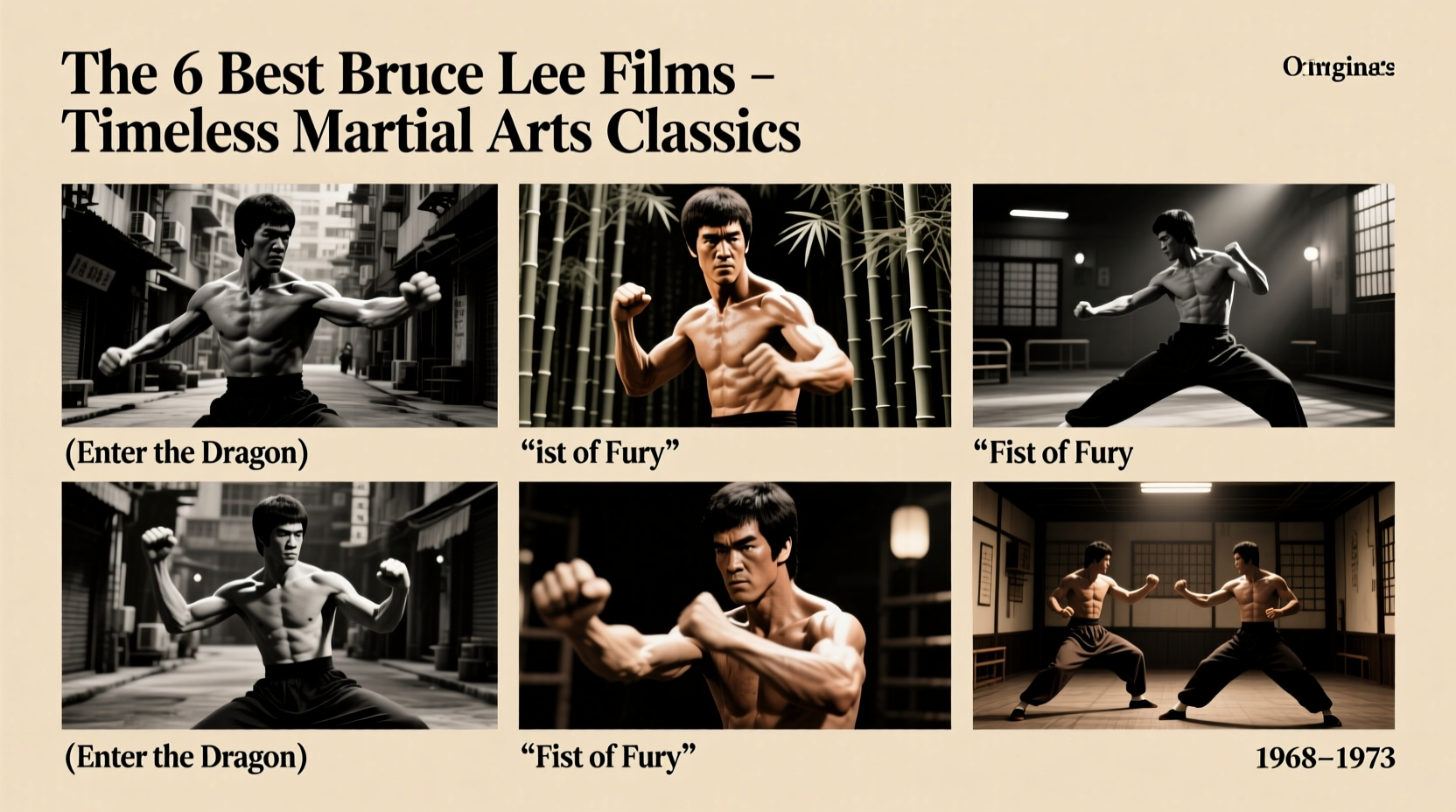
Bruce Lee didn’t just star in martial arts films—he redefined them. With a blend of explosive physicality, philosophical depth, and cinematic innovation, his body of work remains unmatched decades after his untimely passing. Though his filmography is short, each movie he completed or significantly contributed to carries lasting influence. From Hong Kong cinema to Hollywood, his legacy echoes in every kick, punch, and on-screen philosophy. This guide explores the six most essential Bruce Lee films, detailing their impact, cultural significance, and why they remain must-watches for fans of action, martial arts, and cinematic storytelling.
The Legacy of Bruce Lee in Film
Born in San Francisco in 1940 and raised in Hong Kong, Bruce Lee was a prodigy in both performance and combat. Trained in Wing Chun under Yip Man, he later developed his own martial philosophy—Jeet Kune Do—emphasizing efficiency, directness, and adaptability. When he returned to the United States as a young man, he began teaching martial arts and breaking into entertainment, eventually landing roles that would catapult him to global fame.
His presence on screen was magnetic: lean, lightning-fast, and intensely focused. But beyond the physical prowess, Lee brought intelligence and authenticity to his roles. He challenged stereotypes, demanded creative control, and insisted on showcasing real martial arts rather than choreographed theatrics. His films weren’t just action—they were statements.
“Martial arts is not about winning or losing. It’s about self-expression.” — Bruce Lee
This ethos carried through every project he touched, making his filmography more than a list of titles—it’s a blueprint for modern action cinema.
1. The Big Boss (1971) – The Breakthrough
Originally titled Chinese Connection in some regions, The Big Boss marked Bruce Lee’s first leading role in a feature film. Directed by Lo Wei, the movie follows Lee as Cheng Chao-an, a Thai-Chinese laborer who discovers his cousins have been exploited and murdered by a local ice factory boss involved in drug trafficking.
What made this film revolutionary wasn’t its plot—fairly standard for the genre—but Lee’s electrifying performance. His fight sequences were faster and more realistic than anything audiences had seen. The final showdown, where he takes on dozens of henchmen in a warehouse, became iconic. Shot with minimal cuts and no wirework, it showcased raw skill and stamina.
Tip: Watch The Big Boss for its historical significance—this is where the Bruce Lee phenomenon truly began.The film was a massive hit across Asia, breaking box office records in Hong Kong and Southeast Asia. It proved there was a global appetite for authentic martial arts storytelling—and that Bruce Lee was its perfect ambassador.
2. Fist of Fury (1972) – National Pride and Defiance
Also known as The Chinese Connection in the U.S., Fist of Fury is arguably Lee’s most emotionally charged film. He plays Chen Zhen, a student of the late Huo Yuanjia, who returns to Shanghai to find his master dishonored and Chinese people demeaned by Japanese dojo members during the colonial era.
The narrative is steeped in themes of national identity, resistance, and honor. One of the most memorable scenes occurs early in the film when Chen destroys a sign at the entrance of a Japanese dojo that reads “No Dogs and Chinese Allowed”—a powerful act of defiance that resonated deeply with audiences in post-colonial Asia.
Lee’s martial artistry shines throughout, particularly in the duel with the Japanese champion. Unlike typical fight scenes of the time, there’s no music during key battles—only the sound of impacts, breathing, and movement. This realism heightened the intensity and grounded the action in emotional truth.
Why It Stands Out
- Patriotic narrative with strong cultural resonance
- Minimalist fight choreography emphasizing realism
- One of the earliest examples of martial arts as political expression
3. The Way of the Dragon (1972) – Creator, Star, and Visionary
The Way of the Dragon is unique in Bruce Lee’s filmography because he wrote, directed, and starred in it. Playing Tang Lung, a humble martial artist sent from Hong Kong to protect friends running a restaurant in Rome, the film blends comedy, action, and cultural commentary.
The most legendary sequence is the final fight in the Colosseum between Lee and Chuck Norris, then a rising martial artist. This battle is often cited as one of the greatest fight scenes in cinema history—not for its length, but for its precision, pacing, and mutual respect between two elite fighters.
| Film | Year | Role | Notable Achievement |
|---|---|---|---|
| The Big Boss | 1971 | Cheng Chao-an | Breakout role; launched Lee’s stardom |
| Fist of Fury | 1972 | Chen Zhen | Cultural landmark; anti-imperialist message |
| The Way of the Dragon | 1972 | Tang Lung | Directed and starred; Colosseum fight with Norris |
| Enter the Dragon | 1973 | Lee | Hollywood breakthrough; global phenomenon |
| Game of Death | 1978 (posthumous) | Hai Tien | Original concept by Lee; incomplete at death |
| Golden Gate Girl | 1941 (child role) | Bit part | Earliest screen appearance |
While lighter in tone than his other works, The Way of the Dragon allowed Lee full creative control. He infused humor, showcased street fights with multiple attackers, and even included moments of introspection—rare in action films of the era.
4. Enter the Dragon (1973) – The Global Icon Arrives
Warner Bros.’ Enter the Dragon was Bruce Lee’s Hollywood debut and remains the most influential martial arts film ever made. Released just days before his death, it introduced Lee to Western audiences and set the template for nearly every action movie that followed.
Set on a private island where a crime lord hosts a martial arts tournament as a front for illegal operations, the film casts Lee as an undercover agent. The plot is secondary to the spectacle: gravity-defying kicks, nunchaku mastery, and the now-legendary hall of mirrors finale.
What elevated Enter the Dragon beyond mere entertainment was its fusion of Eastern philosophy and Western cinematic technique. James T. Wong’s cinematography, Lalo Schifrin’s jazz-infused score, and Lee’s disciplined performance created a hybrid unlike anything before it.
“ Enter the Dragon didn’t just cross cultures—it bridged them. Bruce wasn’t playing a character; he was being himself on screen.” — John Milius, Screenwriter and Director
The film grossed over $200 million worldwide (adjusted for inflation), cementing Lee’s status as a global icon. It also opened doors for future Asian actors and filmmakers in Hollywood.
5. Game of Death (1978) – A Vision Realized Posthumously
Conceived and partially filmed by Lee before his death, Game of Death was completed years later using stand-ins, doubles, and previously shot footage. Despite its fragmented nature, the core idea—ascending a pagoda by defeating increasingly skilled opponents in different styles—was entirely Lee’s.
The original 11-minute sequence, released in documentaries and special editions, shows Lee in his yellow-and-black tracksuit (now iconic), battling foes representing karate, taekwondo, and kung fu. His philosophy of adapting to the opponent is on full display.
The full 1978 version, directed by Robert Clouse, is flawed but historically significant. It includes voice dubbing and awkward editing, yet still conveys Lee’s vision: martial arts as a personal journey, not just combat.
Checklist: How to Appreciate Bruce Lee’s Films
- Watch in chronological order to see his evolution as a performer and thinker.
- Pay attention to fight choreography—notice how he uses economy of motion.
- Listen to his dialogue; many lines reflect Jeet Kune Job principles.
- Compare his roles to modern action heroes to appreciate his influence.
- Seek out uncut versions with original audio and subtitles when possible.
6. The Silent Flute (Unfinished) – The Lost Masterpiece
Though never completed, The Silent Flute—co-written by Lee, James Coburn, and Stirling Silliphant—represents his most ambitious artistic endeavor. Conceived as a spiritual journey film, it followed a Westerner seeking a mythical martial arts master in the Himalayas.
Lee described it as “a story about achieving victory without violence.” Test footage survives, showing serene landscapes and minimalist combat. Had it been finished, it might have redefined the genre entirely.
While only fragments exist, the project reveals Lee’s desire to move beyond fighting—toward enlightenment, self-mastery, and peace. In many ways, it was the culmination of Jeet Kune Do: “Using no way as way, having no limitation as limitation.”
Frequently Asked Questions
Was Bruce Lee in any movies besides martial arts films?
Early in his career, Lee appeared in minor roles in films like Golden Gate Girl (1941) and several Hong Kong dramas as a child actor. As an adult, he focused exclusively on martial arts and action roles, believing they best expressed his philosophy.
Why are Bruce Lee’s films still relevant today?
His films combine physical excellence with intellectual depth. They influenced generations of filmmakers—from Jackie Chan to Quentin Tarantino—and continue to inspire discussions about identity, discipline, and cultural exchange.
Can I learn martial arts just by watching Bruce Lee’s movies?
While his films demonstrate technique and mindset, they are not substitutes for training. However, they can motivate beginners and offer insight into the spirit of martial arts—especially his emphasis on adaptability and self-awareness.
Conclusion: Step Into the Legacy
Bruce Lee’s films are more than entertainment—they’re milestones in cultural history. Each of the six films discussed here offers something distinct: raw power, national pride, creative autonomy, global reach, unfinished ambition, and enduring inspiration. Whether you're a longtime fan or discovering his work for the first time, these movies invite not just viewing, but reflection.
🚀 Ready to experience cinematic history? Start with The Big Boss and work your way to Enter the Dragon. Then, share your thoughts—what does Bruce Lee’s legacy mean to you?








