Selecting the right pair of running shoes is one of the most important decisions a runner can make. Whether you're logging miles on city sidewalks or tackling rugged mountain trails, your footwear directly impacts your comfort, efficiency, and injury risk. With countless brands, models, and technologies flooding the market, finding the perfect shoe can feel overwhelming. The truth is, there’s no universal “best” shoe—only the best shoe for *your* biomechanics, goals, and environment.
A well-chosen running shoe supports your natural gait, cushions impact forces, and enhances propulsion. Conversely, a poor fit or mismatched support can lead to blisters, shin splints, plantar fasciitis, or knee pain. This guide breaks down the essential factors in selecting high-performing, comfortable running shoes—so you can move with confidence, mile after mile.
Understand Your Foot Type and Gait Pattern
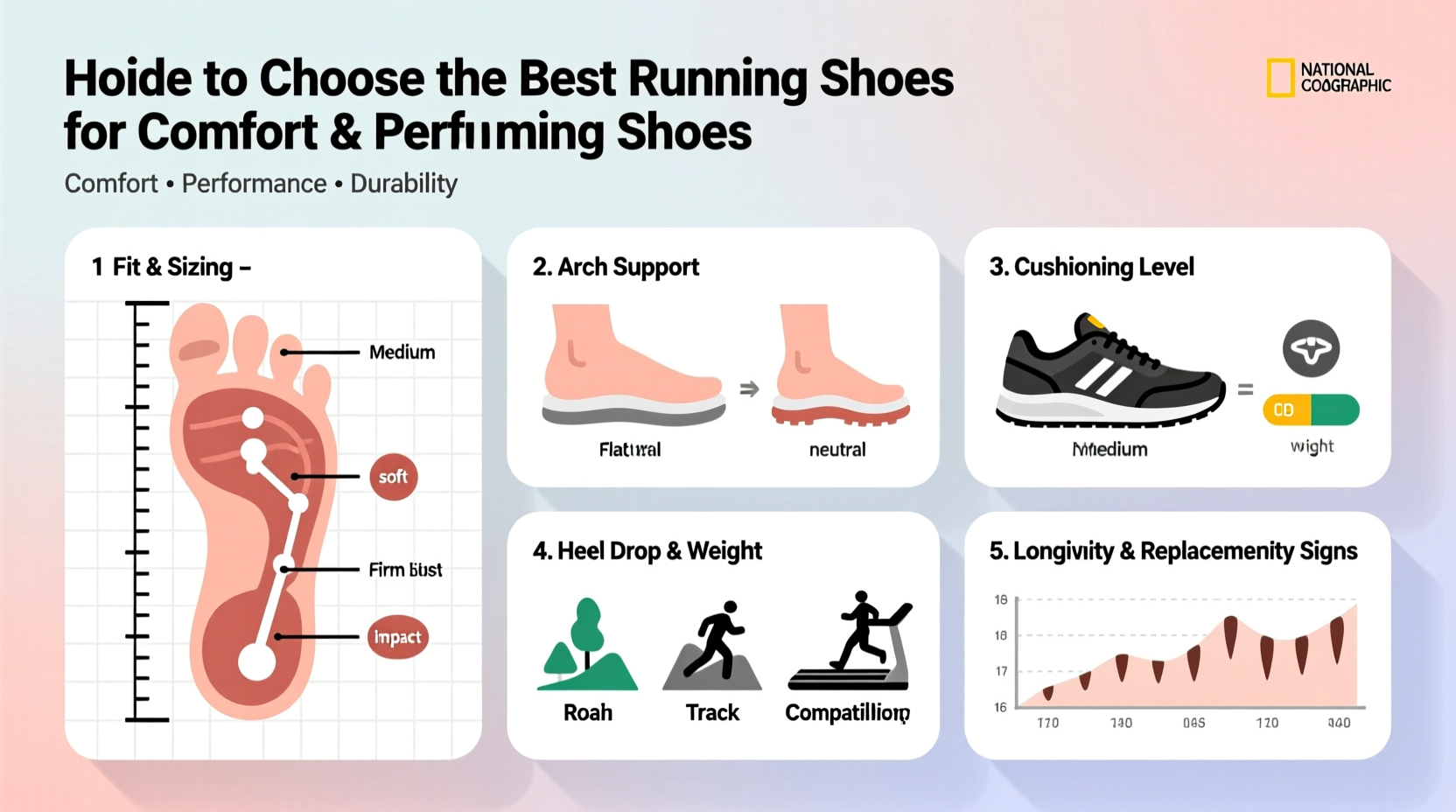
Your foot structure and how it moves during a stride—known as your gait—are foundational to choosing the right shoe. Most runners fall into one of three categories: neutral pronators, overpronators, or underpronators (supinators).
- Neutral Pronation: The foot rolls inward slightly after landing, evenly distributing impact. Ideal for most standard cushioned or stability shoes.
- Overpronation: The foot rolls excessively inward, often seen in flat-footed runners. Requires motion control or structured stability shoes.
- Supination (Underpronation): The foot rolls outward, placing extra stress on the outer edge. Common in high-arched runners; needs maximum cushioning and flexibility.
To determine your gait, visit a specialty running store that offers gait analysis using treadmill video assessment. Alternatively, examine wear patterns on your old shoes: excessive inner sole wear suggests overpronation, while outer wear indicates supination.
“Approximately 70% of runners benefit from some level of arch support or stability features. Assuming you need a neutral shoe without assessing your gait can lead to preventable injuries.” — Dr. Lena Torres, Sports Podiatrist
Match Shoes to Your Running Terrain
Not all running shoes are built for every surface. Choosing a shoe designed for your primary terrain improves traction, durability, and overall performance.
| Terrain | Shoe Type | Key Features |
|---|---|---|
| Road/Pavement | Neutral Cushioned or Stability Shoes | Smooth outsoles, responsive midsoles, durable rubber |
| Trail | Trail-Running Shoes | Aggressive lugs, rock plates, water-resistant uppers |
| Track | Racing Flats or Spikes | Lightweight, minimal cushioning, enhanced grip |
| Treadmill | Most Road Shoes | Good cushioning due to consistent surface impact |
For example, trail shoes feature deeper treads and protective elements to handle mud, rocks, and roots. Wearing road shoes off-road increases slipping risk and accelerates wear. Conversely, heavy trail shoes on pavement can feel clunky and reduce running economy.
Tip: If you run on mixed surfaces, consider a hybrid \"road-to-trail\" shoe with moderate lugs and reliable cushioning.Fit Matters More Than Brand
A shoe might have stellar reviews and cutting-edge tech, but if it doesn’t fit properly, it won’t serve you well. Fit involves more than just size—it includes toe box width, heel lockdown, midfoot snugness, and overall volume.
Visit a running store later in the day when feet are slightly swollen, mimicking running conditions. Wear the socks you typically run in. Stand and walk around the store, simulating a short jog if possible. Key fit checks include:
- At least a thumb’s width (about 1 cm) between your longest toe and the shoe end.
- No heel slippage during movement.
- No pinching across the ball of the foot or top of the toes.
- Laces should secure the midfoot without pressure points.
Brands vary significantly in sizing and last shape. For instance, Altra offers foot-shaped toe boxes ideal for splay-toed runners, while Saucony tends to run narrow. Don’t assume your size is consistent across labels.
Real Example: Finding the Right Fit After Injury
Sarah, a recreational marathoner, experienced chronic black toenails and forefoot pain after long runs. She assumed she needed more cushioning, but a fitting specialist noticed her shoes were half a size too small. After switching to a larger size with a wider toe box, her discomfort vanished within two weeks. The issue wasn’t the model—it was the fit.
Choose Based on Performance Needs, Not Just Comfort
Comfort is critical, but performance goals should also guide your selection. Are you training for a 5K, logging recovery miles, or preparing for an ultramarathon? Different phases of training call for different shoes.
- Daily Trainers: Durable, balanced cushioning and support for high-mileage days. Look for weight between 8–10 oz (men’s size 9).
- Speedwork/Racing Shoes: Lightweight, responsive, often with carbon fiber plates for energy return. Best for intervals and races, not daily use.
- Recovery Shoes: Extra cushioning and softer landings to aid muscle repair after hard efforts.
- Max-Cushion Shoes: Designed for long distances, especially on hard surfaces. Ideal for heavier runners or those with joint sensitivities.
Rotating between two types of shoes—such as a daily trainer and a lighter speed shoe—can reduce repetitive stress and lower injury risk by varying biomechanical load.
Checklist: What to Evaluate Before Buying
- ✅ Gait type identified (neutral, overpronator, supinator)
- ✅ Primary running surface confirmed
- ✅ Shoe tried on late in the day with running socks
- ✅ Thumb’s width space at the toe
- ✅ No pressure points when laced
- ✅ Heel stays locked during movement
- ✅ Weight and drop align with goals (e.g., 4–8mm drop for natural transition)
- ✅ Shoe replaced before 300–500 miles (whichever comes first)
Frequently Asked Questions
How do I know when my running shoes need replacing?
Most running shoes last between 300 and 500 miles. Signs of wear include flattened midsole foam, uneven outsole tread, loss of responsiveness, or new aches in your knees, shins, or feet. Keep a log of mileage or use a running app to track usage.
Is a higher price tag worth it?
Not always. Premium shoes often include advanced materials like PEBA foam or carbon plates, which enhance performance for competitive runners. However, many mid-range models ($100–$130) offer excellent durability and comfort for everyday training. Focus on fit and function over price.
Can I use running shoes for walking or gym workouts?
Running shoes are optimized for forward motion and heel-to-toe transition. While they can be used for brisk walking, they’re less ideal for lateral movements in the gym. Cross-trainers provide better side-to-side support. Using running shoes for non-running activities shortens their lifespan.
Final Steps: Test, Rotate, and Listen to Your Body
The final step in choosing the best running shoe isn’t made at the point of purchase—it happens over the first 10 to 20 miles. Even if a shoe feels great in the store, subtle issues may emerge during real-world use. Run in them on different days and paces. Note any discomfort, hot spots, or inefficiencies.
Consider rotating two pairs: one for easy runs, another for speed or long efforts. This not only extends shoe life but also exposes your body to varied stimuli, potentially reducing overuse injuries.
Ultimately, the best running shoe is one that disappears on your foot—supportive enough to protect, light enough to fly, and perfectly tuned to your stride.
🚀 Ready to find your perfect fit? Visit a specialty running store this week, get a gait analysis, and take the first step toward faster, more comfortable runs. Share your shoe journey in the comments—we’d love to hear what works for you!








