
Selecting the right footwear for a thru hike can make the difference between a transformative journey and an exhausting ordeal. Unlike casual hiking boots or trail runners used for day hikes, thru hiking shoes must balance protection, comfort, weight, and durability over hundreds—or even thousands—of miles. With rugged terrain, unpredictable weather, and constant wear, your feet endure immense stress. Choosing wisely isn’t just about preference; it’s about sustainability, safety, and enjoyment across diverse landscapes.
The ideal shoe supports your foot without causing blisters, drains water efficiently after stream crossings, resists abrasion from rocky paths, and maintains structural integrity over time. But no single shoe fits all trails or hikers. Understanding your needs, the environment you’ll face, and how different designs perform is essential before lacing up for the long haul.
Understand Your Terrain and Climate
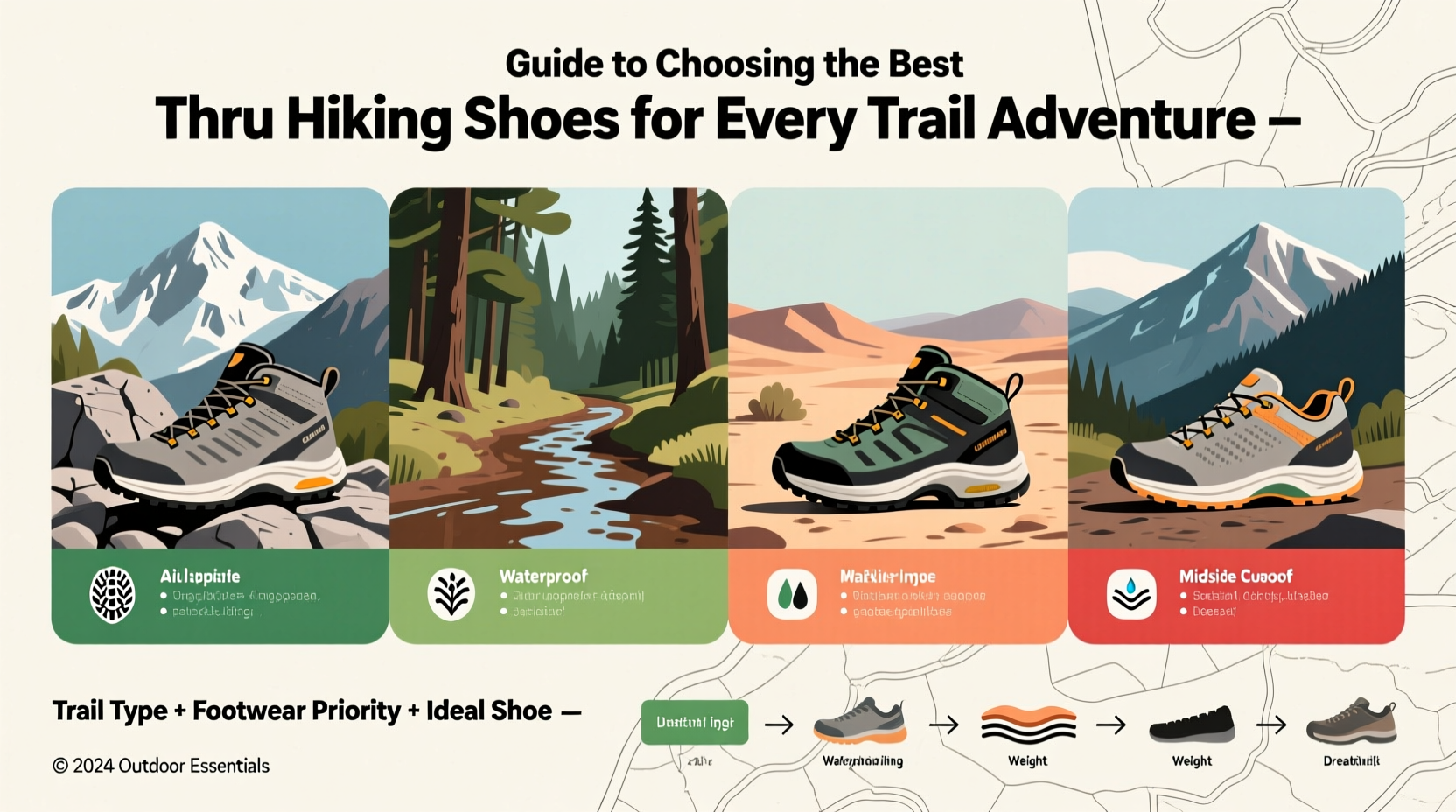
The first step in choosing the right thru hiking shoe is evaluating the conditions of your intended route. Different trails demand different footwear characteristics:
- Rocky, technical trails (e.g., Appalachian Trail): Require stiff midsoles and aggressive lugs for stability and grip on uneven surfaces.
- Muddy, wet environments (e.g., Pacific Crest Trail early season): Demand quick-drying materials and excellent drainage.
- Desert hikes (e.g., Arizona Trail): Need breathable uppers and protection from sharp rocks and sand ingress.
- Alpine zones with snowfields: May require higher cut for ankle support and compatibility with gaiters.
Climate also affects material choice. Leather offers durability and water resistance but retains moisture and takes longer to dry. Synthetic mesh dries quickly and breathes well but may wear faster under abrasive conditions. Some modern hybrids use reinforced mesh with protective overlays to strike a balance.
Tip: If your route includes frequent river crossings or prolonged rain, prioritize shoes with open-mesh uppers and non-water-absorbent linings.Fit and Foot Health: The Foundation of Long-Distance Comfort
No matter how advanced the technology, poor fit leads to discomfort, blisters, and potential injury. Thru hikers often experience foot swelling due to heat, elevation changes, and continuous impact—sometimes gaining half a size or more by the end of the day.
When trying on shoes, do so in the afternoon when feet are naturally swollen. Wear the same socks you plan to hike in—typically medium-weight synthetic or merino wool blends. Ensure there's about a thumb’s width of space between your longest toe and the end of the shoe. This prevents blackened toenails on descents.
Heel slippage should be minimal. A secure heel lock prevents friction that causes blisters. The midfoot should feel snug but not constricted, allowing natural movement without pressure points. Walk on an incline if possible to simulate uphill strain, then downhill to test toe box clearance.
“Over 70% of hikers who abandon long trails cite foot issues as a primary reason. Proper shoe fit isn’t optional—it’s preventive medicine.” — Dr. Lena Torres, Sports Podiatrist and Outdoor Medicine Specialist
Key Features to Evaluate
Beyond fit, several technical aspects determine a shoe’s suitability for extended use. Consider these features carefully:
| Feature | Why It Matters | Recommended for Thru Hiking |
|---|---|---|
| Midsole | Provides cushioning and support; EVA foam is lightweight but compresses over time; TPU or dual-density foams last longer. | Dual-density EVA or compressed rubber compounds |
| Outsole | Affects traction and durability; Vibram® soles are industry standard for abrasion resistance. | Vibram Megagrip or similar high-wear rubber |
| Upper Material | Influences breathability, drying speed, and durability. | Reinforced mesh with TPU or synthetic overlays |
| Weight | Lighter shoes reduce fatigue but may sacrifice protection. | 1 lb 10 oz to 2 lbs per pair (men's size 9) |
| Stack Height & Drop | Higher stack = more cushion; lower drop (~4–8mm) encourages natural gait. | 8–12mm drop; moderate stack height (25–30mm heel) |
Water Resistance vs. Breathability Trade-Off
Gore-Tex-lined shoes keep feet dry in wet conditions but trap heat and sweat during warm weather. Non-waterproof models dry quickly and ventilate better but offer less protection in downpours or snowmelt streams.
For most thru hikes, especially those spanning varied climates, many experienced hikers prefer non-waterproof shoes paired with gaiters. This combination allows airflow while keeping debris out and managing moisture through sock choices.
Tip: Rotate two pairs of shoes on very long hikes (if feasible) to let each pair dry fully and reduce repetitive stress on joints.Step-by-Step Guide to Selecting Your Ideal Shoe
- Map your route: Identify dominant terrain types and seasonal weather patterns.
- Determine your pack weight: Heavier loads require stiffer, more supportive shoes.
- Measure your feet professionally: Include both length and width, preferably at the end of the day.
- Test multiple models: Visit specialty outdoor retailers or rent demo pairs if available.
- Walk on varied surfaces: Try gravel, inclines, and wet tiles to assess grip and flex.
- Break them in gradually: Wear new shoes on short hikes before committing to long distances.
- Monitor feedback: Track hot spots, pressure points, or drainage efficiency during trial runs.
Real-World Example: Sarah’s Sierra Nevada Challenge
Sarah planned a 150-mile section of the John Muir Trail in late summer. She initially chose lightweight trail runners for their breathability. However, after three days, she developed persistent heel blisters from loose fit and suffered soreness from stepping on sharp granite scree.
She switched to a mid-cut hiking shoe with a rock plate and improved torsional rigidity. Though slightly heavier, the new shoe provided better underfoot protection and lateral stability on loose slopes. By adjusting her lacing technique and adding aftermarket insoles, she completed the trek comfortably—with no further foot issues.
This case illustrates that while weight savings are appealing, terrain-specific functionality often outweighs marginal gains in lightness.
Checklist: Pre-Purchase Evaluation
- ✅ Measured feet recently, accounting for swelling
- ✅ Researched trail conditions and expected weather
- ✅ Tried shoes with hiking socks and loaded backpack
- ✅ Tested uphill/downhill movement and side-to-side stability
- ✅ Confirmed adequate toe room with heel locked in place
- ✅ Checked return policy in case break-in reveals flaws
- ✅ Verified availability of replacement models (for long hikes)
Frequently Asked Questions
Can I use running shoes for a thru hike?
You can—if the trail is relatively smooth, dry, and your pack is light. However, most thru hikes involve rugged terrain where added protection, durability, and ankle support become necessary. Trail runners work well for low-load, fast-and-light trips but wear out faster than dedicated hiking shoes.
How often should I replace my thru hiking shoes?
Most quality hiking shoes last between 500 and 1,000 miles, depending on load, terrain, and care. Watch for signs like flattened midsoles, delamination, worn treads, or upper tears. Many long-distance hikers carry a second pair or schedule replacements mid-trail.
Are waterproof shoes worth it?
Only in consistently wet, cold environments. In warm or mixed climates, waterproof membranes often cause overheating and moisture buildup from sweat. Most thru hikers report greater comfort with breathable, fast-drying shoes and strategic use of gaiters.
Final Thoughts and Next Steps
Choosing the best thru hiking shoe isn’t about finding the most expensive or popular model—it’s about alignment with your body, your route, and your pace. Invest time in research, testing, and preparation. Your feet will cover vast distances, traverse breathtaking ridgelines, and carry you through moments of solitude and triumph. Treat them with the care they deserve.
Start by analyzing your next big adventure. Map the terrain, assess your gear load, and visit a trusted outdoor retailer with expertise in long-distance hiking. Bring your socks, know your foot dimensions, and walk with purpose. The right shoe won’t eliminate challenges—but it will help you meet them with confidence.
💬 Have a favorite thru hiking shoe or a lesson learned the hard way? Share your story in the comments and help fellow adventurers make smarter choices.








