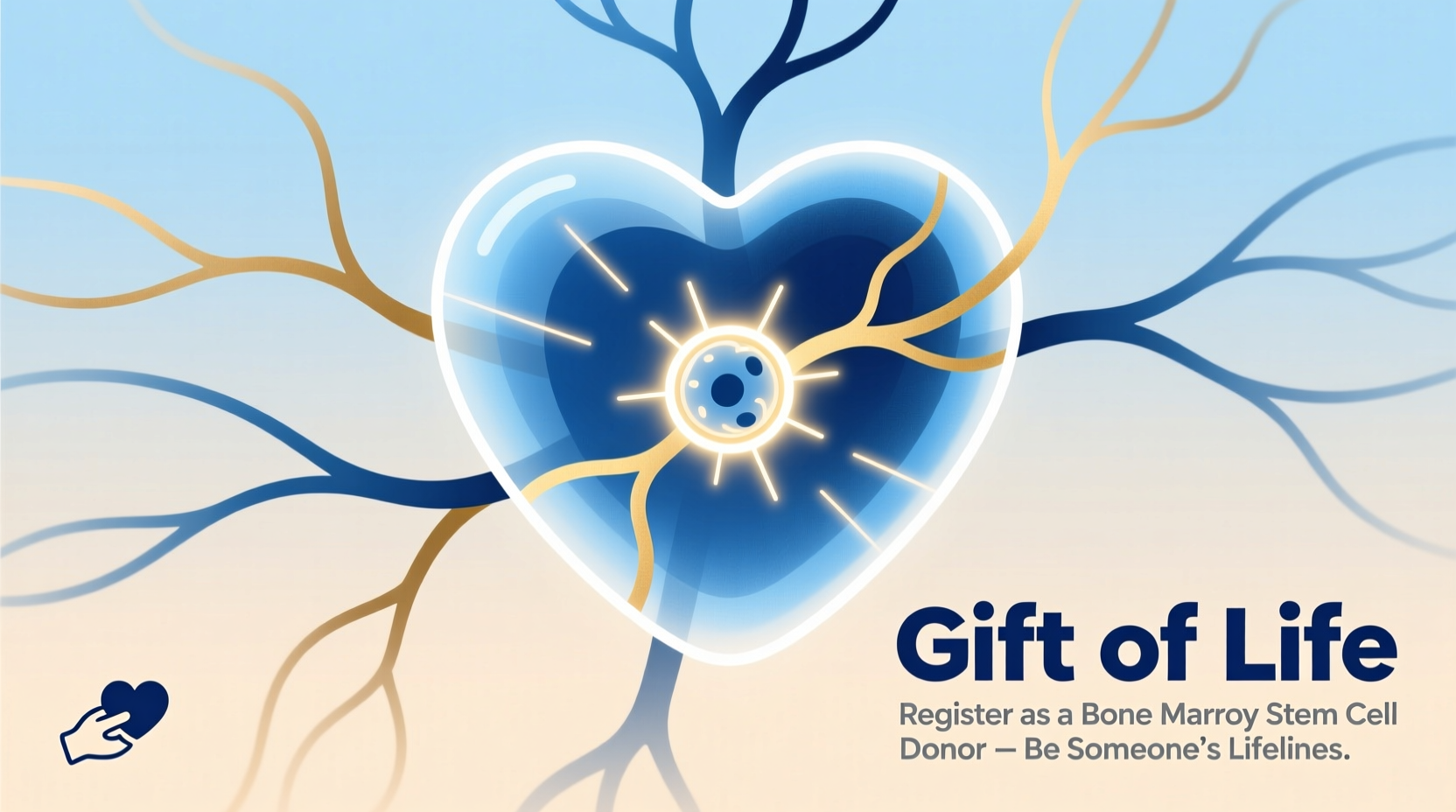
Every year, thousands of patients around the world are diagnosed with life-threatening blood disorders such as leukemia, lymphoma, and sickle cell anemia. For many of them, a bone marrow or stem cell transplant offers the best chance—or sometimes the only chance—for survival. Yet finding a matching donor is a rare and difficult challenge. That’s where you come in. By joining the Gift of Life Registry and becoming a bone marrow or stem cell donor, you could be the match that saves someone’s life.
Becoming a donor is not as complicated or painful as many assume. Advances in medical science have made the donation process safer, less invasive, and more accessible than ever before. This article explains how the registry works, what it means to be a donor, and the real impact one person can make by stepping forward.
Understanding Bone Marrow and Stem Cell Transplants
Bone marrow is the spongy tissue inside bones that produces blood-forming stem cells. When a patient’s bone marrow fails due to disease or treatment like chemotherapy, they need healthy stem cells from a donor to rebuild their blood and immune system. A successful transplant depends on finding a donor whose human leukocyte antigen (HLA) type closely matches the patient’s. Unlike blood types, HLA markers are inherited, making matches most likely among people of similar ethnic backgrounds.
There are two primary methods of donation:
- Peripheral Blood Stem Cell (PBSC) Donation: The most common method. Stem cells are collected from the bloodstream after a few days of injections that increase stem cell production.
- Bone Marrow Donation: A surgical procedure performed under anesthesia, where liquid marrow is extracted from the back of the pelvic bone. Less common but still vital for certain patients.
The choice of method depends on the patient’s condition and medical team’s recommendation. Both are safe for donors, and full recovery typically occurs within weeks.
Tip: You don’t need to be related to a patient to be a match—most donors are strangers who registered out of compassion.How the Gift of Life Registry Works
The Gift of Life Marrow Registry is a nonprofit organization dedicated to saving lives through bone marrow and stem cell transplantation. Founded in 1991, it has facilitated over 50,000 transplants worldwide and maintains one of the largest and most diverse donor databases.
Joining the registry is simple and free. Here’s how it works:
- You register online or at a donor drive by providing basic information and consent.
- A cheek swab kit is sent to you, or administered on-site, to collect DNA for HLA typing.
- Your tissue type is entered into the international database and remains active until you turn 61.
- If you’re identified as a potential match, the registry contacts you for further testing and confirms your willingness to proceed.
- If selected, you undergo a medical evaluation and schedule the donation.
Being on the registry doesn’t mean you’ll definitely donate—it means you’re available if needed. Only about 1 in 430 U.S. registry members will ever be called to donate. But when that call comes, it can mean everything to a patient waiting for a second chance at life.
Who Can Be a Donor?
Eligibility criteria ensure both donor safety and transplant success. Most healthy individuals between the ages of 18 and 44 can join the Gift of Life Registry. Why the age limit? Younger donors produce more robust stem cells, leading to higher survival rates for patients.
| Criteria | Eligible | Not Eligible |
|---|---|---|
| Age | 18–44 (can remain registered up to 61) | Under 18 or over 61 |
| Weight | At least 110 lbs (50 kg) | Below minimum weight or BMI concerns |
| Health | No chronic illnesses affecting immunity | HIV, active cancer, severe heart disease |
| Lifestyle | Non-smokers preferred; no recent tattoos in unregulated settings | Recent high-risk behaviors or infections |
Ethnic diversity is critically important. Patients from minority or mixed-race backgrounds often struggle to find matches because they are underrepresented in donor databases. By registering, especially if you come from a diverse background, you help close this gap.
“Finding a match for a patient of color can take twice as long. Every new diverse registrant increases hope.” — Dr. Steven Chaudry, Hematologist and Transplant Specialist
Step-by-Step Guide to Becoming a Donor
Ready to take action? Follow these steps to officially become part of the Gift of Life Registry:
- Visit the Official Website: Go to gift-of-life.org and click “Join the Registry.”
- Complete the Registration Form: Provide your contact details, date of birth, and health history.
- Receive Your Swab Kit: It arrives by mail within 7–10 days. Contains sterile swabs and instructions.
- Perform the Cheek Swab: Rub the swabs firmly inside each cheek for 30 seconds as directed.
- Return the Kit: Use the prepaid envelope to send your sample to the lab.
- Wait for Confirmation: Within 4–6 weeks, you’ll receive email confirmation that you’re officially in the system.
- Stay Available: Keep your contact information updated. If you’re a match, time is critical.
The entire process takes less than 30 minutes, and your commitment could last decades. You may never be called—but if you are, your decision could save a life.
Real Impact: A Story of Hope
In 2020, 28-year-old Maya from Miami was diagnosed with acute myeloid leukemia. After exhausting all standard treatments, her doctors told her family she needed a stem cell transplant. No relatives were a match. Her oncologist searched international registries and found a 10/10 HLA match—a young teacher named Daniel in Oregon.
Daniel had joined the Gift of Life Registry three years earlier at a college health fair. He received a call asking if he’d consider donating. After learning more and passing his medical screening, he underwent PBSC donation. Two weeks later, Maya received his stem cells.
Today, Maya is in remission and runs a support group for young cancer survivors. “Daniel didn’t just give me cells,” she says. “He gave me my future.” Daniel reflects, “I spent a few hours at a clinic. She got her life back. That balance feels incredible.”
Frequently Asked Questions
Is donating bone marrow painful?
For PBSC donation, most donors experience mild flu-like symptoms during the five days of injections. Bone marrow donation is done under anesthesia, so there’s no pain during the procedure. Recovery usually involves a few days of soreness, similar to a pulled muscle.
Can I choose which method I donate with?
The medical team decides based on the patient’s needs. However, donors are fully informed before committing, and can discuss preferences with the registry coordinator.
Will I meet the person I donate to?
Initially, donations are anonymous. After one year, if both parties agree, contact may be allowed through the registry. Many donors and recipients form lasting bonds.
Tip: Update your address and phone number with the registry if you move—donors who can’t be reached may be removed from the system.Why Your Participation Matters
Every new registrant strengthens the global network of hope. Consider this: 70% of patients don’t have a matching donor in their family. They rely entirely on strangers who stepped forward. And while the odds of being called are low, the impact is immeasurable.
The Gift of Life Registry actively recruits donors from underrepresented communities, including African American, Hispanic, Asian, Native American, and mixed-race individuals. These groups are significantly underrepresented, yet their genetic diversity is essential for finding matches across populations.
Beyond biology, this is about human connection. It’s about knowing that somewhere, someone is praying for a miracle—and you might be it.
Take Action Today
Registering takes minutes. Donating, if called, takes days. But the result can last a lifetime—for someone else. Visit gift-of-life.org right now to join the registry. Share your decision on social media to inspire others. Host a swab drive at your workplace, school, or place of worship.
You don’t need to be a doctor, a scientist, or a hero to save a life. You just need to say yes. In a world where so much feels beyond our control, this is one powerful choice you can make. Join the Gift of Life Registry. Be the match. Be the hope. Be the gift.
💬 Have questions about donating? Know someone who needs a match? Share this article or leave a comment to spread awareness and support the cause.








