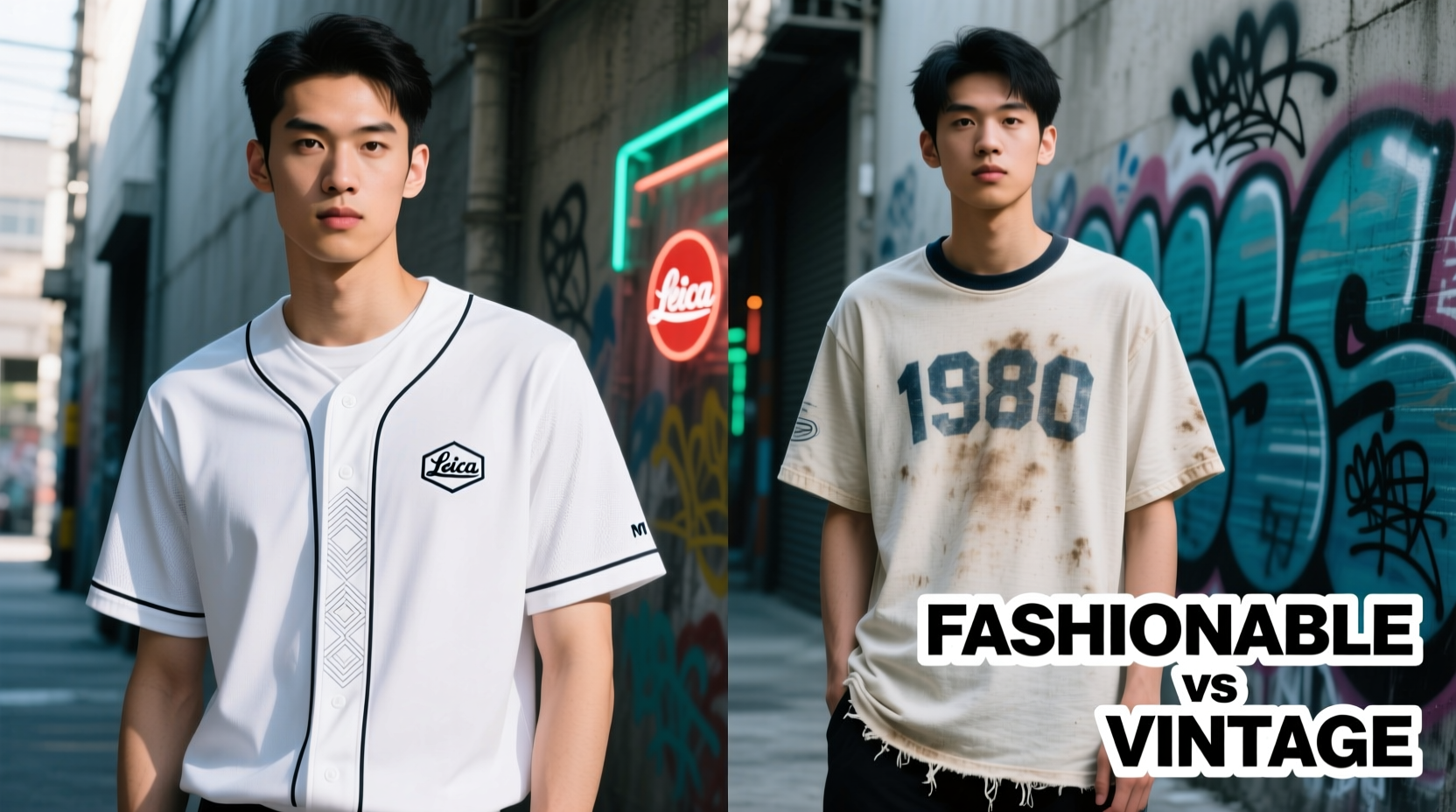
Baseball tees have evolved from functional sportswear into wardrobe staples, embraced by streetwear enthusiasts, casual dressers, and high-fashion designers alike. Today’s market offers two dominant categories: modern fashionable tees and vintage baseball shirts. While both carry undeniable appeal, a growing debate questions whether contemporary designs truly represent an upgrade—or if they’re simply replacing authenticity with trend-driven aesthetics.
The answer isn’t straightforward. It depends on what you value: longevity, craftsmanship, sustainability, or social currency. To understand the real differences, we need to examine materials, design intent, cultural context, and how each type performs in everyday wear.
The Evolution of the Baseball Tee
The original baseball tee emerged in the early 20th century as part of team uniforms—functional garments made from durable cotton-polyester blends designed for movement and moisture-wicking. These shirts featured raglan sleeves, contrasting color panels, and minimal branding. Their purpose was performance, not style.
By the 1980s and 1990s, baseball tees began appearing off the field. Thrift stores and surplus outlets supplied worn-in, soft versions to college students and musicians. The vintage aesthetic—faded logos, cracked prints, slightly oversized fits—became associated with effortless cool. Fast forward to today, and brands like Supreme, Palace, and even Gucci reimagine the classic cut with premium fabrics, limited drops, and logo-heavy designs.
This shift raises a critical question: has innovation improved the baseball tee, or merely repackaged nostalgia for profit?
Material Quality: Comfort vs. Consistency
One of the most tangible differences lies in fabric composition. Vintage baseball tees were typically made from heavier cotton or cotton-polyester blends. Years of washing and wearing break down the fibers, resulting in a uniquely soft, lived-in feel that new shirts can’t replicate immediately.
In contrast, modern fashionable tees often use pre-shrunk, ring-spun cotton or blended synthetics engineered for durability and shape retention. Some luxury iterations incorporate moisture-wicking technology or anti-odor treatments. While these advances offer consistency and longevity, they lack the organic texture development of vintage pieces.
Tip: If you prefer the softness of vintage tees but want modern fit, try garment-dyed or enzyme-washed contemporary styles—they mimic age without requiring years of wear.Comparison Table: Material & Construction
| Feature | Vintage Baseball Tees | Modern Fashionable Tees |
|---|---|---|
| Fabric Type | Cotton-poly blend (often 60/40) | Ring-spun cotton, tech blends |
| Weight | Medium to heavy (5.5–7 oz) | Light to medium (4.5–6 oz) |
| Softness Over Time | Improves significantly | Maintains initial feel |
| Color Fading | Natural, uneven aging | Controlled or avoided |
| Sustainability | Recycled use, low production impact | Varies—some eco-conscious lines exist |
Cultural Value and Authenticity
Vintage baseball tees carry embedded narratives. A faded Minnesota Twins shirt from 1992 might have been bought at a game, passed through multiple owners, or salvaged from a relative’s closet. Its imperfections tell a story. In fashion circles, this provenance adds intangible value—what sociologists call “authentic capital.”
Modern fashionable tees, while often inspired by retro designs, are manufactured to *look* vintage. Distressing techniques, fake cracks, and washed-out colors simulate age artificially. This approach makes style accessible but dilutes the emotional resonance. As fashion historian Dr. Lena Torres observes:
“Authenticity in clothing isn’t just about appearance—it’s about lineage. A vintage piece wears its history; a reproduction only mimics it.” — Dr. Lena Torres, Cultural Anthropologist
That said, modern brands are increasingly transparent about sourcing and ethics. Labels like Patagonia and Everlane produce baseball-style tees using organic cotton and fair labor practices, offering a different kind of value—one rooted in responsibility rather than nostalgia.
Fit, Functionality, and Wearability
Fashion trends have reshaped the silhouette of the baseball tee. Many contemporary versions adopt slimmer cuts, shorter bodies, and tighter sleeves to align with current body-conscious styling. While flattering on some, these fits can restrict movement and exclude broader body types.
Vintage tees, by contrast, were cut generously. Their boxier shapes accommodate layering and provide comfort during extended wear. Raglan sleeves enhance mobility—a feature originally designed for pitchers now appreciated by commuters and weekend explorers alike.
For practical daily use, vintage styles often outperform their modern counterparts. They breathe better, move more freely, and adapt easily across seasons. Layer one under a denim jacket in spring or wear it solo in summer—the versatility remains unmatched.
Mini Case Study: Jake’s Weekend Rotation
Jake, a 32-year-old graphic designer in Portland, owns three vintage baseball tees from the late '90s and five modern branded ones purchased in the last two years. He reaches for the vintage pieces 80% of the time. “They just feel right,” he says. “The newer ones look sharp in photos, but after a few hours, they cling or ride up. The old ones stretch when I need them to and never feel stiff.”
His experience reflects a broader pattern: social media drives demand for photogenic apparel, but real-world comfort often favors older constructions.
Step-by-Step Guide: Building a Balanced Baseball Tee Wardrobe
You don’t have to choose sides. A thoughtful wardrobe includes both vintage character and modern reliability. Follow this timeline to curate a versatile collection:
- Assess Your Lifestyle (Week 1): Determine how often you wear casual tops and in what settings—work, travel, social events.
- Source 1–2 Vintage Pieces (Weeks 2–4): Visit thrift stores, estate sales, or online marketplaces like Etsy or Grailed. Look for strong stitching and minimal pilling.
- Add 1 Modern Functional Tee (Week 5): Choose a well-reviewed brand with sustainable practices and a comfortable fit.
- Evaluate After 30 Days (Week 6): Note which shirts you reach for most. Adjust future purchases based on actual usage, not impulse.
- Maintain With Care (Ongoing): Wash inside out in cold water, air dry when possible, and rotate regularly to extend life.
Checklist: Choosing the Right Baseball Tee
- ✅ Prioritize fabric weight and breathability over logo size
- ✅ Check seam integrity—especially underarms and shoulders
- ✅ Try on with layers (e.g., hoodie or jacket) to test fit
- ✅ Ask: “Will I wear this in six months?” before buying
- ✅ For vintage: inspect for odors, stains, or moth damage
- ✅ For modern: verify return policy and material origin
FAQ
Are vintage baseball tees more sustainable than modern ones?
Generally, yes. Reusing existing garments reduces demand for new production, lowering carbon footprint and textile waste. Even if a vintage tee eventually wears out, it delays the need for manufacturing a replacement.
Can modern tees replicate the look of vintage ones convincingly?
Some come close through wash techniques and fabric selection, but true patina—the subtle fading, softness, and slight asymmetry of wear—cannot be fully duplicated. High-end reproductions may satisfy aesthetically, but purists notice the difference.
Do fashionable baseball tees hold their value?
Limited editions from hyped brands may appreciate briefly, especially if resold soon after release. However, most lose value quickly. In contrast, genuine vintage pieces from defunct teams or rare years often increase in collector interest over time.
Conclusion
The rise of fashionable baseball tees hasn’t rendered vintage styles obsolete—it’s created a meaningful contrast. Modern designs offer precision, branding appeal, and technical improvements. But vintage tees deliver something harder to manufacture: soul. Their softness, fit, and unreplicable history make them enduring favorites beyond trend cycles.
An upgrade should mean improvement in function, durability, or meaning—not just aesthetics. By recognizing the strengths of both worlds, you can build a wardrobe that values both innovation and authenticity. Whether you lean toward retro charm or contemporary polish, the best choice is the one that feels right on your body and aligns with your values.
💬 What’s your go-to baseball tee? Do you chase the latest drop or hunt for hidden vintage gems? Share your thoughts and favorite finds in the comments below.








