Moose are among the largest and most formidable game animals in North America. With their massive frames, thick hides, and remote habitats, a successful and ethical harvest demands more than just skill—it requires the right equipment. Among the most critical decisions a hunter makes is selecting the best calibre for moose hunting. The ideal cartridge must balance stopping power, trajectory, recoil manageability, and performance in harsh weather and dense forest conditions.
This guide distills insights from seasoned guides, wildlife biologists, and veteran hunters to help you choose a calibre that ensures clean kills, deep penetration, and confidence in the field—where every shot counts.
Understanding Moose Anatomy and Ethical Shot Placement
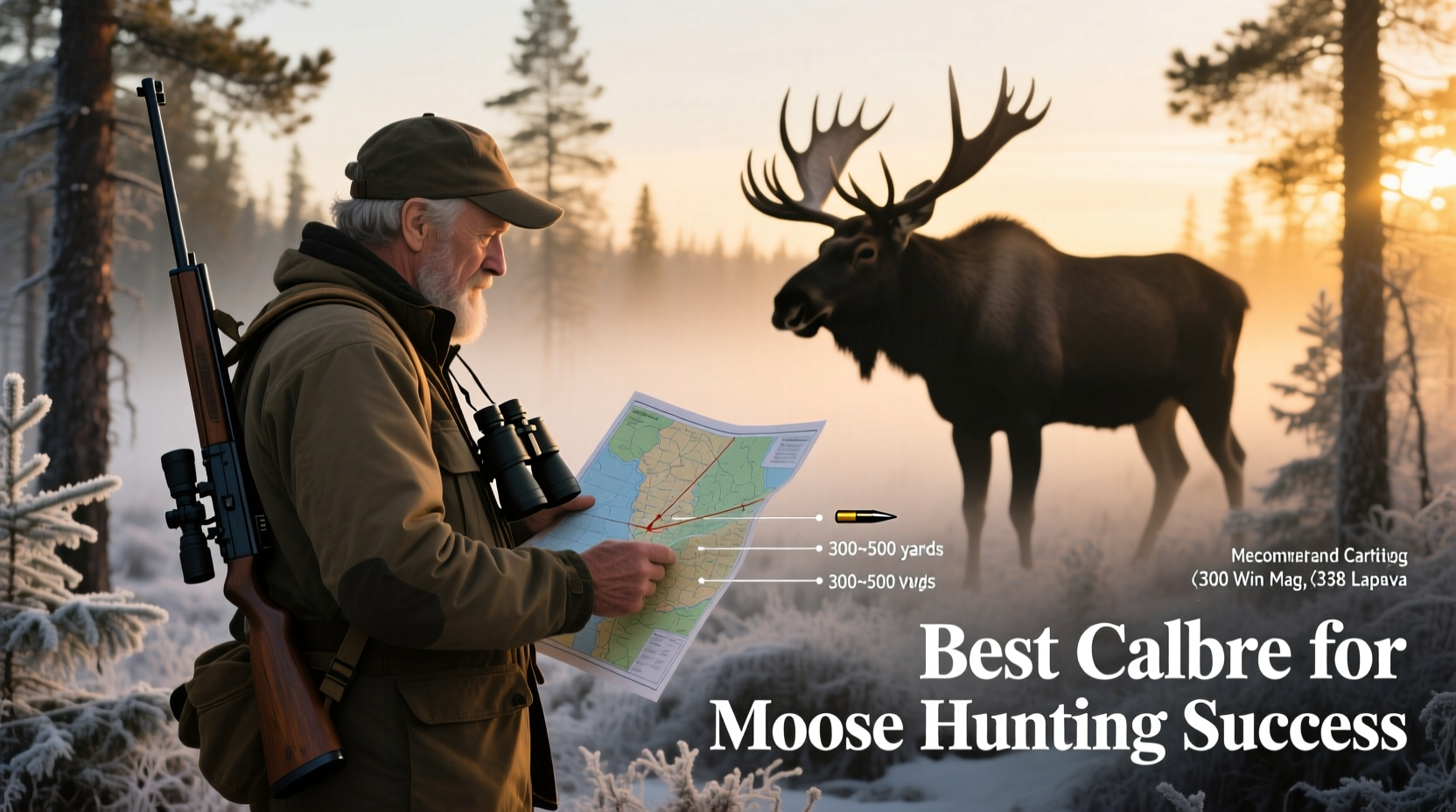
Moose can weigh between 800 and 1,500 pounds, with bulls sometimes exceeding 1,600 pounds. Their shoulder structure is broad, and their hide and muscle mass are exceptionally dense. A bullet must penetrate deeply to reach vital organs, particularly when shots are taken at awkward angles or through heavy brush.
Effective calibres must deliver sufficient kinetic energy—at least 2,500 foot-pounds at the point of impact—to ensure rapid incapacitation. Shot placement remains paramount: heart-lung shots are preferred, but shoulder hits may be necessary in thick cover. This means calibres with strong bone-breaking capability and deep expansion are essential.
“Moose aren’t just big deer. You need a round that can punch through muscle, bone, and hide without deflection. Marginal calibres lead to wounded animals and lost hunts.” — Lars Jensen, Alaskan Hunting Guide with 30+ years of experience
Top Calibres for Moose: Performance Comparison
Not all rifle cartridges are created equal when it comes to moose hunting. Below is a detailed comparison of the most trusted calibres, evaluated on key performance metrics.
| Calibre | Typical Bullet Weight (grains) | Muzzle Energy (ft-lbs) | Effective Range (yards) | Recoil Level | Best Use Case |
|---|---|---|---|---|---|
| .30-06 Springfield | 150–180 | 2,900 | 300–400 | Moderate | All-around versatility; excellent availability |
| .300 Winchester Magnum | 180–200 | 3,700 | 400–500 | High | Long-range shots; mountainous terrain |
| 7mm Remington Magnum | 160–175 | 3,300 | 400–500 | High | Flatter trajectory; lighter recoil than .300 Win Mag |
| .338 Winchester Magnum | 200–250 | 4,000+ | 300–400 | Very High | Heavy penetration; extreme conditions |
| .375 H&H Magnum | 270–300 | 4,500 | 300–400 | Extreme | Alaska/Yukon; dangerous game backup |
The .30-06 remains a top choice due to its proven track record, wide ammunition selection, and manageable recoil. However, hunters in Alaska or northern Canada—where shots may stretch beyond 400 yards or involve adverse weather—often opt for magnum rounds like the .300 Win Mag or .338 Win Mag for added reach and retained energy.
Tip: Always use premium controlled-expansion bullets (e.g., Nosler Partition, Barnes TSX, Swift A-Frame) for moose—they retain weight and penetrate deeply even at high velocities.Real-World Scenario: A Successful Backcountry Harvest
In the Yukon wilderness, experienced hunter Maria Thompson took a 320-yard shot on a mature bull moose through light timber. She was using a .300 Winchester Magnum loaded with 180-grain bonded bullets. Despite a slight branch deflection, the bullet penetrated both shoulders and exited cleanly, dropping the animal within 20 yards.
\"I’ve used the .30-06 before, but in that situation, I needed the extra velocity and wind-bucking ability,\" Maria said. \"The .300 Win Mag held its energy through the brush and delivered enough punch to ensure a quick, humane kill. I wouldn’t hesitate to use it again.\"
This case illustrates how environmental factors—distance, obstacles, and weather—can tip the balance toward higher-powered calibres, even when smaller rounds might technically suffice under ideal conditions.
Step-by-Step: Choosing Your Ideal Moose Calibre
Selecting the right calibre isn’t just about ballistics—it’s about matching your firearm to your physical capabilities, hunting style, and environment. Follow this sequence to make an informed decision:
- Assess your typical hunting terrain. Are you stalking in thick boreal forests or glassing open tundra? Shorter ranges favor moderate calibres; longer shots require flatter-shooting magnums.
- Evaluate your rifle handling comfort. Can you shoot a .338 Win Mag accurately off-hand? Excessive recoil leads to flinching and missed shots.
- Consider ammunition availability. In remote areas, reloading may be necessary. The .30-06 has widespread commercial support, while some magnums require handloading.
- Test terminal ballistics. Review gel tests or barrier penetration data for your chosen bullet type—especially if hunting in brush-heavy zones.
- Practice extensively. Zero your rifle at multiple distances and simulate real-world shooting positions (kneeling, off sticks).
Common Mistakes Hunters Make with Calibre Selection
- Underestimating the animal. Using deer-sized calibres like .270 or .243 on moose risks inadequate penetration and non-fatal wounds.
- Prioritizing flat trajectory over energy. A fast 7mm bullet may shoot flat, but it won’t match the frontal area and momentum of a .30-caliber or larger.
- Ignoring recoil management. Even the best calibre is useless if you can’t shoot it accurately under pressure.
- Overlooking bullet construction. Lightweight, rapidly expanding bullets often fail to reach vitals on large, tough animals.
Frequently Asked Questions
Can I use a .308 Winchester for moose hunting?
Yes, but with caveats. The .308 is effective within 250 yards and with proper shot placement using 180-grain premium bullets. However, it lacks the long-range energy of larger calibres and is less forgiving of suboptimal shots. Many Canadian provinces allow it, but it's not ideal for open-country or mountain hunting.
Is the 6.5 Creedmoor suitable for moose?
While ballistically efficient and accurate, the 6.5 Creedmoor fires relatively light bullets (140 grains typically) with limited frontal diameter. Most experts advise against it for ethical moose hunting, especially in dense woods or at extended ranges. It excels on deer but falls short on the largest cervids.
What’s the minimum recommended energy for moose?
Most professionals recommend at least 2,500 ft-lbs of energy at the target. This ensures adequate penetration through muscle and bone. Cartridges falling below this threshold risk poor performance, even with perfect shot placement.
Final Checklist Before the Hunt
- ☑ Calibre delivers ≥2,500 ft-lbs at expected range
- Verify with ballistic charts or chronograph testing.
- ☑ Rifle is sighted in and familiar
- You should be able to place five shots within 3 inches at 200 yards consistently.
- ☑ Ammunition features bonded or partitioned bullets
- Avoid full-metal jackets or frangible designs meant for varmints.
- ☑ You’ve practiced in field conditions
- Shooting off rests, from prone, and in cold, windy weather builds confidence.
- ☑ Gear matches your calibre choice
- Carry extra ammo, cleaning kit, and know how to handle recoil-induced scope cuts.
Conclusion: Confidence Starts with the Right Round
Choosing the best calibre for moose hunting isn’t about chasing the biggest number—it’s about matching power, precision, and practicality to your specific hunt. Whether you opt for the time-tested reliability of the .30-06 or the long-range dominance of the .300 Win Mag, what matters most is consistency, preparation, and respect for the animal.
An ethical harvest begins long before the trigger is pulled. Invest time in understanding ballistics, practicing marksmanship, and selecting a cartridge that gives you confidence in the backcountry. When the moment arrives, you’ll know you’re equipped—not just with the right gun, but with the right calibre for true moose hunting success.
💬 Have a moose calibre story or tip to share? Join the conversation—comment below and help fellow hunters make informed, responsible choices in the field.








