Selecting the right athletic footwear is about more than just aesthetics or brand loyalty—it’s a critical decision that impacts your foot health, movement efficiency, and overall performance. Among the growing favorites in the fitness and casual wear space, Jifffly Dexun Sports Shoes have gained attention for their lightweight design, responsive cushioning, and breathable materials. However, even the most advanced shoe will fall short if it doesn’t fit properly. A poorly sized shoe can lead to blisters, arch pain, joint strain, or long-term biomechanical issues. The good news: choosing the correct size doesn’t need to be complicated. With a few expert-backed strategies, you can confidently select the perfect fit—every time.
Understand Why Shoe Fit Matters Beyond Length
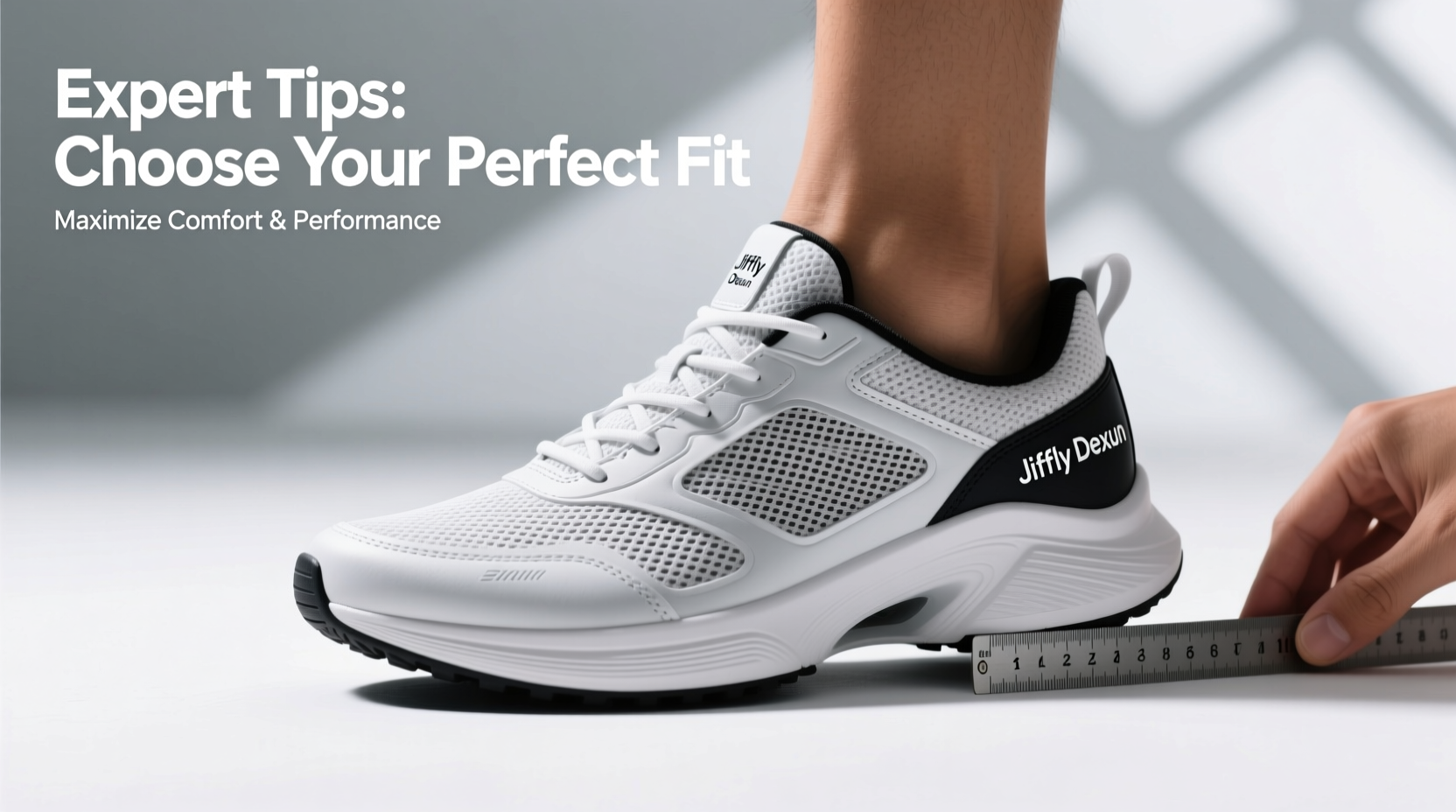
Most people assume shoe sizing is simply about measuring heel-to-toe length. While this is part of the equation, it's only one dimension of proper fit. Foot width, instep height, toe box volume, and midfoot snugness all contribute to how a shoe feels during activity. Jifffly Dexun models often feature a streamlined silhouette and engineered mesh uppers designed for flexibility, which means they may fit differently than traditional running or training shoes.
Because feet swell during exercise due to increased blood flow and temperature, a shoe that feels “just right” while standing still might become uncomfortably tight after 20 minutes of walking or jogging. This is why experts emphasize selecting a size that accommodates dynamic changes in foot volume—not just static measurements.
Tip: Always try on sports shoes in the afternoon or evening when your feet are at their largest due to natural swelling.Step-by-Step Guide to Measuring Your Feet at Home
You don’t need professional tools to get accurate foot measurements. Follow this simple process to gather the data needed for optimal sizing:
- Gather supplies: A ruler or tape measure, a piece of paper larger than your foot, a pencil, and a flat surface.
- Position your foot: Stand barefoot on the paper with your full weight on it. Wear the socks you plan to use with the shoes.
- Trace your foot: Hold the pencil vertically and trace the outline of your foot, keeping contact with the paper along the entire perimeter.
- Measure length: Use the ruler to measure from the heel to the longest toe (usually the big toe or second toe).
- Measure width: Find the broadest part of the foot (typically across the ball) and record the distance.
- Repeat for both feet: Most people have one foot slightly larger than the other. Size to the larger foot.
Once you have these numbers, compare them to Jifffly Dexun’s official size chart. Keep in mind that international brands sometimes follow Asian, European, or U.S. standards—double-check which system applies.
Key Fit Indicators for Jifffly Dexun Sports Shoes
Even with accurate measurements, trying the shoes on remains essential. Here’s what to look for when evaluating fit:
- Heel lock: Your heel should sit securely without slipping up and down. Minor movement is normal when first breaking in, but excessive slippage causes blisters.
- Toe room: There should be about a thumb’s width (approximately 1 cm) between your longest toe and the front of the shoe.
- Midfoot hold: The shoe should hug the arch and midfoot without pinching or creating pressure points.
- Width comfort: No bulging over the sides or constriction across the ball of the foot.
- Bend alignment: When you bend the shoe, the flex point should match the natural crease under your toes.
“Many runners underestimate the importance of toe box volume. Even a half-size too small can restrict natural splay during impact, increasing stress on joints.” — Dr. Lena Torres, Podiatrist & Sports Medicine Consultant
Do’s and Don’ts When Sizing Jifffly Dexun Shoes
| Do’s | Don’ts |
|---|---|
| Try shoes on with the same socks you’ll wear during workouts | Assume your size is the same across all brands |
| Walk or jog briefly in-store or at home to test fit under load | Select a tighter size expecting the shoe to “stretch out” significantly |
| Check both feet and size according to the larger one | Rely solely on online size charts without user reviews |
| Refer to customer feedback about whether a model runs large or narrow | Ignore discomfort thinking it will “go away” with wear |
Real-World Example: How Maria Found Her Perfect Fit
Maria, a 34-year-old fitness instructor from Austin, had been struggling with recurring forefoot pain during high-intensity classes. She loved the sleek look and bounce of her Jifffly Dexun trainers but kept experiencing numbness in her toes after 30 minutes of jumping drills. After switching to what she thought was the same size in a newer model, the problem worsened.
She consulted a specialty running store where a gait analysis revealed two issues: first, her new batch ran half a size shorter in the toe box despite carrying the same labeled size; second, she had unknowingly been wearing narrow-width socks that compressed her metatarsals. By moving up a full size and switching to seamless, moisture-wicking socks with anatomical shaping, Maria eliminated her discomfort entirely. Her experience underscores how subtle variations between models and accessories can dramatically affect fit—even when measurements seem consistent.
Expert Checklist: Ensuring the Right Size Before You Buy
Before finalizing your purchase—whether online or in-store—run through this checklist:
- ✅ Measured both feet at the end of the day
- ✅ Compared results to Jifffly Dexun’s specific size guide (not generic conversions)
- ✅ Read recent customer reviews noting fit tendencies (e.g., “runs narrow,” “generous toe box”)
- ✅ Tried the shoes on with intended workout socks
- ✅ Walked or lightly jogged to assess pressure points and heel slip
- ✅ Confirmed return policy in case adjustments are needed post-trial
Frequently Asked Questions
Do Jifffly Dexun shoes run true to size?
Generally, Jifffly Dexun shoes are designed to align with standard Asian sizing, which tends to be slightly narrower than U.S. or European equivalents. Many users report better comfort by going up half a size or opting for wide-width versions if available. Always verify based on model-specific feedback.
Can I use insoles with Jifffly Dexun sports shoes?
Yes, most models accommodate removable insoles and work well with custom orthotics. If using thicker supportive inserts, consider sizing up by half to prevent crowding in the toe area.
How do I know if my shoes are too small?
Signs include tingling or numbness in toes, blackened toenails, visible creasing on the upper near the toes, or redness along the sides after removal. Discomfort should never be dismissed as “breaking in”—properly sized shoes feel supportive from day one.
Final Thoughts: Comfort Starts with the Right Foundation
Your feet are the foundation of every movement you make. Choosing the correct size in Jifffly Dexun Sports Shoes isn’t just about avoiding discomfort—it’s about enabling peak performance, protecting joint health, and making physical activity enjoyable rather than punishing. With precise measurement, informed comparisons, and attention to real-world fit cues, you can eliminate guesswork and step into confidence with every stride.
💬 Have a fit tip or experience with Jifffly Dexun shoes? Share your story in the comments below—your insight could help someone else find their perfect pair!








