
Camping offers a rare chance to disconnect from daily routines and reconnect with nature. But one of the most common mistakes campers make is bringing too much. Overpacking doesn’t just add physical weight—it increases setup time, complicates decision-making, and often leads to unused gear cluttering your campsite. The key to a successful weekend trip lies not in how much you bring, but in how thoughtfully you choose what to pack.
A minimalist approach ensures mobility, comfort, and ease. With careful planning, it’s entirely possible to enjoy warmth, safety, and convenience without lugging around a backpack full of unnecessary items. This guide breaks down exactly what you need—and what you can leave behind—for a smooth, enjoyable two-day outdoor experience.
Why Less Really Is More on a Weekend Trip
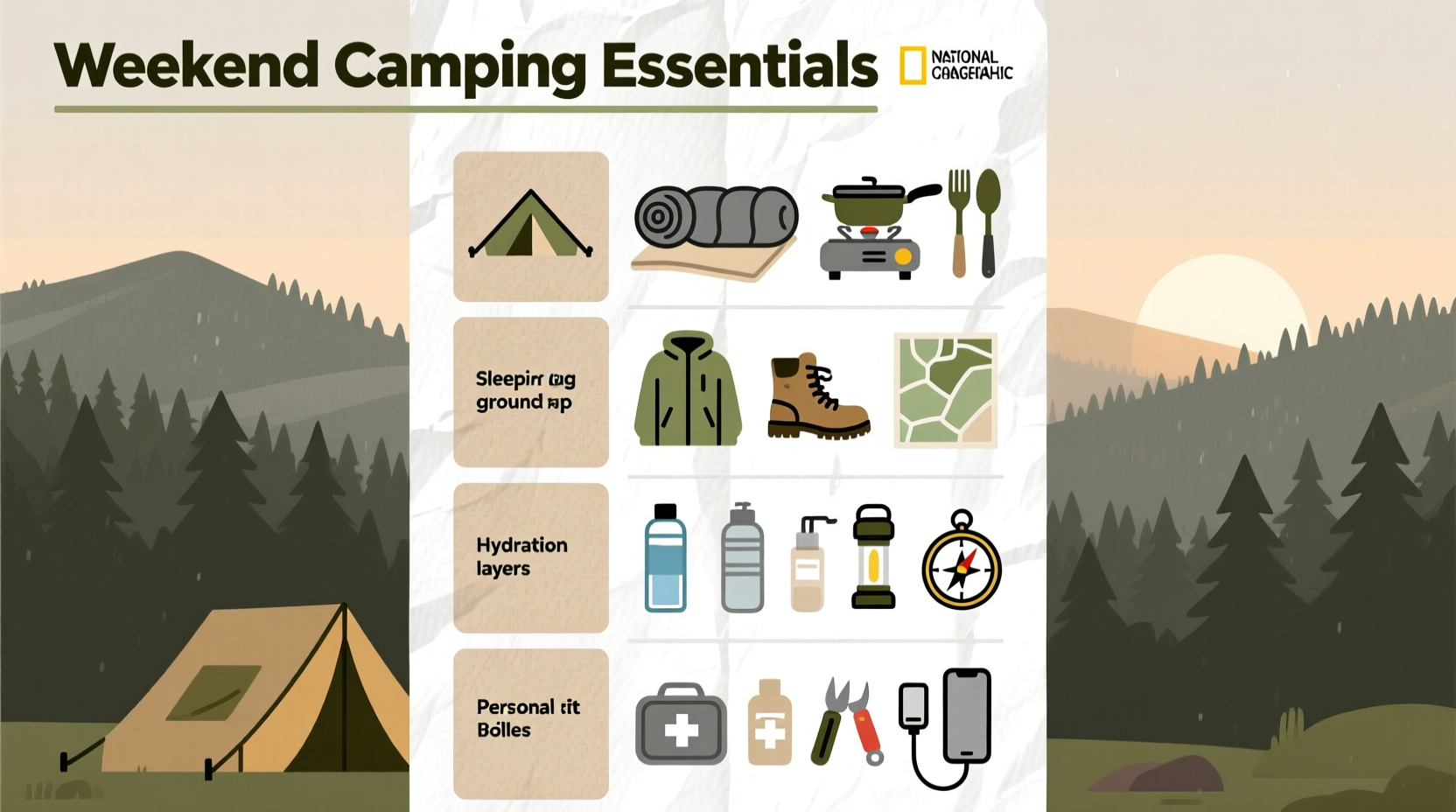
Weekend trips are short by design. You’re not trekking across mountain ranges or surviving off-grid for weeks. Most destinations are within a few hours’ drive, and trails are moderate. That means your gear should reflect the duration and conditions—not an exaggerated sense of preparedness.
Overpacking often stems from fear: fear of cold, rain, hunger, or discomfort. But experience shows that preparation isn’t about quantity—it’s about quality and relevance. Carrying extra clothes “just in case” only works against you when every pound adds strain to your shoulders and limits your agility.
“Efficiency in the backcountry starts with ruthless editing. If it doesn’t serve a core function, it doesn’t earn space in your pack.” — Daniel Reyes, Outdoor Educator and Appalachian Trail Guide
The average camper brings 30–40% more than necessary. By focusing on multi-use items, compact designs, and accurate weather forecasts, you can cut that excess while improving your overall experience.
Core Categories: What You Actually Need
To build a smart packing list, break your needs into six essential categories: shelter, sleep system, cooking, clothing, personal essentials, and food. For each, prioritize lightweight, durable, and functional options.
1. Shelter & Sleep System
This is typically the heaviest part of your load, so optimizing here has the biggest impact. A weekend trip rarely requires heavy-duty winter gear unless you're going to high elevations or traveling in colder months.
- Tent: Choose a lightweight two-person tent even if camping solo—it offers extra room for gear and comfort.
- Sleeping bag: Rated for the expected low temperature, preferably compressible synthetic or down-fill.
- Sleeping pad: Inflatable or foam; provides insulation from the ground and cushioning.
- Pillow (optional): A small inflatable version or stuff sack filled with clothes.
2. Cooking & Hydration
You won’t be preparing elaborate meals, so keep cooking simple. Focus on fuel efficiency and cleanup time.
- Stove: Compact backpacking stove with fuel canister.
- Pot: One lightweight pot (0.8–1.5L) for boiling water and cooking meals.
- Utensils: Spork or collapsible spoon, plus a small knife.
- Mug/cup: Insulated mug helps retain heat and doubles as a measuring cup.
- Water filtration: Pump, gravity filter, or purification tablets—never rely solely on boiling.
- Water bottles/reservoir: Two liters capacity minimum.
3. Clothing: The Layering Principle
Dress for variable conditions using a three-layer system: base, mid, and outer. Avoid cotton—it retains moisture and loses insulation when wet.
| Layer | Purpose | Recommended Items |
|---|---|---|
| Base | Moisture-wicking | Merino wool or synthetic top and bottom |
| Mid | Insulation | Fleece jacket or lightweight puffy |
| Outer | Weather protection | Waterproof breathable jacket and pants |
| Extras | Comfort & hygiene | One camp shirt, one pair of hiking socks (plus one spare), underwear (2–3 pairs) |
Bring only what you’ll realistically wear. Nighttime temps may drop, but a good sleeping bag reduces the need for extra clothing layers in bed.
4. Personal Essentials
Hygiene and health items are non-negotiable, but they don’t need to take up much space.
- Toiletries: Toothbrush, biodegradable toothpaste, small soap, hand sanitizer
- Medications: Any prescriptions, allergy meds, pain relievers
- First aid kit: Bandages, antiseptic wipes, blister treatment, tweezers
- Sun protection: Sunglasses, sunscreen, lip balm with SPF
- Insect repellent: Especially important in wooded or lakeside areas
- Headlamp or flashlight: With spare batteries
- Firestarter: Waterproof matches or lighter in a sealed bag
5. Food Strategy: Lightweight and Nutrient-Dense
Plan for two breakfasts, two lunches, two dinners, and snacks. Dehydrated meals save weight and simplify cooking.
- Breakfast: Oatmeal with dried fruit, instant coffee or tea
- Lunch: Tortillas with peanut butter, jerky, energy bars, trail mix
- Dinner: Freeze-dried meal or ramen with added protein (tuna pouch or dehydrated beans)
- Snacks: Nuts, chocolate, granola bars, dried fruit
Avoid bulky packaging. Repackage food into ziplock bags to reduce waste and save space. Always pack out all trash.
Smart Packing: A Step-by-Step Preparation Timeline
Don’t wait until Friday night to start packing. Follow this timeline to stay organized and stress-free.
- 7 Days Before: Check the weather forecast and finalize your clothing choices. Confirm reservations and permits.
- 5 Days Before: Inventory your gear. Borrow or replace anything missing. Pre-measure fuel needs for your stove.
- 3 Days Before: Repackage food, label bags, and charge headlamp batteries. Clean and dry any used gear like sleeping bags.
- 1 Day Before: Pack everything except perishables. Lay it out and do a “dry run” with your backpack.
- Morning of Departure: Add fresh items (e.g., fruit, yogurt), double-check keys, phone, ID, and emergency contacts.
This method prevents last-minute panic and gives you time to test equipment, like ensuring your stove ignites properly.
Common Overpacking Traps (And How to Avoid Them)
Even experienced campers fall into these habits. Recognizing them helps you pack smarter.
| Overpacked Item | Why It’s Unnecessary | Better Alternative |
|---|---|---|
| Multiple pairs of jeans or cotton shirts | Cotton absorbs sweat, dries slowly, and adds weight | One quick-dry hiking outfit |
| Full-size toiletries | Takes up space and risks spills | Travel-sized containers in a leak-proof bag |
| Books or multiple electronics | Rarely used; drains battery life | One e-reader or audiobook on phone |
| Extra shoes (dress shoes, sandals, boots) | One sturdy pair of hiking shoes suffices | Hiking shoes + camp sandals (optional) |
| Large cooler or heavy cookware | Impractical for backpacking or car camping efficiency | Compact stove and reusable utensils |
Ask yourself: “Have I used this on every past trip?” If not, it probably doesn’t belong.
Real Example: From Chaos to Clarity
Mark, a first-time camper, initially packed a 70-liter backpack for a two-night trip in the Smoky Mountains. His list included three jackets, five pairs of socks, two books, a portable speaker, and a full kitchen set—including a frying pan and spice rack. After consulting a park ranger, he trimmed his load significantly.
He kept his tent, sleeping bag, and stove—but downsized to one insulated jacket, two pairs of socks, and a single spice packet (everything bagel seasoning). He left the speaker behind and brought only a spork and collapsible cup. The result? He hiked farther, set up camp faster, and didn’t miss a single item.
“I thought I was being thorough,” Mark said later. “But I was just anxious. Once I realized how little I actually needed, camping felt liberating instead of exhausting.”
Minimalist Checklist: Your Weekend Camping Essentials
Use this concise checklist to ensure nothing critical is forgotten—and nothing extra is added.
- Tent with stakes and footprint
- Sleeping bag (season-appropriate rating)
- Sleeping pad
- Backpacking pillow (or stuff sack alternative)
- Backpack (40–50L for car camping, 30–40L for hiking)
- Lightweight stove and fuel
- Cooking pot and lid
- Utensil (spork or spoon)
- Insulated mug and bowl (optional)
- Water filter or purification method
- Two water containers (bottles or reservoir)
- Base layer (top and bottom)
- Hiking pants or shorts
- Wool or synthetic socks (1–2 pairs)
- Insulating mid-layer (fleece or puffy jacket)
- Rain jacket and pants
- Camp shoes or sandals (optional)
- Underwear (2–3 pairs)
- Quick-dry camp shirt
- Toiletries in resealable bag
- Toothbrush and paste
- Sunscreen and lip balm
- Insect repellent
- First aid kit
- Headlamp with spare batteries
- Firestarter (matches/lighter)
- Multi-tool or pocket knife
- Map and compass (or GPS device)
- Emergency whistle
- Food for 2 days (pre-packed)
- Trash bag (pack it out!)
- Phone and portable charger
Stick strictly to this list unless conditions demand otherwise (e.g., snow, extreme wind). Every additional item should have a clear, justified purpose.
FAQ: Common Questions About Weekend Camping Packing
Do I really need a water filter if I’m near a stream?
Yes. Natural water sources often contain bacteria, parasites (like Giardia), or chemical runoff. Even clear water can be unsafe. A filter, purifier, or treatment tablets are essential for preventing illness.
Can I use my regular blanket instead of a sleeping bag?
No. Blankets don’t insulate effectively when compressed by body weight. Sleeping bags trap warm air in lofted material. Using a blanket can lead to dangerous heat loss, especially on cold nights.
Is it okay to share gear with a friend?
Absolutely—and encouraged. Share tents, stoves, water filters, and even food. Just ensure responsibilities are clear (who carries the stove? who refills water?) to avoid confusion.
Final Thoughts: Pack Light, Travel Free
The essence of camping lies in simplicity. When you strip away excess, you make room for what matters: crisp morning air, crackling fires, star-filled skies, and uninterrupted conversation. A well-curated packing list isn’t about deprivation—it’s about intentionality.
Every item you bring should earn its place. Ask: Does it keep me safe? Warm? Fed? If not, reconsider. Trust in preparation, not volume. The lightest pack is not the one with the fewest items, but the one where every item has a purpose.
💬 Ready to simplify your next trip? Print this list, customize it for your destination, and experience the freedom of smart, efficient camping. Share your own minimalist tips in the comments!








