Urban mobility is evolving rapidly, and with congested roads, rising fuel costs, and growing environmental awareness, city dwellers are rethinking how they get from point A to point B. Two popular options have emerged: electric scooters and folding bikes. Both promise convenience, affordability, and eco-friendliness—but which one truly delivers more value for daily city commuting?
The answer isn’t universal. It depends on your commute distance, storage space, physical fitness, local infrastructure, and personal preferences. This article breaks down the practicality of both options across key factors—portability, cost, maintenance, safety, and urban integration—so you can make an informed decision based on real-world use.
Portability and Storage: Getting Around Indoors and Outdoors
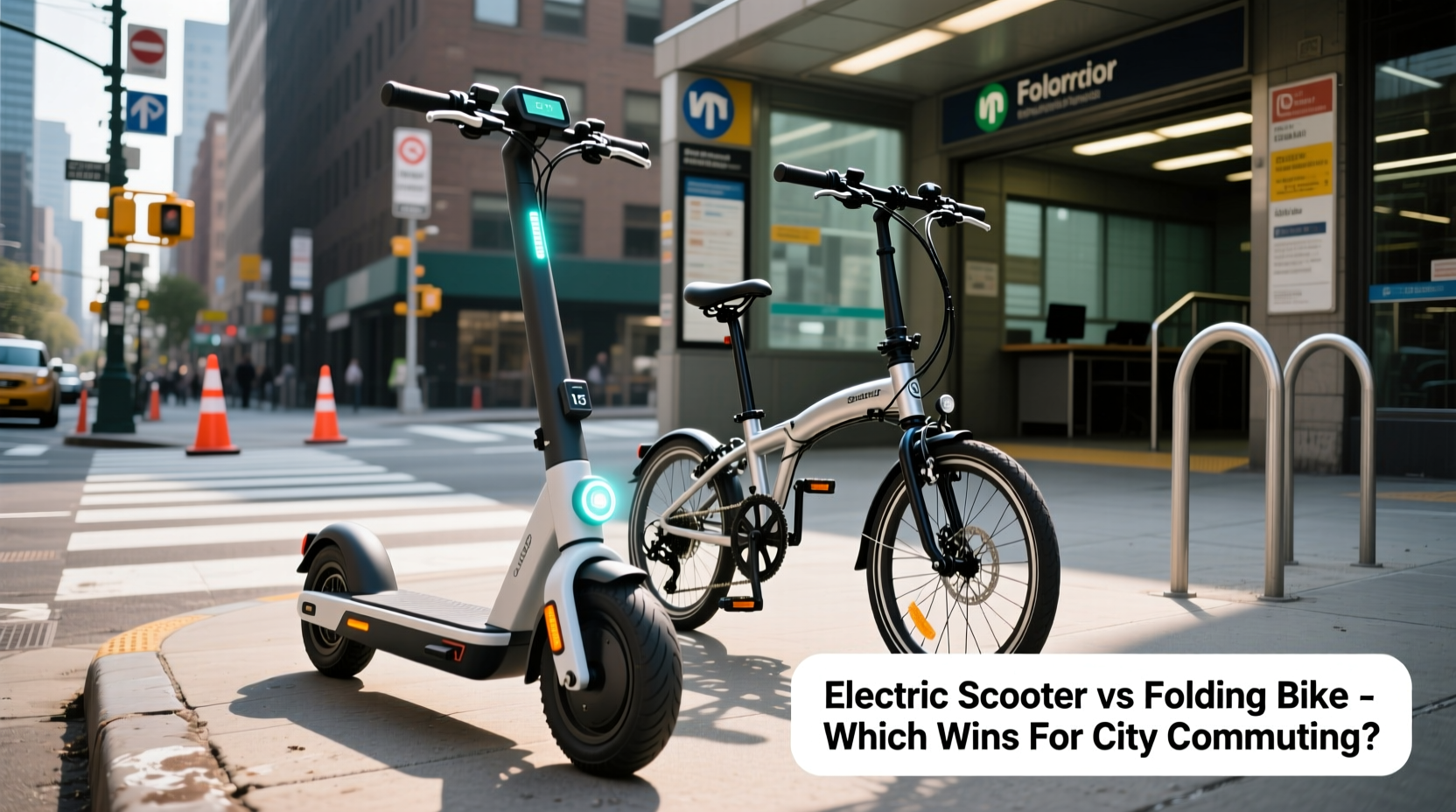
One of the biggest advantages of compact urban transport is the ability to move seamlessly between public transit, sidewalks, and indoor spaces like offices or apartments. Here, both electric scooters and folding bikes excel—but in different ways.
Folding bikes have been around longer and are designed with portability in mind. Most models fold into a package roughly the size of a large suitcase, making them manageable on buses, subways, and even under desks. However, they still weigh between 25–35 pounds, depending on materials and components, which can be taxing when climbing stairs or carrying long distances.
Modern electric scooters, by contrast, are lighter—many weigh between 20–30 pounds—and some high-end models fold with one hand. Their compact footprint makes them easier to stow in tight apartments or carry onto elevators. Unlike folding bikes, e-scooters don’t require pedals or chains to tuck away; their folding mechanism is often simpler and faster.
Tip: If you frequently switch between transit modes or live in a small apartment, prioritize weight and folding speed. Look for e-scooters under 25 lbs or carbon-fiber folding bikes.However, there’s a caveat: while folded bikes can sometimes be ridden in pedestrian zones where motorized devices are banned, e-scooters face legal restrictions in many cities. Always check local regulations before assuming you can ride or store either device freely.
Speed, Range, and Commute Efficiency
When it comes to covering ground quickly, performance metrics matter. Let’s compare average speeds, range, and real-world efficiency for typical city commutes (3–10 km).
| Metric | Folding Bike (Human-Powered) | Folding E-Bike | Electric Scooter |
|---|---|---|---|
| Average Speed | 12–16 km/h | 20–25 km/h | 20–28 km/h |
| Range per Charge/Charge Frequency | N/A | 50–100 km | 25–50 km |
| Hill Climbing Ability | Moderate (depends on rider strength) | Excellent (motor-assisted) | Fair to Good (varies by model) |
| Time to “Ready” State | Immediate | Unfold + power on (~30 sec) | Unfold + power on (~15 sec) |
For short trips under 5 km, electric scooters often win on time efficiency. They accelerate faster than bikes and require no physical exertion, meaning you arrive at work without sweating—a major advantage for professionals in formal attire.
Folding e-bikes offer greater range and stability, especially over uneven terrain or longer commutes. However, they tend to cost significantly more and are heavier, reducing portability. Traditional folding bikes rely entirely on rider effort, which may not suit everyone—especially those with physical limitations or hilly routes.
“E-scooters reduce perceived commute stress by eliminating physical strain and offering predictable travel times.” — Dr. Lena Torres, Urban Mobility Researcher, Institute for Sustainable Transport
Maintenance and Long-Term Costs
Initial purchase price is just one part of the equation. Long-term ownership involves maintenance, repairs, and potential replacement parts.
Folding bikes—especially non-electric models—are mechanically simple. Tires, chains, brakes, and gears wear over time but are generally inexpensive to replace. With proper care, a quality folding bike can last a decade or more. Brands like Brompton and Dahon have built reputations on durability and service networks.
Electric scooters introduce complexity: lithium-ion batteries degrade after 2–4 years, motors can fail, and suspension systems need attention. Replacement batteries alone can cost $150–$300. Puncture-resistant tires help, but most e-scooters use solid or semi-pneumatic tires that provide a harsher ride than proper bicycle tires.
Additionally, exposure to rain and temperature extremes affects e-scooter electronics. While many models claim water resistance, few are fully waterproof. Folding bikes, particularly steel-framed ones, tolerate weather better and are easier to clean and maintain at home.
Tip: Store your e-scooter indoors and wipe it down after wet rides. Avoid leaving it in direct sunlight or freezing temperatures to prolong battery life.Here’s a rough breakdown of five-year ownership costs:
- Folding Bike (non-electric): $800 (initial) + $200 (maintenance) = $1,000
- Folding E-Bike: $2,500 + $600 (battery replacement, brake pads, tune-ups) = $3,100
- Electric Scooter: $600 + $400 (battery, tire, controller issues) = $1,000
While e-scooters start cheaper, reliability varies widely by brand. Premium models like the Unagi Model One or Segway Ninebot Max offer better longevity but come closer to e-bike pricing.
Safety and Urban Integration
Safety is non-negotiable. Both options operate in shared spaces—bike lanes, sidewalks, and mixed traffic—which creates challenges.
E-scooters typically have smaller wheels (8–10 inches), making them less stable on potholes, gravel, or tram tracks. Riders sit or stand upright with minimal body protection, increasing injury risk in falls. A 2022 study by the National Highway Traffic Safety Administration found that e-scooter riders were 2.3 times more likely to sustain head injuries than cyclists, largely due to lower helmet usage.
Folding bikes, with larger wheels (16–20 inch) and lower centers of gravity, handle road irregularities better. Cyclists also tend to wear helmets more consistently. E-bikes further enhance control with pedal assist, allowing riders to maintain momentum without sudden throttle inputs.
Infrastructure plays a role too. Cities with extensive protected bike lanes—like Copenhagen, Amsterdam, or Utrecht—favor bikes. Others, such as Los Angeles or Austin, have embraced e-scooters through rental programs but lack safe riding corridors, leading to sidewalk riding and pedestrian conflicts.
Legally, regulations vary. In many European cities, e-scooters must stay below 25 km/h and are prohibited on sidewalks. In parts of Asia, they’re banned outright. Folding bikes face fewer restrictions and can often be taken on trains during peak hours, unlike motorized devices.
Mini Case Study: Maria’s Morning Commute in Berlin
Maria works in central Berlin and lives 4.5 km from her office. Her route includes a subway ride and two flights of stairs at each end. Initially, she used a shared e-scooter service. It was fast and fun, but rainy days left her soaked, and the scooters weren’t always available.
She switched to a Brompton folding bike. Though slower, it gave her reliable access every day. She could ride to the station, fold it in under a minute, take it on the U-Bahn, and ride the last kilometer to work. No charging, no fines, and no dependency on app availability. After six months, she reported feeling fitter and more in control of her commute.
Her only regret? The initial cost—€1,500—but she expects it to last over a decade with basic servicing.
Choosing What Works for You: A Practical Checklist
Still unsure which option suits your lifestyle? Use this checklist to guide your decision.
Choose an Electric Scooter if:
- Your commute is under 6 km
- You want zero physical exertion
- You have easy indoor charging access
- Your city allows sidewalk parking or has dedicated micro-mobility lanes
- You prioritize quick setup and lightweight design
Choose a Folding Bike if:
- You commute regularly in all weather conditions
- You value mechanical simplicity and repairability
- You already know how to ride a bike
- You take public transit as part of your journey
- You prefer long-term durability over instant convenience
Frequently Asked Questions
Can I take an electric scooter on public transit?
It depends on local rules. In cities like London and Paris, folded e-scooters are allowed on buses and subways outside peak hours. In New York City, privately owned e-scooters are illegal on all public transit and most streets. Always verify with your transit authority.
Are folding bikes harder to ride than full-size bikes?
Not significantly. Modern folding bikes are engineered for stability and comfort. Smaller wheels may feel slightly twitchier, but geometry improvements and suspension options have minimized differences. Many users adapt within a few rides.
Do electric scooters need insurance?
In most countries, private e-scooters do not require insurance, but liability coverage is recommended. In Germany, for example, e-scooters must have third-party liability insurance (haftpflichtversicherung), similar to bicycles. Check your national and municipal laws before riding.
Final Verdict: Which Is More Practical?
The most practical choice hinges on your definition of \"practical.\"
If practical means **low effort, fast deployment, and minimal physical demand**, then an electric scooter wins—especially for short, predictable commutes in scooter-friendly cities. It’s ideal for tech workers, gig economy riders, or anyone looking to minimize time and energy spent traveling.
If practical means **reliability, longevity, all-weather usability, and seamless integration with existing infrastructure**, then a folding bike—particularly a non-electric model—is superior. It requires more effort but offers greater resilience, lower lifetime cost, and fewer regulatory hurdles.
For maximum flexibility, some commuters own both: using the e-scooter in dry weather for speed, and the folding bike as a backup during winter or when charging isn’t possible.
🚀 Ready to simplify your city commute? Test both options—rent a scooter for a week and borrow a folding bike from a friend. Real-world experience beats speculation. Share your findings in the comments and help others choose wisely!








