Whether tracking wildlife across a canyon, scanning distant peaks on a hiking trail, or watching a bird glide through the sky at dusk, having the right pair of binoculars can transform your experience. Zoom binoculars offer adjustable magnification, giving users flexibility in how closely they view distant objects. Unlike fixed-magnification models, these versatile tools adapt to different environments—bringing faraway details into crisp focus without switching devices. But not all zoom binoculars deliver equal performance. Choosing the right one requires understanding optics, build quality, and real-world usability.
Why Zoom Binoculars Matter for Outdoor Enthusiasts
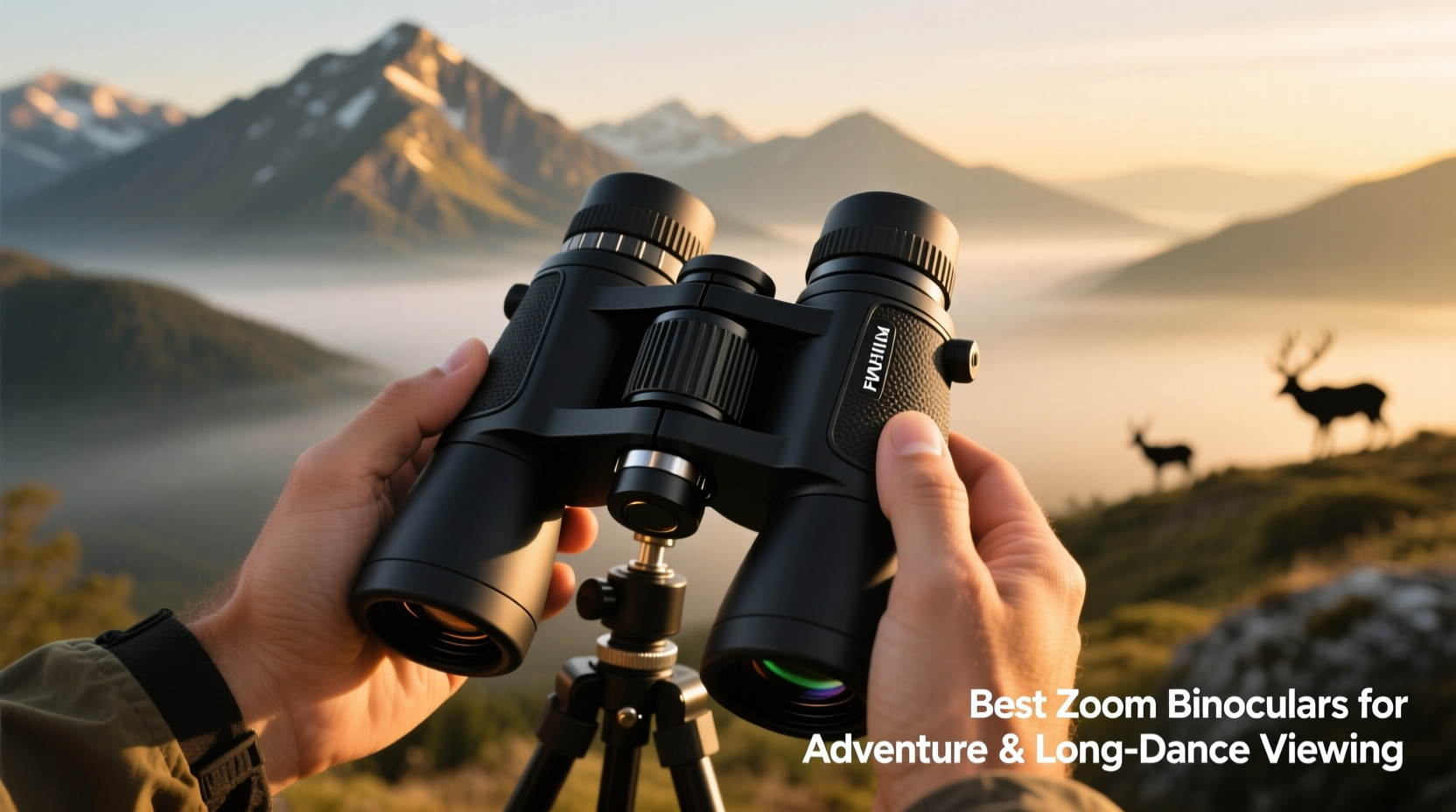
Zoom binoculars stand out because of their variable magnification range—typically from 8x to 24x or higher. This allows users to start with a wide field of view for general scanning and then \"zoom in\" for detailed observation. For birdwatchers, hunters, boaters, and hikers, this adaptability is invaluable when conditions change rapidly.
However, increased zoom capability comes with trade-offs. Higher magnification amplifies hand movement, making image stabilization more critical. Additionally, as magnification increases, light transmission often decreases, which can impact clarity in low-light settings such as dawn or dusk.
“Zoom binoculars are ideal for dynamic environments where both broad context and fine detail matter—but only if optical quality keeps pace with magnification.” — Dr. Alan Reeves, Optical Engineer and Field Gear Consultant
Key Features to Look for in High-Performance Zoom Binoculars
Selecting the best zoom binoculars involves evaluating several technical and ergonomic factors. Understanding these elements ensures you invest in a tool that performs reliably under real-world conditions.
Magnification and Objective Lens Size
The first number (e.g., 10–22x) indicates the zoom range; the second (e.g., 50mm) refers to the diameter of the objective lens. Larger lenses gather more light, improving visibility in dim conditions. A model labeled 10–22x50 offers better low-light performance than a 8–24x40, even though the latter has higher maximum zoom.
Optical Coatings and Prism Type
High-quality anti-reflective coatings increase light transmission, resulting in brighter, clearer images. Look for fully multi-coated lenses, which apply multiple layers across all air-to-glass surfaces. Most modern zoom binoculars use roof prisms due to their compact design, but premium models include phase-correction coatings to preserve image sharpness.
Durability and Weather Resistance
Outdoor use demands rugged construction. Nitrogen-purged, waterproof models resist fogging and moisture damage. Rubber armor provides shock absorption and improves grip in wet or cold conditions.
Eyecup Design and Focus System
Twist-up eyecups accommodate eyeglass wearers by adjusting eye relief. A central focusing wheel should be smooth and precise, with a diopter adjustment for fine-tuning one barrel to match individual vision differences.
Tip: Always test the focus mechanism before purchasing. A stiff or imprecise knob can make tracking moving subjects frustrating.Top-Rated Zoom Binoculars for Adventure Use
The following models represent the best balance of optical performance, durability, and value for adventurers who demand clarity at long distances.
| Model | Magnification | Objective Lens | Key Features | Best For |
|---|---|---|---|---|
| Nikon Action EX Zoom 10-22x50 | 10–22x | 50mm | Fully multi-coated lenses, lightweight chassis, comfortable grip | Birdwatching, hiking |
| Vortex Optics Diamondback HD Zoom 12-40x60 | 12–40x | 60mm | HD glass, rubber armor, tripod adaptable | Long-range surveillance, marine use |
| Bushnell Legend Ultra HD Zoom 15-45x65 | 15–45x | 65mm | ED Prime glass, RainGuard HD coating, IPX7 waterproof | Hunting, mountain observation |
| Celestron SkyMaster 15-45x70 | 15–45x | 70mm | Large aperture, high magnification, includes tripod | Astronomy, stationary viewing |
| Swarovski CL Curio Zoom 10-30x40 | 10–30x | 40mm | Premium build, exceptional color fidelity, compact | Luxury travel, close-to-mid range detail |
Note: While higher magnifications may seem superior, practical usability drops significantly above 30x without image stabilization or tripod support. Handheld stability becomes a limiting factor.
Step-by-Step Guide to Choosing and Using Your Zoom Binoculars
Follow this timeline to ensure optimal selection, setup, and field use:
- Define your primary use case: Are you observing birds at moderate distances or scanning horizons from a ridge? Match the magnification range accordingly.
- Set a realistic budget: Premium optics cost more, but mid-tier models like Nikon and Vortex offer excellent performance under $500.
- Test ergonomics: Hold sample units if possible. Weight distribution, button placement, and focus wheel location affect comfort during extended use.
- Adjust the diopter: Close your right eye, focus on a distant object with the left barrel using the center wheel. Then close your left eye, adjust the right barrel via the diopter ring until sharp.
- Use a tripod for high zoom: Above 25x, even slight hand tremors blur the image. A mini tripod or window mount stabilizes the view.
- Maintain your optics: Clean lenses with a microfiber cloth and lens-safe solution. Store in a dry place with silica gel packs to prevent internal fogging.
Real-World Example: Tracking Eagles in the Rockies
During a wildlife expedition in Colorado’s Front Range, biologist Maria Tran used her Bushnell Legend Ultra HD 15-45x65 to monitor a nesting pair of golden eagles. From a safe distance of nearly 800 meters, she started at 15x to locate the nest on a cliff face. After pinpointing the site, she slowly increased magnification to 30x to observe feeding behavior and chick development. The ED glass preserved edge-to-edge clarity, and the waterproof housing protected against sudden afternoon storms. “Without zoom capability,” she noted, “I’d have needed multiple devices or risked disturbing the birds by moving closer.”
Common Pitfalls and How to Avoid Them
- Overestimating handheld stability: Even experienced users struggle to keep high-zoom views steady. Use lower magnifications when tracking fast-moving animals.
- Neglecting exit pupil size: Exit pupil = objective lens / magnification. At 20x on a 50mm binocular, it’s just 2.5mm—too small for comfortable viewing in low light.
- Ignoring weight: Larger zoom binoculars can exceed 900g. Consider neck strain during full-day outings.
- Skipping diopter calibration: Uncalibrated barrels cause eye fatigue and perceived blurriness, often mistaken for poor optics.
Frequently Asked Questions
Are zoom binoculars as sharp as fixed-power models?
In general, fixed-magnification binoculars offer slightly better optical consistency because they’re optimized for a single power. However, top-tier zoom models with ED glass and advanced coatings now rival fixed lenses in clarity across most of their range.
Can I use zoom binoculars for stargazing?
Yes, especially larger models like the Celestron SkyMaster 15-45x70. However, they require a tripod and perform best under dark skies. They’re excellent for lunar observation and bright celestial objects but lack the light-gathering ability of telescopes.
Do I need image stabilization in zoom binoculars?
For magnifications above 20x, yes—especially if handheld use is essential. Some high-end brands offer built-in stabilization, but these models are heavier and significantly more expensive. For most users, a lightweight tripod is a more practical solution.
Final Thoughts: Elevate Your View, Enhance Your Adventure
The right zoom binoculars do more than bring distant scenes closer—they deepen your connection to the natural world. Whether you're deciphering trail markers across a valley or identifying raptor species by wing shape, clarity and reliability matter. Prioritize optical quality over maximum zoom numbers, and always consider how the device fits into your actual usage patterns. With proper care and informed selection, a great pair of zoom binoculars becomes an indispensable companion for years of exploration.
💬 Ready to upgrade your gear? Share your favorite zoom binocular model or ask questions in the comments below—let’s help each other see farther and clearer on every adventure.








