When it comes to athletic footwear, the choice between cross training shoes and running shoes isn’t just about comfort or aesthetics—it can significantly influence your risk of injury, especially around the ankle. Ankle sprains are among the most common sports-related injuries, affecting millions each year. While both types of shoes are engineered for performance, their structural differences mean they protect the foot in distinct ways. Understanding how each shoe supports the ankle during movement is essential for anyone serious about staying active without sidelining themselves with preventable injuries.
The debate isn't about declaring one shoe universally superior, but rather identifying which design better mitigates lateral instability, heel slippage, and sudden shifts that strain ankle ligaments. Whether you're a gym enthusiast who alternates between sprints and strength circuits, or a dedicated runner logging miles on pavement, choosing the right footwear plays a crucial role in joint safety.
Anatomy of Ankle Injuries in Sports
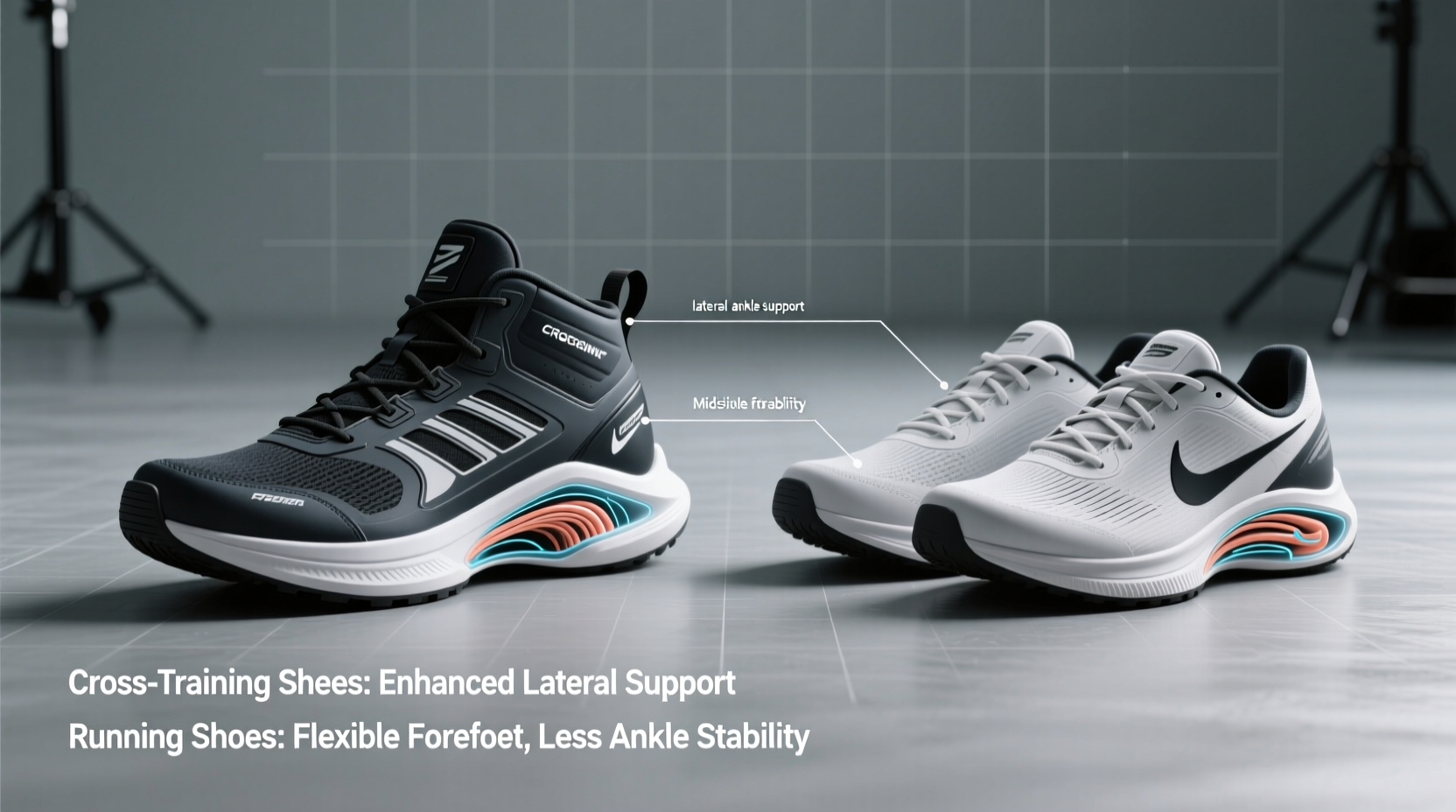
Ankle injuries typically occur when the foot rolls inward (inversion) or outward (eversion), stretching or tearing the ligaments that stabilize the joint. The anterior talofibular ligament (ATFL) is the most commonly injured, particularly during sudden stops, directional changes, or landing awkwardly from a jump—movements prevalent in high-intensity interval training (HIIT), plyometrics, and trail running.
Repetitive stress can also lead to chronic instability, especially if previous sprains haven’t healed properly. This makes preventive measures like proper footwear even more critical. Research published in the Journal of Athletic Training indicates that up to 70% of individuals who suffer an ankle sprain experience recurrent issues, often due to inadequate rehabilitation or continued use of unsupportive shoes.
“Footwear that limits excessive motion at the subtalar joint can reduce inversion forces by up to 30%, directly lowering sprain risk.” — Dr. Lena Torres, Biomechanics Specialist, University of Colorado Sports Medicine Lab
How Running Shoes Are Designed—and Where They Fall Short
Running shoes prioritize forward motion efficiency. Their design emphasizes cushioning in the heel and forefoot to absorb impact during heel strike and toe-off. The midsole is often curved or rockered to encourage a smooth transition from heel to toe, reducing muscular effort over long distances.
However, this streamlined structure sacrifices lateral stability. Most running shoes feature:
- A narrow base with minimal sidewall coverage
- Flexible uppers that allow natural foot splay but offer little resistance to side-to-side roll
- Heel counters that focus on rearfoot control rather than medial/lateral bracing
On uneven terrain—such as trails, cracked sidewalks, or wet grass—this lack of lateral rigidity increases the chance of rolling the ankle. A 2021 biomechanical study at Loughborough University found that runners wearing lightweight racing flats were 2.4 times more likely to experience inversion episodes compared to those in stiffer-soled trainers during off-road conditions.
Tip: If you frequently run on trails or uneven surfaces, consider trail-specific running shoes with reinforced sidewalls and aggressive outsoles for improved grip and stability.Cross Training Shoes: Built for Multi-Directional Support
Cross training shoes are engineered for versatility across activities—weightlifting, agility drills, jumping, and short bursts of cardio. Unlike running shoes, they’re built with lateral movement in mind. Key features include:
- Wider, flatter soles that lower the center of gravity and improve balance
- Rigid heel counters and medial posts that resist inward collapse
- Denser foam or rubber along the midfoot sidewalls to limit excessive roll
- Uppers made from reinforced mesh or synthetic overlays for secure lockdown
This structural robustness translates into tangible protection. During cutting maneuvers—a staple in boot camps or functional fitness classes—the shoe acts as a stabilizing shell, minimizing micro-movements that strain the ankle capsule. A case study involving CrossFit athletes at a Denver training facility showed a 41% reduction in reported ankle discomfort after switching from running shoes to cross trainers, despite no change in workout intensity.
Mini Case Study: From Chronic Sprains to Stable Performance
Mark R., a 35-year-old firefighter and amateur obstacle racer, had suffered three ankle sprains in two years—all occurring during gym sessions while wearing his favorite running shoes. He assumed he was simply “clumsy” until a physical therapist reviewed his footwear. After switching to a high-top cross trainer with external TPU heel cages, Mark eliminated acute sprains and reported greater confidence during ladder drills and box jumps. His therapist noted improved proprioception, attributing part of the gain to enhanced shoe feedback and reduced joint wobble.
Comparative Analysis: Stability Features Side-by-Side
| Feature | Cross Training Shoes | Running Shoes |
|---|---|---|
| Sole Width | Wider base for lateral stability | Narrower, tapered for forward roll |
| Midfoot Support | Stiff shank, dual-density foam | Flexible, designed for torsion |
| Heel Counter | High, rigid, wraps laterally | Moderate height, focused on rearfoot |
| Outsole Pattern | Multi-directional tread | Linear, heel-to-toe focused |
| Lateral Roll Resistance | High—designed to prevent ankle inversion | Low to moderate—prioritizes flexibility |
| Ideal For | Gym circuits, HIIT, weight training, court sports | Running, jogging, treadmill walking |
The data clearly shows that cross training shoes provide superior mechanical resistance to ankle-rolling motions. However, this doesn’t mean runners should abandon their specialty footwear. Context matters: a marathoner logging 40 miles per week benefits more from shock absorption than lateral rigidity, whereas someone doing burpees and kettlebell swings needs dynamic joint protection.
When Running Shoes Make Sense—and When They Don’t
For pure linear motion, running shoes excel. Their lightweight construction reduces fatigue, and advanced foams like EVA, Pebax, or Boost deliver responsive cushioning that protects joints over distance. But problems arise when runners misuse them outside their intended scope.
Common misuses include:
- Wearing running shoes for Zumba, basketball, or circuit training
- Using worn-out running shoes beyond 300–500 miles (when support degrades)
- Choosing minimalist models without sufficient ankle strength or gait control
In these cases, the risk of ankle injury rises not because running shoes are inherently flawed, but because they’re being asked to perform tasks they weren’t designed for. It’s akin to using road tires on a mountain bike—efficient on pavement, dangerous off-road.
Step-by-Step Guide to Choosing Injury-Preventive Footwear
Selecting the right shoe isn’t guesswork. Follow this sequence to match your activity profile with optimal ankle protection:
- Assess Your Primary Activity: Track what percentage of your workout involves running versus lateral movements. If more than 70% is straight-line running, prioritize running shoes. If you do mixed modal training, lean toward cross trainers.
- Inspect Your Gait: Have a gait analysis done at a specialty store. Overpronators benefit from cross trainers with medial posting; supinators may need extra cushioning regardless of shoe type.
- Test for Fit and Lockdown: Try on shoes later in the day when feet are slightly swollen. Walk, pivot, and simulate side lunges. Your heel should not slip, and the midfoot should feel cradled.
- Evaluate Sole Rigidity: Press down on the forefoot and twist the sole. Cross trainers should resist twisting; running shoes will flex more easily—which is acceptable only if you’re not doing multidirectional work.
- Check Wear Patterns: Examine your current shoes. Excessive wear on the outer heel edge suggests overpronation, while inner forefoot wear may indicate instability needing better support.
- Replace on Schedule: Replace running shoes every 300–500 miles. Cross trainers last longer—up to 6 months of regular use—but inspect for creasing in the midsole or loosening uppers.
Checklist: Is Your Shoe Protecting Your Ankles?
- ✅ Does the shoe have a wide, stable base?
- ✅ Can you twist the sole easily? (If yes, it may be too flexible for lateral moves.)
- ✅ Does the heel stay locked during quick direction changes?
- ✅ Is the upper snug without pressure points?
- ✅ Are you using the right shoe for your primary activity?
- ✅ Has the shoe exceeded its mileage or usage lifespan?
Frequently Asked Questions
Can I use cross training shoes for running?
Yes, for short distances (under 3 miles) or treadmill intervals, cross training shoes are safe. However, they lack the cushioning and energy return optimized for long runs. Using them exclusively for running may lead to increased fatigue or knee strain over time.
Do high-top cross training shoes offer more ankle protection?
Not necessarily. While some high-top designs include additional collar padding, true ankle support comes from the midsole and heel counter, not height. Studies show that most ankle stabilization occurs through the shoe’s interface with the foot, not the upper’s height. That said, high-tops can enhance proprioception and perceived security.
Are expensive shoes better at preventing injuries?
Price correlates with materials and technology, but not always with injury prevention. A $140 running shoe may have superior foam, but if it doesn’t match your foot type or activity, it won’t reduce injury risk. Focus on fit, function, and appropriateness over brand prestige.
Final Recommendation: Match the Shoe to the Movement
The evidence strongly favors cross training shoes when it comes to preventing ankle injuries in dynamic, multi-planar environments. Their wider base, reinforced sidewalls, and resistance to torsion make them inherently more protective against inversion sprains than traditional running shoes. That said, running shoes remain the best choice for sustained forward motion, where minimizing impact forces takes precedence over lateral control.
The smartest approach is not to choose one shoe for all purposes, but to own both—and use them appropriately. Rotate footwear based on your workout: lace up your running shoes for jogs and tempo runs, then switch to cross trainers for strength days, agility ladders, or group fitness classes. This simple habit can dramatically reduce your risk of ankle trauma while optimizing performance across disciplines.
💬 Ready to protect your ankles? Audit your current shoes today. Are you wearing the right pair for your workout? Share your experience or ask questions in the comments below—your insight could help others train safer and stronger.








