
A charming residential street with a tree-lined path evokes images of tranquility, beauty, and community. More than just an aesthetic feature, such streets are foundational to livable, sustainable neighborhoods. They offer environmental, psychological, and social advantages that elevate everyday life. As cities grow denser and climate concerns intensify, the intentional design of residential spaces—particularly those incorporating mature trees along pedestrian pathways—has become a hallmark of thoughtful urban planning. This article examines the significance of tree-lined residential streets, their defining characteristics, practical benefits, variations in implementation, and long-term value to homeowners and municipalities alike.
Definition & Overview
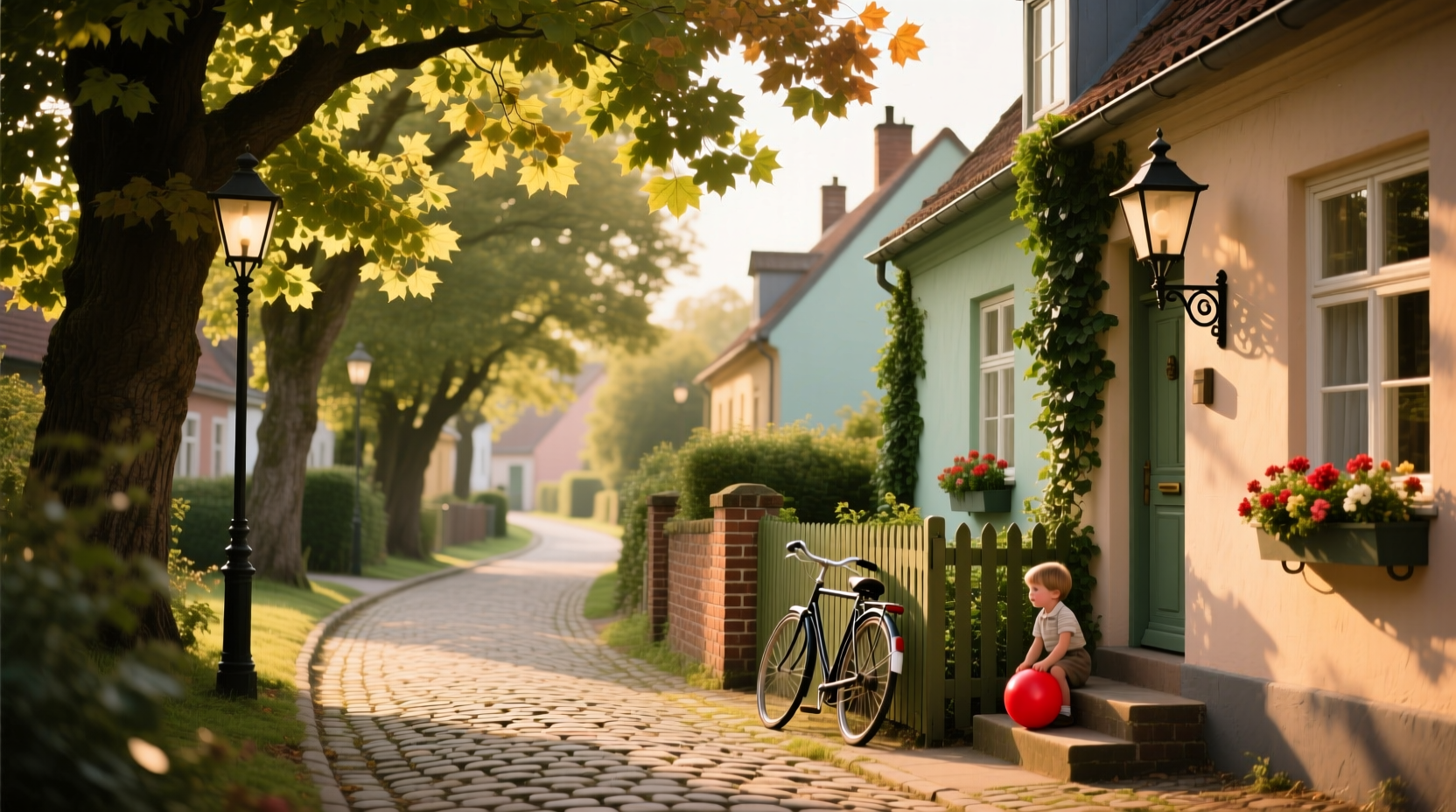
A \"charming residential street with a tree-lined path\" refers to a neighborhood thoroughfare bordered by evenly spaced, mature trees that form a natural canopy over sidewalks or shared pathways. These streets typically serve single-family homes or low-rise multi-unit buildings and prioritize pedestrian comfort, shade, and visual continuity. Unlike commercial boulevards or park trails, these paths are integrated into daily living—used for walking children to school, jogging, dog-walking, or casual neighborly interaction.
The concept is not new; it traces back to 19th-century urban planning movements such as the Garden City model and the work of landscape architects like Frederick Law Olmsted, who championed green corridors within urban environments. Today, this design principle endures because it directly supports human well-being, ecological resilience, and property values.
Such streets are defined not only by the presence of trees but by their arrangement: consistent spacing (usually 30–50 feet apart), species uniformity or complementary diversity, and alignment that creates a tunnel-like effect during peak foliage. The path itself may be paved, gravel, or boardwalk-style, depending on regional context and topography.
Key Characteristics
The enduring appeal of a tree-lined residential path lies in its multifaceted attributes. Below is a breakdown of its essential features:
| Characteristic | Description |
|---|---|
| Visual Aesthetic | Symmetrical layout with overhead canopy creates a sense of enclosure and serenity. Seasonal changes add dynamic beauty. |
| Shade & Microclimate Regulation | Trees reduce surface temperatures by up to 20°F through evapotranspiration and direct shading. |
| Sound Dampening | Foliage absorbs traffic noise, contributing to quieter, more peaceful neighborhoods. |
| Air Quality Improvement | Mature trees filter particulate matter, absorb carbon dioxide, and release oxygen. |
| Stormwater Management | Root systems and leaf canopies intercept rainfall, reducing runoff and strain on drainage systems. |
| Wildlife Habitat | Supports birds, pollinators, and small mammals, increasing local biodiversity. |
| Social Cohesion | Encourages foot traffic, chance encounters, and informal surveillance, fostering safer, more connected communities. |
| Property Value Impact | Homes adjacent to tree-lined streets often command premiums of 5%–15% compared to similar properties without canopy cover. |
Practical Usage & Implementation
Designing or preserving a charming residential street with a tree-lined path requires coordination between residents, municipal planners, arborists, and public works departments. The process begins with assessment and continues through planting, maintenance, and long-term stewardship.
Step-by-Step Guide to Establishing a Tree-Lined Path
- Site Assessment: Evaluate soil quality, underground utilities, sidewalk width, and drainage patterns. Avoid areas with shallow sewer lines or limited root space.
- Select Appropriate Species: Choose native or climate-adapted trees with non-invasive roots and strong limb structure. Ideal candidates include sugar maple, red oak, American linden, or London plane tree.
- Determine Spacing: Plant trees 30 to 50 feet apart to ensure adequate growth room while maintaining visual continuity. Closer spacing may lead to overcrowding and disease vulnerability.
- Coordinate with Municipal Codes: Obtain permits if required. Some cities have urban forestry ordinances governing species selection, planting depth, and protection zones.
- Install Structural Soil or Root Barriers: Use engineered soils beneath sidewalks to allow root expansion without lifting pavement. Install root barriers to protect infrastructure.
- Plant at the Right Time: Late fall or early spring is optimal for transplanting bare-root or balled-and-burlapped trees.
- Water and Mulch Regularly: Young trees require deep watering weekly during dry periods for the first three years. Apply organic mulch in a donut shape (not against the trunk) to retain moisture.
- Prune Strategically: Begin formative pruning in year two to establish strong branch unions and clearance height (minimum 8 feet over walkways).
Pro Tip: Engage neighbors early. Form a block association or petition for city-funded tree programs. Many municipalities offer free or subsidized street trees to qualifying residents.
Professional Applications in Urban Design
Landscape architects and city planners integrate tree-lined paths into broader sustainability goals. In new developments, they are part of green infrastructure plans that manage stormwater via bioswales and permeable surfaces. In retrofit projects, “road diets” may narrow vehicle lanes to accommodate planting strips.
Cities like Portland, Oregon, and Vancouver, British Columbia, have implemented comprehensive urban forest strategies aiming for 25%–30% canopy cover by 2050. These initiatives treat tree-lined residential streets not as luxuries but as essential components of climate adaptation.
Variants & Types
Not all tree-lined residential paths are identical. Their design varies based on geography, culture, and available resources. Understanding these variants helps communities choose the most suitable model.
1. Classic Canopy Street
Found in historic districts from New England to Europe, this type features large deciduous trees (e.g., elms, oaks) forming a continuous arch over the road and sidewalk. Offers maximum shade and seasonal drama but requires decades to mature.
2. Modern Green Corridor
Common in planned communities, this version uses drought-tolerant species (e.g., crepe myrtle, Chinese pistache) arranged with irrigation systems and protective grates. Often includes benches and bike racks.
3. Mixed-Use Buffer Zone
In transitional neighborhoods, tree-lined paths separate residential zones from commercial areas. Trees act as both visual and acoustic buffers, enhancing privacy.
4. Elevated or Sunken Paths
In hilly or flood-prone regions, paths may be built above grade or recessed below street level, with terraced plantings. Requires careful engineering but adds dramatic flair.
5. Pollinator-Focused Alleys
Increasingly popular in eco-conscious suburbs, these incorporate understory shrubs and flowering trees (e.g., serviceberry, redbud) to support bees and butterflies alongside canopy species.
| Type | Best For | Maintenance Level | Time to Maturity |
|---|---|---|---|
| Classic Canopy Street | Historic preservation, high-end neighborhoods | Medium (pruning, disease monitoring) | 30–60 years |
| Modern Green Corridor | New developments, arid climates | Low–Medium (irrigation needed initially) | 10–20 years |
| Mixed-Use Buffer Zone | Urban infill, zoning transitions | Medium (litter control, lighting integration) | 15–25 years |
| Elevated/Sunken Path | Hilly terrain, flood mitigation | High (structural upkeep) | 5–10 years (with fast-growing species) |
| Pollinator-Focused Alley | Eco-suburbs, educational communities | Medium (seasonal cleanup, bloom rotation) | 8–15 years |
Comparison with Similar Features
Tree-lined residential paths are sometimes confused with other green spaces. Clarifying distinctions ensures proper planning and expectations.
- Park Trails: Located within parks, not integrated into residential access routes. Typically longer, winding, and used primarily for recreation rather than commuting.
- Boulevards: Wide urban avenues with medians or dual sidewalks. Often lined with trees but designed for higher traffic volumes and commercial activity.
- Garden Walks: Found in private estates or botanical gardens. Decorative rather than functional, lacking public accessibility or utility.
- Cul-de-Sac Landscaping: Limited to dead-end streets; lacks linear continuity and connectivity to larger networks.
\"A tree-lined street isn’t just landscaping—it’s infrastructure. It cools cities, cleans air, reduces flooding, and makes people happier to be outside. We need to fund it like we fund roads and sewers.\" — Dr. E. Gregory McPherson, Urban Forestry Research Specialist, USDA Forest Service
Practical Tips & FAQs
How do I advocate for tree planting on my street?
Contact your city’s forestry department or public works division. Attend community planning meetings and present data on benefits such as increased safety and property values. Organize a petition with neighbors to demonstrate demand.
What if roots damage sidewalks?
This is preventable with proper design. Use structural soil cells, flexible pavement joints, or elevated tree pits. Avoid planting aggressive rooters like silver maple near concrete. Repair damaged sections using rubberized or segmented pavers that flex with root movement.
Are there legal restrictions on trimming or removing street trees?
Yes. Most municipalities regulate tree removal on public rights-of-way. Permits are usually required, especially for heritage or designated trees. Unauthorized cutting may result in fines.
Can I plant a tree in front of my house?
In most cases, yes—but check local codes. Some cities require approval to ensure compatibility with utility lines and sightlines at intersections. Many offer free saplings through annual distribution programs.
Which trees should I avoid?
Avoid invasive species such as Callery pear (Bradford pear), which spreads rapidly and displaces native flora. Also avoid trees with weak wood (e.g., willow, Siberian elm) prone to breakage in storms.
How much does maintenance cost?
Annual maintenance per tree averages $50–$150, including pruning, mulching, and inspection. Municipalities often cover public-side trees; homeowners are responsible for those near their lots unless otherwise specified.
Maintenance Checklist:
- Inspect twice yearly for pests, diseases, or structural issues
- Prune during dormancy (late winter)
- Replace dead or hazardous trees promptly
- Report vandalism or illegal pruning to authorities
- Participate in city tree inventories or canopy assessments
Environmental & Health Benefits: Beyond Aesthetics
The impact of a tree-lined residential path extends far beyond curb appeal. Scientific studies confirm measurable improvements in physical and mental health:
- Reduced Heat Stress: Neighborhoods with high canopy cover experience fewer heat-related hospitalizations during summer months.
- Lower Blood Pressure: Exposure to green views correlates with reduced stress markers and improved cardiovascular outcomes.
- Increased Physical Activity: Pedestrian counts rise by 25%–50% on shaded streets compared to exposed ones.
- Better Air Quality: A single mature tree removes approximately 48 pounds of CO₂ annually and filters airborne pollutants like ozone and nitrogen dioxide.
In densely populated areas, even modest increases in tree cover can mitigate the urban heat island effect, where built environments absorb and re-radiate heat, raising ambient temperatures significantly above rural surroundings.
Case Study: The Transformation of Seattle’s Capitol Hill
In the early 2010s, residents of Seattle’s Capitol Hill neighborhood launched the “Green Streets Initiative,” targeting under-canopied blocks for tree planting. Over five years, 320 street trees were installed along residential corridors, focusing on low-income households and historically underserved areas.
Results included:
- A 17% increase in reported walking frequency among seniors and children
- Measurable temperature drops of 9–12°F during heat events
- A 12% rise in home sale prices within 100 feet of newly planted trees
- Stronger neighborhood identity, with residents organizing annual tree-care workshops
The project demonstrated that equitable access to green infrastructure improves both environmental justice and community resilience.
Summary & Key Takeaways
A charming residential street with a tree-lined path is more than picturesque—it is a vital component of sustainable, healthy communities. Its benefits span environmental protection, public health, economic value, and social cohesion. When thoughtfully designed and maintained, such streets become legacy assets passed down through generations.
Key points to remember:
- Tree-lined paths reduce urban heat, improve air quality, and manage stormwater naturally.
- Proper species selection and installation techniques prevent future conflicts with infrastructure.
- Community involvement increases success rates and long-term stewardship.
- Different types suit different contexts—from historic districts to modern eco-developments.
- These features are increasingly recognized as critical urban infrastructure, not mere decoration.
Take Action: Assess your own street. Is there room for one more tree? Connect with local arborists, city planners, or nonprofit groups focused on urban greening. Start small—every tree planted today shapes the character of tomorrow’s neighborhoods.









