For new riders stepping into the world of sportbikes, choosing between the Honda CBR300R and Yamaha YZF-R3 isn’t just about style or brand loyalty—it’s about long-term satisfaction, reliability, and how well each bike supports skill development. As we approach 2025, both models have matured through years of refinement, but subtle differences in engine character, chassis behavior, maintenance demands, and resale performance reveal which machine is truly better suited for beginners aiming to grow as riders.
The CBR300R and R3 occupy the same competitive niche: sub-400cc lightweight sportbikes designed for accessibility, agility, and low ownership costs. Yet their engineering philosophies diverge in ways that matter over time. One emphasizes smoothness and stability; the other leans into sharpness and engagement. Understanding these distinctions helps riders make a choice that won’t just last through early miles—but evolve with them.
Engine & Performance: Power Delivery Matters for New Riders
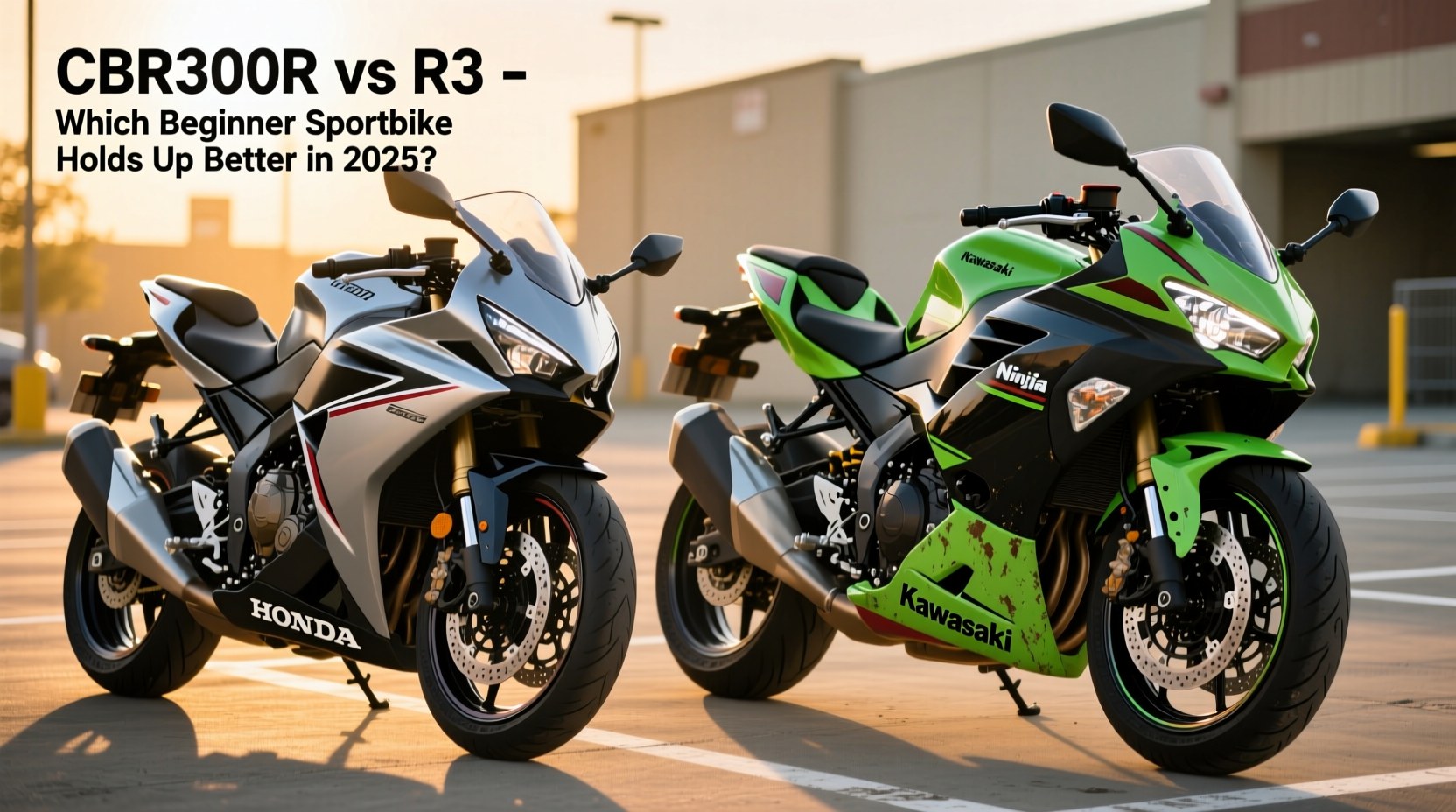
The heart of any motorcycle defines its personality. The Honda CBR300R uses a 286cc single-cylinder engine derived from the older CBR250R, now tuned for broader usability. It produces around 30 horsepower with a linear, predictable powerband. Throttle response is gentle, and peak torque arrives early, making it forgiving in city traffic and beginner twisties.
In contrast, the Yamaha YZF-R3 features a 321cc parallel-twin engine co-developed with the MT-03. This design generates approximately 41 horsepower—significantly more than the Honda—and delivers a sharper throttle response with a noticeable surge past 7,000 RPM. While still manageable, this power delivery requires more clutch control and attention, especially when accelerating out of corners or riding on uneven terrain.
Tip: If you're nervous about managing sudden power spikes, the CBR300R's single-cylinder smoothness reduces rider workload during skill-building phases.By 2025, engine longevity data shows both platforms are durable, but usage patterns differ. The R3’s twin engine runs hotter under sustained load and may require earlier valve adjustments. The CBR300R’s simpler design has fewer moving parts, translating to lower maintenance frequency and cost over five years of ownership.
Chassis & Handling: Stability vs Agility
Handling characteristics significantly influence rider confidence. The CBR300R features a steel diamond frame with a longer wheelbase (52.2 inches) and less aggressive geometry. This setup prioritizes stability, especially at highway speeds and during emergency maneuvers. Its upright riding position and wide handlebar enhance low-speed control, ideal for urban commuting and rider training.
The R3, meanwhile, adopts a Deltabox-style aluminum frame with steeper rake and shorter wheelbase (50.8 inches), delivering quicker turn-in and racier feedback. While thrilling on backroads, this responsiveness can feel twitchy to inexperienced hands, particularly in crosswinds or during abrupt lane changes. The R3 also sits slightly lower (30.7 inches vs 31.5), aiding ground reach for shorter riders.
“Beginner bikes should inspire confidence, not adrenaline. A stable chassis like the CBR300R’s gives new riders room to make mistakes without punishment.” — Marcus Tran, Motorcycle Safety Instructor (MSF-Certified)
Over time, the R3 rewards skilled input with engaging dynamics, but the CBR300R’s neutral balance makes it more adaptable across varied conditions—rain, wind, fatigue, or unexpected obstacles—without overwhelming the rider.
Ownership Costs & Long-Term Reliability in 2025
As both models age into the used market, their reliability profiles become clearer. Honda’s reputation for bulletproof engines holds strong: CBR300Rs regularly exceed 50,000 miles with basic servicing. Parts are widely available, and common issues (like occasional fuel pump hiccups) are inexpensive to fix.
Yamaha’s R3 has proven generally reliable, but twin-cylinder complexity introduces more potential failure points—such as cam chain tensioners and oil cooler lines. Some 2019–2022 models reported premature wear in the clutch basket, requiring replacement before 25,000 miles. While not widespread, these incidents increase long-term ownership risk.
| Metric | Honda CBR300R | Yamaha YZF-R3 |
|---|---|---|
| Engine Type | 286cc Single-Cylinder | 321cc Parallel-Twin |
| Horsepower | ~30 hp | ~41 hp |
| Seat Height | 31.5 in | 30.7 in |
| Weight (Wet) | 326 lbs | 370 lbs |
| Avg. Used Price (2025) | $3,200–$4,000 | $3,800–$4,600 |
| Maintenance Frequency | Every 8,000 miles | Every 6,000 miles |
| Resale Value (5-Year) | 68% retained | 62% retained |
The weight difference—44 pounds heavier for the R3—also impacts handling feel and parking lot maneuverability. For smaller or less physically confident riders, the CBR300R offers easier low-speed control, reducing tip-over risks during learning stages.
Real-World Example: Two Riders, Two Paths
Consider two riders who bought their bikes in 2022: Lena chose the CBR300R after completing her MSF course. She commutes daily, rides weekend loops, and values predictability. At 18,000 miles, her only service beyond oil changes was replacing brake pads. She reports feeling “in control every time,” even during a sudden downpour on a mountain pass.
Daniel picked the R3 for its sportier image and extra power. He enjoys canyon carving and joined track days after one year. While he praises the engine’s excitement, he admits struggling with clutch control early on and replaced his clutch assembly at 16,500 miles due to slipping—a known issue in high-RPM use cases. His enthusiasm remains high, but maintenance costs have exceeded expectations.
Their experiences reflect a broader trend: the CBR300R excels as a dependable, stress-free companion, while the R3 demands more engagement—and investment—from the rider.
Expert Recommendations for 2025 Buyers
When advising new riders, experienced trainers emphasize suitability over specs. “A bike that grows with you is better than one that impresses you,” says Tran. “The CBR300R teaches good habits without punishing errors. The R3 can do the same, but only if the rider respects its livelier nature.”
- Choose the CBR300R if: You prioritize ease of use, fuel efficiency (up to 70 mpg), and minimal maintenance. Ideal for commuters, first-time owners, or those building foundational skills.
- Choose the R3 if: You’re drawn to sportbike aesthetics, want stronger acceleration, and plan to advance quickly into spirited riding or track exposure.
FAQ: Common Questions About CBR300R vs R3 in 2025
Can the CBR300R keep up with highway traffic?
Yes. The CBR300R comfortably maintains 70–75 mph on flat roads. Wind protection is limited, so extended freeway rides may be tiring, but it’s fully capable for daily highway commuting.
Is the R3 too powerful for beginners?
Not inherently, but it requires respect. The extra power and sharper throttle can catch unprepared riders off guard, especially in wet conditions or tight turns. Proper training and gradual throttle application are essential.
Which bike holds value better?
Data from Kelley Blue Book and CycleTrader in 2025 shows the CBR300R retains about 68% of its value after five years, compared to 62% for the R3. Simpler mechanics and Honda’s reputation contribute to stronger resale demand.
Final Verdict: Which Beginner Sportbike Holds Up Better?
In 2025, the Honda CBR300R emerges as the more resilient and rider-friendly option for most newcomers. It balances performance, economy, and durability in a way that accommodates human error, evolving skill levels, and real-world unpredictability. While the Yamaha R3 offers greater thrill and a more authentic supersport silhouette, its higher maintenance needs and livelier dynamics make it better suited for riders already confident in their abilities—or those willing to invest more time and money into mastery.
Ultimately, the best beginner bike isn’t the fastest or flashiest—it’s the one that encourages consistent riding, minimizes setbacks, and builds competence without fear. On these terms, the CBR300R continues to set the standard.
💬 Have experience with either bike? Share your story in the comments—your insights could help a new rider choose wisely.








