Pizza is a global favorite—convenient, delicious, and deeply embedded in weekly routines. But after the last slice is gone, one question lingers: what do you do with the box? Many toss it into the recycling bin without hesitation, assuming paper-based packaging is automatically recyclable. However, when grease, cheese residue, and food particles enter the equation, the answer becomes far more complicated. The truth is, while pizza boxes *can* be recycled, contamination from grease often renders them unsuitable—and worse, they can compromise entire batches of otherwise clean recyclables.
Understanding the nuances of pizza box recycling isn’t just about following local rules—it’s about protecting the integrity of the recycling stream, reducing landfill waste, and making informed choices that support sustainable systems. This article breaks down the science behind paper recycling, explains how grease interferes with the process, and provides clear guidance on what you can (and should) do with your used pizza boxes.
How Paper Recycling Works: The Basics
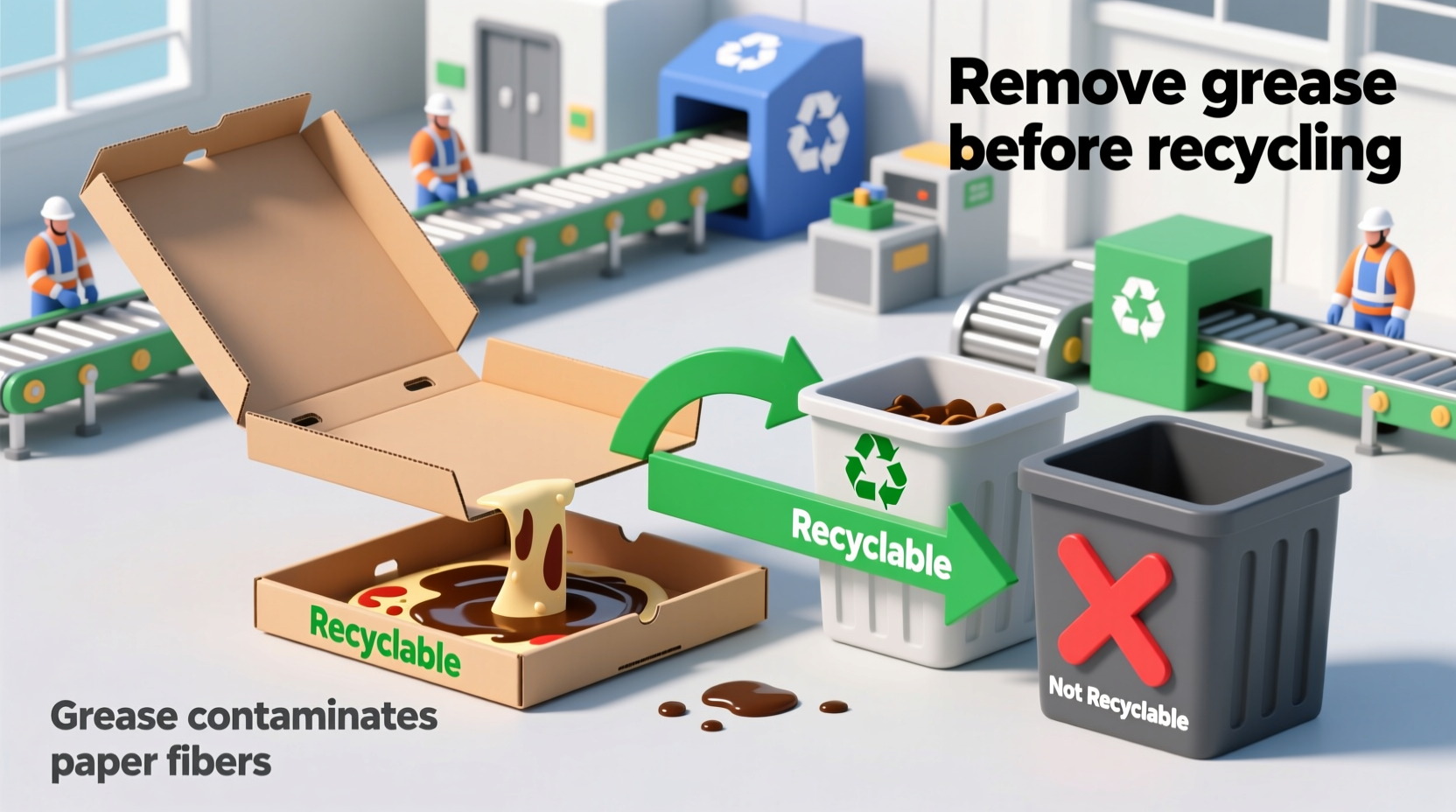
To understand why grease is problematic, it helps to know how paper recycling actually works. When paper products enter a materials recovery facility (MRF), they go through a multi-step process designed to separate fibers, remove contaminants, and produce new pulp for manufacturing.
- Sorting: Recyclables are separated by material type using mechanical screens, magnets, and optical scanners.
- Pulping: Clean paper is mixed with water and chemicals to break it down into individual fibers, forming a slurry.
- Cleaning: The slurry passes through centrifugal cleaners and screens to remove small contaminants like staples, plastics, and adhesives.
- De-inking: Ink and coatings are removed via flotation or washing processes, especially for high-grade office paper.
- Reprocessing: The cleaned pulp is then pressed, dried, and rolled into new paper products.
This system relies heavily on the purity of input materials. Even small amounts of oil or food waste can disrupt fiber separation, clog machinery, and degrade the quality of the final product. Unlike dirt or tape—which can often be filtered out—grease bonds chemically with paper fibers, making it nearly impossible to extract during pulping.
“Oil and grease don’t mix with water—and neither do they mix with paper recycling. Once contaminated, those fibers are lost to the process.” — Dr. Linda Chen, Waste Management Engineer at the National Recycling Coalition
Why Grease Ruins the Recycling Process
Grease from pizza doesn’t just stain a box—it fundamentally alters its recyclability. Here’s why:
- Fiber Degradation: Oil weakens paper fibers, reducing their ability to bond during reprocessing. This leads to lower-quality recycled paper or outright rejection.
- Water Repellency: Grease creates hydrophobic zones in the pulp, preventing even mixing and causing clumping. These clumps can jam machinery or create defects in new paper rolls.
- Contamination Spread: A single greasy pizza box can contaminate an entire bale of recyclables. MRF operators often discard whole loads if contamination exceeds acceptable thresholds (typically around 10–15%).
- Processing Costs: Facilities spend extra time and resources cleaning equipment fouled by grease, increasing operational costs that ultimately affect municipal programs.
The issue isn’t limited to visible grease. Even subtle oil saturation—like the faint sheen left by pepperoni—can be enough to disqualify a box. This is especially true in single-stream recycling systems, where all materials are collected together and sorting happens only after collection.
Tip: If you can see grease spots or feel slickness on the cardboard, assume it's not recyclable. When in doubt, throw it out—or compost instead.When Can You Recycle a Pizza Box?
The good news is that not all pizza boxes are destined for the landfill. Many components remain recyclable, depending on condition. The key lies in **separating clean from contaminated sections**.
Most pizza boxes are made of corrugated cardboard—a highly recyclable material—as long as it’s free from food debris and oil. If only the bottom portion is soiled, the top flap and clean side panels can still be recycled. In fact, some municipalities explicitly encourage residents to tear boxes apart and recycle only the uncontaminated portions.
Recyclable vs. Non-Recyclable Parts
| Part of Box | Condition | Recyclable? |
|---|---|---|
| Top lid | Dry, no food residue or stains | Yes |
| Side walls | No direct contact with pizza, minimal handling | Yes |
| Bottom panel | Greasy, stained, or has cheese stuck to it | No |
| Entire box | Saturated with oil or partially burned (e.g., from delivery insulation) | No |
Some cities, like San Francisco and Seattle, have advanced composting infrastructure that accepts greasy cardboard. In these areas, soiled pizza boxes may be composted rather than trashed, turning waste into nutrient-rich soil. Check your local waste authority’s guidelines to determine whether composting is an option.
Step-by-Step Guide: How to Dispose of a Pizza Box Responsibly
Follow this practical sequence to maximize recyclability and minimize environmental impact:
- Inspect the Box: Open it up and examine each section. Look for grease stains, food scraps, and moisture.
- Tear It Apart: Separate the top from the bottom. Remove any wax-lined inserts or plastic partitions.
- Recycle Clean Sections: Place dry, unsoiled parts (like the lid) into your recycling bin. Flatten them to save space.
- Compost Greasy Bottoms (if available): If your city offers curbside composting, place the greasy portion in the organics bin. Do not include if composting rules prohibit paper with synthetic coatings.
- Trash as Last Resort: If neither recycling nor composting is viable, dispose of contaminated pieces in the trash. Wrap heavily soiled sections to prevent mess.
- Rinse Hands & Surface: Wipe down counters and wash hands after handling dirty boxes to maintain hygiene.
Real-World Example: A City’s Struggle with Contamination
In 2022, the city of Denver reported a 22% increase in contaminated recycling loads during the winter months—peaking right after major football events. Investigation revealed that pizza boxes were among the top culprits. Despite public education campaigns, many residents continued to toss entire boxes into recycling bins, unaware that grease was sabotaging the process.
In response, Denver launched “Clean Box, Better Recycle,” a targeted outreach program featuring QR codes on pizza delivery bags linking to instructional videos. They also partnered with local pizzerias to print disposal tips directly on boxes. Within six months, contamination dropped by 14%, saving the city over $180,000 in processing fees.
This case illustrates how small behavioral changes, supported by clear communication, can yield significant environmental and economic benefits.
Checklist: Responsible Pizza Box Disposal
Use this quick reference before tossing your next box:
- ✅ Removed leftover food and napkins?
- ✅ Separated clean top from greasy bottom?
- ✅ Flattened recyclable sections?
- ✅ Checked local rules for compost eligibility?
- ✅ Placed clean parts in recycling bin?
- ✅ Put greasy parts in compost (if available) or trash?
- ✅ Avoided putting plastic liners or stickers in recycling?
FAQ: Common Questions About Pizza Box Recycling
Can I recycle a pizza box with cheese stuck to it?
No. Any food residue—including cheese, sauce, or crumbs—makes the box non-recyclable. Remove and discard these parts with the contaminated section.
What if the grease is only in one corner?
If less than 10% of the surface is affected, you may trim off the stained area and recycle the rest. However, if the oil has wicked into the fibers, it’s safer to exclude that piece.
Are frozen pizza boxes different?
Often, yes. Many frozen food boxes have a thin plastic or wax coating to prevent freezer burn. These cannot be recycled through standard paper streams. Check the packaging for symbols indicating recyclability or coating type.
Expert Insight: What Industry Leaders Recommend
Recycling professionals emphasize source separation and consumer education as critical tools in maintaining recycling efficiency.
“Contamination starts at the kitchen bin. We need people to think of recycling like cooking—ingredients must be prepped properly before they go into the mix.” — Marcus Reed, Operations Director at GreenStream Recycling
Industry standards are evolving. Some packaging manufacturers are now developing grease-resistant coatings that still allow for recyclability, such as water-based barriers or easily separable liners. While not yet widespread, these innovations could redefine what “recyclable pizza packaging” means in the coming decade.
Conclusion: Make Every Box Count
The fate of a pizza box doesn’t have to be sealed the moment the last slice disappears. With a few mindful steps, you can ensure that reusable materials stay in circulation and contaminants stay out of the recycling stream. Recycling isn’t just about intention—it’s about accuracy. A well-separated box contributes to cleaner processing, lower costs, and a stronger circular economy.
Your actions matter. Whether it’s tearing apart a box, supporting compost programs, or spreading awareness, small habits add up to large-scale change. The next time you order pizza, remember: sustainability starts at the table.
💬 Did this guide change how you handle pizza boxes? Share your disposal routine or ask questions in the comments—let’s build a cleaner future, one box at a time.








