As temperatures rise and outdoor activities dominate weekends, choosing the right summer hat becomes more than a fashion statement—it’s a health decision. With skin cancer rates climbing and dermatologists urging greater sun awareness, the humble hat has evolved from accessory to essential. Two styles dominate warm-weather wardrobes: the bucket hat and the baseball cap. Both are staples in casual fashion, but when it comes to shielding your skin from harmful UV rays while maintaining personal style, which one truly delivers?
This isn’t just about aesthetics or trend cycles. It’s about understanding fabric density, coverage area, brim design, and how each element contributes to real-world protection. Whether you're hiking coastal trails, lounging at a music festival, or walking your dog under midday sun, the hat on your head can influence your long-term skin health.
Sun Protection Science: What Makes a Hat Effective?
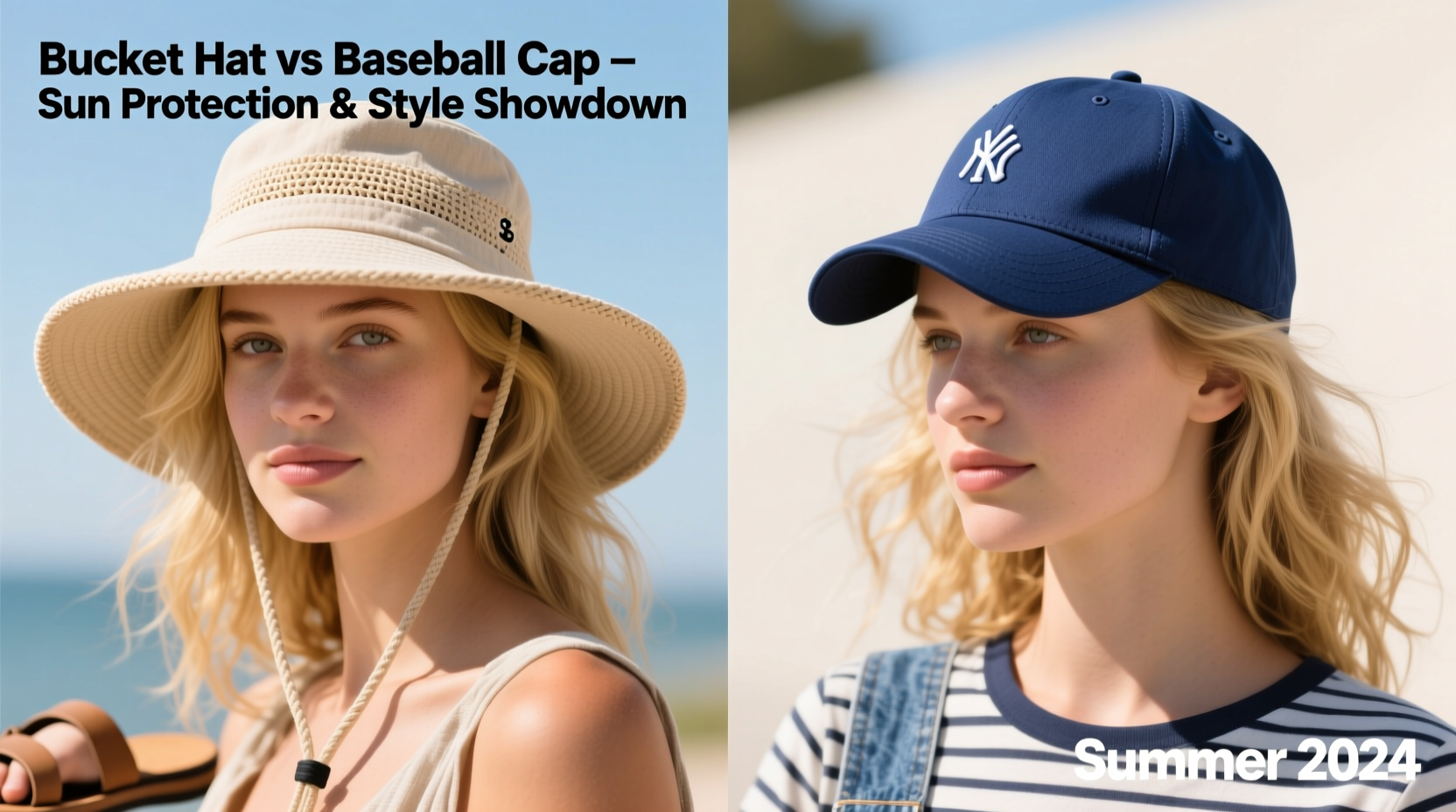
Not all hats are created equal when it comes to blocking ultraviolet (UV) radiation. The effectiveness of a sun hat depends on three key factors: UPF rating, coverage area, and material composition.
UPF—Ultraviolet Protection Factor—measures how much UV radiation a fabric blocks. A UPF 50 fabric allows only 1/50th (2%) of UV rays to pass through, blocking 98%. In contrast, a standard cotton baseball cap might offer UPF 5–10, depending on weave tightness. Many bucket hats, especially those made from tightly woven nylon or polyester with moisture-wicking coatings, are rated UPF 30–50+.
Coverage is equally critical. The face and scalp receive direct overhead exposure, but the neck, ears, and back of the head are often neglected. A baseball cap shields the forehead, nose, and eyes well but leaves the ears and neck vulnerable. Bucket hats, with their wide, downward-sloping brims, typically extend 3–4 inches all around, offering consistent shade to these high-risk zones.
“People underestimate how much UV damage accumulates on the ears and neck. These areas see some of the highest rates of non-melanoma skin cancers because they’re frequently exposed and rarely protected.” — Dr. Lena Tran, Dermatologist and Sun Safety Advocate
Design & Coverage: How Each Hat Performs in Real Conditions
To evaluate practical performance, consider daily scenarios:
- Morning walk: Sun at low angle, hitting side profiles—bucket hat excels.
- Noon errands: Overhead sun—both hats protect face, but only bucket covers neck.
- Beach day: Reflective sand increases UV exposure—wide brim reduces scatter.
- Outdoor sports: Sweat management and stability matter—baseball cap wins for fit.
The structural differences are clear. Baseball caps feature a curved front brim and a fitted crown, usually with an adjustable strap or snapback. They sit snugly, minimizing movement during activity. However, the rigid front-only brim creates blind spots in protection. Side and rear exposure remains unmitigated unless paired with sunscreen—a step many skip.
Bucket hats, by contrast, have a soft, circular brim that encircles the entire head. This 360-degree shield dramatically reduces incidental exposure. Their loose fit allows airflow, reducing heat buildup, though it can make them less secure in windy conditions. Modern versions include chin straps or elastic bands to counter this.
Tip: For maximum protection, choose a bucket hat with a brim width of at least 3 inches and a dark inner lining to reduce UV reflection.Fashion Flexibility: Style Across Contexts
Style plays a major role in adoption. No amount of sun safety advice will matter if the hat feels out of place in someone’s wardrobe.
Baseball caps remain the go-to for sporty, urban, and minimalist aesthetics. Teams, brands, and logos personalize them easily. They pair naturally with athleisure, jeans, and t-shirts. Their structured look conveys readiness and energy—ideal for active lifestyles. However, their association with casual or athletic wear can limit versatility in semi-formal or fashion-forward settings.
Bucket hats, once dismissed as relics of the ’90s or fishing gear, have undergone a renaissance. Luxury labels like Jacquemus and Maison Margiela have elevated them with premium fabrics and bold silhouettes. Streetwear brands use vibrant prints, camo patterns, and sustainable textiles to appeal to younger audiences. Today, a bucket hat can be dressed up with linen shirts and tailored shorts or worn with swim trunks and sandals.
Material choices also affect style perception. Cotton twill bucket hats feel relaxed and organic; nylon versions appear technical and modern. Denim or waxed canvas adds texture and edge. Baseball caps, while customizable, tend to stick to uniform designs—structured front panel, flat brim, embroidered logo.
Comparative Analysis: Bucket Hat vs Baseball Cap
| Feature | Bucket Hat | Baseball Cap |
|---|---|---|
| Brim Width | 3–4 inches (full circle) | 2–3 inches (front only) |
| Neck/Ears Coverage | Excellent | Poor |
| Typical UPF Rating | 30–50+ | 5–15 |
| Fit & Adjustability | Loose; may require strap | Snug; adjustable closure |
| Ventilation | High (soft crown) | Moderate (mesh panels) |
| Style Range | Broad (casual to luxury) | Narrow (sporty/casual) |
| Durability | Moderate (folds easily) | High (structured shape) |
Real-World Scenario: A Weekend at the Beach Festival
Consider Sarah, a 32-year-old graphic designer attending a two-day outdoor music festival. She arrives at 11 a.m., sets up her spot near the stage, and stays until sunset. The field offers no shade, and temperatures reach 90°F (32°C).
She owns both a classic navy baseball cap and a UPF 50 olive-green bucket hat. On Saturday, she wears the baseball cap—comfortable, familiar, and matches her band tee. By late afternoon, her ears are red and tender. She reapplies sunscreen but forgets her neck. On Sunday, she switches to the bucket hat. Despite longer sun exposure, she feels cooler and notices no burning—even after eight hours outside.
Her experience reflects clinical findings: full-coverage hats significantly reduce erythema (skin reddening) on the neck and postauricular areas (behind the ears). While she still needs sunscreen on exposed arms and legs, her facial skin remains protected without constant reapplication.
How to Choose Based on Your Lifestyle
Your ideal hat depends on routine, environment, and priorities. Use this checklist to guide your decision:
Checklist: Choosing Your Summer Hat- ✅ Do you spend extended time outdoors between 10 a.m. and 4 p.m.? → Prioritize coverage → Bucket hat
- ✅ Are you frequently in motion—running, cycling, playing sports? → Need stability → Baseball cap
- ✅ Do you value fashion versatility? → Bucket hats offer broader styling options
- ✅ Do you have sensitive skin or a history of sunburns? → Opt for UPF 50+ and full brim
- ✅ Do you travel or pack frequently? → Bucket hats fold; baseball caps hold shape
For hybrid needs, consider specialized options: performance baseball caps with extended rear flaps, or bucket hats with moisture-wicking sweatbands and ventilation grommets. Some outdoor brands now offer convertible models—flip-up brims or detachable neck curtains—that merge the best of both worlds.
Expert Tips for Maximizing Protection
Even the best hat won’t work if used incorrectly. Follow these evidence-based practices:
- Pair with sunscreen: Hats don’t cover everything. Apply SPF 30+ to exposed areas, especially ears, neck, and hands.
- Wear it early: UV intensity peaks midday, but damaging rays begin accumulating by late morning.
- Replace when worn: Faded, stretched, or thinning fabric loses UPF effectiveness. Replace every 1–2 seasons with heavy use.
- Choose darker colors: Darker dyes absorb more UV than light or white fabrics, despite feeling warmer.
- Avoid wet hats: Wet cotton or canvas can reduce UPF by up to 50%. Carry a spare or opt for quick-dry synthetics.
“Think of your hat as the first layer of sun defense—not the only one. Combine it with sunglasses, shade breaks, and protective clothing for complete coverage.” — National Council on Skin Cancer Prevention
FAQ
Can a baseball cap be made more protective?
Yes. Look for models with extended neck flaps or wear a gaiter or lightweight scarf over the back of your neck. Some brands offer “sun safety” caps with wider side and rear brims. Alternatively, apply water-resistant sunscreen behind the ears and on the nape before heading out.
Are bucket hats suitable for formal events?
Context matters. In most professional or formal settings, bucket hats remain too casual. However, in creative industries, beach weddings, garden parties, or art festivals, a neutral-toned, high-quality bucket hat in linen or wool blend can complement a stylish summer outfit.
Do kids benefit more from one style over the other?
Children’s skin is more sensitive to UV damage. Pediatric dermatologists recommend wide-brimmed hats—including bucket styles—for playgrounds, pools, and vacations. Their looser fit accommodates growing heads, and fun prints encourage consistent wear. Ensure the hat stays on by choosing an adjustable drawstring or chin strap.
Conclusion: Balancing Health, Comfort, and Personal Expression
The bucket hat vs baseball cap debate isn’t about declaring a single winner—it’s about aligning your choice with your life. If your days involve prolonged sun exposure, minimal shade, or a history of skin sensitivity, the bucket hat’s superior coverage and higher UPF ratings make it the healthier long-term investment. Its resurgence in fashion means you don’t have to sacrifice style for safety.
But if you’re active, prefer a sleek profile, or operate in environments where a structured look fits better, the baseball cap remains a valid option—provided you supplement it with sunscreen, timing awareness, and protective habits.
In the end, the best hat is the one you’ll actually wear—and wear consistently. As sun protection becomes a non-negotiable part of wellness routines, integrating smart accessories into daily life is a small change with lasting impact. Consider rotating both styles based on context: baseball cap for errands and workouts, bucket hat for beaches, festivals, and open-air adventures.
💬 What’s your summer go-to hat? Share your favorite brand, styling tip, or sun protection hack in the comments—help others stay safe and stylish this season!








