As outdoor activities increase with warmer weather, protecting your skin from harmful ultraviolet (UV) radiation becomes essential. While sunscreen is a go-to defense, protective clothing—including hats—plays a critical role in reducing long-term sun damage. Two of the most popular sun-safe headwear options are the bucket hat and the baseball cap. Though both serve functional and fashion purposes, they differ significantly in how much sun protection they actually provide. Understanding these differences can help you choose the best option for your lifestyle, skin sensitivity, and daily sun exposure.
Sun Exposure Risks and the Role of Hats
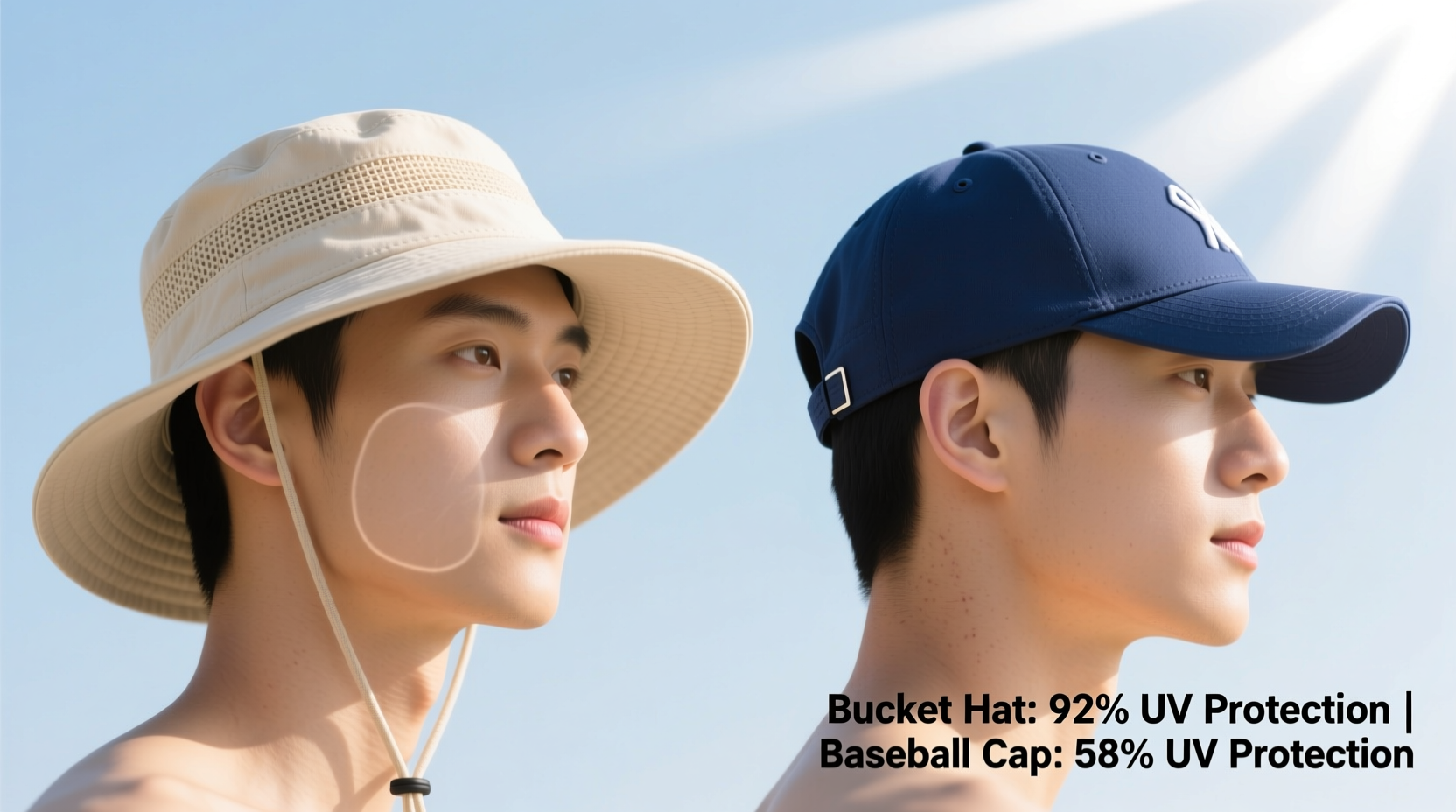
The sun emits UVA and UVB rays, both of which contribute to premature aging, eye damage, and an increased risk of skin cancer. According to the Skin Cancer Foundation, the face, ears, and neck are among the most commonly affected areas because they’re frequently exposed and often underprotected. Wearing a hat is one of the simplest yet most effective ways to reduce UV exposure to these vulnerable zones.
However, not all hats offer equal protection. Factors such as brim width, fabric density, weave tightness, color, and coverage area determine a hat’s effectiveness. A study published in *JAMA Dermatology* found that broad-brimmed hats block up to 70% more UV radiation than traditional baseball caps, especially on the ears and neck. This sets the stage for a deeper comparison between bucket hats and baseball caps—two styles that look similar at first glance but perform very differently under the sun.
Coverage Comparison: Bucket Hat vs Baseball Cap
The primary difference between a bucket hat and a baseball cap lies in their design and coverage. Let’s break down what each provides:
- Baseball Cap: Features a stiff front bill and a rounded crown that covers the top of the head. The back is typically open or adjustable, and the brim extends only in the front.
- Bucket Hat: Has a soft, downward-sloping brim that circles the entire head, offering 360-degree shade. It usually has a relaxed fit and sits lower on the forehead and ears.
This structural contrast leads to significant differences in protection:
| Feature | Baseball Cap | Bucket Hat |
|---|---|---|
| Front Coverage | Excellent (long brim) | Good (shorter, flexible brim) |
| Sides & Ears | Poor (no brim on sides) | Very Good (full wraparound brim) |
| Neck Protection | None | Good (brim extends over nape) |
| Top of Head | Full | Full |
| UV Protection Potential | Moderate | High |
The data shows that while baseball caps excel at shielding the face and eyes from direct overhead sunlight, they leave the ears, jawline, and neck completely exposed—areas particularly prone to sunburn and skin damage. In contrast, the bucket hat’s circular brim creates a \"micro-shade zone\" around the head, significantly reducing scattered and reflected UV rays.
Tip: For maximum protection, pair any hat with UV-blocking sunglasses and broad-spectrum SPF 30+ sunscreen on exposed areas like the back of the neck and hands.Material and UPF Ratings Matter
Beyond shape and coverage, the material used in a hat determines its actual sun-blocking capability. The Ultraviolet Protection Factor (UPF) rating measures how effectively a fabric blocks UV radiation. A UPF 50 fabric, for example, allows only 1/50th (2%) of UV rays to pass through—offering excellent protection.
Many modern bucket hats are made from tightly woven nylon, polyester, or cotton blends specifically designed for outdoor use, often labeled with UPF 30+ or higher. Some even feature moisture-wicking and quick-dry technologies, making them ideal for hiking, fishing, or beach days.
Baseball caps, on the other hand, are traditionally made from cotton or wool—which may have looser weaves and lower inherent UV resistance. While performance versions now include UPF-rated synthetics, many casual or fashion-focused caps lack this certification. Additionally, the curved brim is often thinner and less dense, allowing more UV penetration.
“Hats with wide, flexible brims made from high-UPF fabrics offer superior protection compared to structured caps with limited coverage.” — Dr. Naomi Patel, Board-Certified Dermatologist
When shopping for sun-safe headwear, always check for a UPF label. If unavailable, opt for darker colors (which absorb more UV than light ones) and tightly woven fabrics. Hold the material up to the light: if you see many pinpoints of light passing through, it likely offers poor UV protection.
Real-World Use Case: A Day at the Beach
Consider two friends spending a day at the seaside: Alex wears a classic navy baseball cap, while Jordan chooses a khaki bucket hat with UPF 50+ rating.
By mid-afternoon, Alex notices a painful burn behind the ears and along the back of the neck—common “baseball cap burn” zones. Despite reapplying sunscreen earlier, the constant movement and sweat caused uneven coverage, and the cap offered no physical barrier to low-angle sunlight reflecting off the sand and water.
Jordan, however, remains cool and burn-free. The bucket hat shaded the ears, neck, and shoulders throughout the day. Even when sitting sideways to the sun, the wraparound brim adjusted naturally with head movements, maintaining consistent protection. The lightweight, breathable fabric also prevented overheating.
This scenario illustrates a key principle: sun protection isn’t just about blocking direct sunlight—it’s about minimizing cumulative exposure from all angles, including reflections from surfaces like water, sand, snow, and concrete.
Practical Tips for Choosing the Best Sun Hat
Selecting between a bucket hat and a baseball cap depends on your activity, environment, and personal needs. Use the following checklist to guide your decision:
Checklist: How to Choose a Sun-Safe Hat- ✅ Look for a brim that is at least 3 inches wide all around (ideal for bucket hats).
- ✅ Check for a UPF 30+ or UPF 50+ label on the fabric.
- ✅ Prioritize full ear and neck coverage if you’ll be outdoors for extended periods.
- ✅ Choose darker or neutral colors—they absorb UV rays better than white or pastels.
- ✅ Ensure the hat fits securely and won’t blow off in wind.
- ✅ Consider ventilation features (like mesh panels) for comfort in hot climates.
- ✅ Avoid straw hats with visible gaps unless they have a tight weave or inner liner.
If you're torn between style and function, consider hybrid options. Some brands now offer “sun caps” that combine the front brim of a baseball cap with side and rear flaps that can be folded down during peak sun hours. Others produce sporty bucket hats with adjustable chin straps and packable designs for travel.
When a Baseball Cap Might Be the Better Choice
Despite its limitations, the baseball cap still has its place. It excels in situations where:
- You need focused front shading without excess fabric (e.g., driving, golf swings).
- Headroom is limited (e.g., under a hood, inside a car, or wearing a helmet).
- Style and branding matter (e.g., sports events, casual wear).
- You're engaged in high-motion activities requiring minimal obstruction.
In these cases, pairing a baseball cap with additional protections—such as a neck gaiter, sunscreen on ears and neck, or polarized sunglasses—can compensate for its lack of full coverage. However, relying solely on a baseball cap for prolonged sun exposure increases risk.
Frequently Asked Questions
Can I get enough sun protection from a white baseball cap?
Not reliably. White fabrics reflect visible light but often transmit more UV radiation than darker colors. A white cotton baseball cap may have a UPF of only 5–10, meaning it blocks less than 90% of UV rays. Combine it with sunscreen and avoid midday sun for safer results.
Are bucket hats suitable for formal or professional settings?
It depends on the design. Traditional bucket hats may seem too casual for office environments, but modern versions in neutral tones (like beige, olive, or navy) and structured shapes can work in outdoor workplaces or creative industries. For formal occasions, consider a Panama hat or wide-brimmed fedora instead.
Do kids benefit more from bucket hats than baseball caps?
Absolutely. Children’s skin is more sensitive to UV damage, and they often spend long hours playing outdoors. Bucket hats provide broader protection for their delicate ears and necks. Many pediatric dermatologists recommend wide-brimmed or bucket-style hats as part of a complete sun safety routine for children.
Final Recommendation: Prioritize Coverage and Fabric
If your main goal is sun protection, the bucket hat is the superior choice. Its full-circumference brim, combined with high-UPF materials, offers comprehensive defense against direct, indirect, and reflected UV rays. It outperforms the baseball cap in every key metric related to skin safety, especially during extended outdoor exposure.
That said, the baseball cap remains a practical option for short-duration activities or when mobility and style are priorities. But never assume it’s enough on its own. Always supplement it with sunscreen on exposed areas and consider upgrading to a sun-optimized version with side flaps or UV-resistant fabric.
Ultimately, the best hat is the one you’ll wear consistently. Choose a design that fits your lifestyle, feels comfortable, and meets sun safety standards. Whether you lean toward the laid-back vibe of a bucket hat or the sporty familiarity of a baseball cap, make protection your top priority.
💬 What’s your go-to sun hat? Share your favorite brand, style, or tip in the comments below—and help others stay safe under the sun!








