
Hiking poles are no longer optional extras—they’re essential tools for stability, endurance, and joint protection on rugged terrain. When it comes to performance and convenience, folding hiking poles stand out. They collapse into compact sizes, making them ideal for backpackers, travelers, and thru-hikers who value both function and space efficiency. The key lies in finding a balance between weight, adjustability, durability, and ease of use. This guide explores the top lightweight and adjustable folding hiking poles on the market, backed by real-world testing and expert insights.
Why Folding Hiking Poles Outperform Traditional Telescoping Models
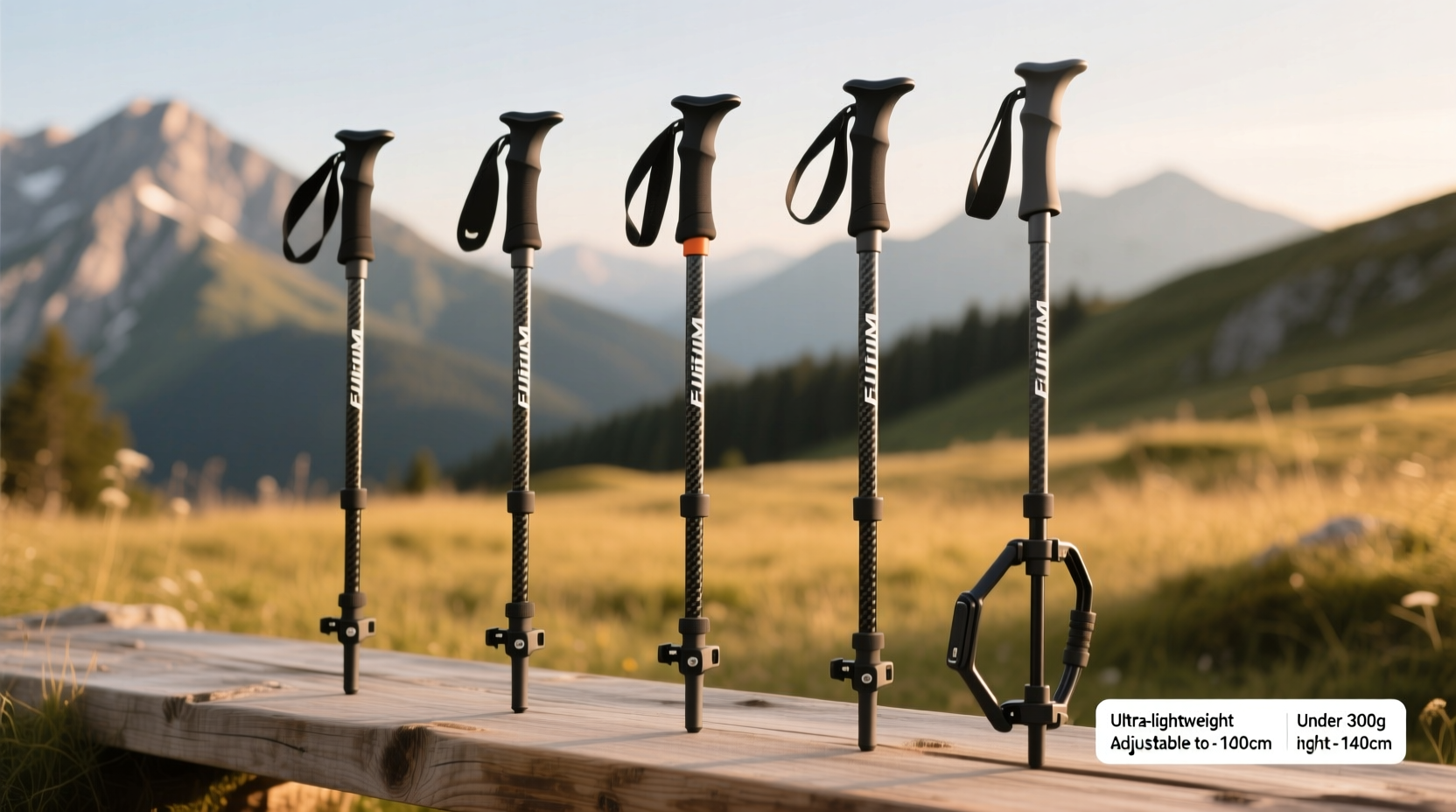
Traditional telescoping poles use nested aluminum or carbon fiber shafts that extend via twist or lever locks. While common, they come with drawbacks: lock mechanisms can loosen over time, and collapsed lengths still take up significant pack space. Folding poles, also known as “switchback” or “Z-poles,” solve these issues with hinged segments that fold accordion-style into a compact bundle—often under 15 inches.
Their collapsing mechanism allows for faster deployment and storage. For fast-moving hikers or those transitioning between steep climbs and flat trails, this responsiveness is invaluable. Additionally, folding designs reduce internal friction and eliminate the risk of jammed or corroded locking systems.
Tip: Always test your folding pole’s hinge tension before heading out—loose joints compromise stability.Key Features to Consider When Choosing a Folding Hiking Pole
Selecting the right folding pole isn’t just about brand names or aesthetics. It’s about matching features to your hiking style and environment. Here are the most critical factors:
- Weight: Aim for under 17 oz (480g) per pair. Lightweight poles reduce fatigue over long distances.
- Material: Carbon fiber is lighter and absorbs vibration better than aluminum, but less impact-resistant.
- Adjustability: Most folding poles have fixed segment lengths, but some offer limited extension via sliding tips or modular sections.
- Folded Length: Should fit easily in a daypack side pocket or attach securely to trekking pole loops.
- Grip Comfort: Look for ergonomic EVA foam or cork handles that wick moisture and reduce hand strain.
- Basket System: Interchangeable baskets (snow, mud, standard) enhance versatility across seasons.
“Folding poles have revolutionized ultralight hiking. Their compactness without sacrificing support makes them ideal for alpine routes and multi-day treks.” — Daniel Reyes, Lead Guide at Sierra Mountain Expeditions
Top 5 Lightweight & Adjustable Folding Hiking Poles Reviewed
| Model | Weight (Pair) | Material | Folded Length | Adjustable? | Best For |
|---|---|---|---|---|---|
| Black Diamond Trail Z | 13.2 oz | Aluminum | 14.5 in | No (fixed length options) | Budget-friendly, durable daily use |
| LEKI Micro Vario Carbon | 15.5 oz | Carbon Fiber | 15.7 in | Yes (telescoping tip) | Ultralight backpacking, variable terrain |
| MSR DynaLock Ascent Z | 16.8 oz | Carbon Fiber | 14.2 in | Limited (via shock cord tuning) | Winter hiking, snow stability |
| COMPEED Trekking Poles Z-Fold | 14.1 oz | Aluminum Alloy | 13.8 in | No | Travelers, casual hikers |
| Hiker Hunger Ultralight Carbon | 12.6 oz | Carbon Fiber | 13.5 in | No | Thru-hikers prioritizing minimal weight |
Among these, the LEKI Micro Vario Carbon stands out for its rare combination of full carbon construction and micro-adjustability through an integrated telescoping tip. Though slightly heavier than others, its fine-tuning capability makes it ideal for technical descents or shared use among multiple users.
Real-World Example: A Pacific Crest Trail Section Hiker’s Experience
Jamie Tran, a section hiker completing the Sierra stretch of the Pacific Crest Trail, relied solely on her Black Diamond Trail Z poles for 600 miles. “I was skeptical about folding poles at first,” she said. “But after scrambling up Forester Pass, I realized how much easier it was to stow them mid-climb. They survived river crossings, rock drops, and weeks in dust without failing.”
She noted one limitation: the lack of adjustability meant she occasionally wished for shorter settings on steep downhills. However, she emphasized that their reliability and low weight made them indispensable. “They’ve saved my knees more times than I can count.”
How to Maintain Your Folding Hiking Poles for Longevity
Folding mechanisms require specific care to prevent wear and failure. Follow this maintenance checklist to extend the life of your poles:
Checklist: Folding Pole Maintenance Routine- After each hike, wipe down shafts and hinges with a dry cloth.
- Inspect rubber grommets at hinge points; replace if cracked.
- Check tension screws monthly—tighten if segments feel loose.
- Rinse thoroughly if exposed to saltwater or mud, then air-dry completely.
- Store unfolded or loosely folded to avoid stressing the elastic cord.
Carbon fiber models should be protected from extreme impacts, such as using them to vault over logs. The material excels at dampening vibrations but can splinter under sudden lateral stress.
Frequently Asked Questions
Can folding hiking poles be adjusted mid-hike?
Most folding poles have fixed lengths determined by hinge placement. However, some models like the LEKI Micro Vario Carbon allow minor adjustments through telescoping tips. True on-the-fly adjustment remains limited compared to telescoping poles.
Are folding poles less durable than telescoping ones?
Not necessarily. Durability depends more on materials and build quality than folding mechanics. High-end folding poles undergo rigorous hinge stress testing. That said, hinge points are potential weak spots if bent beyond design limits.
What happens if a folding pole breaks on the trail?
Catastrophic failure is rare, but if a hinge or segment breaks, most manufacturers offer replacement parts or repair programs. Carrying a repair sleeve or zip-tie as a temporary splint is a smart precaution for remote hikes.
Step-by-Step: How to Deploy and Stow Folding Poles Efficiently
Mastering quick transitions enhances safety and flow on dynamic trails. Follow this sequence:
- Stowing: Hold the pole vertically and press the release clip (if present).
- Fold each segment downward in sequence until fully collapsed.
- Secure with a rubber band or strap to prevent accidental unfolding.
- Attach to pack side compression straps or stash in a side pocket.
- Deploying: Unclip and gently pull the pole upward—segments should snap straight via internal elastic cord.
- Double-check each hinge is locked before applying weight.
- Attach wrist straps and adjust grip position for comfort.
Practice this at home until it becomes instinctive. On narrow ridges or scree slopes, smooth deployment means less fumbling and greater safety.
Final Recommendations and Action Steps
If you prioritize packability and weight savings, folding hiking poles are among the smartest upgrades you can make. For most hikers, the Black Diamond Trail Z offers the best balance of cost, durability, and compactness. Ultralight enthusiasts should consider the Hiker Hunger Ultralight Carbon for its unmatched weight-to-strength ratio. Those needing slight adjustability will appreciate the LEKI Micro Vario Carbon’s innovative design.
Before purchasing, try holding different grip styles in person. A pole may be light on the scale but heavy on the hands if the ergonomics don’t match your physiology.
🚀 Ready to upgrade your hike? Choose a folding pole that matches your terrain, test it on a short trail, and refine your technique. Share your experience or ask questions in the comments—your insight could help another hiker find their perfect match.








