
As urban gardening and space-efficient food production gain momentum, more home growers are turning to vertical cultivation methods to grow staple crops like potatoes. Traditional in-ground row planting requires significant land area, but vertical systems—using towers, bags, stacked containers, or trellised planters—allow gardeners to produce abundant harvests in minimal footprint. Central to this method’s success is selecting the right potato varieties: those that exhibit strong upward growth, adapt well to confined root zones, and reliably produce tubers along the stem when hilled vertically. Not all potatoes respond equally to these conditions. Some remain compact and low-yielding, while others thrive when encouraged to climb. Understanding which cultivars are genetically predisposed to perform in vertical setups is essential for maximizing both yield and quality. This guide identifies the most effective climbing-type potatoes for vertical growing, explains their performance traits, and provides practical cultivation strategies to ensure success.
Definition & Overview: What Are Climbing Potatoes?
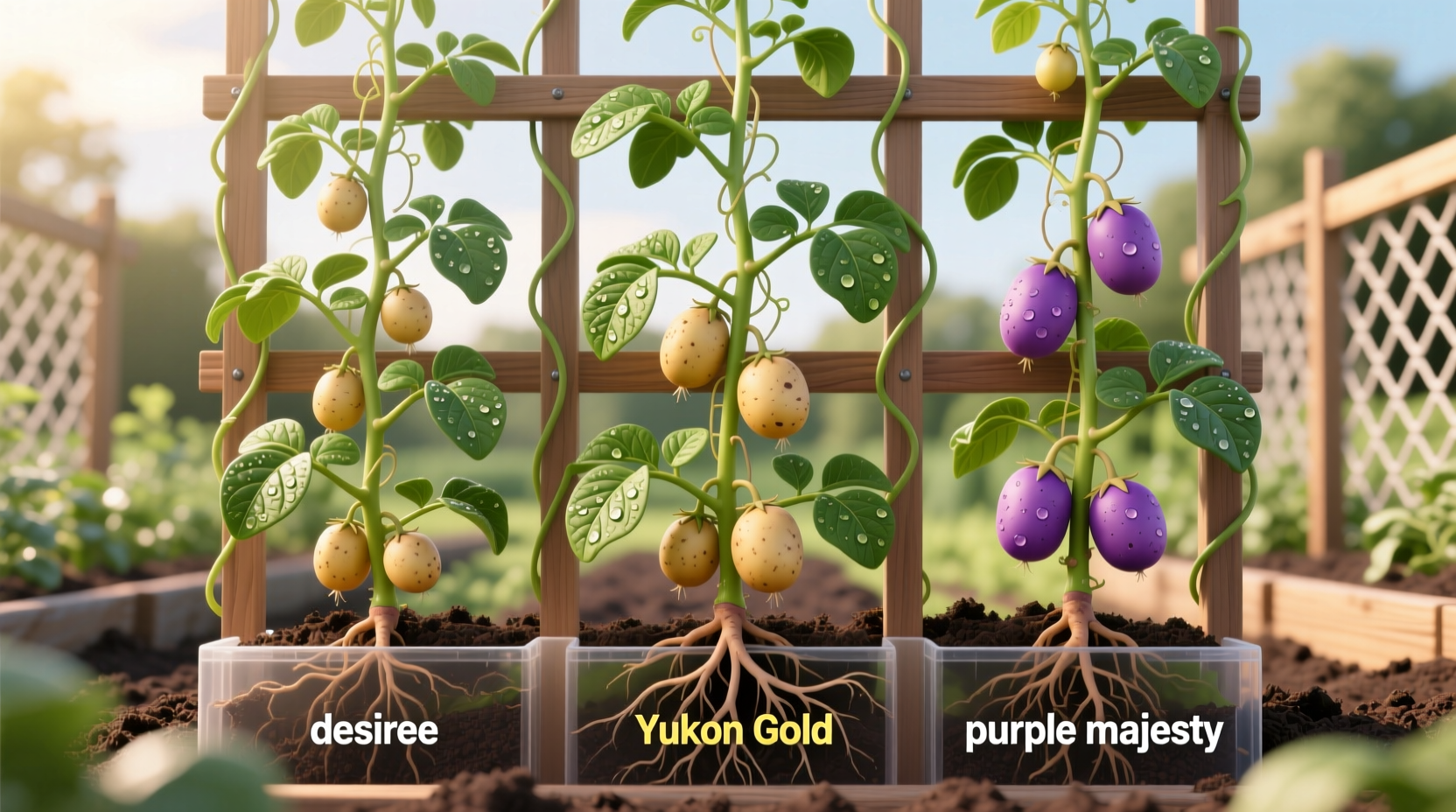
The term “climbing potatoes” is somewhat misleading, as true potatoes (Solanum tuberosum) do not climb like vines such as beans or cucumbers. Instead, the phrase refers to potato varieties that exhibit vigorous, upright, and often sprawling foliage capable of supporting repeated hilling—a technique where soil or growing medium is added around the base of the plant as it grows, encouraging the formation of additional tubers along buried stems. In vertical gardening, this principle is amplified: instead of mounding earth outward, gardeners build upward using layered containers, fabric sacks, or tower structures filled with soil, compost, or straw. The most suitable varieties for this method are those that develop long stolons (underground stems) and continue producing tubers at multiple levels when covered incrementally.
These varieties typically belong to early, mid-season, or late-maturing groups but share a common trait: indeterminate growth habit. Unlike determinate types that form a fixed number of tubers close to the crown and stop growing after flowering, indeterminate potatoes keep producing new stems and potential tuber sites as long as environmental conditions allow. This makes them ideal candidates for vertical culture, where continuous hilling mimics natural layering and stimulates higher yields per plant.
Key Characteristics of Ideal Vertical-Growing Potato Varieties
When evaluating potato cultivars for vertical systems, several key characteristics determine suitability:
- Indeterminate Growth Habit: Continues producing stems and tubers over time, responding well to repeated hilling.
- Vigorous Foliage Development: Strong, upright shoots that can support added weight from soil layers.
- Long Stolon Production: Ability to generate stolons several inches long, increasing tuber set along buried stems.
- Disease Resistance: Tolerance to common pathogens like blight, scab, or viruses, especially important in dense, moisture-retentive vertical media.
- Adaptability to Container Media: Performs well in potting mixes, compost blends, or straw-based substrates rather than native soil.
- Short to Mid-Season Maturity: Faster maturation reduces risk of pest pressure and allows earlier harvest before foliage collapses.
| Characteristic | Why It Matters | Top Performers |
|---|---|---|
| Indeterminate Growth | Enables multiple hilling cycles and extended tuber formation | Russet Burbank, Vitelotte Noire, German Butterball |
| Foliage Vigor | Supports structural integrity under layered soil | Kennebec, Yukon Gold, Red Pontiac |
| Stolon Length | Increases number of viable tuber sites along stem | Desirée, Purple Majesty, French Fingerling |
| Blight Resistance | Reduces disease risk in humid microclimates of vertical beds | Cosmos, Sarpo Mira, Cara |
| Container Adaptability | Thrives in confined, engineered soils without compaction stress | All fingerlings, Chieftain, Maris Piper |
Practical Usage: How to Grow Potatoes Vertically Using Climbing Varieties
Growing potatoes vertically leverages space-saving design while enhancing air circulation and reducing soil-borne diseases. The process begins with selecting an appropriate structure—common options include potato towers, fabric grow bags, PVC-pipe cylinders, wooden crates, or repurposed barrels with removable side panels. Regardless of the system, the core principle remains the same: start with a small amount of growing medium at the bottom, plant seed potatoes, and as the green shoots emerge, gradually add more material to cover all but the top few inches of foliage. This forces the plant to behave as if it's naturally being buried by sediment, stimulating lateral stem development and tuberization at each new level.
For best results, follow this step-by-step protocol:
- Choose a container at least 3–4 feet tall and 18–24 inches wide to accommodate root expansion and multiple hilling stages.
- Begin with 6–8 inches of high-quality potting mix blended with compost and slow-release organic fertilizer. Avoid heavy garden soil, which may compact and restrict drainage.
- Plant certified disease-free seed potatoes (not grocery store tubers), spacing two to three per large container depending on size.
- Once shoots reach 8–10 inches, add 4–6 inches of fresh mix, covering all but the uppermost leaves. Repeat every 10–14 days until the container is nearly full.
- Water consistently, ensuring even moisture without saturation. Vertical systems dry out faster than ground plots, so daily checks may be necessary during hot weather.
- Provide partial shade in extreme heat, as black plastic bags or dark-colored towers can overheat roots.
- Harvest \"new\" potatoes about 7–9 weeks after planting by reaching into lower access ports or removing bottom panels. For maincrop harvest, wait until foliage yellows and dies back completely.
Pro Tip: Insert a perforated 4-inch PVC pipe down the center of your tower before filling. This acts as an internal watering and fertilizing column, delivering nutrients directly to deeper roots and improving moisture distribution throughout the structure.
Variants & Types: Top Potato Cultivars for Vertical Systems
While hundreds of potato varieties exist, only a subset have demonstrated consistent performance in vertical growing trials. Below are the most reliable and widely recommended cultivars, categorized by type and use case:
1. Russet Burbank
A classic indeterminate russet known for its towering foliage and prolific tuber production. Widely used in commercial agriculture, it adapts exceptionally well to vertical hilling due to its long stolons and tolerance for deep burying. Tubers are large, oblong, and ideal for baking and frying. Requires 90–110 days to mature. Susceptible to late blight, so monitor closely in humid climates.
2. Yukon Gold
An early-to-mid season favorite with golden flesh and buttery flavor. Though semi-determinate, it responds surprisingly well to moderate hilling, especially in containers. Produces smooth, oval tubers excellent for boiling, roasting, and mashing. Ready in 80–90 days. Moderate disease resistance; avoid replanting in same mix.
3. Red Pontiac
A vigorous red-skinned variety with crisp texture and high yields. Its upright growth and strong stems make it ideal for stacking systems. Excellent for boiling and salads. Matures in 90–100 days. Resists common scab but watch for aphid infestations.
4. Desirée
A Dutch-bred red-fleshed potato with exceptional vertical performance. Features pink skin, creamy yellow-orange flesh, and a slightly sweet taste. Highly resistant to blight and tolerant of cooler temperatures. Forms tubers at multiple levels when hilled. Best harvested young or fully matured. Matures in 85–95 days.
5. Purple Majesty (and other purple-fleshed types)
Anthocyanin-rich tubers with striking color and nutty flavor. These varieties tend to have longer stolons and benefit significantly from vertical layering. Harvest early for tender baby potatoes or let mature for storage. Handle gently—purple skins can bruise easily. Matures in 80–90 days.
6. French Fingerling & Russian Banana
True standout performers in vertical systems. Their elongated shape and clustered growth mimic rhizomatic spreading, allowing them to fill available space efficiently. Develop numerous small tubers along buried stems. Exceptional flavor when roasted. Indeterminate growth allows extended hilling. Matures in 70–85 days.
7. German Butterball
A gourmet yellow-fleshed variety prized for rich, buttery taste and waxy texture. Exhibits strong indeterminate growth and produces generous yields in containers. Resistant to cracking and stores well. Prefers cooler soils; protect from overheating in black bags.
8. Cosmos
A newer blight-resistant variety developed specifically for organic and intensive systems. Bright red skin, white flesh, and compact yet productive growth. Performs excellently in stacked crates or towers. Early maturity (75 days) allows succession planting.
9. Sarpo Mira
Breeding breakthrough in disease resistance, particularly against late blight—the bane of many potato growers. Tall, bushy plants require staking in windy areas but reward with massive yields in vertical settings. Skin turns deep red; flesh is firm and flavorful. Long season (110+ days), but worth the wait for reliable performance in damp climates.
Comparison with Non-Climbing (Determinate) Varieties
Understanding the difference between determinate and indeterminate potatoes is critical when planning a vertical garden. Choosing the wrong type leads to poor yields and wasted effort.
| Feature | Indeterminate (Climbing-Type) | Determinate (Bush-Type) |
|---|---|---|
| Growth Habit | Continuous upward and lateral growth | Compact, stops growing after flowering |
| Hilling Response | Excellent—produces tubers at each layer | Poor—limited stolon development beyond crown |
| Ideal Use | Towers, grow bags, stacked planters | Traditional rows, shallow containers |
| Yield Potential | High (up to 5x more per plant) | Moderate (fixed tuber count) |
| Examples | Russet Burbank, Desirée, Fingerlings | Carola, Norland, Satina |
“In our trials at the Urban Ag Research Station, indeterminate varieties grown vertically yielded an average of 3.7 pounds per plant compared to just 1.2 pounds for determinate types under identical conditions.” — Dr. Elena Torres, Sustainable Horticulture Lab, University of Vermont
Practical Tips & FAQs
Can I grow any potato vertically?
No. Only indeterminate or semi-indeterminate varieties respond effectively to vertical hilling. Determinate types form all their tubers within a short window near the base and won’t produce additional yield when covered.
How many seed potatoes should I plant per tower?
In a standard 20-gallon grow bag or 3-foot tower, plant two to three seed potatoes. Overcrowding reduces airflow and increases competition for nutrients.
Do I need to cut seed potatoes before planting?
Larger seed pieces (1.5–2 oz with 2–3 eyes) can be cut and dried for 24–48 hours to form a protective callus. Smaller whole seeds do not require cutting.
What’s the best soil mix for vertical potato towers?
A blend of equal parts compost, coconut coir or peat moss, perlite, and well-rotted manure provides optimal structure, moisture retention, and fertility. Avoid garden soil, which compacts and may harbor pathogens.
Should I fertilize during the hilling process?
Yes. Apply a balanced organic fertilizer (such as 4-3-6) or compost tea every time you hill. Potatoes are heavy feeders, especially during tuber initiation.
How do I know when to harvest?
For new potatoes: Harvest 7–9 weeks after planting when flowers appear. For maincrop: Wait until foliage browns and collapses naturally. Cut back watering one week prior to encourage skin toughening for storage.
Can I reuse the growing medium?
Discard used mix after harvest. Reusing it risks spreading diseases like verticillium wilt or nematodes. Compost it separately and replace with fresh blend for next season.
Are sweet potatoes suitable for vertical growing?
Yes, but they are botanically unrelated to Irish potatoes. Sweet potatoes (Ipomoea batatas) vine aggressively and can be trained upward on trellises, though tuber formation still occurs underground. They require different timing and care.
Checklist: Preparing Your Vertical Potato System
- ☐ Select an indeterminate, disease-resistant variety
- ☐ Choose a container with adequate height and drainage
- ☐ Prepare a loose, fertile soilless mix
- ☰ Plant seed potatoes 4–6 inches deep
- ☐ Begin hilling once stems reach 8 inches
- ☐ Water deeply and regularly
- ☐ Monitor for pests (Colorado potato beetle, aphids)
- ☐ Harvest promptly upon vine dieback
Summary & Key Takeaways
Vertical potato cultivation offers a smart, efficient way to grow one of the world’s most important staple foods in limited spaces. Success hinges on choosing the right varieties—specifically those with indeterminate growth habits, vigorous foliage, and strong stolon development. Russets, fingerlings, Desirée, and certain colored varieties excel in stacked systems, yielding substantially more per square foot than traditional planting. By understanding the biological differences between determinate and indeterminate types, gardeners avoid common pitfalls and optimize their efforts.
Effective vertical growing combines proper cultivar selection with sound horticultural practices: gradual hilling, consistent irrigation, nutrient management, and timely harvesting. Structures such as towers and grow bags must be designed to support ongoing layering while maintaining good aeration and drainage. With attention to detail, even apartment dwellers with only a balcony can harvest several pounds of fresh, homegrown potatoes from a single compact unit.
Ultimately, the shift toward vertical farming isn't just about saving space—it's about reimagining how we grow food sustainably. By leveraging the natural adaptability of climbing-type potatoes, modern gardeners tap into centuries of agricultural wisdom while embracing innovative techniques for the future.
Ready to maximize your harvest? Start with Russet Burbank or French Fingerling in a fabric grow bag this season—and discover how high your potatoes can really climb.









