If you've ever stood in a store debating between a baseball tee and a sports jersey—both emblazoned with your favorite team's logo—you’ve likely asked yourself: Is there actually a meaningful difference, or am I overthinking this? The price gap can be significant. One might cost $25; the other, $60 or more. But does that translate to real-world value? And more importantly, does anyone around you even care?
The short answer: yes, there’s a difference. Whether it matters depends on what you’re looking for—comfort, authenticity, durability, or social signaling. Let’s break it down beyond surface-level aesthetics.
Understanding the Basics: What Each Garment Is
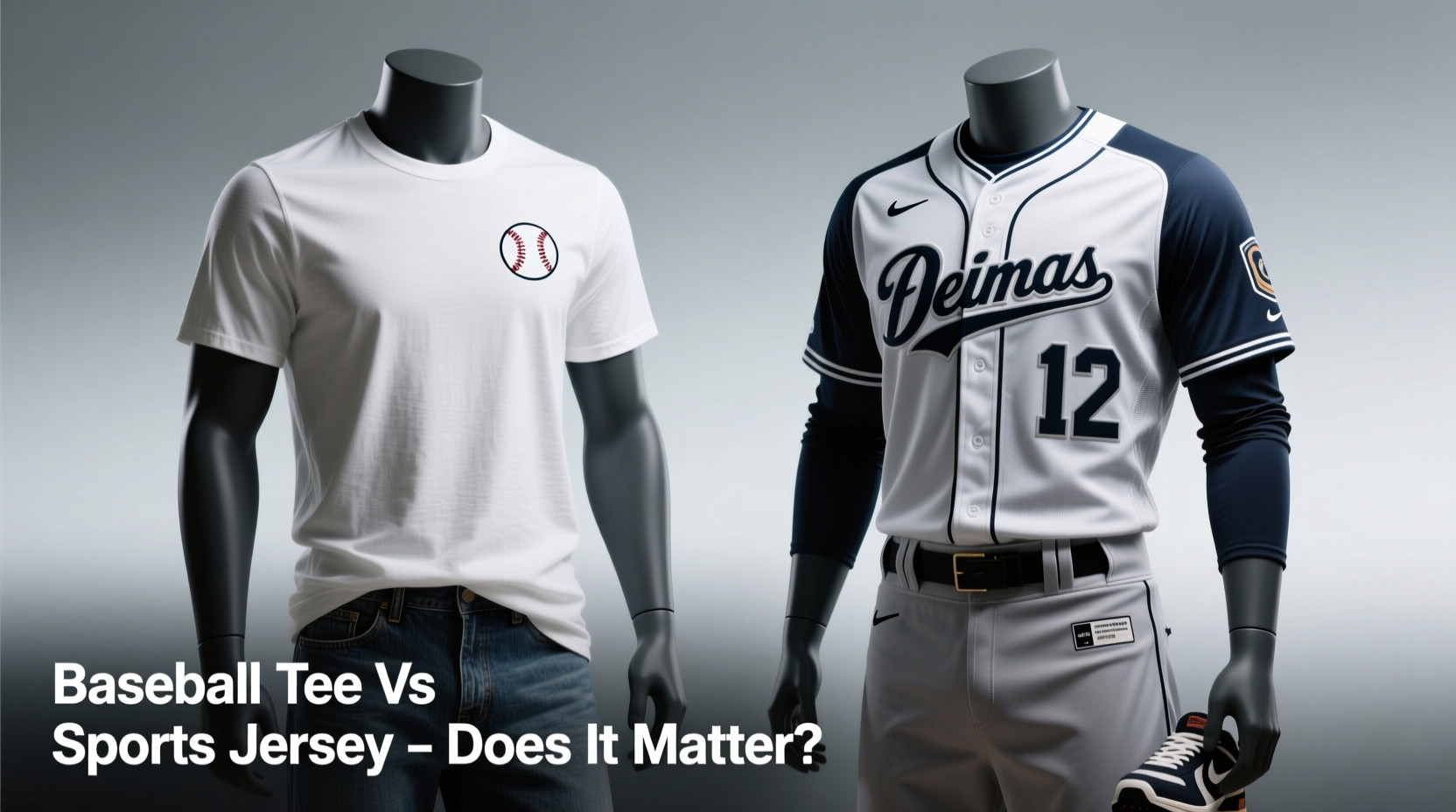
A baseball tee is typically a casual cotton t-shirt with a retro-inspired design, often featuring vintage team logos, distressed graphics, or throwback color schemes. It’s marketed as fan apparel but designed for everyday wear—think game-day bar outings, weekend errands, or lounging at home.
A sports jersey, particularly an authentic or replica version sold by official leagues (like MLB), is engineered performance wear. Made from moisture-wicking synthetic fabrics like polyester mesh, it mirrors what players wear on the field. These come in two main tiers: “replica” (slightly looser, consumer-grade) and “authentic” (game-used cut and material, premium price).
The confusion arises because both garments represent team pride. But their purpose diverges sharply.
Material & Construction: Where the Real Difference Lies
Cotton tees breathe well and feel soft initially, but they absorb sweat, stretch out over time, and fade with washing. A standard baseball tee is usually 100% cotton or a cotton blend, screen-printed or heat-pressed with graphics. It’s not built for movement or prolonged physical activity.
In contrast, sports jerseys use technical fabrics designed for breathability, durability, and shape retention. They feature stitched-on numbers and names (not printed), reinforced seams, and tailored cuts meant to allow full range of motion. Even replica jerseys are constructed with attention to detail that casual tees rarely match.
Tip: If you plan to wear the shirt during outdoor games, workouts, or hot weather, skip the cotton tee—go for the jersey’s performance fabric.Comparative Breakdown: Baseball Tee vs Sports Jersey
| Feature | Baseball Tee | Sports Jersey |
|---|---|---|
| Fabric | Cotton or cotton blend | Polyester mesh (moisture-wicking) |
| Fit | Relaxed, boxy | Tailored, athletic cut |
| Durability | Moderate (fades, shrinks, stretches) | High (retains shape, resists wear) |
| Graphics | Printed or heat-pressed | Stitched twill or sublimated |
| Price Range | $15–$35 | $50–$120+ |
| Best Use Case | Casual wear, fan events, gifts | Games, active viewing, collectibles |
Do People Actually Notice the Difference?
Anecdotally, most casual observers won’t scrutinize your shirt unless they’re deeply into sports culture. At a backyard BBQ, coworkers probably won’t distinguish between a $20 tee and a $70 jersey. But context matters.
At a live game, especially among die-hard fans, details stand out. A fan wearing an authentic jersey with correct player number, year, and stitching signals deeper allegiance. It’s akin to showing up to a car meet in a factory-original Mustang versus a replica decal on a sedan. Enthusiasts notice—and sometimes judge.
“Wearing an authentic jersey isn’t about flexing. It’s about respect—for the team, the players, and the tradition.” — Marcus Tran, Sports Apparel Curator at FanThread Collective
This doesn’t mean you need one. But if being seen as a “real” fan matters to you—or if you want to feel connected to the game on a deeper level—the jersey carries symbolic weight the tee simply can’t replicate.
When the Upgrade Makes Sense (And When It Doesn’t)
Spending extra only makes sense if the benefits align with your lifestyle. Consider these scenarios:
- You attend live games regularly. Jerseys are common, expected even. A cotton tee may look out of place unless styled intentionally (e.g., under a flannel).
- You sweat easily or sit in direct sun. Polyester wicks moisture and dries fast. Cotton holds sweat and clings uncomfortably.
- You collect memorabilia. Authentic jerseys hold value. Some resale for more than retail, especially limited editions.
- You’re buying for a gift. A jersey feels more special, more intentional. It’s a statement piece.
Conversely, if you’re buying a shirt just to show team support once a season, or you prioritize comfort over accuracy, a baseball tee is perfectly sufficient. There’s no shame in choosing practicality.
Mini Case Study: Jake’s Game-Day Dilemma
Jake bought a vintage-style baseball tee for his first-ever trip to Wrigley Field. He loved the retro Cubs logo and how soft the cotton felt. But when temperatures hit 90°F and he spent six innings standing, cheering, and sweating through three beers, the shirt clung to his back, the print cracked near the seams, and by the seventh inning, he regretted not spending the extra $40.
The next season, he upgraded to a replica jersey. Lighter, breathable, and easier to move in, it survived multiple games, washes, and even a rain delay without issue. “I didn’t think people noticed,” he said, “but three strangers complimented my jersey. One asked where I got the player name right. Never happened with the tee.”
How to Decide: A Practical Checklist
Before purchasing, ask yourself these questions:
- Will I wear this more than 3–5 times a year?
- Do I care about accurate team representation (player name, number, patch details)?
- Am I likely to sweat, travel, or be active while wearing it?
- Does appearance matter in fan-heavy environments (stadiums, watch parties, tailgates)?
- Is this something I’d want to keep long-term or pass down?
If you answered “yes” to two or more, the jersey is likely worth the investment. If not, the baseball tee wins on value and simplicity.
FAQ
Can I machine wash a sports jersey?
Yes, but with caution. Turn it inside out, use cold water, and air dry or tumble dry low. Avoid bleach and fabric softener, which degrade elastic fibers and wicking properties.
Are there fake jerseys that look authentic?
Yes—many third-party brands sell imitation jerseys at lower prices. While they mimic the look, they often use inferior stitching, thinner fabric, and incorrect details. True fans spot the differences quickly.
Is a baseball tee uncool if I own a jersey?
Not at all. Many fans layer both into their wardrobe. A vintage tee works better with jeans and sneakers off-field; a jersey shines at the ballpark. Context defines appropriateness, not hierarchy.
Final Thoughts: Value Beyond Visibility
People may not always notice the difference between a baseball tee and a sports jersey—but you will. It’s in how the fabric feels after an hour in the sun, how the shoulders don’t sag after a season of wear, or how confidently you wear it knowing it’s the real deal.
The question isn’t whether others see the upgrade. It’s whether you feel the difference. For some, a $20 tee expresses enough loyalty. For others, wearing a jersey is part of the ritual—the uniform connecting fan to field.
So no, you’re not wasting money if you choose the jersey. And no, you’re not missing out if you stick with the tee. The real win is making an intentional choice based on how you engage with the game.
💬 What’s your go-to fan gear? Share your thoughts on tees vs. jerseys—practicality, pride, or price—and help others decide what fits their fandom best.








