The humble t-shirt is a cornerstone of modern wardrobes. But within that simplicity lies a quiet debate: should you go for the bold statement of a baseball tee or stick with the timeless reliability of a plain tee? The answer isn’t just about fashion—it’s about lifestyle, durability, versatility, and personal expression. As streetwear trends push graphic and athletic-inspired styles into mainstream fashion, the baseball tee has gained traction. Yet, the classic plain tee remains an enduring favorite. Understanding the real differences helps you make intentional choices without falling prey to fleeting trends.
Understanding the Designs: What Sets Them Apart?
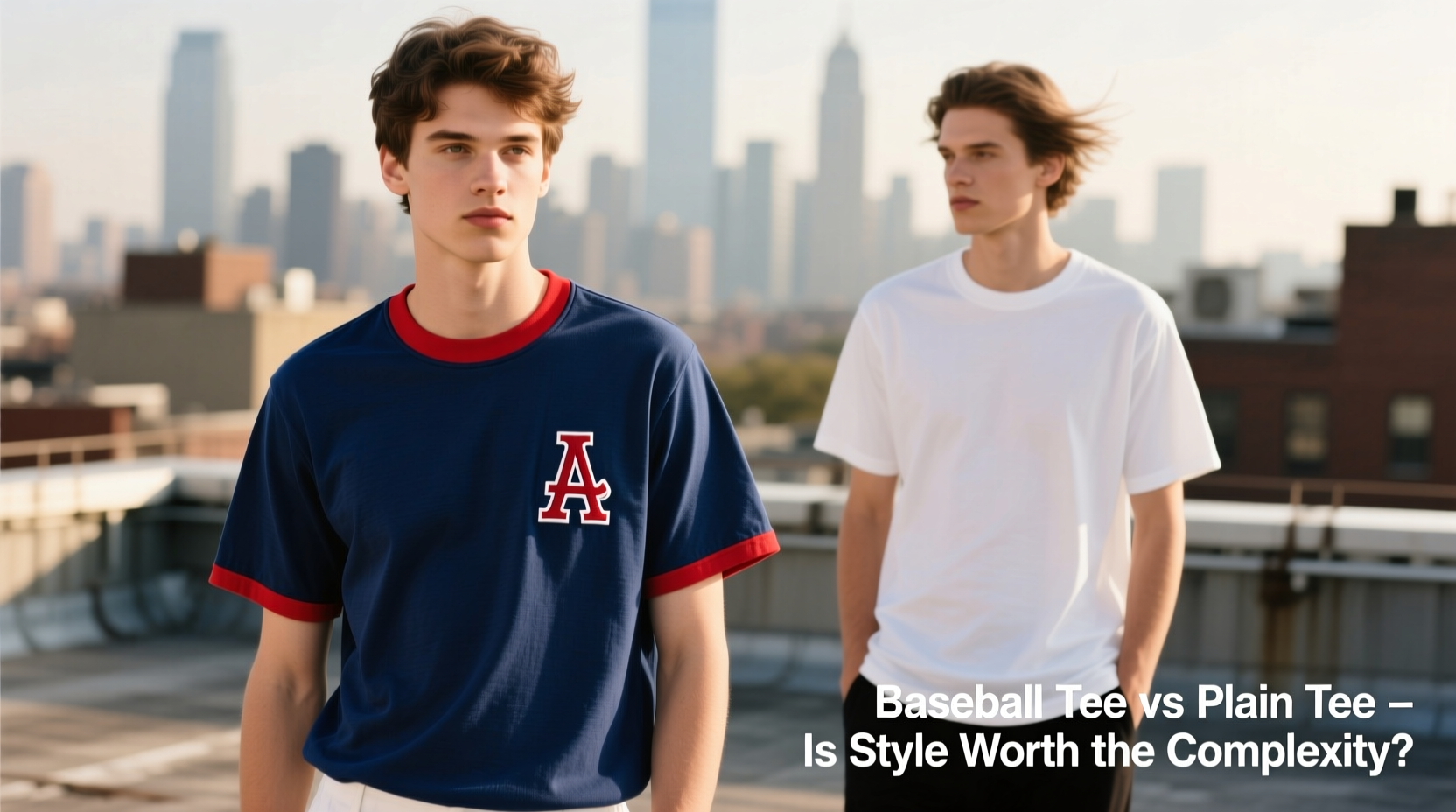
The most obvious distinction between a baseball tee and a plain tee lies in construction and aesthetic. A baseball tee—often called a raglan tee—features contrasting colored sleeves, typically in black, white, grey, or red, running diagonally from underarm to collar. This design originated in baseball uniforms for better visibility of arm movement. Modern versions retain this signature three-color pattern (usually two sleeve colors and one body color) and often use cotton-polyester blends for stretch and moisture-wicking properties.
In contrast, a plain tee is uniformly colored, made from 100% cotton or cotton blends, and designed for minimalism. Its strength lies in neutrality—no visual distractions, no loud patterns, just clean lines and consistent texture. While baseball tees lean toward sporty or casual streetwear aesthetics, plain tees serve as blank canvases suitable for layering, formal-casual transitions, or under-shirts.
Material & Fit Differences
Baseball tees often prioritize performance. Many are made with 65% polyester and 35% cotton to enhance durability, reduce shrinkage, and improve flexibility during movement. They usually feature a looser, athletic cut to accommodate motion. Plain tees, especially premium ones, favor softness and breathability, using ring-spun or combed cotton. These tend to have slimmer or standard fits and may require more delicate care to maintain shape.
Tip: If you're active or prioritize comfort in motion, a baseball tee’s fabric blend and raglan sleeves offer superior range.Versatility and Styling Potential
When evaluating wardrobe value, versatility matters more than momentary appeal. A plain tee wins in adaptability. It pairs effortlessly with blazers, cardigans, jeans, chinos, or even under denim jackets without clashing. Its uniform color ensures it doesn’t compete with other elements in an outfit. You can dress it up or down depending on fabric weight and fit.
Baseball tees, while stylish, are inherently more niche. Their contrasting sleeves draw attention and set a casual, sporty tone. Wearing one with tailored trousers might look mismatched unless intentionally styled for contrast. They shine in weekend wear, athleisure outfits, or with shorts and sneakers—but rarely transition into semi-formal settings.
“Clothing should serve your life, not dictate it. A piece that only works in one context limits your options.” — Marcus Lin, Menswear Stylist & Wardrobe Consultant
Styling Scenarios Compared
| Scenario | Plain Tee Suitability | Baseball Tee Suitability |
|---|---|---|
| Casual day out | ★★★★★ | ★★★★☆ |
| Office (casual Friday) | ★★★★☆ | ★★☆☆☆ |
| Workout or gym session | ★★★☆☆ | ★★★★★ |
| Dinner date | ★★★★☆ | ★★☆☆☆ |
| Layering under jackets | ★★★★★ | ★★★☆☆ |
Longevity and Practicality
Fashionable designs often sacrifice longevity for novelty. Baseball tees, with their multi-panel construction and synthetic blends, may resist pilling and stretching better than basic cotton tees. However, the seams where different fabrics meet are potential weak points. Over time, these can fray or separate, especially after repeated washing.
Plain tees, particularly those made from high-quality cotton, age gracefully. With proper care—cold washes, inside-out laundering, air drying—they maintain softness and shape for years. Faded plain tees even gain character, becoming wardrobe staples with a lived-in feel. In contrast, a worn baseball tee may look outdated rather than vintage due to its specific color blocking.
Tip: Turn any tee inside out before washing to preserve color and reduce surface abrasion.Cost vs. Value Analysis
Baseball tees often carry a price premium—sometimes 20–40% more than comparable plain tees—due to added manufacturing complexity and branding appeal. But does this translate to better value? Not necessarily. Unless you’re frequently in athletic or streetwear-centric environments, you may not wear it enough to justify the cost. A $25 baseball tee worn 10 times costs $2.50 per wear. A $15 plain tee worn 30 times costs just $0.50 per wear—offering far greater long-term value.
Real-Life Example: Two Men, Two Approaches
Consider two professionals in their early 30s with similar lifestyles. Daniel invests in five baseball tees, drawn to their retro athleticism. He wears them mostly on weekends or casual outings. After a year, two show pilling at the seams, and he feels they’ve gone out of style. His rotation stagnates.
James opts for eight high-quality plain tees in neutral tones. He mixes them with different jackets, watches, and footwear to create varied looks. Some fade gently, adding charm. After 18 months, all remain wearable. He spends less annually and owns more functional pieces.
This isn’t to say Daniel made a poor choice—he expressed his personality. But James maximized utility. The takeaway? Fashionable designs work best when aligned with actual usage, not just aspiration.
When to Choose Each: A Practical Checklist
Use this checklist to guide your next purchase:
- Choose a baseball tee if:
- You lead an active lifestyle or play sports casually.
- Your wardrobe leans toward streetwear, athleisure, or vintage Americana.
- You want to add visual interest without relying on graphics or logos.
- You appreciate seasonal or thematic variety (e.g., summer BBQs, game days).
- Choose a plain tee if:
- You value minimalist, timeless style.
- You need versatile basics for work, travel, or layering.
- You prefer low-maintenance clothing that ages well.
- You want to maximize wardrobe efficiency with fewer pieces.
Frequently Asked Questions
Can I wear a baseball tee to a semi-formal event?
Generally, no. The sporty design and color blocking clash with semi-formal expectations. Stick to plain tees under blazers or opt for polos in smart-casual settings.
Are baseball tees only for men?
No. Both styles are unisex and widely available in fitted, oversized, and gender-neutral cuts. Women often style baseball tees with high-waisted jeans or skirts for a retro vibe.
How many plain tees should I own?
Aim for 5–7 high-quality plain tees in core colors (white, black, grey, navy). This allows for daily rotation with time to wash and reduces wear-and-tear.
Final Thoughts: Balance Expression with Utility
The baseball tee vs. plain tee debate isn’t about which is objectively better—it’s about alignment with your life. Fashionable designs like the baseball tee offer personality and flair, making them excellent for self-expression and specific occasions. But the plain tee remains unmatched in versatility, longevity, and cost-efficiency.
The smart approach isn’t choosing one over the other entirely, but building a balanced foundation. Start with quality plain tees as your wardrobe anchors. Then, selectively incorporate baseball or statement tees to reflect mood, season, or activity. This way, you stay stylish without sacrificing practicality.
💬 What’s your go-to tee for everyday wear? Share your preference and styling tips in the comments—let’s build a smarter, more intentional wardrobe together.








