At first glance, ballet flats and Mary Janes appear nearly identical—both are low-heeled, closed-toe shoes often made from soft leather or fabric. They’re staples in wardrobes across ages and styles, favored for their comfort and versatility. But beneath the surface, subtle yet significant distinctions shape how they fit, function, and feel in everyday wear. Understanding these differences isn’t just about semantics; it’s about making smarter footwear choices based on support, occasion, and personal comfort.
The confusion between the two styles is common. Many people use the terms interchangeably, especially when shopping online or browsing fashion magazines. However, mistaking one for the other can lead to unexpected discomfort or mismatched styling. The real difference lies not in heel height or toe shape—but in structure, closure, and intended use.
Defining the Designs: What Makes Each Shoe Unique
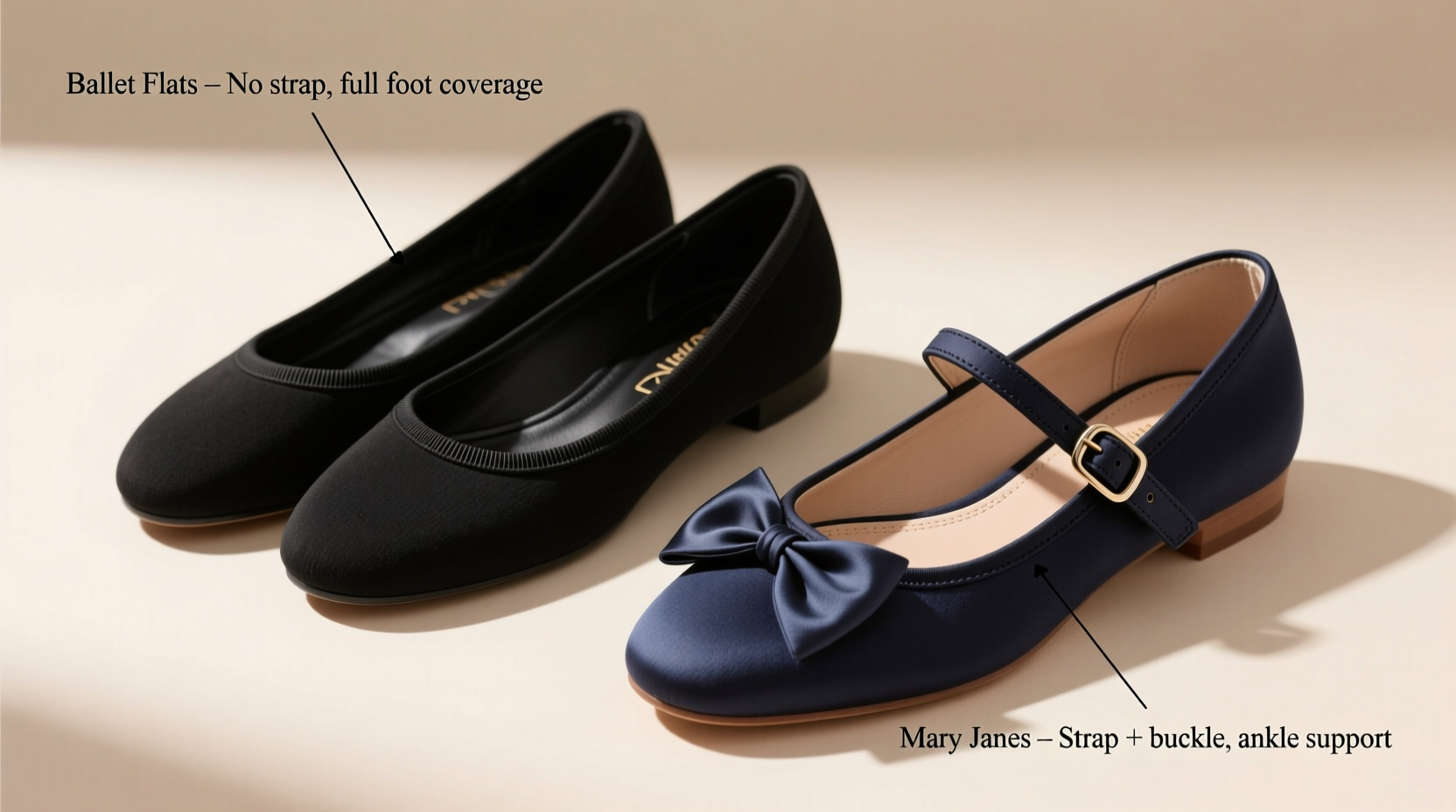
Ballet flats originated from actual ballet slippers worn by dancers during rehearsal. Their design prioritizes flexibility and minimalism. True to their roots, modern ballet flats typically feature a thin sole, rounded toe, and no fastening mechanism. They slip on easily and rely solely on foot width and arch pressure to stay in place. This makes them ideal for short-term wear or casual outings but less suitable for extended walking or active days.
Mary Janes, in contrast, are defined by one key element: the strap. Named after a character in a 1902 comic strip, these shoes traditionally include a single adjustable strap across the instep, secured with a buckle or snap. While some variations exist—like double straps or elasticized versions—the presence of a strap is non-negotiable in authentic Mary Jane design. This strap provides critical stability, reducing slippage and improving overall foot containment.
“Footwear with secure closures like the Mary Jane strap offer better biomechanical alignment during movement.” — Dr. Lena Torres, Podiatrist & Footwear Consultant
Functional Differences That Impact Daily Wear
While both shoes sit low to the ground, their functional performance diverges significantly due to structural elements. The absence of a strap in ballet flats means the shoe depends entirely on friction between the foot and interior lining to remain in place. Over time, this leads to heel lift, toe gripping, and fatigue—especially on uneven terrain or long walks.
Mary Janes solve this issue through engineered support. The strap acts as an anchor, distributing pressure more evenly across the midfoot. This reduces strain on tendons and ligaments, making Mary Janes a preferred choice for children, nurses, teachers, and anyone spending hours on their feet. Even in adult fashion models, the strap allows for sleeker silhouettes without sacrificing practicality.
Tip: If you frequently experience heel slippage in flats, opt for Mary Janes—they provide superior lockdown and reduce blisters caused by shoe drag.Style and Styling: When to Choose Which
Fashion context plays a major role in deciding between ballet flats and Mary Janes. Ballet flats exude effortless elegance. Paired with cigarette pants, midi skirts, or summer dresses, they create a polished, minimalist look associated with French chic. Designers like Repetto and Miu Miu have elevated the style into high fashion, often using satin, patent leather, or embellished finishes.
Mary Janes, while historically linked to school uniforms and vintage aesthetics, have undergone a modern revival. Today’s interpretations range from chunky platform soles to pointed toes and bold colors. Brands like Comme des Garçons and Vivienne Westwood have reimagined the style for avant-garde runways, proving its adaptability beyond nostalgia. In professional settings, conservative black or navy Mary Janes with a modest heel offer a refined alternative to pumps.
| Feature | Ballet Flats | Mary Janes |
|---|---|---|
| Instep Closure | None (slip-on) | Single strap (buckle or elastic) |
| Foot Security | Low – prone to slippage | High – strap stabilizes foot |
| Best For | Casual wear, short durations | All-day wear, work, walking |
| Common Materials | Satin, soft leather, canvas | Patent leather, suede, rubber |
| Historical Association | Ballet dancers, Parisian style | School uniforms, 1920s fashion |
Choosing Based on Comfort and Fit
Comfort should never be secondary when selecting footwear. A well-fitted Mary Jane accommodates a wider range of foot shapes due to adjustable straps. This is particularly beneficial for those with narrow heels or high arches—common culprits behind slipping in traditional ballet flats.
Some modern ballet flats attempt to compensate with elastic inserts or textured insoles, but these are reactive solutions rather than preventive design. Without a physical closure, there’s no way to actively secure the foot within the shoe. In contrast, even a simple non-adjustable strap on a Mary Jane creates enough tension to minimize internal movement.
For individuals with flat feet or plantar fasciitis, podiatrists often recommend structured flats with moderate arch support and secure fastenings. While neither style inherently offers orthotic-level support, Mary Janes are more likely to come in versions compatible with custom insoles due to deeper footbeds and sturdier construction.
Step-by-Step Guide: How to Select the Right Style for Your Needs
- Evaluate your daily activity level. If you walk more than a mile per day, prioritize Mary Janes for better foot retention.
- Assess your foot shape. Narrow heels benefit from straps; wide forefeet may prefer stretchable ballet flat uppers.
- Consider the occasion. Opt for ballet flats in relaxed, aesthetic-driven settings; choose Mary Janes for work, travel, or events requiring prolonged standing.
- Check the sole thickness. Look for cushioned or rubberized soles in either style to enhance shock absorption.
- Try before you buy—or read detailed reviews. Pay attention to feedback about heel slippage, especially for ballet flats.
Real-World Example: Two Days, Two Shoes
Sophia, a graphic designer who commutes via subway and walks between meetings, used to wear ballet flats exclusively for their clean lines. After three months, she developed persistent blisters behind her ankles and noticed increased foot fatigue by mid-afternoon. She switched to a pair of black leather Mary Janes with a 1-inch block heel and a discreet ankle strap. Within a week, her discomfort diminished. “I didn’t realize how much energy I was wasting trying to keep my shoes on,” she said. “The strap holds everything in place, and I can walk confidently now.”
This shift didn’t compromise her style—in fact, colleagues complimented her “retro-modern” look. Her experience underscores a broader truth: small design features can yield outsized benefits in real-life functionality.
Expert Tips for Maximizing Wearability
- Break in new ballet flats at home with thick socks to prevent immediate rubbing.
- Use adhesive heel grips if you love a pair of ballet flats but struggle with slippage.
- Choose Mary Janes with padded straps for added comfort, especially in warmer weather.
- Avoid overly flexible soles—some give too much under the arch, leading to strain over time.
- Rotate your flats regularly to allow materials to recover and prevent odor buildup.
Frequently Asked Questions
Can ballet flats be modified to stay on better?
Yes, though not perfectly. You can add adhesive heel liners, switch to elasticized side goring inserts, or use anti-slip pads on the sole. However, none replicate the consistent hold of a strap.
Are Mary Janes only for kids or formal wear?
No. While traditionally associated with children's school shoes, contemporary designs span casual, professional, and even edgy streetwear styles. Chunky-soled Mary Janes are popular in alternative fashion, while minimalist leather versions suit office environments.
Do ballet flats damage your feet over time?
Prolonged use of poorly supported ballet flats may contribute to issues like tendonitis, plantar fasciitis, or hammertoes due to lack of arch support and excessive gripping. Limit continuous wear and consider adding orthotic insoles for protection.
Final Thoughts: Prioritize Function Without Sacrificing Style
The real difference between ballet flats and Mary Janes isn’t just visual—it’s mechanical. One relies on passive fit, the other on active support. Choosing between them shouldn’t be based solely on trend or nostalgia, but on what your lifestyle demands. If ease and elegance define your needs, ballet flats remain a timeless option for light-duty wear. But if you value stability, endurance, and all-day comfort, Mary Janes deliver where it counts.
Today’s footwear market offers endless hybrids—strappy ballet-inspired Mary Janes, elastic-sided versions without buckles, even sporty takes with hidden arch support. Use the core distinction—strap versus slip-on—as your guidepost. Once you understand this fundamental difference, you’ll make more informed decisions that align with both your aesthetic and physical well-being.
💬 Which style do you reach for most—and why? Share your go-to flat and what matters most to you: comfort, look, or durability. Your insight could help others find their perfect fit!








