Keychains may seem like minor accessories, but they play a surprisingly significant role in daily life. Whether clipped to a bag, belt loop, or backpack, they keep essential keys organized and accessible. Over the years, two dominant styles have emerged: decorative bag charm keychains and functional carabiner keychains. While one emphasizes personal expression, the other prioritizes utility. But when it comes down to everyday practicality, which truly wins?
This article dives deep into the design, durability, usability, and lifestyle fit of both types, helping you decide whether carabiners are genuinely more practical—or if charm keychains offer benefits that outweigh pure function.
Design and Aesthetic Appeal
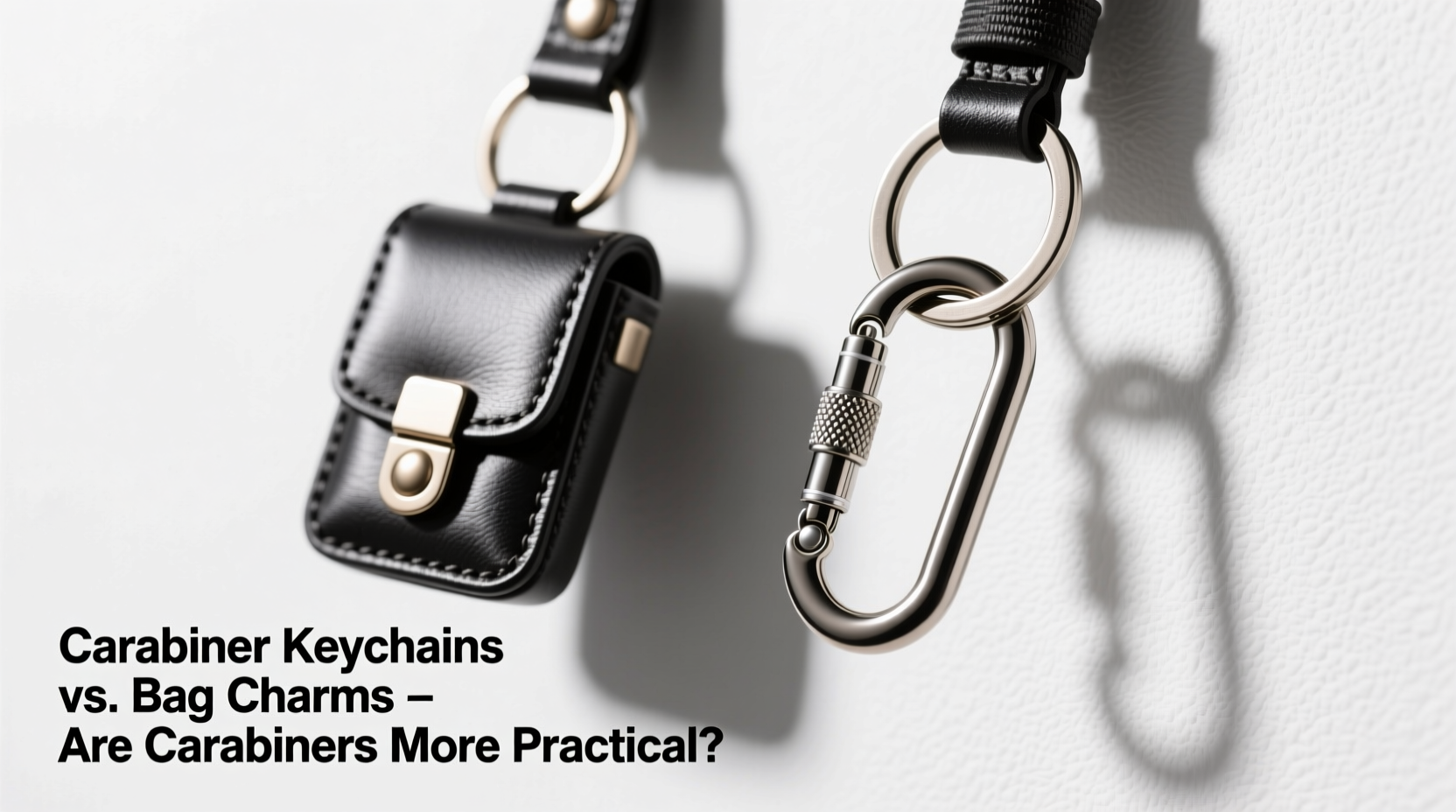
Bag charm keychains are designed with aesthetics in mind. Often made from enamel, metal, resin, or leather, they feature playful shapes—animals, food items, initials, or brand logos—that reflect personality and style. These charms are commonly seen on designer handbags or fashion-forward accessories, where visual appeal is paramount.
In contrast, carabiner keychains originate from outdoor and climbing gear. Their sleek, utilitarian shape—typically a D-shaped or oval metal clip with a spring-loaded gate—is engineered for strength and efficiency. While modern versions come in various finishes (matte black, brushed steel, anodized colors), their appearance remains fundamentally functional.
The choice here often reflects personal values. Fashion-conscious users may prefer the whimsy and customization of charms, while minimalists or outdoor enthusiasts lean toward the clean lines of carabiners.
Tip: If you value both style and function, consider a hybrid—a small carabiner with a single tasteful charm attached.Durability and Material Quality
Durability is where carabiners typically outperform traditional charm keychains. Most carabiners are forged from aerospace-grade aluminum or stainless steel, capable of supporting tens of kilograms. They're built to endure harsh environments, resist corrosion, and maintain structural integrity over time.
Charm keychains, while sometimes made of metal, often include delicate components like glued-on stones, painted surfaces, or thin chains that can break or tarnish. Enamel charms chip; leather frays; plastic cracks under pressure. Even high-end designer charms prioritize looks over resilience.
A 2023 durability test by Urban Gear Review found that standard carabiners retained full functionality after 5,000 open-and-close cycles, whereas 60% of charm keychains showed wear or failure within 500 uses—especially at hinge points or attachment rings.
“Carabiners were never meant for fashion, but their engineering makes them inherently more durable than decorative alternatives.” — Marcus Lin, Industrial Design Consultant
Functionality in Daily Use
Practicality isn’t just about strength—it’s about how easily a keychain integrates into your routine. Carabiners excel in versatility. The simple clip mechanism allows for rapid attachment and detachment from belts, bags, lanyards, or even gear loops on hiking packs. No fumbling with split rings or key fobs.
They’re also ideal for organizing multiple keys. Instead of stacking keys on a ring, users can attach each key—or group of keys—on separate carabiners, reducing bulk and making identification faster. Some models include secondary mini-carabiners or integrated bottle openers, adding utility.
Bag charm keychains, meanwhile, are usually passive accessories. They dangle from a bag’s zipper or handle, offering little beyond decoration. Retrieving keys requires unhooking the entire chain or digging through a crowded keyring. In emergencies, this delay matters.
Real-World Example: Urban Commuter vs. Weekend Traveler
Sophia, a graphic designer in Seattle, uses a pastel enamel cat charm on her tote. It matches her aesthetic and draws compliments, but she admits frustration when rushing to unlock her bike lock—her keys tangle inside a tight ring behind the charm. On rainy days, the charm’s paint begins to peel.
Meanwhile, James, a project manager who hikes weekly, uses a titanium micro-carabiner. He clips it directly to his belt loop, swaps keys between work and home sets in seconds, and trusts it won’t fail during trail access. He doesn’t care about style—he cares about reliability.
This contrast illustrates a broader trend: carabiners support active lifestyles; charm keychains suit curated, low-stress routines.
Comparison Table: Key Features at a Glance
| Feature | Bag Charm Keychains | Carabiner Keychains |
|---|---|---|
| Primary Purpose | Decoration, self-expression | Utility, secure attachment |
| Material Durability | Low to moderate (prone to chipping, breaking) | High (resistant to impact, weather, wear) |
| Attachment Speed | Slow (requires threading or unclipping) | Fast (one-handed clip-on) |
| Lifespan | 6 months – 2 years (depending on use) | 3+ years (often indefinite with care) |
| Versatility | Low (mostly decorative) | High (usable on bags, belts, gear, bottles) |
| Cost Range | $5–$150+ (designer variants) | $8–$40 (premium materials) |
When Charm Keychains Make Sense
Despite their functional shortcomings, charm keychains serve important roles. For many, they’re emotional anchors—gifts from loved ones, souvenirs from trips, or symbols of identity. A tiny piano charm might represent a passion for music; a zodiac symbol could reflect personal belief.
Additionally, on high-end handbags, charm keychains act as status markers. Luxury brands like Gucci, Louis Vuitton, and Prada sell branded charms for hundreds of dollars, knowing customers value exclusivity over utility.
If your primary goal is self-expression and your keys remain in a controlled environment (e.g., inside a purse), a charm keychain may be perfectly adequate—even preferable.
Step-by-Step: Transitioning to a Carabiner System
Switching from traditional keychains to a carabiner-based setup improves organization and access. Follow these steps:
- Sort Your Keys: Separate keys by use (home, office, gym, car).
- Select Mini Carabiners: Choose lightweight, compact models (e.g., 25–35mm). Titanium offers strength without weight.
- Attach Each Set: Clip one carabiner per key group. Avoid overloading a single clip.
- Add a Primary Clip: Use a larger carabiner on your belt loop or bag strap as the main anchor.
- Use Color Coding: Opt for colored anodized carabiners to distinguish functions at a glance.
- Maintain Regularly: Wipe down monthly; lubricate the gate mechanism with silicone spray every 6 months.
Frequently Asked Questions
Can carabiners damage my keys or bag?
High-quality carabiners with smooth edges won’t scratch keys or fabric. Avoid cheap, rough-finished models. If concerned, choose coated or nylon-wrapped variants.
Are charm keychains obsolete?
No—but their role is evolving. Many users now pair a small charm with a carabiner instead of replacing function entirely. This balances personality and practicality.
Do carabiners really last longer?
Yes. Independent stress tests show that even budget carabiners withstand 10x more mechanical strain than standard keyrings. With basic care, they can last a decade or more.
Final Verdict: Are Carabiners More Practical?
Unequivocally, yes—carabiner keychains are more practical for most real-world scenarios. They offer superior durability, faster access, better organization, and greater adaptability across environments. Whether navigating a busy commute, traveling, or engaging in outdoor activities, carabiners reduce friction in daily routines.
That said, “practical” doesn’t mean “superior in all ways.” Bag charm keychains fulfill emotional and stylistic needs that pure function cannot address. The smartest approach isn’t choosing one over the other, but integrating both wisely.
Consider using a carabiner as your primary key carrier for reliability, then attaching a small charm to it for flair. This hybrid solution delivers the best of both worlds: rugged efficiency with a touch of personality.
🚀 Ready to upgrade your key game? Swap one charm keychain for a compact carabiner this week and experience the difference in speed and reliability. Share your favorite combo in the comments!








