Mini fridges are convenient—perfect for dorm rooms, offices, garages, or as extra cold storage in tight kitchens. But while they seem harmless, many people wonder: could this compact appliance be quietly inflating their monthly electricity costs? The answer isn’t straightforward. Some mini fridges are impressively efficient; others consume far more energy than expected. Understanding the factors behind their power draw is essential to avoid surprise spikes on your electric bill.
Unlike full-sized refrigerators, which are subject to strict federal efficiency standards and clear EnergyGuide labeling, mini fridges often fly under the radar. Their smaller size doesn’t always mean lower energy consumption, especially if they’re poorly designed or used inefficiently. This article breaks down the truth about mini fridge energy use, identifies what makes some models energy hogs, and provides actionable steps to ensure yours isn’t costing you more than it should.
How Mini Fridges Use Electricity
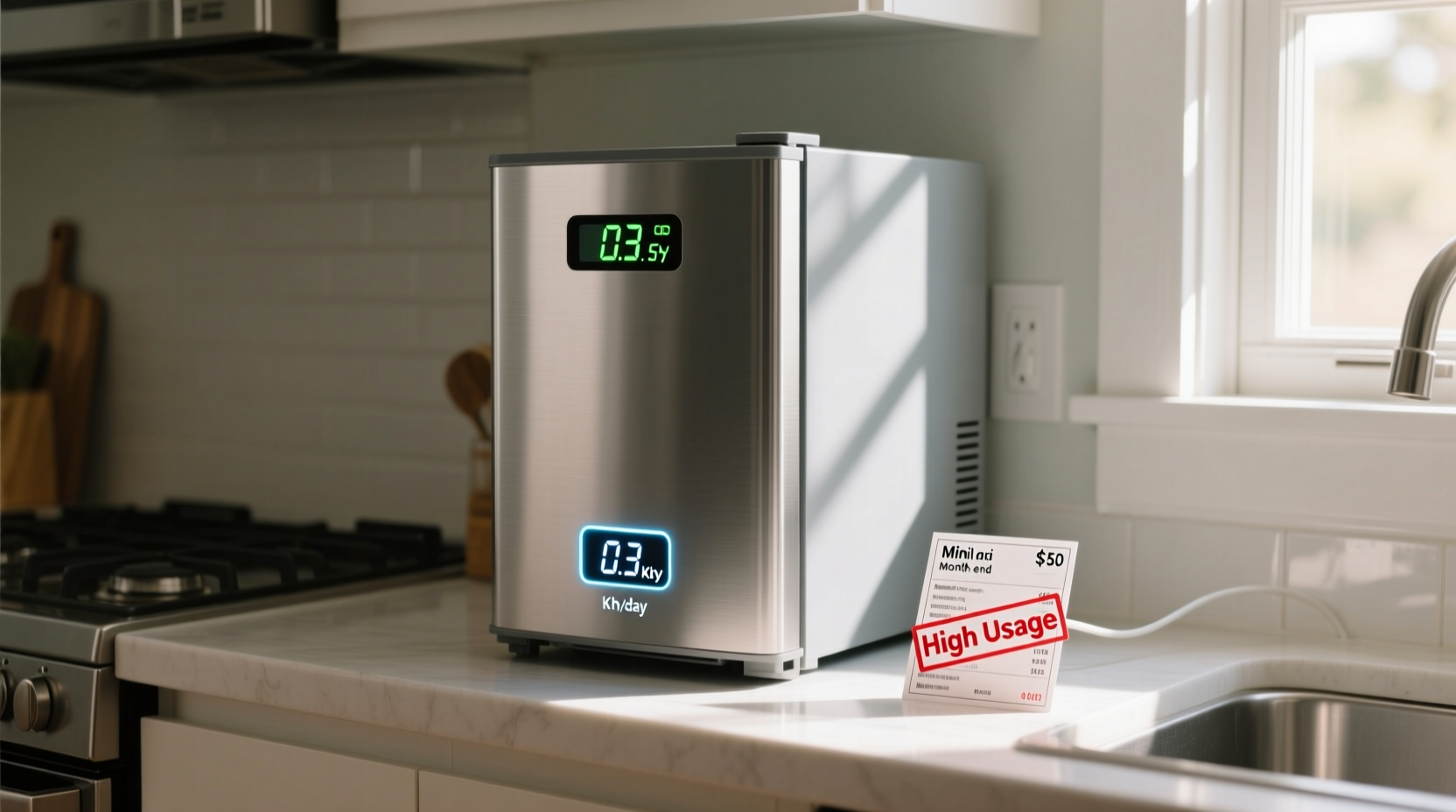
All refrigerators work by removing heat from inside the unit and expelling it into the surrounding room. This process relies on a compressor, condenser coils, and refrigerant. Every time the internal temperature rises—due to opening the door or warm ambient air—the compressor kicks in to cool things back down. The frequency and duration of these cycles determine energy consumption.
Mini fridges typically range from 1.5 to 4.5 cubic feet in capacity. Smaller units (under 2 cubic feet) may use 50–100 kWh per year, while larger or older models can exceed 300 kWh annually. For context, a modern ENERGY STAR-certified full-size refrigerator uses around 400–600 kWh per year. So yes, most mini fridges use less energy than standard fridges—but not necessarily as little as people assume.
The problem arises when a mini fridge operates inefficiently. Poor insulation, outdated compressors, lack of thermostat precision, and placement in hot environments (like sunlit rooms or garages) can dramatically increase runtime and energy use. A mini fridge in a 90°F garage may run twice as much as one in a climate-controlled bedroom, effectively doubling its electricity cost.
Tip: Always check the annual kWh rating on the yellow EnergyGuide label before purchasing. If it's missing, look up the model’s specs online.Energy Efficiency: What Actually Matters?
Not all mini fridges are created equal. While they share the same basic function, design differences significantly impact energy performance. Here are the key features that affect efficiency:
- Insulation quality: Thicker walls with better insulating materials reduce heat transfer, meaning the compressor runs less often.
- Compressor type: Modern thermoelectric models are quieter but generally less efficient than compressor-based units, especially in warmer climates.
- Thermostat control: Accurate thermostats maintain consistent temperatures without overcooling or frequent cycling.
- Door seal integrity: A worn or poorly fitting gasket allows cold air to escape, forcing the unit to work harder.
- Defrost system: Manual-defrost models tend to be more efficient than automatic-defrost versions, which use additional heating elements.
One common misconception is that thermoelectric coolers—often marketed as “eco-friendly” or “silent”—are inherently more efficient. In reality, they perform poorly in ambient temperatures above 75°F and are best suited for keeping already-chilled items cold, not cooling room-temperature contents. According to the U.S. Department of Energy, compressor-driven mini fridges are generally 20–30% more efficient in typical indoor conditions.
“Just because it’s small doesn’t mean it’s efficient. Many mini fridges lack the engineering refinements found in larger, regulated appliances.” — Dr. Linda Chen, Appliance Energy Research Institute
Real-World Impact: How Much Does It Cost to Run a Mini Fridge?
To understand whether your mini fridge is hiking your electric bill, calculate its actual operating cost. Start by finding its annual kilowatt-hour (kWh) consumption. This information should be on the EnergyGuide label or in the product manual. If unavailable, estimate based on average wattage and usage.
For example, a mini fridge drawing 100 watts that runs 8 hours per day uses:
100 watts × 8 hours = 800 watt-hours (0.8 kWh) per day 0.8 kWh × 365 days = 292 kWh per year
At the U.S. average electricity rate of $0.15 per kWh, that’s:
292 kWh × $0.15 = $43.80 per year
That might sound reasonable—about $3.65 per month. But consider this: an inefficient model using 400 kWh/year would cost $60 annually, while a highly efficient ENERGY STAR unit might use only 150 kWh, costing just $22.50. Over five years, that’s a $190 difference.
Cost Comparison Table: Mini Fridge Efficiency Tiers
| Type | Avg. Annual kWh | Yearly Cost ($0.15/kWh) | Lifespan Cost (10 yrs) |
|---|---|---|---|
| Premium ENERGY STAR Compressor Model | 120–160 | $18–$24 | $180–$240 |
| Average New Compressor Model | 200–280 | $30–$42 | $300–$420 |
| Older or Poorly Insulated Model | 300–400+ | $45–$60+ | $450–$600+ |
| Thermoelectric Cooler (warm climate) | 350–500 | $52–$75 | $520–$750 |
The takeaway? A cheap upfront price can lead to long-term financial pain. Investing in a high-efficiency model pays off in lower utility bills and reduced environmental impact.
Mini Fridge Case Study: Dorm Room Dilemma
Consider Sarah, a college sophomore who bought a $99 mini fridge for her dorm. It had no EnergyGuide label, and the manual didn’t list annual kWh. After noticing her roommate’s electric bill was consistently higher than others on the floor, she investigated.
Sarah borrowed a plug-in energy monitor and discovered her fridge was using 380 kWh per year—nearly double the campus average for similar units. The cause? Poor insulation, a weak seal, and constant vibration from being placed on an uneven shelf. The compressor ran almost continuously, especially during warm afternoons.
She replaced it with an ENERGY STAR-rated 2.6-cubic-foot model that used only 145 kWh/year. Her portion of the electric bill dropped by $3.20 per month. Over four years, that’s nearly $150 saved—not including reduced wear on the electrical circuit and fewer complaints from roommates about noise.
This scenario is common. Students, renters, and office workers often prioritize price and size over efficiency, unaware of the hidden costs. Simple upgrades and proper usage make a measurable difference.
How to Choose an Energy-Efficient Mini Fridge
Selecting the right mini fridge starts with research. Don’t rely on marketing terms like “eco” or “low energy” without verification. Follow this checklist before buying:
- Look for ENERGY STAR certification: Only a few mini fridge models qualify, but they are among the most efficient available.
- Check the EnergyGuide label: Compare estimated yearly kWh across models. Lower is better.
- Avoid thermoelectric models for primary cooling: Use them only for light chilling in cool environments.
- Choose compressor-based units: They handle temperature fluctuations better and maintain efficiency over time.
- Opt for manual defrost: Automatic defrost systems waste energy with periodic heating cycles.
- Verify insulation thickness: Look for customer reviews mentioning \"cold sides\" or \"condensation\"—signs of poor insulation.
- Consider size carefully: A slightly larger, well-insulated model may be more efficient than an overstuffed tiny one.
Maximizing Efficiency: Daily Usage Tips
Even the best mini fridge can become inefficient with poor habits. These practices will help minimize energy use:
- Keep it full (but not packed): A fridge with mass (like water bottles or sealed containers) retains cold better than an empty one. Cold items absorb heat when the door opens, reducing compressor workload.
- Minimize door openings: Decide what you need before opening. Each 10-second open can raise internal temperature by several degrees.
- Allow space around the unit: Leave at least 2–3 inches of clearance at the back and sides for airflow, especially for compressor models that vent heat from the rear.
- Clean the coils regularly: Dust buildup on condenser coils forces the compressor to work harder. Vacuum them every 3–6 months.
- Set the right temperature: 37°F for the fridge compartment and 0°F for freezers is optimal. Colder settings waste energy without benefit.
- Let food cool first: Never place hot leftovers directly inside. Allow them to reach room temperature to prevent excess moisture and compressor strain.
Do’s and Don’ts of Mini Fridge Placement
| Do | Don’t |
|---|---|
| Place in a cool, shaded room with stable temperatures | Put it near a window with direct sunlight |
| Use in interior rooms away from stoves or heaters | Install next to a radiator or oven |
| Elevate slightly for airflow if floor is carpeted | Push tightly against walls or furniture |
| Use in basements or climate-controlled garages | Leave in unconditioned attics or outdoor patios |
Frequently Asked Questions
Can a mini fridge double my electric bill?
Unlikely, but possible in extreme cases. A typical mini fridge adds $20–$60 annually to your bill. However, if it’s an old, inefficient model in a hot environment, it could use as much as a small window AC unit over time—especially if running nonstop. Most households won’t see a doubling, but incremental increases across multiple appliances can add up.
Is it cheaper to share a full-size fridge or use a mini fridge?
Yes, sharing a full-size refrigerator is almost always more energy-efficient per user. Large fridges distribute energy costs across more storage volume. A mini fridge serving one person uses disproportionately more energy per cubic foot. If access to a shared fridge is feasible, it’s the greener and more economical choice.
Do unplugging a mini fridge save energy?
Only if it’s unused for extended periods. Refrigerators are designed to run continuously. Frequent on-off cycling stresses the compressor and wastes energy during startup. If storing food, leave it running. If empty for weeks, clean and unplug it, then restart with a new load when needed.
Final Thoughts: Smart Choices for Long-Term Savings
Mini fridges aren’t inherently energy efficient—but they don’t have to be energy vampires either. The key lies in informed selection and mindful usage. A well-chosen, properly maintained mini fridge can provide convenience without guilt. On the other hand, ignoring efficiency metrics can lead to unnecessary costs and environmental impact.
Before buying, prioritize verified energy data over aesthetics or price. Once in use, optimize placement, loading, and maintenance to keep energy use low. Remember: small appliances can have big impacts over time. By treating your mini fridge like any major appliance—with attention to efficiency—you gain both comfort and control over your electric bill.
🚀 Ready to cut your energy waste? Audit your mini fridge today—check its label, measure its usage, and consider upgrading if needed. Share your experience or ask questions in the comments below.








