Cardiovascular exercise is essential for heart health, endurance, and fat loss. Among the most accessible and time-efficient options are jumping rope and running. Both elevate the heart rate, improve stamina, and support weight management. But when comparing jump rope workouts to running, many people wonder: Are they truly equivalent in effectiveness? The answer depends on intensity, duration, individual fitness level, and goals. This article breaks down the science, practical benefits, and limitations of each to help you make an informed decision.
Calorie Burn and Cardiovascular Demand
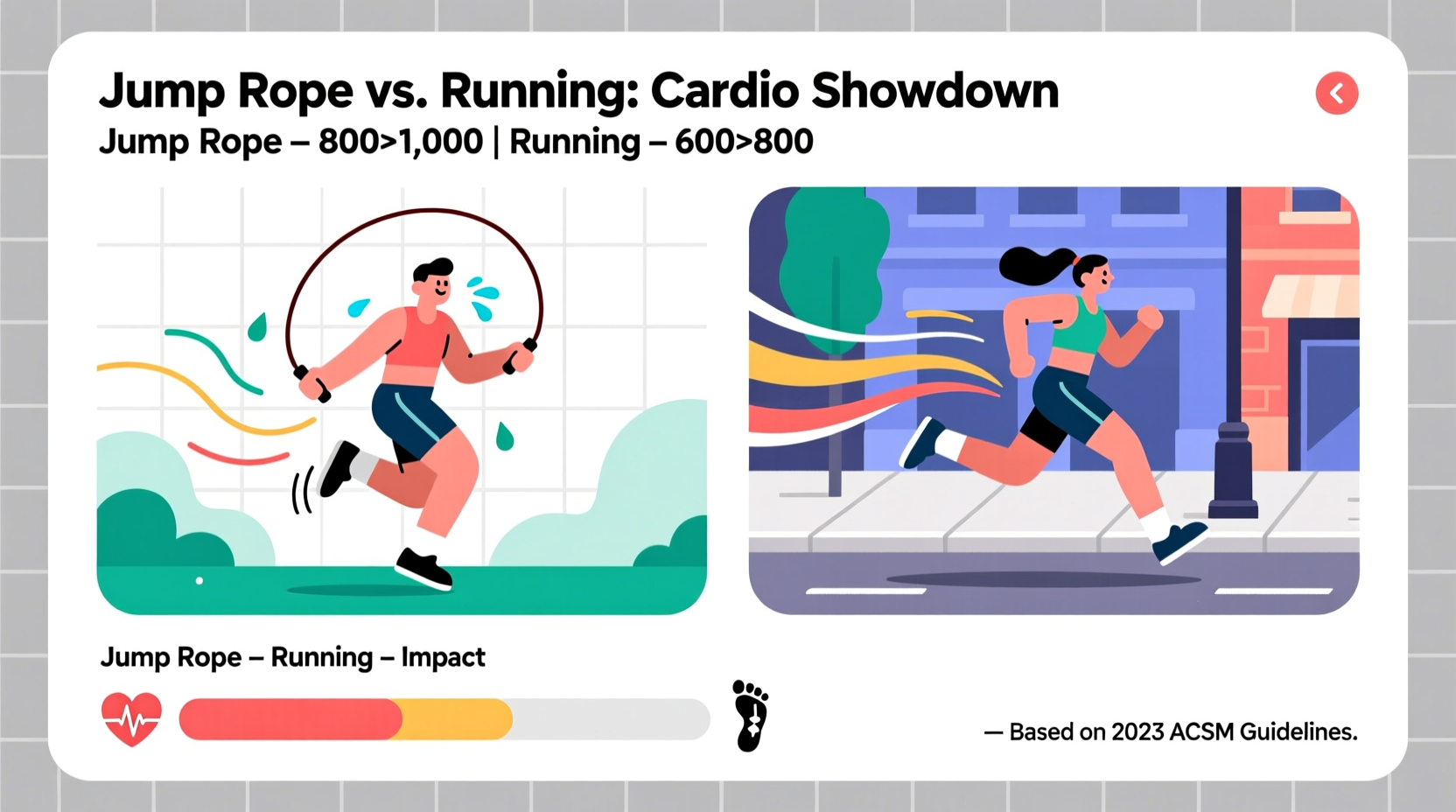
One of the primary metrics used to evaluate cardio effectiveness is calorie expenditure. According to research from the American Council on Exercise (ACE), a 150-pound person can burn approximately 10–16 calories per minute during moderate to vigorous jump rope sessions. That’s comparable to a 6–8 mph run—roughly a 7.5- to 10-minute mile pace.
In fact, high-intensity interval training (HIIT) with jump rope often surpasses steady-state running in terms of metabolic demand. A study published in the Journal of Sports Science & Medicine found that jump rope intervals increased VO2 max—a key measure of cardiovascular fitness—more effectively than continuous moderate running over a six-week period.
Tip: To maximize calorie burn during jump rope, incorporate short bursts of double-unders or high knees between recovery jumps.Muscle Engagement and Full-Body Impact
While both activities engage the lower body, jump rope activates more muscle groups due to its dynamic coordination requirements. Jumping rope recruits the calves, quads, glutes, hamstrings, core stabilizers, shoulders, forearms, and even grip muscles. It’s a full-body neuromuscular workout disguised as simple cardio.
Running, by contrast, is primarily a lower-body dominant activity. While it does require core engagement for posture, the upper body involvement is minimal unless sprinting or navigating uneven terrain.
This broader activation makes jump rope particularly effective for improving coordination, rhythm, and muscular endurance. It also contributes to better balance and proprioception—important factors in injury prevention and athletic performance.
Joint Stress and Injury Risk Comparison
Despite its benefits, jump rope is often criticized for being hard on the joints. However, when performed correctly—with proper footwear, on a forgiving surface like rubberized flooring or grass—the impact forces are surprisingly low. A 2020 biomechanics study showed that peak ground reaction forces during two-footed rope jumping were only about 1.5 to 2 times body weight, compared to 2.5 to 3 times during running.
The key difference lies in stride length and landing mechanics. Runners cover more distance per step, leading to higher cumulative stress over time, especially on the knees and hips. Jump rope involves smaller, controlled hops with shorter flight time, reducing strain if technique is maintained.
That said, poor form—such as landing flat-footed or bouncing too high—can increase injury risk. Beginners should start with short durations (e.g., 30 seconds on, 30 seconds off) and focus on soft landings using the balls of the feet.
“Jumping rope done right is actually gentler on the joints than long-distance running. It’s about control, not force.” — Dr. Lena Torres, Sports Biomechanist and Physical Therapist
Time Efficiency and Accessibility
One of the strongest arguments in favor of jump rope is efficiency. A 15-minute session at moderate to high intensity can deliver similar cardiovascular benefits to a 30- to 45-minute jog. This makes it ideal for individuals with limited time or access to outdoor spaces.
Additionally, jump ropes are inexpensive, portable, and require no special facilities. Unlike running, which may be limited by weather, safety concerns, or joint pain, jump rope can be done indoors with minimal space—making it a viable year-round alternative.
For urban dwellers, apartment residents, or those traveling frequently, carrying a speed rope in a suitcase offers a reliable way to maintain cardio fitness without needing a gym membership or treadmill.
Comparative Analysis: Jump Rope vs. Running
| Factor | Jump Rope | Running |
|---|---|---|
| Calories Burned (per 15 min) | ~150–240 (vigorous) | ~120–200 (6–8 mph) |
| Muscle Groups Engaged | Full-body (lower + upper + core) | Primarily lower body |
| Joint Impact (controlled form) | Low to moderate | Moderate to high (cumulative) |
| Space Required | Minimal (~3 ft²) | Extensive (trail, track, treadmill) |
| Skill Learning Curve | Moderate (coordination needed) | Low (natural movement) |
| Portability | Excellent (fits in pocket) | Poor (requires infrastructure) |
Real-World Example: From Jogger to Rope Jumper
Consider Marcus, a 32-year-old software developer who used to run three times a week to manage stress and stay fit. After developing mild knee pain from pounding pavement, he switched to jump rope under his physical therapist’s guidance. Starting with just five minutes daily, he gradually built up to 20-minute HIIT-style sessions combining single jumps, high knees, and rest intervals.
Within eight weeks, Marcus reported improved agility, reduced joint discomfort, and greater energy levels. His resting heart rate dropped from 72 to 64 bpm, and he lost 3 pounds of fat despite eating slightly more due to increased metabolism. He now alternates jump rope with occasional trail runs, finding the rope more sustainable for daily use.
His experience reflects a growing trend among fitness-conscious individuals seeking efficient, joint-friendly alternatives that don’t sacrifice results.
Step-by-Step Guide to Transitioning from Running to Jump Rope
If you're considering replacing some of your running routine with jump rope, follow this structured approach:
- Week 1–2: Build Foundation
Perform 3 sessions per week. Use a basic two-foot jump for 30 seconds, followed by 30 seconds of rest. Repeat for 5–10 minutes total. Focus on rhythm and soft landings. - Week 3–4: Increase Duration
Extend work intervals to 45 seconds, rest to 15 seconds. Aim for 15 minutes total. Introduce variations like alternating foot taps. - Week 5–6: Add Intensity
Incorporate high knees, side swings, or double-unders (if skilled). Try Tabata format: 20 seconds max effort, 10 seconds rest, repeat 8 rounds. - Week 7+: Integrate Strategically
Replace one or two weekly runs with jump rope workouts. Use rope sessions for warm-ups before strength training or as standalone cardio days.
Frequently Asked Questions
Can jump rope really replace running for cardio conditioning?
Yes, provided the intensity and duration are sufficient. Studies show that jump rope improves VO2 max and aerobic capacity comparably to running, especially when performed in interval formats. For general cardiovascular health and fat loss, it's a highly effective substitute.
Is jump rope bad for your knees?
Not inherently. When done with proper form—using the balls of the feet, slight knee bend, and controlled bounce—it can be easier on joints than running. However, those with existing knee issues should consult a professional and begin cautiously.
How long should I jump rope to equal a 30-minute run?
About 15 minutes of continuous or interval jump rope at moderate-to-high intensity provides similar cardiovascular stimulation. Adjust based on perceived exertion; if you’re sweating heavily and breathing hard, you’re getting a comparable workout.
Actionable Checklist: Optimize Your Jump Rope Routine
- ✅ Choose the right rope length: Stand on the center; handles should reach armpits.
- ✅ Wear supportive shoes with cushioned soles or jump barefoot on shock-absorbing surfaces.
- ✅ Warm up with ankle circles, calf raises, and light skipping before starting.
- ✅ Maintain upright posture—avoid hunching shoulders or looking down.
- ✅ Keep jumps low—only 1–2 inches off the ground—to reduce impact.
- ✅ Cool down with stretching, focusing on calves, hamstrings, and shoulders.
- ✅ Track progress weekly: note duration, new skills mastered, and how you feel post-workout.
Final Verdict: Equal Effectiveness, Different Applications
Jump rope workouts are not only as effective as running for cardiovascular fitness—they often surpass it in terms of time efficiency, muscle engagement, and accessibility. However, “effectiveness” must be contextualized. For marathon training or building road endurance, running remains irreplaceable. But for general heart health, fat loss, coordination, and functional fitness, jump rope delivers equal or superior returns in less time and with fewer logistical barriers.
The smartest approach isn't choosing one over the other, but integrating both. Use jump rope for high-efficiency days, active recovery, or indoor workouts. Reserve running for longer endurance efforts or mental refreshment through nature. Together, they create a balanced, resilient cardio foundation.
💬 Ready to test the rope? Grab one today and try a 10-minute session. Compare how you feel afterward to a similar run—you might be surprised at the burn. Share your experience or ask questions in the comments below!








