For skiers, hand warmth isn’t just about comfort—it’s about control, endurance, and enjoyment on the mountain. Cold fingers can ruin a day on the slopes, making it harder to grip poles, adjust gear, or even zip up a jacket. The debate between heated gloves and traditional mittens is one every serious skier eventually faces. Are high-tech heated gloves worth the investment, or do old-school mittens still reign supreme in keeping hands warm?
The answer isn’t straightforward. It depends on your skiing habits, sensitivity to cold, terrain preferences, and how much dexterity you need. This guide dives into the science of hand warmth, compares performance across glove types, and provides real-world insights to help you make an informed decision.
Understanding Heat Retention: Why Mittens Are Naturally Warmer
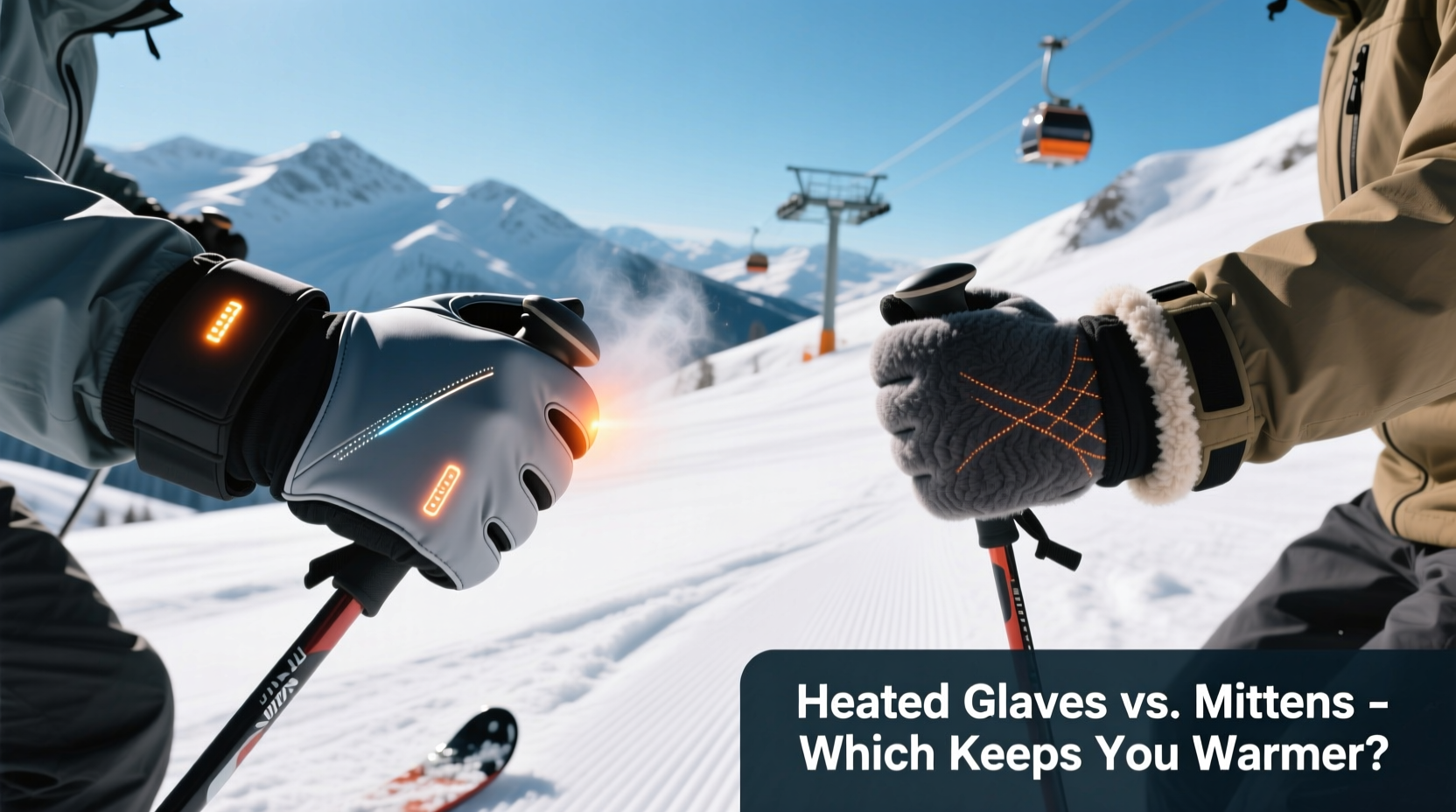
At its core, heat retention comes down to surface area and insulation. Mittens outperform gloves in warmth because they keep all four fingers together in a shared compartment. This allows fingers to share body heat, reducing individual heat loss. In contrast, gloves separate each finger, increasing exposed surface area and isolating digits from one another.
According to thermal physiology research, grouped fingers lose less heat than separated ones. A study by the U.S. Army Research Institute of Environmental Medicine found that mittens can be up to 30% warmer than gloves under identical conditions—especially in sub-zero temperatures.
“From a thermodynamic standpoint, mittens are simply more efficient. The shared microclimate between fingers acts like a natural heating system.” — Dr. Lena Pruitt, Biomechanics & Cold Weather Performance Researcher
This doesn’t mean gloves can’t be warm—they absolutely can, especially with advanced insulation like PrimaLoft, Thinsulate, or down. But physics gives mittens a built-in advantage when pure warmth is the goal.
Heated Gloves: Technology vs. Tradition
Heated gloves aim to close the warmth gap—and potentially surpass it—by adding active heating elements. These gloves typically feature thin carbon fiber or metal alloy heating panels sewn into the fingertips, back of hand, and sometimes the palm. Powered by small lithium-ion batteries (usually tucked into the wrist or cuff), they offer adjustable heat settings, often controlled via a button or smartphone app.
Modern heated gloves can maintain internal temperatures between 95°F and 110°F (35°C–43°C) for 2 to 8 hours, depending on battery size, setting, and external temperature. Some models even include USB rechargeability, waterproof membranes, and touchscreen-compatible fingertips.
But technology brings trade-offs. Heated gloves are generally heavier, stiffer, and more expensive than non-heated alternatives. They also require maintenance: charging batteries, protecting electronics from moisture, and ensuring proper fit without compressing heating elements.
Tip: Always charge your heated gloves the night before a ski trip and carry spare batteries if supported. Cold drains power fast.Performance Comparison: Mittens vs. Heated Gloves
To assess real-world effectiveness, consider multiple factors beyond raw warmth. Here's a detailed breakdown:
| Feature | Mittens (Insulated) | Heated Gloves |
|---|---|---|
| Maximum Warmth | ★★★★★ | ★★★★☆ |
| Dexterity | ★★★☆☆ | ★★★★★ |
| Battery Dependency | None | High (requires charging) |
| Lifespan | 5+ years (with care) | 2–4 years (electronics degrade) |
| Best For | Cold climates, resort skiing, beginners, children | Backcountry touring, frequent pole use, cold-sensitive users |
| Average Price | $60–$120 | $150–$300+ |
While mittens win in passive warmth, heated gloves excel in usability. Skiers who frequently adjust bindings, use GPS devices, or wear lightweight shell gloves benefit from the precision offered by individual fingers.
When Heated Gloves Make Sense
Not every skier needs heated gloves—but for some, they’re game-changers. Consider these scenarios:
- You have poor circulation or Raynaud’s syndrome. Even mild cold can trigger numbness. Heated gloves provide consistent warmth that passive insulation can’t match.
- You ski early season or in extreme cold. Below 15°F (-10°C), standard gloves and mittens may struggle. Active heating adds a crucial buffer.
- You spend long days in variable conditions. Being able to dial up heat during chairlift rides or stormy descents offers flexibility.
- You prioritize dexterity over maximum warmth. If you're constantly handling gear, using lift tickets, or adjusting goggles, heated gloves give superior finger control.
“I used to dread ski mornings because my hands would go numb within 20 minutes. Switching to heated gloves changed everything. I finally stay warm enough to focus on technique.” — Mark T., avid backcountry skier, Colorado
Mini Case Study: A Ski Instructor’s Dilemma
Sarah, a Level 3 ski instructor in Utah, teaches six to eight hours daily, regardless of weather. She previously wore heavy mittens but struggled with dexterity when demonstrating techniques or helping students with gear. After switching to a mid-range heated glove model, she noticed immediate improvements.
“I still wear liner gloves underneath, but now I can zip jackets, adjust straps, and handle poles without taking my hands out,” she said. “And on -5°F mornings, I just turn on high heat during breaks. My hands don’t stiffen up anymore.”
She does acknowledge downsides: the gloves are bulkier than her old pair, and she must remember to charge them nightly. But overall, the benefits outweigh the hassles.
Maximizing Warmth: Strategies That Work With Any Glove Type
No matter which handwear you choose, smart practices dramatically improve warmth. Relying solely on gear specs is a mistake. Follow this step-by-step approach to avoid cold hands:
- Wear a moisture-wicking liner glove. Silk or merino wool liners pull sweat away from skin, preventing dampness that leads to rapid cooling.
- Use hand warmers as backup. Disposable air-activated warmers placed inside mittens or gloves add extra heat, especially useful if batteries die.
- Stay active during lifts. Wiggle fingers, clench and release fists, or tuck hands under armpits to stimulate blood flow.
- Avoid tight-fitting gloves. Compression restricts circulation. Ensure a snug but not constrictive fit.
- Warm up before hitting the slopes. Start your day with light exercise to boost core and extremity temperature.
- Hydrate and eat well. Dehydration and low calorie intake reduce peripheral circulation, making hands colder.
Do’s and Don’ts: Handwear Best Practices
| Do | Don’t |
|---|---|
| Size up slightly to allow airflow and prevent blood flow restriction | Choose gloves that feel tight when trying them on |
| Use gloves with wrist cinches to block wind and snow entry | Leave gaps between glove and jacket sleeve |
| Carry a backup pair of dry liners | Keep wet gloves in your bag overnight |
| Store gloves in a dry, ventilated area after use | Tumble dry heated gloves—even on low heat |
| Check battery health monthly if used seasonally | Expose batteries to extreme cold for extended periods |
Frequently Asked Questions
Can you wash heated gloves?
Most manufacturers recommend hand washing only. Remove batteries first, then gently clean with mild soap and lukewarm water. Never submerge the entire glove, and always air dry completely before reinserting batteries or using. Check the care label—some brands like Outdoor Master and Gerbing offer machine-washable models with detachable components.
Are heated gloves safe in wet conditions?
Yes, most high-quality heated gloves are designed with waterproof shells (e.g., Gore-Tex, Hytrel) and sealed heating elements. However, prolonged submersion or damage to seams can compromise safety. Always inspect for wear and tear, and never use damaged gloves with active heating.
Why do my fingers still get cold even with heated gloves?
Poor circulation is often the culprit. Even heated gloves can’t compensate for restricted blood flow. Ensure your gloves aren’t too tight, layer properly, and stay active. Also, check that the heating zones cover your fingertips—some models only heat the back of the hand.
Final Verdict: Are Heated Gloves Worth It?
If you value dexterity, ski in consistently cold conditions, or suffer from cold-sensitive hands, heated gloves are absolutely worth the investment. They deliver reliable, controllable warmth that passive insulation alone can’t match. Modern models are durable, user-friendly, and increasingly integrated with ski-specific features like reinforced palms and goggle wipes.
However, if your priority is maximum warmth with minimal maintenance, traditional mittens remain the gold standard. They’re simpler, longer-lasting, and more cost-effective over time. For many skiers, the best solution lies in combining both approaches: wearing heated gloves for technical terrain or long days, and switching to insulated mittens for deep cold or relaxed resort skiing.
Ultimately, the right choice depends on your personal needs, not marketing claims. Try both styles if possible. Rent heated gloves for a weekend test run. Borrow a friend’s mittens on a frigid morning. Real experience beats theory every time.
💬 Have you made the switch to heated gloves? Or are you team mitten forever? Share your winter handwarmer strategy in the comments and help others find their perfect fit.








