Once dismissed as a fashion faux pas of the 1990s, the fanny pack has quietly re-emerged—not just on city streets but on mountain trails. Meanwhile, the crossbody bag remains a staple for hikers who value compact storage with easy access. The debate is no longer about style alone; it’s about practicality, ergonomics, and how gear adapts to modern outdoor adventures. As trail systems grow more accessible and day hikes become weekend rituals, what you carry—and how—matters more than ever.
The resurgence of the fanny pack isn’t just nostalgia-driven. Outdoor brands like Patagonia, Arc’teryx, and Deuter have re-engineered waist packs with technical fabrics, hydration compatibility, and anatomical fit. At the same time, crossbody bags from companies like Peak Design and Topo Designs offer sleek silhouettes with padded straps and weather-resistant zippers. So which option truly serves the needs of today’s hiker? The answer depends on distance, terrain, personal preference, and how you define convenience.
The Fanny Pack Resurgence: From Dadcore to Trail Essential
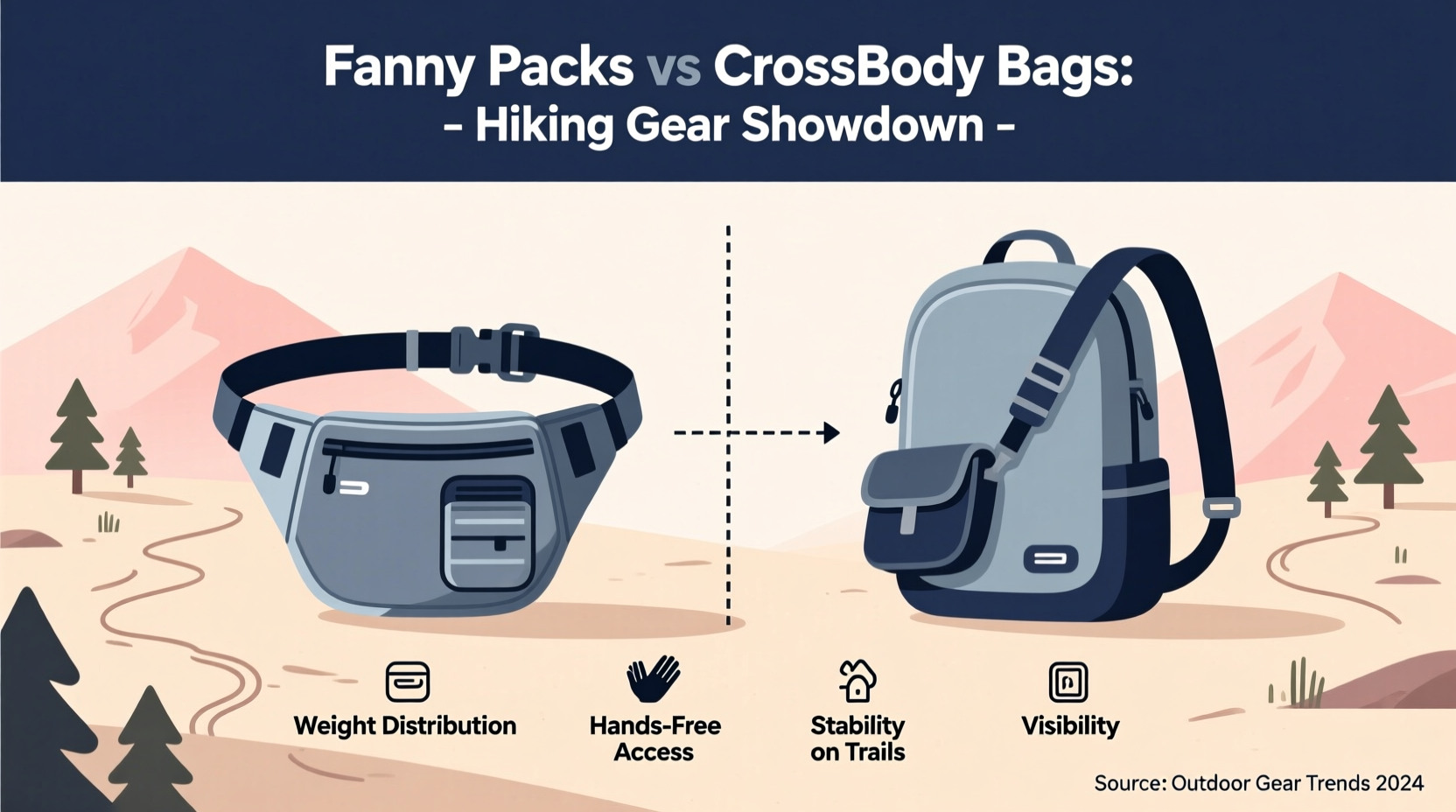
Fanny packs, or waist packs, were once synonymous with tourist clichés. But in recent years, they’ve undergone a transformation. Modern versions are streamlined, lightweight, and purpose-built. Made from ripstop nylon, Dyneema blends, or recycled polyester, these updated models prioritize function without sacrificing form. Many now feature:
- Ergonomic padding that conforms to the hips
- Dual compartments for quick-access items and secure storage
- Compatibility with hydration bladders or trekking pole attachments
- Reflective details for low-light visibility
Outdoor retailers report a 40% increase in waist pack sales over the past three years, according to NPD Group data. This surge isn’t limited to casual users—trail runners and ultralight backpackers are adopting minimalist fanny packs as primary carriers for short excursions.
Tip: Wear your fanny pack slightly higher on the hips, not around the waist, to prevent bouncing during movement.Why Hikers Are Reconsidering the Waist Pack
One major advantage of the fanny pack is weight distribution. Unlike shoulder-based bags, it centers mass over the body’s core, reducing strain on the neck and shoulders. This makes it ideal for fast-paced activities like trail running or scrambling.
Additionally, front-access designs allow hikers to grab snacks, maps, or phones without removing the pack. Some models even let you wear the strap diagonally (the “bandolier” style), combining the stability of a waist pack with the accessibility of a crossbody.
“Waist packs are seeing a renaissance because they solve a real problem: carrying essentials without the bulk. For sub-six-hour hikes, they’re often all you need.” — Jordan Reed, Gear Editor at *Trailline Magazine*
Crossbody Bags: The Enduring Favorite
Crossbody bags remain popular among urban hikers and those transitioning from city life to nature. Their diagonal strap design keeps the bag stable across the torso, minimizing swing while allowing one-shoulder relief through positional adjustment.
These bags typically range from 5 to 12 liters, offering more volume than most fanny packs. They often include padded laptop sleeves, RFID-safe pockets, and external attachment points—features appealing to multi-use travelers who hike after work or combine transit with trail time.
However, their strength in versatility can be a weakness on rugged terrain. The off-center load can cause imbalance on steep ascents, and prolonged wear may lead to shoulder fatigue, especially when loaded beyond 8 pounds.
When the Crossbody Shines
Crossbody bags excel in scenarios where gear variety matters more than speed. If your day hike includes photography, birdwatching, or visiting a park café afterward, a crossbody offers organized storage and polished aesthetics.
Many models now include anti-theft features like lockable zippers and slash-proof straps—important for hikers using public transport to reach trailheads. Brands like Pacsafe and Wandrd build durability into every seam, catering to adventurers who refuse to compromise on security.
Head-to-Head Comparison: Fanny Pack vs. Crossbody Bag
| Feature | Fanny Pack | Crossbody Bag |
|---|---|---|
| Weight Distribution | Evenly centered on hips | Off-center, shoulder-focused |
| Capacity Range | 1–6 liters | 5–14 liters |
| Bounce Resistance | High (when fitted properly) | Moderate (can shift during stride) |
| Access Speed | Front or side zip—very fast | Front flap or top-loading—moderate |
| Style Flexibility | Limited (technical look) | High (urban to outdoors) |
| Ideal Use Case | Ultralight day hikes, trail running | Multi-stop outings, photo hikes |
Real-World Scenario: A Weekend Hike in the Smokies
Consider Sarah, a 32-year-old photographer hiking Abrams Falls Trail in Great Smoky Mountains National Park. Her goal: capture golden hour light filtering through the forest canopy. She carries a mirrorless camera, extra lens, water bottle, snack bar, and rain jacket.
She opts for a 10-liter crossbody bag with a padded camera insert. The diagonal strap keeps her hands free, and she can quickly swing the bag forward to adjust settings. However, during the steeper descent, she notices the bag pulling on her left shoulder. By mile four, she’s shifting it constantly to relieve pressure.
In contrast, Mark, hiking the same trail with just water, keys, phone, and bear spray, wears a reinforced fanny pack from Hyperlite Mountain Gear. He reports zero discomfort, easy access to his phone for navigation, and no bounce—even during rock scrambles. “It’s like I’m not carrying anything,” he says.
This contrast illustrates a key principle: the best bag depends on your load, not just your preference.
Choosing the Right Option: A Step-by-Step Guide
Selecting between a fanny pack and a crossbody bag shouldn’t be arbitrary. Follow this decision-making process to match your gear to your adventure:
- Assess your typical load. List everything you bring on a standard day hike. If total weight exceeds 7 lbs or volume surpasses 7 liters, lean toward a crossbody or consider a small backpack instead.
- Map your terrain. Technical trails with elevation gain favor balanced weight distribution—advantage fanny pack. Flat, well-maintained paths with frequent stops suit crossbody access patterns.
- Test wearing duration. Try both styles around the block with your usual gear. Note any pressure points after 30 minutes of walking.
- Check weather preparedness. Does the bag protect contents from rain? Fanny packs often lack full coverage, while many crossbodies come with built-in rain flaps.
- Evaluate post-hike usability. Will you go straight to a café or meeting? Crossbody bags transition better to social settings.
Hybrid Solutions and Emerging Trends
The line between fanny packs and crossbody bags is blurring. Several brands now offer convertible designs:
- Patagonia Black Hole Hip Pack: Can be worn on the waist or across the chest via adjustable strap.
- Osprey Syncro Series: Features a stabilizing sternum strap and breathable mesh back panel, bridging the gap between belt and sling.
- Thule Merge Bandit: Transforms from waist pack to crossbody with removable shoulder strap.
These hybrids provide adaptability for changing conditions. You might start with a waist configuration for climbing, then switch to crossbody for relaxed valley walks. For hikers who refuse to choose, these models offer the best of both worlds—though often at a premium price.
What Experts Are Saying
“The future of day hiking gear isn’t about choosing between waist and shoulder—it’s about integration. The smartest designs let users pivot based on activity phase.” — Dr. Lena Torres, Human Factors Researcher at Outdoor Industry Association
Essential Checklist Before Buying
Before committing to either style, verify these features:
- ✅ Water-resistant or waterproof material (e.g., silicone-coated nylon)
- ✅ Secure closures (zippered main compartment, not just snap-flap)
- ✅ Padded or ventilated contact areas (especially for crossbody straps)
- ✅ External attachment points (for carabiners, trekking poles, or dog leashes)
- ✅ Reflective elements or bright color options for safety
- ✅ Warranty and repair policy (many premium brands offer lifetime repairs)
Frequently Asked Questions
Can I carry a hydration bladder in a fanny pack?
Yes—many modern fanny packs include a dedicated sleeve or external loop system for 1–2L bladders. Look for models labeled “hydration compatible” and ensure the hose exit port is positioned comfortably near the shoulder or chest clip.
Do fanny packs work for people with wider torsos?
Absolutely. Most high-quality waist packs feature extendable straps (up to 50 inches). Some brands, like Cotopaxi and Mystery Ranch, offer plus-size-specific fits. Avoid cheap elastic bands that stretch out quickly.
Is a crossbody bag safe for hiking in bear country?
Safety depends on placement, not style. Bear spray must be instantly accessible—ideally on your hip or chest strap. If your crossbody buries the canister under layers, it defeats the purpose. Ensure critical safety gear is always within arm’s reach, regardless of bag type.
Final Verdict: It Depends on Your Hike
Fanny packs aren’t universally superior—but they’re no longer outdated. Their comeback is rooted in genuine utility: balance, accessibility, and minimalism. For fast-and-light missions under six hours, they’re often the optimal choice.
Crossbody bags retain their edge when versatility, capacity, and post-trail transitions matter. If you're hauling camera gear, a packed lunch, or need professional-ready appearance afterward, the crossbody earns its place.
The truth is, neither option dominates across all scenarios. Instead of declaring a winner, hikers should consider owning both—a compact fanny pack for summit pushes and a crossbody for full-day explorations. Rotation prevents overuse and lets you optimize for each outing.
💬 What’s your go-to trail bag? Share your experience with fanny packs or crossbody bags in the comments. Your insight could help fellow hikers make smarter gear choices!








