
Few beauty tools have captured public imagination quite like the facial roller. From jade to rose quartz, these smooth, handheld stones glide across Instagram feeds with promises of depuffing, lifting, and glowing skin. But beneath the aesthetic appeal and influencer endorsements lies a pressing question: are facial rollers actually supported by scientific evidence, or are they merely a form of relaxing skincare theater—a placebo wrapped in crystal?
The answer isn’t binary. While facial rollers may not deliver dramatic anti-aging results on their own, emerging research and dermatological insights suggest they offer subtle, measurable benefits—especially when used as part of a broader skincare routine. Understanding what’s real, what’s exaggerated, and what remains unproven is essential for making informed decisions about your skin.
The Origins and Rise of Facial Rolling
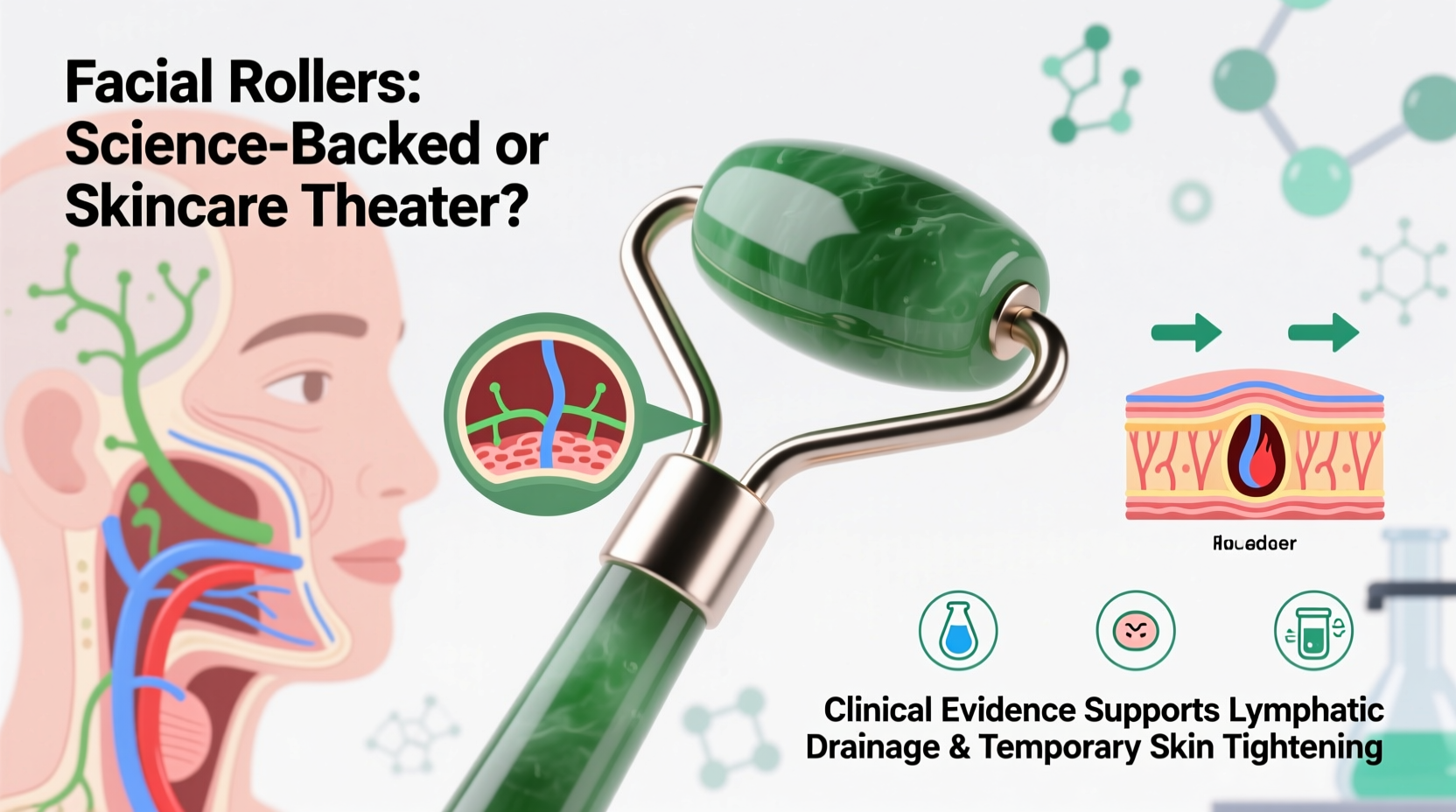
Facial rolling traces its roots to traditional Chinese medicine, where tools like the gua sha (a flat, sculpted stone) and hand-carved rollers were used to stimulate circulation and promote energy flow, or \"qi.\" These practices date back centuries and were traditionally performed with horn, jade, or bian stone.
In the 2000s, Western beauty culture began adopting these tools, rebranding them as modern self-care accessories. By the 2010s, social media amplified their popularity. Influencers posted soothing videos of themselves gliding cool stones over their faces, often after applying serums or oils. The ritual became synonymous with luxury, mindfulness, and natural beauty enhancement.
But while the tradition is ancient, scientific scrutiny of these tools is relatively new. That gap between cultural practice and clinical validation is where much of the skepticism—and curiosity—arises.
What Science Says About Facial Rollers
To assess whether facial rollers are more than just feel-good props, it's important to examine their proposed mechanisms: lymphatic drainage, increased circulation, product absorption, and muscle relaxation.
Lymphatic Drainage and Depuffing
One of the most cited benefits of facial rolling is reducing puffiness through lymphatic stimulation. The lymphatic system helps remove waste and excess fluid from tissues. When sluggish—often due to poor sleep, diet, or stress—it can contribute to morning facial swelling.
A 2020 pilot study published in *The Journal of Cosmetic Dermatology* examined the effects of facial massage using a roller on periorbital (under-eye) puffiness. After four weeks of twice-daily use, participants showed a statistically significant reduction in under-eye volume compared to the control group. Researchers attributed this to improved lymphatic flow.
“Manual lymphatic drainage techniques, including those facilitated by tools like rollers, can temporarily reduce edema and improve facial contour.” — Dr. Angela Kim, Board-Certified Dermatologist
However, the effects were temporary, lasting only 6–8 hours post-use. This suggests that while rollers may help manage puffiness, they don’t offer permanent solutions.
Blood Circulation and Skin Radiance
Another claim is that rolling boosts blood flow, delivering oxygen and nutrients to the skin for a healthier glow. A small 2018 study using laser Doppler imaging found that facial massage with a roller increased microcirculation by up to 25% immediately after use. However, this effect subsided within 30 minutes.
While enhanced circulation doesn't reverse aging, it may support skin repair processes and give the appearance of brighter, more awake skin—especially useful before events or after fatigue.
Serum and Moisturizer Absorption
Some brands claim that rolling helps products penetrate deeper into the skin. There is limited direct evidence for this, but mechanical pressure and friction can enhance transdermal delivery in certain contexts. For example, studies on drug delivery via massage show modest improvements in absorption.
In practical terms, gently rolling after applying a serum may help distribute the product evenly and reduce pooling, which could minimize waste. But it won’t significantly alter how deeply active ingredients like hyaluronic acid or vitamin C reach the dermis.
Muscle Tension and Facial Relaxation
Preliminary research suggests that repetitive facial movements and tension—such as clenching the jaw or furrowing brows—can contribute to dynamic wrinkles over time. Tools like rollers may help relax facial muscles through gentle pressure and rhythmic motion.
A 2021 survey conducted by the American Academy of Facial Aesthetics found that 68% of respondents reported reduced facial tension after regular use of facial massage tools. While subjective, this aligns with broader findings on the stress-reducing effects of tactile self-care.
Tip: For enhanced depuffing, store your facial roller in the refrigerator overnight. The cold temperature can constrict blood vessels and further reduce morning swelling.Limitations and Misconceptions
Despite promising findings in specific areas, several claims about facial rollers lack robust scientific backing:
- Permanent lifting or tightening: No credible study shows that rolling remodels collagen or elastin long-term. Any “lift” is temporary and due to improved fluid distribution.
- Acne or scar reduction: There is no evidence that rolling clears breakouts or fades scars. In fact, aggressive rolling on active acne can spread bacteria and worsen inflammation.
- Detoxification: The term “detox” is frequently misused. The liver and kidneys handle detoxification; facial tools do not “draw out toxins.”
- Crystal energy healing: While aesthetically pleasing, there’s no scientific basis for claims that jade or rose quartz emit healing vibrations.
These exaggerations contribute to the perception of facial rollers as pseudoscientific wellness props. Yet dismissing them entirely overlooks their real, if modest, physiological effects.
How to Use a Facial Roller Effectively: A Step-by-Step Guide
To maximize potential benefits and avoid harm, follow an evidence-informed technique:
- Cleanse your face and apply a lightweight serum or facial oil to reduce friction.
- Start at the center of the face, using upward and outward motions. Begin with the forehead, moving from the brow line to the hairline.
- Move to the cheeks, rolling from the nose outward toward the ears. Apply light to moderate pressure—never press hard enough to cause redness.
- Under the eyes, use the smaller end and glide gently from the inner corner toward the temples. Avoid tugging delicate skin.
- Chin and jawline: Roll upward along the jaw, ending at the lymph nodes near the ears. This supports lymphatic drainage.
- Neck: Don’t skip this area. Roll downward from the jaw to the collarbone to guide fluid toward major lymphatic zones.
- Duration: Spend 3–5 minutes total. Overuse can irritate the skin.
- Clean the roller after each use with mild soap and water to prevent bacterial buildup.
Consistency matters less than proper technique. Using a roller correctly two to three times per week is more beneficial than daily aggressive rolling.
Facial Roller vs. Gua Sha: What’s the Difference?
Many consumers confuse facial rollers with gua sha tools. While both originate from traditional practices and aim to improve circulation and tone, they function differently.
| Feature | Facial Roller | Gua Sha Tool |
|---|---|---|
| Design | Two wheels on a handle (one large, one small) | Flat, contoured stone with curved edges |
| Primary Use | Gliding motion for depuffing and relaxation | Scraping motion for muscle release and definition |
| Pressure Level | Light to moderate | Moderate to firm (with proper training) |
| Learning Curve | Low – easy for beginners | Moderate – requires correct angle and stroke |
| Scientific Support | Modest for circulation and lymphatic flow | Emerging evidence for muscle relaxation and tone |
| Risk of Irritation | Low, if used gently | Moderate, if applied too aggressively |
Both tools can complement a skincare routine, but gua sha may offer more targeted sculpting benefits—if used correctly. Beginners should start with a roller before progressing to gua sha.
Real Example: A Dermatologist’s Perspective in Practice
Dr. Lena Torres, a cosmetic dermatologist in Los Angeles, incorporates facial rolling into her post-procedure protocols. After patients receive injectables or laser treatments, she recommends gentle rolling to reduce swelling.
“After microneedling, some patients experience localized edema,” she explains. “We give them chilled rollers and teach them basic lymphatic patterns. It’s not magic, but it helps move fluid and improves comfort.”
She cautions against overhyping results: “I’ve had patients come in expecting a facelift from rolling every night. When they don’t see dramatic changes, they feel misled. My job is to set realistic expectations.”
For Dr. Torres, the value lies in integration—not replacement. “Rolling works best when paired with proven treatments like retinoids, sunscreen, and hydration. Alone, it’s a supportive player, not the star.”
Checklist: Using Facial Rollers Wisely
Before adding a facial roller to your routine, consider this checklist:
- ✅ Do consult a dermatologist if you have rosacea, active acne, or sensitive skin.
- ✅ Do clean your roller regularly to avoid bacterial transfer.
- ✅ Do use light pressure—skin should not turn red or feel sore.
- ✅ Do combine with other evidence-based skincare (e.g., SPF, antioxidants).
- ❌ Don’t roll over broken skin, open lesions, or active cold sores.
- ❌ Don’t expect permanent lifting or wrinkle elimination.
- ❌ Don’t believe marketing claims about “energy balancing” or “detox.”
FAQ
Can facial rollers really reduce wrinkles?
No, facial rollers do not reduce wrinkles in the way that retinoids, peptides, or professional treatments do. They may temporarily smooth fine lines by reducing puffiness, but they don’t stimulate collagen production or reverse photoaging.
How often should I use a facial roller?
2–3 times per week is sufficient for most people. Daily use is safe if done gently, but overuse may lead to irritation, especially on sensitive skin.
Are expensive crystals like rose quartz worth it?
Not from a functional standpoint. Jade, rose quartz, and amethyst perform similarly as rolling surfaces. Price differences are largely due to aesthetics and branding. Choose based on comfort and durability, not metaphysical claims.
Conclusion: Ritual Meets Reality
Facial rollers sit at the intersection of tradition, aesthetics, and emerging science. They are not miracle devices, nor are they meaningless props. The truth lies in nuance: they offer mild, temporary improvements in puffiness, circulation, and product application—benefits that, while modest, are physiologically plausible and safe when used correctly.
Where they truly shine is in the realm of ritual. The act of pausing, cooling the skin, and engaging in mindful self-care has documented psychological benefits. Stress reduction alone can improve skin health over time by lowering cortisol and inflammation.
So, are facial rollers backed by science? Partially. Are they just relaxing skincare theater? Not entirely. They are best understood as complementary tools—one small part of a holistic approach to skin wellness.
🚀 Ready to optimize your routine? Try incorporating a facial roller 2–3 times a week using proper technique. Track how your skin feels and looks over a month. Share your experience—or questions—with others seeking balanced, science-aware skincare choices.








