Balancing on a wobbly board while typing at your desk might look like the latest wellness trend, but it raises a valid question: are balance boards actually effective for building core strength, or are they little more than stylish office accessories with exaggerated claims? As standing desks and ergonomic gadgets flood home offices, balance boards have gained popularity as tools to improve posture, engage muscles, and combat sedentary lifestyles. But behind the sleek designs and influencer endorsements lies a need for evidence-based clarity.
The answer isn’t a simple yes or no. Balance boards can contribute meaningfully to core engagement and neuromuscular control — but only under the right conditions and expectations. Used correctly, they serve as functional training aids. Misunderstood or overhyped, they become passive props that offer minimal benefit. This article examines the biomechanics of balance training, reviews scientific findings, compares different board types, and outlines realistic outcomes so you can decide whether a balance board deserves a place in your fitness or work routine.
The Science Behind Balance and Core Activation
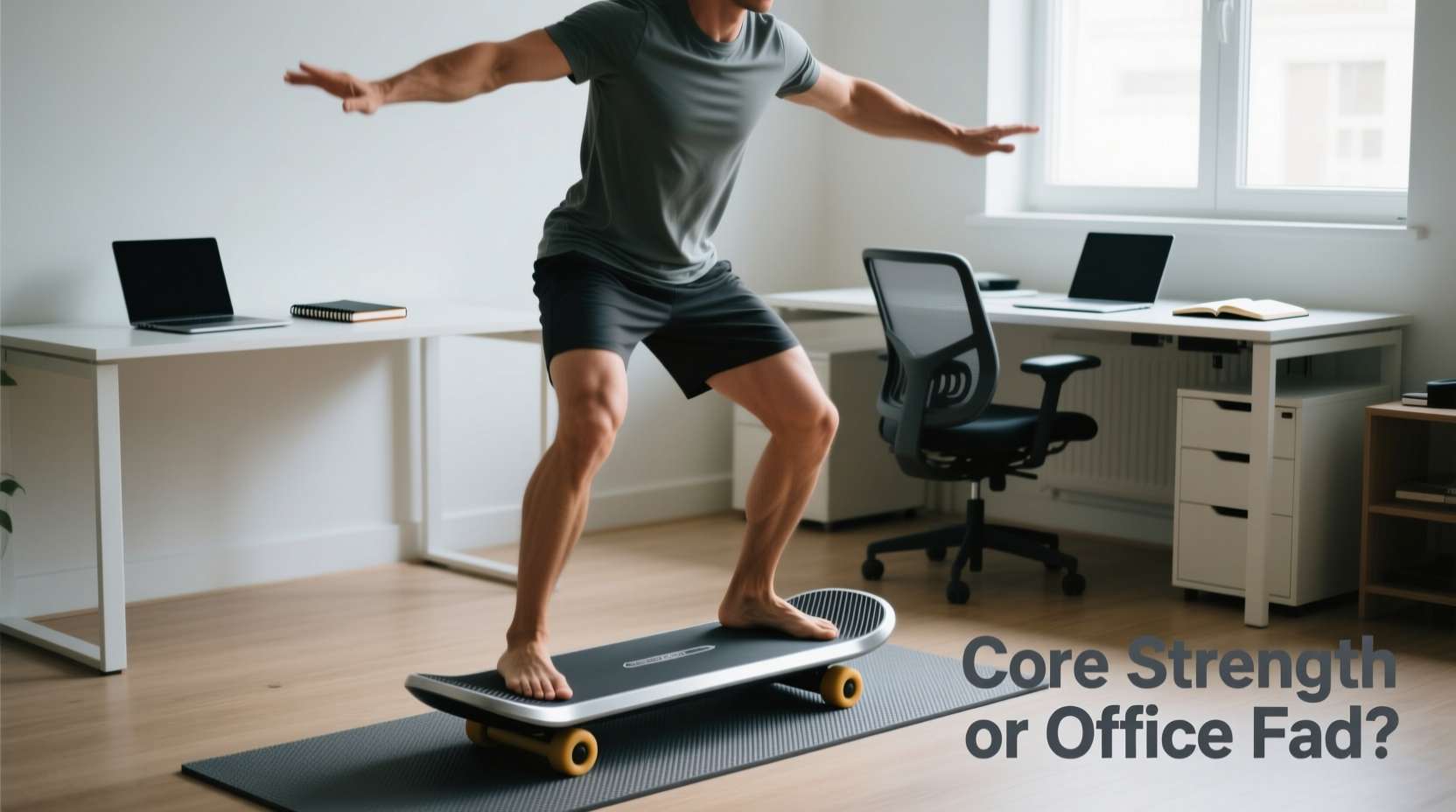
Your core is not just your abs. It includes the transverse abdominis, obliques, erector spinae, multifidus, diaphragm, and pelvic floor — all working together to stabilize your spine and pelvis during movement. Traditional exercises like planks and deadlifts challenge this system through resistance. Balance boards, however, introduce instability, forcing your body to make constant micro-adjustments to maintain equilibrium.
When you stand on an unstable surface, your proprioceptive system — the network of sensors in your muscles, tendons, and joints — sends rapid feedback to your brain. In response, your central nervous system recruits stabilizing muscles, particularly in the core and lower limbs, to prevent falls. This process increases muscle activation compared to standing on solid ground.
A 2018 study published in the Journal of Sports Science & Medicine found that participants using a wobble board demonstrated up to 32% greater activation in the transverse abdominis and internal obliques during quiet standing versus stable surfaces. Another study in Gait & Posture showed that balance board use improved postural control in healthy adults after six weeks of regular use, suggesting neuromuscular adaptation.
However, increased activation does not automatically translate to increased strength. Muscle growth (hypertrophy) requires progressive overload — increasing resistance or intensity over time. Balance boards provide low-level, sustained engagement rather than high-intensity stimulus. They’re better suited for endurance and stability than for building visible six-pack abs.
“Instability training has its place, but it shouldn’t replace traditional strength work. Think of it as a supplement, not a substitute.” — Dr. Laura Chen, Physical Therapist and Movement Specialist
Types of Balance Boards and Their Functional Differences
Not all balance boards are created equal. The design determines the type of movement and level of difficulty, which directly affects core engagement. Understanding these differences helps set realistic expectations.
| Type | Movement Pattern | Core Engagement Level | Best For |
|---|---|---|---|
| Wobble Board | 360-degree tilt | High | Rehabilitation, athletic training, advanced users |
| Roller Board | Side-to-side or front-to-back roll | Moderate to High | Challenging workouts, dynamic movement |
| Rocker Board | Single-axis tilt (front-back or side-side) | Moderate | Beginners, office use, light activation |
| Spring-Based Board | Compressed bounce with tilt | Low to Moderate | Ergonomic standing, mild engagement |
For example, a rocker board used under a standing desk may only activate core muscles intermittently, especially if the user adopts a passive stance. In contrast, deliberate movements on a wobble board — such as squats or single-leg stands — demand continuous stabilization, leading to stronger neuromuscular recruitment.
Tip: To maximize core engagement, avoid leaning on furniture or locking your knees. Stand tall with soft joints and shift your weight intentionally.Real-World Applications: From Offices to Athletic Training
The rise of the “active office” has positioned balance boards as tools to combat prolonged sitting. While standing alone improves circulation and reduces back strain, adding instability introduces subtle muscular work. However, effectiveness depends on usage patterns.
In a typical eight-hour workday, someone using a balance board intermittently might accumulate 2–3 hours of light postural engagement. This won’t burn significant calories or build muscle, but it can enhance proprioception and reduce stiffness. Over time, consistent use may improve posture awareness and decrease reliance on back support.
Conversely, athletes and rehab patients use balance boards with intention. Physical therapists prescribe them for ankle sprain recovery because they retrain joint position sense. Gymnasts and surfers use them to refine balance under fatigue. These applications involve structured drills — timed holds, eyes closed, single-leg variations — that progressively challenge stability.
Mini Case Study: Office Worker vs. Rehab Patient
Sarah, a 34-year-old software developer, bought a spring-based balance board to use at her standing desk. She stands for about two hours daily, shifting her weight occasionally. After three months, she reports feeling “a bit more alert” but notices no change in core strength or posture.
Meanwhile, James, a 28-year-old recovering from an ACL reconstruction, uses a wobble board as part of his physical therapy. His routine includes 3 sets of 30-second single-leg stands, progressing to dynamic reaches and squats. After six weeks, his therapist measures improved knee stability and trunk control during walking tasks.
The difference? Intent and structure. Sarah’s use is passive; James’s is active and progressive. Both gain some benefit, but only James experiences measurable functional improvement.
Do’s and Don’ts of Effective Balance Board Use
To avoid falling into the trap of treating a balance board like a novelty item, follow these guidelines.
| Do | Don't |
|---|---|
| Start with short sessions (5–10 minutes) to build confidence | Use it for hours without breaks, risking joint fatigue |
| Combine with intentional movements: heel raises, mini-squats, arm lifts | Stand rigidly or hold onto your desk for support |
| Progress difficulty by closing your eyes or lifting one foot | Expect dramatic strength gains without complementary exercise |
| Use proper footwear or go barefoot for better feedback | Use on slippery or uneven surfaces |
| Incorporate into warm-ups or cooldowns | Replace dedicated core workouts entirely |
Step-by-Step Guide to Maximizing Core Benefits
If you want to move beyond passive rocking and actually strengthen your core, follow this progression plan. Perform these routines 3–4 times per week alongside other strength training.
- Week 1–2: Foundation Building
Stand on the board with feet shoulder-width apart. Focus on maintaining balance for 1–2 minutes. Repeat 3 times daily. Goal: Develop awareness and basic stability. - Week 3–4: Controlled Movement
Add slow weight shifts: lean forward, backward, left, right. Hold each position for 5 seconds. Complete 2 sets of 10 reps in each direction. Goal: Enhance coordination and eccentric control. - Week 5–6: Dynamic Challenges
Perform 10 bodyweight squats on the board, keeping heels down and chest up. Progress to single-leg stands (3 sets of 20 seconds per leg). Goal: Increase muscular endurance and joint stability. - Week 7+: Advanced Integration
Combine upper-body motion: hold light dumbbells and perform overhead presses or bicep curls while balancing. Alternatively, close your eyes during single-leg stands. Goal: Improve multisensory integration and functional strength.
Frequently Asked Questions
Can balance boards help with lower back pain?
Indirectly, yes. By improving core stability and posture control, balance boards may reduce strain on the lower back, especially for individuals with sedentary jobs. However, they are not a standalone treatment. Chronic back pain requires assessment by a healthcare provider and targeted rehabilitation.
How long should I use a balance board each day?
For general health and posture, 10–20 minutes total is sufficient. Break it into multiple short sessions to avoid fatigue. Athletes or those in rehab may train longer under professional guidance. Avoid overuse, as excessive instability can lead to joint irritation.
Are balance boards safe for older adults?
Yes, but with precautions. Older adults can benefit from improved balance and fall prevention, but should start with low-risk models (like rocker boards) and use near a wall or sturdy surface for support. Supervision is recommended initially, especially for those with existing balance issues.
Conclusion: Practical Tool or Passing Trend?
Balance boards are neither miracle devices nor meaningless office fads. Their effectiveness hinges on how they’re used. As passive accessories beneath a standing desk, they offer modest improvements in alertness and minor muscle engagement. But when integrated into purposeful training routines, they become valuable tools for enhancing neuromuscular control, joint stability, and functional core strength.
They won’t replace planks, deadbugs, or compound lifts — no unstable surface will. But they complement them well, especially for those looking to improve balance, recover from injury, or add variety to their movement practice. The key is intentionality: treat the board as equipment, not decor.
If you're considering a purchase, choose based on your goals. Opt for a wobble or roller board if you want real challenge; pick a rocker or spring model if you prioritize comfort during standing work. And above all, stay active — not just balanced.
🚀 Ready to turn passive standing into active strengthening? Start with five minutes a day of focused balance work and track your progress over a month. Share your experience in the comments and inspire others to move with purpose.








