
Alcohol delivery apps have transformed convenience—offering same-day beer, wine, and spirits from local retailers without stepping outside. But unlike food or grocery deliveries, alcohol deliveries carry unique legal, ethical, and physical safety implications. A driver carrying alcohol is not just delivering a product; they’re handling a regulated substance that requires age verification, responsible conduct, and strict compliance with state laws. Yet many users accept deliveries without verifying who’s at their door—or whether that person has been properly vetted. This isn’t theoretical risk: reports of impersonation, forged IDs, unlicensed drivers, and even theft disguised as delivery have surfaced across major markets from Austin to Chicago to Portland. Safety shouldn’t be an afterthought—it must be built into every step of the transaction.
Why Alcohol Delivery Drivers Pose Distinct Safety Risks
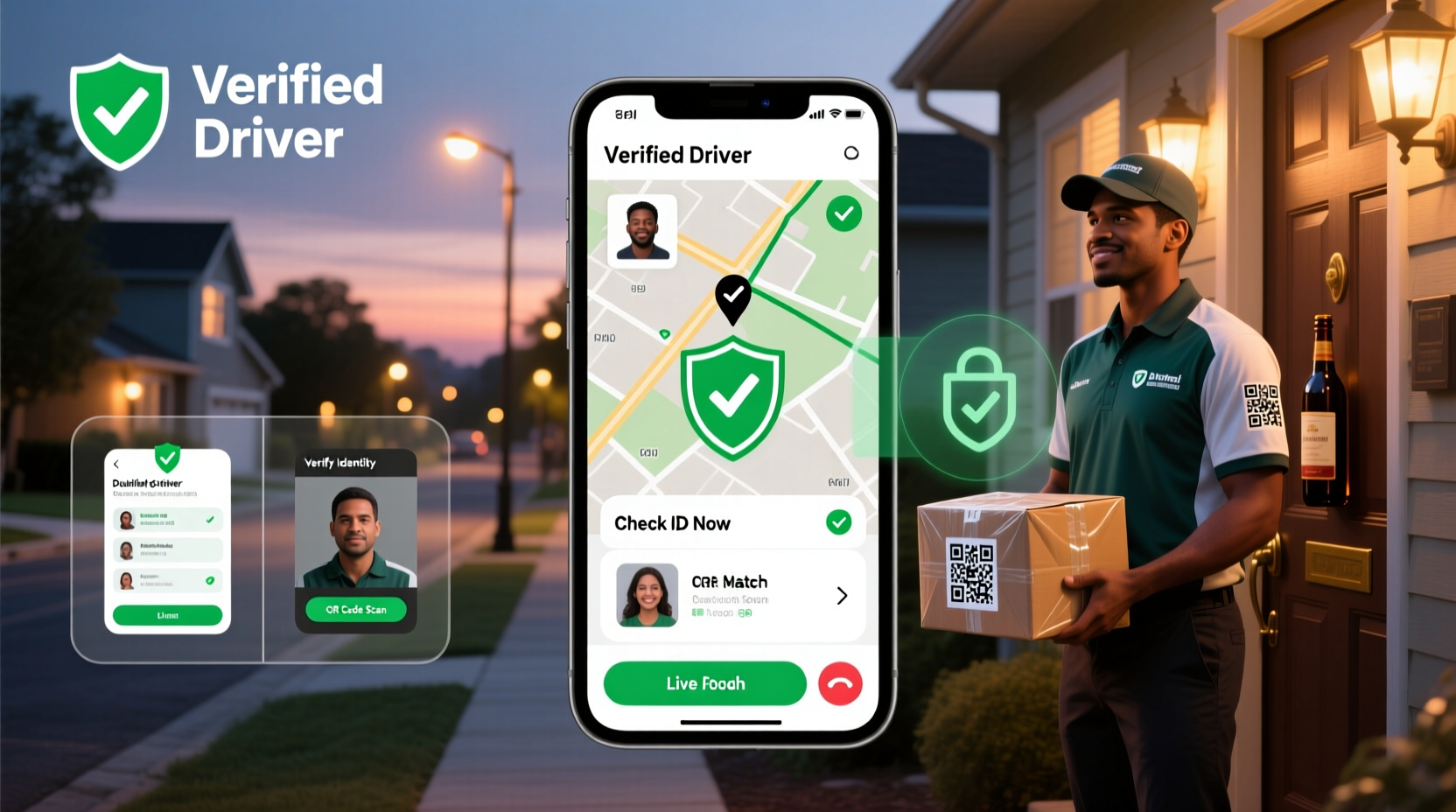
Standard food or package delivery involves low-stakes handoffs. Alcohol delivery introduces layered vulnerabilities: regulatory exposure (e.g., liability for underage delivery), behavioral unpredictability (drivers may consume on shift), and operational gaps (many platforms outsource background checks to third-party vendors with inconsistent standards). In 2023, the National Retail Federation flagged alcohol delivery as one of the fastest-growing categories for identity fraud—accounting for over 37% of all age-verification failures in digital commerce. Unlike rideshare services, which require real-time GPS tracking and two-way rating systems, many alcohol delivery apps offer minimal visibility into driver profiles until seconds before arrival. Worse, some platforms allow “driverless” fulfillment—where retail staff fulfill orders but use generic or masked driver names in-app, making accountability nearly impossible.
Compounding this, state laws vary widely. In Texas, drivers must complete TABC-certified seller training. In New York, they must hold a valid liquor license endorsement. In contrast, Alabama prohibits direct-to-consumer alcohol delivery entirely—yet apps sometimes route orders through neighboring states or misrepresent jurisdictional compliance. Users rarely check whether their local app adheres to these rules. That gap between platform claims and actual enforcement is where safety risks crystallize.
How to Verify a Driver Before Accepting Delivery: A Step-by-Step Protocol
Verification shouldn’t begin when someone knocks on your door. It starts before you place the order—and continues through handoff. Follow this sequence precisely:
- Pre-order check: Confirm the app displays full driver information *before* checkout—not just a first name and avatar. Legitimate platforms (e.g., Drizly via Uber Eats, Minibar, or local retailer apps like Total Wine’s delivery portal) show verified first and last name, photo ID thumbnail, vehicle make/model/license plate, and active TABC or state-specific certification badge.
- During order confirmation: Note the assigned driver’s unique ID number (not just a nickname) and cross-reference it with the app’s “Driver Details” page. Tap into the profile to view certification expiration dates and review history.
- 15 minutes pre-arrival: Open the live map. Verify the driver’s route matches expected travel time and geography. Sudden detours, prolonged stops, or GPS freezing warrant cancellation—even if the app says “on the way.”
- At the door: Require ID presentation *before* handing over payment or accepting goods. Match the face, name, and photo on their government-issued ID to the app’s displayed profile. Do not accept a phone screenshot of an ID.
- Post-handoff: Within five minutes, log into the app and submit feedback *specifically about driver verification*. Flag inconsistencies (e.g., mismatched license plate, unprofessional behavior, refusal to show ID). These reports trigger platform audits—most apps investigate verified complaints within 48 hours.
What to Look For (and What to Reject) in Driver Profiles
Not all driver profiles are created equal. The table below outlines critical indicators of legitimacy versus red flags requiring immediate cancellation:
| Feature | ✅ Legitimate Indicator | ❌ Red Flag |
|---|---|---|
| Name Display | Full legal name matching state ID, with middle initial or full middle name visible | Only first name + generic nickname (“Mike D.”, “Alex R.”); no surname or initials |
| ID Photo | Clear, front-facing, high-resolution photo showing full face, shoulders, and proper lighting—no filters or cropping | Blurry, sideways, or heavily filtered image; cropped to exclude hairline or jawline |
| Certification Badge | Clickable badge linking to official state database (e.g., TABC License Search, NYSLA Public Registry) | Static icon with no link, vague text (“Certified”), or expired date (e.g., “Valid until 06/2023”) |
| Vehicle Info | License plate number *exactly* matching what appears in live tracking—and verifiable via DMV lookup tools in your state | Vague description only (“white SUV”), missing plate, or plate obscured by glare/angle in app photo |
| Review History | Minimum 25+ reviews averaging ≥4.7 stars, with recent comments referencing ID checks or professionalism | Fewer than 10 reviews, all posted within same 48-hour window, or generic praise (“Nice guy!” with no specifics) |
Mini Case Study: How One Verification Saved a Homeowner in Denver
In March 2024, Sarah M., a 34-year-old graphic designer in Denver’s Highland neighborhood, ordered craft cocktails via a regional app called “LiquorLoop.” At checkout, she noticed the driver’s profile showed only “J.T.” and a pixelated photo. She paused, scrolled to “View Full Profile,” and found no certification badge—just a grayed-out “Pending Verification” label. She canceled and re-ordered through Total Wine’s official app instead. Fifteen minutes later, the LiquorLoop driver arrived at her building—but under a *different* name and license plate than shown in-app. Security footage confirmed he’d entered using a fake access code and attempted to deliver to three other units before leaving. Sarah reported the incident to Colorado’s Department of Revenue, Division of Alcoholic Beverages and Tobacco (DABT), which launched an investigation. Within 72 hours, LiquorLoop suspended operations in Colorado pending audit. Sarah’s insistence on pre-arrival verification didn’t just protect her—it exposed systemic noncompliance affecting hundreds of customers.
Expert Insight: Regulatory Realities Behind the Screen
“Platforms often treat driver verification as a ‘checkbox’ item—not a continuous process. But alcohol isn’t coffee. A single undetected lapse can mean illegal service to minors, DUI-related liability, or stolen inventory. States like California now require quarterly re-verification of driver credentials—not just at hire. Consumers hold the most immediate power: if you don’t see full, clickable, auditable proof *before* ordering, walk away. Your vigilance shapes industry standards.” — Rafael Chen, Senior Investigator, National Alcohol Beverage Control Association (NABCA)
Practical Safety Checklist for Every Alcohol Delivery
- ☐ Confirm the app is licensed to operate in your state (check your state ABC board website—e.g., ca.gov/abc or ny.gov/liquor)
- ☐ Require full name, photo, certification badge, and license plate *before* finalizing order
- ☐ Cross-check driver’s license plate against your state’s free DMV lookup tool (available in 42 states)
- ☐ Insist on government-issued photo ID presentation *in person*, not via phone
- ☐ Refuse delivery if driver arrives without visible company-branded apparel or vehicle signage matching app details
- ☐ Report mismatches immediately to both the app *and* your state’s alcohol control authority
FAQ: Critical Questions Answered
Can I legally refuse delivery if the driver won’t show ID?
Yes—and you should. Federal law (27 CFR § 7.206) and every state’s alcohol code prohibit sale or delivery without positive age verification. Drivers employed by licensed retailers are trained to comply. If they resist, it signals noncompliance with their employer’s license—and you’re within rights to decline, cancel, and report.
What if the app shows a driver photo but no certification badge?
This is a serious omission. Certification isn’t optional: in 38 states, drivers must complete mandatory server training (e.g., TIPS, ServSafe Alcohol) and maintain active status. No badge means either the platform hasn’t verified them—or they’re operating without authorization. Cancel and choose a provider that transparently displays live certification status.
Are background checks required for alcohol delivery drivers?
Yes—but enforcement varies. The federal Alcohol and Tobacco Tax and Trade Bureau (TTB) mandates fingerprint-based background checks for anyone handling alcohol shipments across state lines. For intrastate delivery, requirements fall to state ABC boards. California, Washington, and Massachusetts enforce rigorous checks including felony, DUI, and violent offense screening. Others rely on self-reported disclosures. Always assume verification is incomplete unless proven otherwise.
Conclusion: Safety Is a Shared Responsibility—Start Today
Alcohol delivery apps thrive on speed and simplicity—but safety demands deliberate action. You don’t need technical expertise or legal training to protect yourself. You need consistency: checking profiles before ordering, matching IDs at the door, and reporting anomalies without hesitation. Every time you insist on transparency, you reinforce accountability—not just for one driver, but for the entire ecosystem. Platforms respond to user behavior. When enough customers demand verifiable credentials, certification links, and real-time license plate validation, those features become standard—not exceptions. Don’t wait for regulation to catch up. Make verification habitual. Save that screenshot. Ask for the ID. Cancel when something feels off. Your home, your family, and your community depend on the quiet courage of everyday vigilance.
💬 Your experience matters. Have you spotted a driver verification gap—or successfully prevented a risky delivery? Share your story in the comments. Real examples help others recognize red flags—and push platforms toward meaningful reform.








