Gaming marathons—multi-hour or even multi-day stretches of uninterrupted play—are deeply embedded in modern gaming culture. From charity livestreams like Games Done Quick to solo weekend raids in Elden Ring, endurance play signals dedication, camaraderie, and identity. Yet alongside the controllers, headsets, and energy drinks, a quieter but persistent companion often appears: alcohol. It’s not just anecdotal. A 2023 survey by the Digital Wellness Institute found that 42% of respondents who streamed or participated in 6+ hour gaming sessions reported consuming alcohol during at least half of those events. This isn’t about “just having a beer”—it’s a complex interplay of neurochemistry, social ritual, performance perception, and unmet regulatory needs. Understanding why players reach for alcohol during long sessions is the first step toward making intentional, health-conscious choices—not just for physical well-being, but for cognitive longevity, emotional resilience, and the integrity of the gaming experience itself.
The Psychological Pull: Stress Relief, Flow, and Cognitive Load
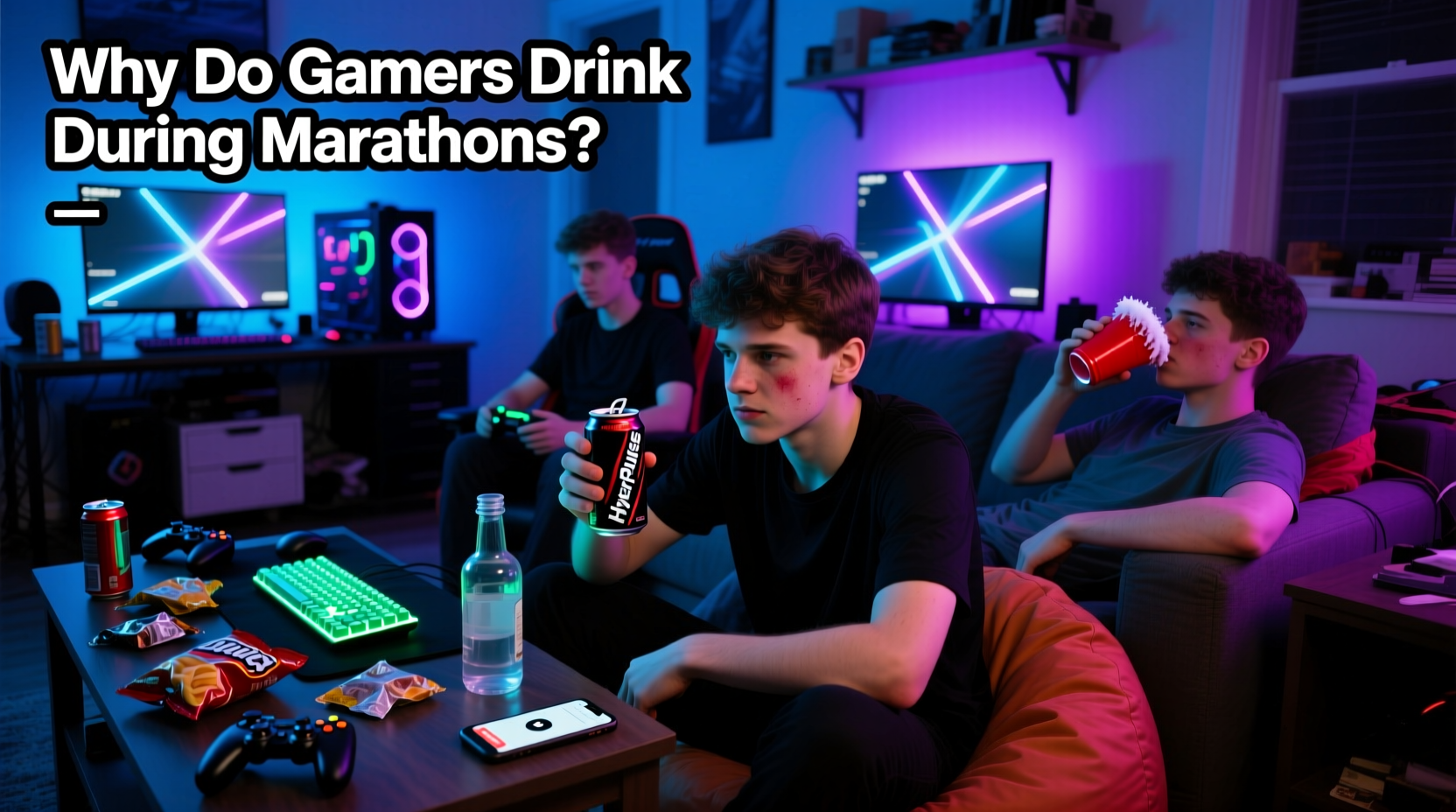
Extended gaming demands sustained attention, rapid decision-making, and emotional regulation—especially in competitive or high-stakes environments. The brain treats this as a form of cognitive labor. As mental fatigue accumulates, dopamine and serotonin levels dip, while cortisol—the body’s primary stress hormone—rises. Alcohol, even in low doses, temporarily dampens amygdala reactivity and enhances GABA activity, producing a subjective sense of relaxation and reduced self-monitoring. For many players, this feels like “taking the edge off” frustration after repeated losses, or easing the tension before a boss fight they’ve failed 17 times.
This effect dovetails with the pursuit of flow—a psychological state of deep immersion where time distorts and self-consciousness recedes. While flow is typically associated with optimal challenge-skill balance, some players mistakenly believe alcohol lowers the threshold for entry. In reality, research from the University of Essex (2022) shows that even one standard drink impairs reaction time by 12–18%, reduces working memory capacity by up to 23%, and degrades visual tracking accuracy—undermining the very conditions required for true flow. What players often experience instead is *disinhibited absorption*: a looser, less precise engagement that mimics flow but lacks its cognitive benefits.
Tip: Replace alcohol with non-alcoholic alternatives that support focus—not suppress it. Tart cherry juice (rich in anthocyanins), matcha (L-theanine + caffeine synergy), or electrolyte-infused water can ease mental fatigue without impairing neural processing.Social Ritual and Community Reinforcement
Gaming marathons are rarely solitary acts. They’re shared experiences—whether co-op raids, Discord voice chats, or Twitch streams where thousands watch and interact in real time. Alcohol functions as a social lubricant in these spaces, mirroring broader cultural patterns: a “virtual pub crawl,” a shared toast before launching into a dungeon, or a celebratory shot after clearing a raid. The ritual itself carries meaning: pouring a drink becomes a signal of commitment (“I’m in for the long haul”), a marker of belonging (“We’re doing this together”), and a performative cue for viewers (“This is serious fun”).
But this reinforcement is double-edged. When streamers normalize drinking during gameplay—“Just one more IPA before we take on the final boss!”—they inadvertently validate behavior that studies link to increased risk of problematic use. A longitudinal analysis published in Frontiers in Psychology (2024) tracked 312 regular stream viewers over 18 months and found that those who followed creators who frequently drank on stream were 2.7× more likely to report using alcohol to cope with gaming-related frustration or disappointment.
Performance Misconceptions and the “Liquid Confidence” Myth
One of the most persistent myths in gaming circles is that alcohol improves performance—particularly in social or improvisational contexts like Among Us, Fall Guys, or multiplayer RPGs. Players cite reasons like “I’m funnier when I’ve had a few,” “I stop overthinking my moves,” or “It makes me less nervous about voice chat.” These beliefs tap into real pharmacological effects—alcohol does reduce activity in the prefrontal cortex, which governs inhibition and self-evaluation—but they ignore critical trade-offs.
What feels like “confidence” is often diminished error detection and slower conflict resolution. In team-based games requiring coordination, timing, and communication clarity, alcohol impairs auditory processing speed, increases latency in verbal response, and reduces the ability to parse sarcasm or urgency in teammates’ tone—all factors confirmed in lab-based VR gaming simulations (University of Helsinki, 2023). Worse, the perceived boost is short-lived: blood alcohol concentration (BAC) peaks 30–90 minutes after consumption, followed by rebound anxiety, irritability, and mental fog—precisely when marathon stamina is most needed.
| Effect | Impact on Gaming Performance | Evidence Level |
|---|---|---|
| Reaction Time | Slowed by 12–25% at BAC 0.02–0.05% | High (controlled lab studies) |
| Working Memory | Reduced recall accuracy for map layouts, cooldown timers, teammate roles | High |
| Voice Chat Clarity | Increased slurring, longer pauses, mispronounced commands | Moderate (streamer observational data) |
| Emotional Regulation | Higher likelihood of tilt, toxic chat, abrupt quitting | High (Twitch moderation logs + self-report) |
| Post-Session Recovery | Disrupted sleep architecture; 40% less REM sleep; next-day fatigue amplifies | High (polysomnography data) |
A Real-World Snapshot: Maya’s 36-Hour Charity Stream
Maya, a 28-year-old indie game developer and Twitch streamer, hosted a 36-hour “Retro Rumble” marathon for Child’s Play Charity. Her goal was $10,000. She planned meticulously: scheduled breaks, hydration reminders, backup co-hosts, and a playlist of energizing tracks. But she also brought six craft IPAs—“one per 6 hours, to keep morale up.” By hour 18, her speech slowed, her strategy calls grew vague (“Just… go left? Or was it right?”), and she missed two major donation alerts. At hour 24, during a high-viewership Super Mario Bros. 3 speedrun attempt, she fumbled a critical warp zone input—costing her a world record attempt—and snapped at a viewer who pointed it out. She later described the moment: “I thought the beer was helping me relax, but what it really did was mute my awareness that I was tired. I wasn’t ‘loose’—I was dissociating from my own fatigue cues.” She raised $8,200. Afterward, she switched to sparkling ginger beer and implemented mandatory 15-minute screen-free breaks every 90 minutes. Her next marathon—48 hours, zero alcohol—raised $14,600 and earned praise for her consistent energy and sharp commentary.
Expert Insight: Beyond Willpower
Understanding the “why” requires moving past moral judgments about discipline or self-control. Neuroscientist Dr. Lena Torres, who leads the Gaming & Cognition Lab at McGill University, explains:
“The drive to drink during gaming marathons isn’t primarily about hedonism or weakness—it’s about unmet regulatory needs. When players lack accessible, effective tools to manage fatigue, uncertainty, or social pressure, the brain defaults to the fastest available neuromodulator. Alcohol works *fast*. That doesn’t make it wise—but it does make it understandable. Sustainable change means building better scaffolds: structured rest protocols, peer accountability systems, and reframing ‘endurance’ as strategic pacing—not stoic suffering.” — Dr. Lena Torres, Neuroscientist & Lead Researcher, Gaming & Cognition Lab, McGill University
Practical Alternatives: A Step-by-Step Resilience Protocol
Replacing alcohol isn’t about deprivation—it’s about upgrading your toolkit. Here’s a field-tested protocol used by professional esports support staff and verified by occupational health researchers:
- Pre-Marathon Prep (24–48 hrs prior): Prioritize 7–8 hours of quality sleep; consume magnesium-rich foods (spinach, almonds, black beans); hydrate consistently—not just with water, but with sodium/potassium-electrolyte solutions to support neural conductivity.
- Hour 0–2 (Launch Phase): Begin with 250 mL cold green tea (caffeine + L-theanine) and a 5-minute dynamic stretch routine. Set visible timers for micro-breaks (every 25 mins: 2 min eye relaxation + shoulder rolls).
- Hour 3–6 (Sustained Focus Phase): Switch to tart cherry juice (natural melatonin precursor) or matcha latte. Use blue-light filtering glasses if on screen >4 hours. Introduce low-stakes social interaction: ask one open-ended question in voice chat (“What’s your all-time favorite boss theme?”).
- Hour 7–12 (Fatigue Threshold): Take a mandatory 15-minute screen-free break. Walk outside if possible—even 3 minutes of natural light resets circadian alertness. Eat a protein + complex carb snack (e.g., Greek yogurt + berries). Practice box breathing: inhale 4 sec → hold 4 → exhale 4 → hold 4 × 3 rounds.
- Hour 12+ (Recovery Anchoring): Shift to caffeine-free options (peppermint or ginger herbal tea). Dim ambient lighting slightly to signal parasympathetic shift. End each session with a 3-bullet reflection: “One thing I executed well,” “One adjustment for next time,” “One person I appreciated today.”
FAQ: Addressing Common Concerns
“Isn’t moderate drinking harmless during casual gaming?”
Moderation is highly individual—and context-dependent. For gaming marathons specifically, “moderate” (defined by NIH as ≤1 drink/day for women, ≤2 for men) doesn’t account for cumulative neurocognitive load. Even one drink during a 6+ hour session measurably delays visual-motor integration and increases error propagation in sequential tasks. Harm reduction starts with intentionality: ask *why* you’re reaching for alcohol *now*, and whether that need could be met more effectively.
“What if my friends only hang out while drinking? Won’t skipping it isolate me?”
True connection doesn’t require chemical mediation. Try initiating new rituals: “Let’s try a no-alc co-op night—first to finish the dungeon gets to pick the next game.” Many communities are already shifting: platforms like Discord now host “Sober Streams” and “Hydration Challenges,” with dedicated channels for sharing non-alcoholic drink recipes and focus techniques. Your choice to prioritize presence over intoxication often invites others to do the same.
“I use alcohol to fall asleep after late-night sessions. What else works?”
Alcohol fragments sleep and suppresses REM—the stage critical for procedural memory consolidation (i.e., learning game mechanics). Instead, practice a 20-minute wind-down: dim lights, listen to binaural beats at 4–7 Hz (theta range), sip warm chamomile + glycine tea (glycine supports GABA synthesis naturally), and journal three sensory details from your session (“The sound of the rain in Red Dead Redemption 2,” “The weight of my controller,” “The color of my teammate’s health bar”). This grounds the nervous system without suppression.
Conclusion: Reclaiming Endurance as Empowerment
Gaming marathons represent something profoundly human: our desire to push boundaries, share triumphs, and immerse ourselves in worlds of meaning and mastery. Alcohol has long been an easy, culturally sanctioned prop—but props weaken the structure they’re meant to support. When you choose hydration over intoxication, rest over endurance-as-punishment, and presence over disinhibition, you’re not diminishing the experience. You’re deepening it. You’re honoring your nervous system’s limits, sharpening your strategic thinking, protecting your emotional bandwidth, and modeling resilience for everyone watching—or playing beside you. The most impressive marathon isn’t measured in hours logged or drinks consumed. It’s measured in clarity maintained, connections strengthened, and the quiet pride of knowing you showed up—fully, sustainably, and authentically—as both player and person.
💬 Your experience matters. Have you shifted away from alcohol during gaming sessions? What worked—or didn’t? Share your insight in the comments. Let’s build a smarter, stronger, more joyful gaming culture—together.








