Hiking demands reliable gear, and few items are as critical to comfort and performance as your socks. Among the many materials available, wool—particularly merino—stands out for its natural ability to regulate temperature, wick moisture, resist odor, and provide cushioning over long distances. But high performance doesn’t have to mean a high price tag. With careful selection, it’s possible to find wool hiking socks that are both affordable and built to last. This guide explores practical options, key features to look for, and real-world strategies for maximizing value without sacrificing quality.
Why Wool Still Reigns Supreme for Hiking Socks
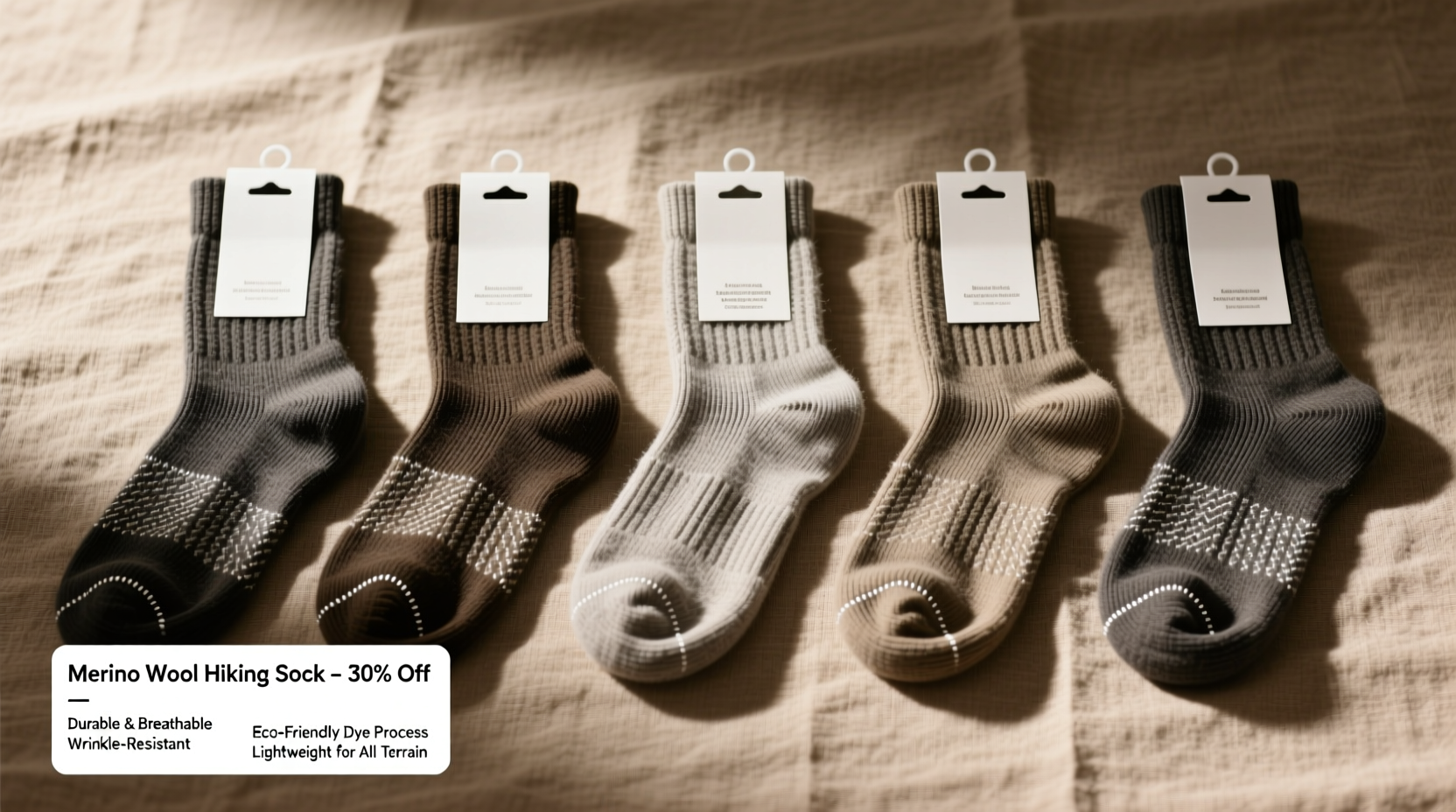
Synthetic blends and cotton may be cheaper upfront, but they fall short in durability and functionality compared to wool. Merino wool, sourced from specially bred sheep, offers a soft feel that avoids the itchiness associated with traditional wool. It manages moisture by pulling sweat away from the skin while retaining warmth even when damp—a crucial advantage in changing weather or wet trail conditions.
Additionally, wool contains natural antimicrobial properties, meaning odors build up much more slowly than with polyester or nylon socks. This is especially valuable on multi-day hikes where laundry isn’t an option. While pure merino can be delicate, most high-quality hiking socks blend 60–80% merino with nylon and spandex for reinforcement in high-wear zones like the heel and ball of the foot.
“Merino wool remains the gold standard for active outdoor use because it balances comfort, climate regulation, and durability better than any synthetic.” — Dr. Lena Torres, Textile Scientist & Outdoor Gear Consultant
Key Features of Durable, Affordable Wool Hiking Socks
Not all wool socks are created equal. To identify models that offer lasting value, focus on construction details rather than brand prestige alone. The following characteristics separate budget-friendly performers from those that wear out after a single season:
- Blend Ratio: Look for 65–75% merino wool, 20–30% nylon, and 5–10% elastane. This mix ensures warmth and softness with added abrasion resistance and snug fit retention.
- Zonal Reinforcement: Extra padding in the heel, toe, and arch areas increases longevity and comfort on rocky or uneven terrain.
- Seamless Toe Closure: A well-finished, flat or seamless toe seam prevents friction and blistering during extended wear.
- Arch Support Banding: Elastic bands around the midfoot help the sock stay in place without slipping or bunching.
- Weight Class: Medium-weight (‘mid-cushion’) socks strike the best balance between warmth, breathability, and versatility across seasons.
Top Budget-Friendly Brands That Deliver Long-Term Value
Several brands have cracked the code on delivering durable merino-blend socks at accessible price points. These companies prioritize functional design over marketing hype, making them favorites among thru-hikers and weekend adventurers alike.
| Brand | Price Range (per pair) | Merino Content | Durability Notes | Best For |
|---|---|---|---|---|
| Darn Tough Vertex Ultra-Light | $24–$28 | 66% Merino | Unconditional lifetime warranty; reinforced heel/toe | All-season day hikes |
| Smartwool PhD Outdoor Light | $22–$26 | 56% Merino | Targeted cushioning; moderate durability with proper care | Spring/Fall trails |
| Icebreaker Oasis+ Light Crew | $25–$29 | 74% Merino | Natural odor resistance; slightly less abrasion-resistant than blended competitors | Warm-weather backpacking |
| REI Co-op Merino Wool Hiking Socks | $14–$18 | 60% Merino | Excellent value; good stitch density; REI satisfaction guarantee | Beginner hikers, casual use |
| Woolly Apparel Classic Hiker | $16–$20 (in bulk) | 70% Merino | Family-run brand; direct-to-consumer pricing; strong customer reviews on longevity | Budget-conscious thru-hikers |
Among these, Darn Tough stands out for its lifetime guarantee—replaceable no matter how many miles you log. REI’s house brand offers the lowest entry point for those testing wool for the first time. Meanwhile, Woolly Apparel delivers impressive consistency for hikers who buy in multiples and rotate pairs to extend service life.
Real-World Example: A Thru-Hiker’s Sock Strategy
Mark R., a 2023 Appalachian Trail section hiker, completed 1,200 miles using three pairs of REI Co-op Merino Hiking Socks rotated weekly. He washed them every 5–7 days using a biodegradable soap in stream water and air-dried them over his pack during hikes. After seven months, two pairs showed minor pilling under the toes but remained fully functional. The third developed a small hole after catching on a boot buckle, but Mark attributes this to mechanical damage rather than material failure.
“I didn’t expect these to last half a season,” he said. “But by rotating them and avoiding the dryer, I got way more mileage than pricier socks I’ve used before.” His experience underscores that care habits often matter more than initial cost when determining long-term affordability.
How to Extend the Life of Your Wool Hiking Socks: A Step-by-Step Guide
Durability isn’t just about what the sock is made of—it’s also shaped by how you treat it. Follow this sequence to maximize lifespan:
- Rotate your socks: Use multiple pairs in rotation so each gets time to rest and recover elasticity between wears.
- Inspect after each hike: Check for thinning fabric, loose threads, or early holes, especially under the ball of the foot.
- Wash gently: Use cold water and wool-safe detergent. Turn socks inside out to protect outer fibers.
- Air dry flat: Avoid hanging by the cuff, which can stretch elastic. Keep away from direct heat sources.
- Patch minor damage: Apply a small adhesive patch or use a needle and wool thread to reinforce weak spots before they become holes.
- Store properly: Keep clean, dry socks in a breathable cotton bag—never sealed in plastic where moisture can accumulate.
Frequently Asked Questions
Can I machine wash wool hiking socks?
You can, but only on a cold, gentle cycle with a wool-specific detergent. However, hand washing is strongly recommended to preserve elasticity and prevent pilling. Always avoid bleach and fabric softeners.
Are cheaper wool socks worth it if they have lower merino content?
Sometimes. A lower merino percentage (e.g., 50–60%) may reduce warmth and odor resistance, but if balanced with durable synthetics like nylon, the sock can still perform well—especially in moderate conditions. Prioritize construction quality over raw percentages.
How many pairs should I own for regular hiking?
At least three pairs are ideal for regular use. Rotation prevents overuse, allows time for thorough drying, and ensures you always have a clean, dry pair ready. For backpacking trips, consider one pair per two days of hiking plus a spare.
Tip: Label your sock pairs (e.g., A, B, C) and rotate them in order to ensure even wear and prolong overall set life.Final Thoughts: Smart Choices Over Splurging
The best wool hiking socks don’t need to come with a luxury price tag. By focusing on thoughtful construction, responsible care, and strategic purchasing, hikers can enjoy the benefits of merino wool—temperature regulation, moisture management, and odor resistance—without overspending. Brands like REI Co-op, Darn Tough, and Woolly Apparel prove that affordability and durability aren’t mutually exclusive.
Investing in proper sock maintenance pays dividends in both comfort and cost-efficiency. A $16 pair that lasts two full hiking seasons outperforms a $30 pair that fails prematurely due to poor care. When combined with smart rotation and gentle washing, even budget-conscious choices can deliver elite-level performance mile after mile.
💬 What’s your go-to wool hiking sock? Share your favorite affordable pick and care tips with the community in the comments below.








