Choosing the right cat litter is more than a matter of convenience—it affects your home’s cleanliness, your cat’s comfort, and even your health. Two of the most common types on the market are wood-based and clay litters. While both have loyal followings, they differ significantly in how well they control odor and minimize tracking. Understanding these differences helps you make an informed decision that balances effectiveness, cost, and environmental impact.
How Tracking Works and Why It Matters
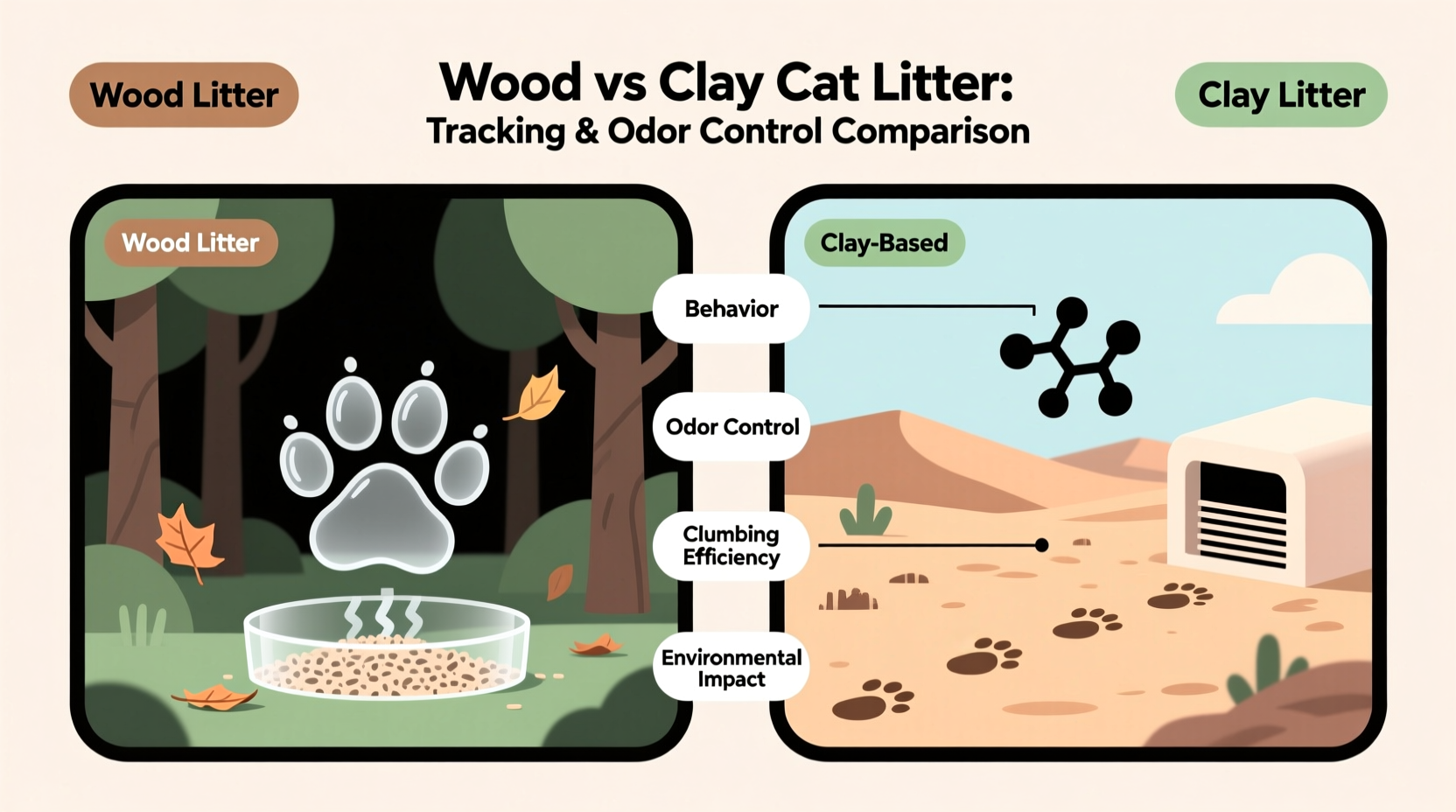
Tracking refers to the litter particles that stick to a cat’s paws and are carried outside the litter box, scattering across floors and into other areas of the home. This not only creates a mess but can also introduce dust and allergens into living spaces. The size, weight, texture, and cohesiveness of litter granules all influence how much it tracks.
Clay litter, especially clumping varieties, tends to be fine-grained and lightweight. While this makes it highly absorbent, it also means small particles easily cling to fur and paws. Wood litter, typically made from recycled pine or cedar, comes in larger, heavier pellets. These are less likely to adhere to feet, resulting in reduced tracking.
Tip: Place a rubber mat under and around the litter box to catch stray litter and reduce cleanup.Weight and Particle Size Comparison
The physical characteristics of each litter type play a major role in tracking behavior. Heavier, coarser materials naturally stay contained, while fine powders scatter easily.
| Litter Type | Average Particle Size | Weight per Cup | Tracking Tendency |
|---|---|---|---|
| Clay (clumping) | Small granules (1–3 mm) | ~120 grams | High |
| Wood (pellet form) | Large pellets (5–10 mm) | ~85 grams | Low to moderate |
| Silica gel | Fine beads (2–4 mm) | ~95 grams | Moderate |
Although wood pellets are lighter by volume, their larger size and structural integrity reduce dispersion. Clay, despite being denser, breaks down into dust and fine particles that disperse widely when kicked or stepped on.
Odor Control: Mechanisms and Real-World Performance
Effective odor control depends on absorption, neutralization, and microbial activity. Cat urine contains ammonia, sulfur compounds, and organic acids—all of which contribute to strong, persistent smells. How each litter handles these compounds varies dramatically.
Clay litter relies primarily on physical absorption. Sodium bentonite, the main component in most clumping clays, swells when wet, forming tight clumps that trap liquid and some odor. However, once saturated, clay does little to neutralize gases. Many brands add chemical fragrances to mask smells, which can irritate cats and humans with sensitivities.
Wood-based litters take a different approach. Pine and cedar contain natural oils—such as pinene and thujaplicin—that possess antimicrobial and deodorizing properties. When urine soaks into wood pellets, it breaks them down slightly, releasing these oils and helping neutralize odors at the molecular level. Additionally, the breakdown process often produces a faint, pleasant pine scent without artificial perfumes.
“Natural wood litters offer superior long-term odor management because they work biologically, not just physically. The essential oils in pine inhibit bacterial growth that causes decomposition smells.” — Dr. Lena Patel, Veterinary Behaviorist
Durability and Longevity in Odor Suppression
Another factor is how long each litter remains effective. Clay may appear to control odor initially due to clumping, but if not scooped daily, trapped waste begins to decompose inside clumps, leading to sudden odor spikes. Wood pellets, on the other hand, allow urine to drain through and evaporate, reducing bacterial buildup. Solid waste is easier to remove, and the remaining pellets stay dry and functional longer.
In multi-cat households, this difference becomes more pronounced. One study conducted by an independent pet product lab found that wood litter maintained acceptable odor levels for up to 7 days between full changes in a two-cat household, compared to 3–4 days for standard clay.
Health, Safety, and Environmental Considerations
Beyond tracking and smell, consider the broader implications of your choice. Dust production, respiratory effects, and environmental sustainability are increasingly important factors for conscientious pet owners.
Clay litter generates significant dust during pouring and use. This dust contains crystalline silica and fine particulate matter, which has been linked to respiratory issues in both cats and humans. Kittens, senior cats, and those with asthma or bronchitis are particularly vulnerable. Frequent exposure may lead to chronic coughing or nasal irritation.
Wood litter is naturally low-dust, especially when made from compressed sawdust or kiln-dried wood fibers. It is also biodegradable and often sourced from sustainable forestry byproducts. Most wood litters are flushable (in small amounts) and compostable, making disposal easier and more eco-friendly. In contrast, clay is strip-mined, non-renewable, and ends up in landfills indefinitely.
Tip: If your cat sneezes frequently after using the litter box, try switching to a low-dust option like wood or paper-based litter.Environmental Impact Summary
- Clay Litter: Mined from open pits, contributes to habitat destruction, non-biodegradable, high carbon footprint.
- Wood Litter: Made from renewable resources, biodegradable, often packaged in recyclable materials, lower transportation weight reduces emissions.
Real-World Example: A Multi-Cat Household Switch
The Thompson family had two indoor cats and used traditional clumping clay litter for years. They noticed constant tracking along the hallway leading to the bathroom where the litter box was kept. Fine gray dust coated baseboards, and despite daily scooping, ammonia odors became noticeable within two days.
After reading about natural alternatives, they switched to a pine pellet litter. Within a week, tracking dropped significantly—no more black specks on light-colored rugs. The house developed a subtle pine aroma instead of periodic ammonia bursts. They also observed their older cat, who previously avoided the box after use, began spending more time near it, suggesting improved air quality.
They did note an adjustment period: the younger cat initially played with the pellets, tossing them out of the box. But after adding a higher-sided litter mat and a top-entry box, containment improved. After six weeks, they reported they would never return to clay.
Step-by-Step Guide to Transitioning From Clay to Wood Litter
Switching litter types requires care to avoid rejection by your cat. Follow this gradual method to ensure acceptance:
- Evaluate your cat’s preferences: Note whether they prefer soft or coarse textures, scented or unscented environments.
- Choose a high-quality wood pellet litter: Look for 100% natural pine, no added dyes or fragrances.
- Mix gradually: Start with 75% clay and 25% wood. Use for 3–4 days.
- Increase ratio: Shift to 50% clay, 50% wood for another 4 days.
- Move to majority wood: Use 75% wood, 25% clay for 3–4 days.
- Complete transition: Switch fully to wood litter. Monitor usage and behavior closely.
- Adjust setup: Add a deeper layer (2–3 inches) of wood pellets and place a mesh-bottom mat outside the box to filter out debris.
If your cat resists, slow the process or try a different wood brand. Some cats prefer finely ground wood over pellets. Patience and consistency yield the best results.
Common Misconceptions About Natural Litters
Despite growing popularity, several myths persist about wood-based cat litters:
- Myth: Wood litter doesn’t clump, so it’s harder to clean.
Reality: While it doesn’t form tight clumps like clay, solid waste is easily removed, and soaked pellets break down visibly, signaling when a full change is needed. - Myth: It’s too expensive.
Reality: Though upfront cost may be higher, wood litter lasts longer due to lower tracking and slower saturation, reducing replacement frequency. - Myth: Cats dislike the smell.
Reality: Most cats adapt quickly. The natural scent is mild and non-irritating, unlike synthetic perfumes in many clay litters.
Frequently Asked Questions
Can wood litter be used in automatic self-cleaning litter boxes?
Most automatic litter boxes are designed for fine, clumping materials. Wood pellets may clog sensors or mechanical rakes due to their size and tendency to absorb moisture unevenly. Check manufacturer guidelines—some models support pellet litter, but compatibility is limited.
Does wood litter attract insects?
No more than other organic materials. Properly stored in a sealed container, dry wood litter does not attract pests. Avoid damp storage areas, and replace litter regularly to prevent mold or mildew, which could attract bugs.
Is clay litter safer for kittens?
Not necessarily. Kittens are prone to ingesting litter while grooming. Clay contains sodium bentonite, which can swell dangerously if ingested. Wood litter is generally safer, though always supervise young kittens during litter training.
Final Recommendation: Which Is Better Overall?
When comparing wood and clay cat litter for tracking and odor control, wood emerges as the superior choice in most real-world scenarios. Its larger, heavier pellets result in significantly less tracking. Its natural antimicrobial properties provide longer-lasting odor suppression without relying on artificial fragrances. It’s also safer for cats’ respiratory systems and more environmentally responsible.
That said, clay litter still has its place. It’s widely available, inexpensive, and performs well in single-cat homes with diligent daily maintenance. For owners seeking maximum convenience and familiar texture, clumping clay remains a viable option—especially if paired with a covered box and high-trapping litter mat.
Ultimately, the best litter depends on your priorities: minimal mess and long-term odor control favor wood; immediate clumping action and low initial cost favor clay.
💬 Have you tried switching from clay to wood litter? Share your experience, tips, or challenges in the comments below—your insights could help another cat owner make a cleaner, healthier choice.








