Choosing the right cat litter is more than a matter of preference—it directly impacts your home’s cleanliness, air quality, and even your cat’s comfort. Among the most popular types, wood and clay litters dominate pet care shelves, each with loyal followings. But when it comes to two critical concerns—tracking (litter scattered outside the box) and odor control—how do they really compare? This article dives deep into both options, backed by performance data, expert insight, and real-life experience, to help you make an informed decision.
Understanding Wood and Clay Cat Litter
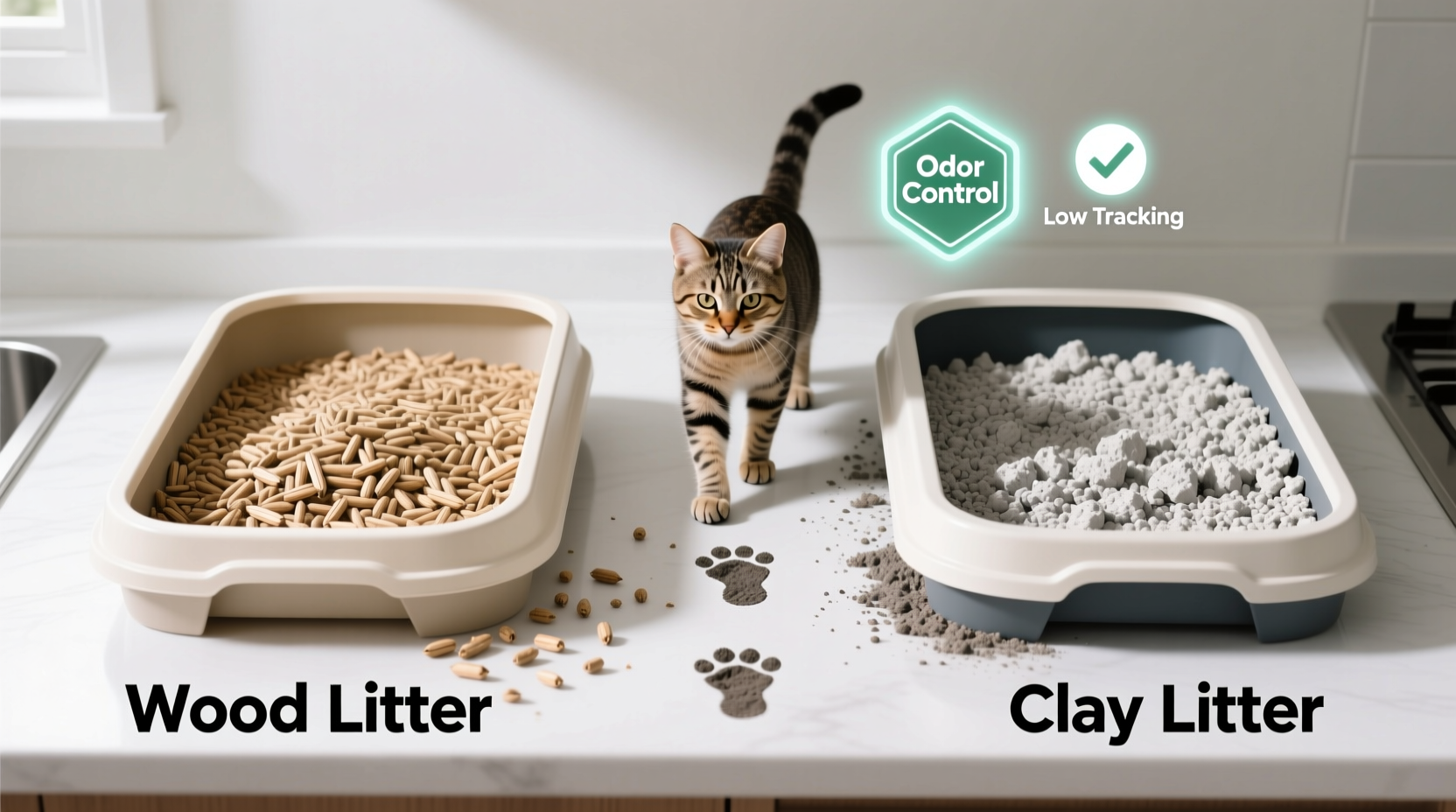
Before comparing performance, it’s essential to understand what sets these two litters apart at the molecular level.
Clay litter is typically made from sodium bentonite, a natural clay that swells when wet, forming solid clumps that make waste removal easy. It’s dense, fine-grained, and widely available. Most conventional clay litters are non-biodegradable and mined through strip mining, raising environmental concerns.
Wood litter, on the other hand, is crafted from reclaimed or kiln-dried wood—often pine, cedar, or mixed softwoods. It comes in pellet form and works by absorbing urine into the core while neutralizing odors naturally through the wood’s inherent properties. When saturated, some wood pellets break down into sawdust, which can be composted (in appropriate systems).
The structural differences between granular clay and fibrous wood directly influence how each performs in tracking and odor scenarios.
Tracking: How Much Litter Ends Up on Your Floor?
Tracking refers to the amount of litter carried out of the box on your cat’s paws. Fine particles are more likely to stick to fur and scatter across floors, carpets, and furniture.
Clay litter, especially lightweight varieties, is notorious for tracking. Its small, dusty granules easily cling to paws and fur. Even high-end scoopable clays generate noticeable footprints leading away from the litter box. In multi-cat homes, this problem compounds quickly, requiring frequent sweeping or vacuuming.
Wood litter, due to its larger pellet size and lighter weight, generally tracks less. Pellets are too big to lodge between toes and tend to fall off immediately if dislodged. However, when wood pellets break down after absorbing moisture, the resulting sawdust can spread. Still, the volume is typically lower than clay dust, and the material is easier to clean from hard surfaces.
Tip: Place a rubber mat under and around the litter box to catch escaping litter—especially effective with clay.Odor Control: Neutralizing Smells Naturally vs. Chemically
Odor control is often the top priority for cat owners. No one wants their living space smelling like a feline bathroom.
Clay litter relies heavily on clumping action and added fragrances to mask smells. High-quality scoopable clays encapsulate urine into tight clumps, isolating the source of odor. However, many contain synthetic perfumes that can irritate cats and humans with sensitivities. Dust from clay can also carry ammonia vapors, worsening air quality.
Wood litter takes a different approach. Pine and cedar naturally contain aromatic oils—such as pinene—that inhibit bacterial growth and neutralize ammonia. Instead of masking odors, wood breaks them down chemically. There's no artificial fragrance; the scent is earthy and subtle. In controlled environments, wood litter has shown longer-lasting odor suppression between full changes, especially in well-ventilated areas.
“Wood-based litters offer a biologically active solution to odor—they don’t just cover it up, they alter its chemistry.” — Dr. Lena Pruitt, DVM, Feline Health Researcher
Performance Comparison: A Side-by-Side Analysis
| Feature | Clay Litter | Wood Litter |
|---|---|---|
| Tracking Level | High – fine granules stick to paws and scatter | Low to Moderate – pellets rarely track, but sawdust may spread over time |
| Odor Control Method | Clumping + fragrance masking | Natural enzymatic breakdown via wood resins |
| Initial Scent | Often perfumed (floral, clean linen, etc.) | Natural pine or cedar aroma |
| Dust Production | High – contributes to respiratory irritation | Very low – minimal airborne particles |
| Clumping Ability | Excellent – forms tight, scoopable clumps | Poor – absorbs but doesn’t clump; requires full changes |
| Eco-Friendliness | Poor – strip-mined, non-renewable, not biodegradable | High – renewable, biodegradable, compostable (when unscented) |
| Cat Acceptance | Generally high – familiar texture | Mixed – some cats dislike pellet texture or strong cedar scent |
| Cost Over Time | Moderate to high – frequent replacement needed | Lower – lasts longer per bag due to slower saturation |
Real-World Case Study: The Miller Household Test
The Miller family in Portland, Oregon, switched from premium clay litter to pine pellet litter after their older cat developed sneezing fits. With two cats—one a heavy digger and the other a light stepper—they monitored tracking and odor over six weeks.
Initially, they noticed more sawdust buildup beneath the box as pellets broke down. They replaced the bottom liner monthly and used a shallow tray underneath to contain debris. After two weeks, tracking stabilized and was visibly less than with clay.
For odor, they were skeptical. Their previous clay litter claimed “24-hour freshness” but required daily scooping and deodorizer sprays. With wood, they scooped solid waste daily but only did full changes every three to four weeks. Ammonia smell remained undetectable in the room, even during summer heat.
One challenge: their younger cat occasionally kicked pellets out of the box. They solved this by switching to a covered litter box with a top entry, reducing scatter by over 70%.
After six weeks, they decided to stick with wood. “It’s quieter, cleaner, and honestly, we forgot we had a litter box in the house,” said Sarah Miller. “That’s the best compliment I can give.”
Step-by-Step Guide to Testing Wood Litter in a Clay-Dominant Home
Transitioning from clay to wood litter should be gradual, especially if your cat is sensitive to change. Follow this timeline for a smooth switch:
- Week 1: Introduce a mix – Fill the litter box with 75% clay and 25% wood pellets. Let your cat adjust to the new texture and scent.
- Week 2: Balance the blend – Use a 50/50 ratio. Scoop daily, noting any hesitation or avoidance from your cat.
- Week 3: Shift majority – Use 75% wood, 25% clay. Monitor tracking and odor. If your cat uses the box normally, proceed.
- Week 4: Full transition – Switch entirely to wood litter. Perform a complete box change and observe behavior closely.
- Ongoing: Maintain and assess – Replace litter every 3–4 weeks or sooner if odor develops. Clean the box thoroughly before refilling.
If your cat refuses the new litter, pause the process and return to the last accepted ratio. Some cats need more time or prefer alternative natural litters like paper or walnut.
Checklist: Choosing the Best Litter for Low Tracking & Odor
- ✅ Assess your cat’s digging habits – heavy diggers increase tracking risk
- ✅ Measure dust levels – opt for low-dust or dust-free formulas
- ✅ Prioritize natural odor neutralizers over synthetic fragrances
- ✅ Consider pellet size – larger pieces track less but may feel unfamiliar
- ✅ Evaluate your cleaning routine – do you prefer scooping clumps or full changes?
- ✅ Check for allergies – some cats react to scented clay or cedar oils
- ✅ Factor in eco-impact – wood is more sustainable than strip-mined clay
- ✅ Test with a small batch before committing to bulk purchase
Frequently Asked Questions
Can wood litter handle multiple cats effectively?
Yes, but with conditions. Wood litter performs well in multi-cat homes if changed regularly—every 3 to 4 weeks depending on usage. Because it doesn’t clump, urine-soaked pellets must be removed or replaced entirely when damp. Using larger boxes or multiple stations helps distribute load and maintain dryness.
Is clay litter really worse for odor long-term?
In short-term use, high-end clay litters excel at immediate odor containment through clumping. However, over time, residual moisture in the box can lead to bacterial growth beneath clumps, causing sudden ammonia spikes. Wood litter maintains consistent pH levels that inhibit bacteria, offering steadier long-term control without surprise smells.
Does wood litter attract pests like ants or termites?
No evidence suggests properly stored or used wood litter attracts structural pests. The pellets are kiln-dried and treated to prevent mold and insect infestation. However, avoid storing open bags in damp basements or garages where moisture could compromise integrity.
Expert Tips for Maximizing Performance
No litter performs perfectly without proper management. These strategies enhance both wood and clay litter effectiveness:
Tip: Use a sifting litter mat to capture escaping particles—especially helpful with clay litter.- Choose the right box: Covered boxes reduce tracking but may trap odors. Top-entry designs minimize scatter while allowing airflow.
- Scoop daily: Regardless of type, removing solids daily extends litter life and prevents odor buildup.
- Ventilate the area: Place the litter box in a well-ventilated room to disperse moisture and gases naturally.
- Avoid scented additives: Many “deodorizing crystals” or sprays interfere with a cat’s sense of safety and can cause avoidance.
- Rotate brands carefully: Not all wood litters are equal. Some use recycled lumber with contaminants; stick to reputable, food-grade sources.
Conclusion: Which Is Better for You?
When it comes to tracking, **wood litter wins**. Its larger pellet form simply doesn’t stick to paws like fine clay granules. While breakdown dust occurs, it’s less pervasive and easier to manage with simple tools like mats and trays.
For odor control, the answer is nuanced. **Clay offers strong initial protection** through clumping and fragrance, ideal for those who prioritize convenience and quick cleanup. But **wood provides superior long-term odor suppression** through natural chemistry, fewer toxins, and better air quality—especially beneficial in homes with children, allergy sufferers, or respiratory-sensitive cats.
Ultimately, the best choice depends on your lifestyle, tolerance for maintenance, and your cat’s preferences. Many owners find that switching to wood litter reduces household dust, eliminates artificial scents, and creates a more pleasant environment overall—even if the adjustment period takes a few weeks.
💬 Ready to reduce tracking and improve air quality in your home? Try a small bag of natural wood litter and monitor the difference over two weeks. Share your experience, ask questions, or help fellow cat owners decide—your insight could make someone else’s transition smoother.








