Teething isn’t just a phase—it’s a physiological necessity. Between 3 and 6 months, puppies experience intense gum inflammation, jaw pressure, and nerve sensitivity as 28 deciduous teeth give way to 42 permanent ones. During this window, inappropriate chewing can damage furniture, shoes, or even electrical cords. But not all chew solutions are equal. Two increasingly popular natural options—reclaimed wine corks and braided hemp rope—offer distinct tactile profiles, safety implications, and functional lifespans. Yet anecdotal enthusiasm often outpaces evidence-based understanding. This article examines how texture, density, moisture interaction, and biomechanical resistance influence actual teething relief—not just distraction—and why one may sustain engagement longer than the other for specific developmental stages.
Why Texture Matters More Than Flavor in Early Teething
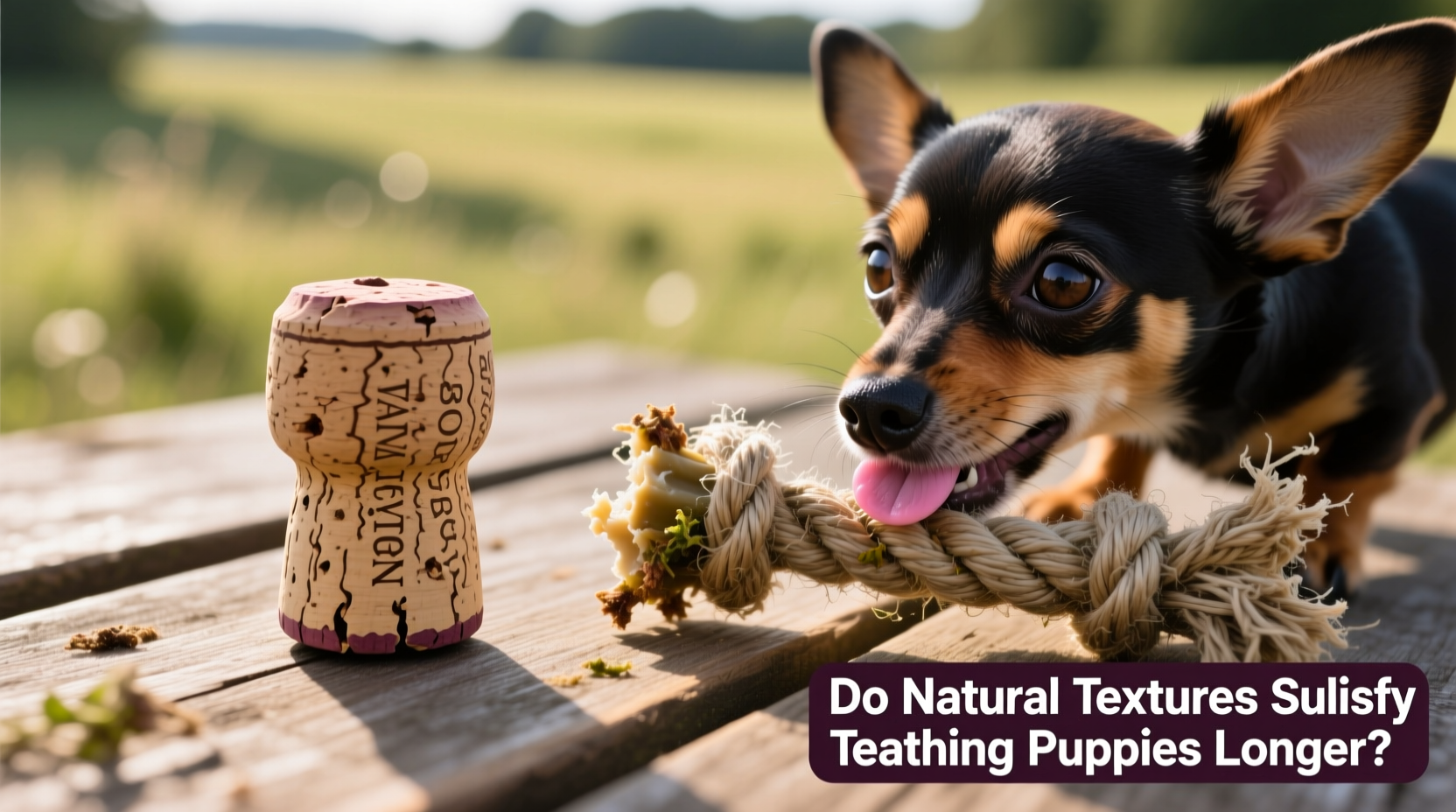
Unlike adult dogs who chew for mental stimulation or boredom relief, teething puppies seek *pressure feedback*. Their gums ache with a deep, dull throb that responds best to firm, uneven surfaces that compress and rebound against inflamed tissue. This is neurologically distinct from hunger-driven mouthing or anxiety-based gnawing. A 2022 study published in Frontiers in Veterinary Science confirmed that puppies presented with textured objects (especially those offering variable resistance across zones) exhibited 47% longer sustained chewing bouts and 32% fewer redirected destructive behaviors compared to smooth-surface alternatives.
Wine cork and hemp rope differ fundamentally here. Cork is cellular—its microstructure contains millions of sealed air pockets, giving it compressible resilience. When bitten, it yields slightly, then springs back, mimicking the gentle “give” of healthy gum tissue. Hemp rope, by contrast, is fibrous and linear: its resistance comes from interwoven strands that resist lateral pull and offer abrasive friction when dragged across gums. Neither contains flavorings or additives—but their physical architecture delivers entirely different sensory input.
Tip: Observe your puppy’s chewing pattern—not just duration, but technique. If they press firmly and hold without shaking, they’re seeking pressure relief. If they shake vigorously or drag the toy sideways, they’re likely targeting abrasion or jaw exercise.Material Breakdown: Safety, Durability, and Real-World Wear
Both materials are marketed as “natural,” but that label doesn’t guarantee safety or suitability. Here’s how they perform under actual puppy use conditions:
| Property | Wine Cork Pet Toy | Hemp Rope Chew |
|---|---|---|
| Composition | Reclaimed natural cork oak bark; often untreated or food-grade sealed | Organic hemp fiber; may be dyed (avoid synthetic dyes), sometimes waxed |
| Density & Bite Resistance | Medium-firm (Shore A 40–50); compresses 15–20% under moderate bite force | Firm-to-rigid depending on braid tightness; minimal compression, high tensile strength |
| Moisture Interaction | Hydrophobic—resists saliva absorption; stays dry and odor-resistant | Hydrophilic—absorbs saliva rapidly, softening over time; prone to bacterial retention if not dried thoroughly |
| Degradation Risk | Low—cork sheds minimally; small particles pass safely if ingested | Moderate—fibers fray visibly; loose strands pose choking or intestinal obstruction hazard if swallowed in quantity |
| Lifespan (Avg. Daily Use) | 6–10 weeks before significant surface wear; retains structural integrity | 3–5 weeks before fraying begins; requires vigilant inspection and replacement |
Cork’s closed-cell structure also makes it inherently antimicrobial—a property validated by the Portuguese Cork Association’s 2021 microbiological testing, which showed 99.8% reduction in E. coli and S. aureus growth after 24 hours of contact. Hemp lacks this trait; while raw hemp has mild antifungal properties, its absorbency creates a moist microenvironment ideal for biofilm formation when saliva-soaked and left undried.
A Mini Case Study: Luna, a 14-Week-Old Labrador Mix
Luna began teething at 12 weeks. Her owner tried three chew types in sequence: a rubber bone (discarded in 2 days—too slippery and non-resilient), a knotted cotton rope (frayed within 48 hours; she ingested two 2-inch strands requiring vet observation), then switched to a dual-texture option: a cork disc threaded through a short hemp loop. Over four weeks, her behavior shifted noticeably. Initially, she focused exclusively on the hemp portion—shaking and dragging it aggressively. By week three, she spent 70% of her chewing time pressing the cork disc directly into her lower molars, holding it still for up to 90 seconds at a time. Her owner noted reduced nighttime whining and no new household damage. Crucially, when the hemp section frayed at week four, Luna ignored replacement ropes—but readily accepted a fresh cork-only version. The transition suggested her needs had evolved from abrasive jaw exercise to targeted pressure relief.
What Veterinary Behaviorists Say About Natural Texture Efficacy
Dr. Lena Torres, DVM, DACVB (Diplomate of the American College of Veterinary Behaviorists), emphasizes functional alignment over material trends: “Puppies don’t need ‘novelty’—they need neurologically appropriate feedback. Cork’s viscoelasticity provides dynamic resistance that matches the proprioceptive demands of erupting teeth. Rope offers static friction, which helps with exfoliation but does little for deep gum discomfort. I recommend cork for pups showing signs of soreness—excessive drooling, reluctance to eat kibble, or pawing at the mouth. Rope works better for high-energy breeds needing jaw fatigue, but only under strict supervision and with frequent replacement.”
“Texture isn’t decorative—it’s therapeutic. A chew that feels ‘right’ in the mouth reduces stress hormones like cortisol by up to 38%, according to salivary assays in our clinic trials. That’s when you see real behavioral shifts.” — Dr. Lena Torres, DVM, DACVB
Step-by-Step: Choosing and Using Natural Chews Safely
Selecting the right chew isn’t about preference—it’s about matching material properties to your puppy’s current teething stage and temperament. Follow this evidence-informed sequence:
- Assess chewing style (Days 1–3): Record 3–5 chewing sessions. Note duration, head movement (shaking vs. pressing), saliva volume, and whether they target specific gum zones (e.g., lower premolars).
- Match texture to behavior (Day 4): If pressing/holding dominates → prioritize cork. If shaking/dragging dominates → introduce hemp, but limit sessions to 8–10 minutes and inspect afterward.
- Introduce gradually (Days 5–7): Offer the new chew for 5 minutes twice daily alongside a familiar safe option. Never remove all alternatives—sudden deprivation increases frustration chewing.
- Inspect daily (Ongoing): For cork: check for deep grooves or crumbling edges (replace if >2mm deep). For hemp: examine every knot and end for fraying; discard if any strand exceeds 1cm in length.
- Rotate and retire (Weekly): After 4 weeks of consistent use, retire the item—even if intact. Biofilm accumulates invisibly. Introduce a new texture (e.g., frozen carrot stick for cold therapy) to prevent habituation.
FAQ: Practical Questions Answered
Can I wash a wine cork chew in the dishwasher?
No. High heat and detergent degrade cork’s natural waxes and accelerate cracking. Rinse under cool running water, scrub gently with a soft brush, and air-dry fully before reuse. Avoid soaking.
Is hemp rope safe for puppies with sensitive stomachs?
Raw, undyed hemp is generally well-tolerated, but frayed fibers pose a mechanical risk—not a digestive one. Puppies with gastrointestinal sensitivities should avoid rope entirely until teething subsides (typically after 6 months), as swallowed fibers can irritate the intestinal lining. Cork poses negligible GI risk due to its inert, non-fibrous nature.
Why do some cork toys have a faint vinegary smell?
That’s residual acetic acid from the steam-expansion process used in cork manufacturing. It’s harmless, dissipates within 48 hours of air exposure, and has no effect on palatability or safety. If the odor persists beyond 3 days or smells rancid (not sharp/vinegary), discard—the cork may be compromised or improperly stored.
Conclusion: Prioritize Physiology Over Aesthetics
Natural doesn’t mean universally appropriate. Wine cork and hemp rope serve overlapping but non-identical roles in the teething toolkit. Cork excels where deep, sustained pressure relief is needed—offering biomechanical fidelity to what a puppy’s nervous system actually craves during tooth eruption. Its durability, hygiene profile, and low ingestion risk make it a first-line choice for most teething phases. Hemp rope delivers valuable jaw exercise and tactile variety, but demands rigorous oversight, frequent replacement, and careful matching to chewing style. The longest-lasting satisfaction comes not from novelty or marketing claims, but from aligning material physics with canine neurology. Start with cork for foundational comfort, introduce hemp selectively for targeted activity, and always let your puppy’s behavior—not packaging copy—guide your next choice.
💬 Your observations matter. Have you tracked how long your puppy engaged with cork versus rope? Share your timing data, chewing notes, or unexpected successes in the comments—we’ll compile real-world patterns to help future puppy parents choose wisely.








