In early 2019, millions of mobile gamers were surprised to find that Angry Birds, one of the most iconic mobile games of all time, had vanished from major app stores. For a game that once defined smartphone gaming and helped popularize the freemium model, its sudden disappearance raised questions. Was it due to declining popularity? A corporate decision? Or something more complex? The truth behind the removal is not as simple as a single cause—it’s a mix of licensing complications, technological transitions, and evolving business strategies by Rovio Entertainment.
The original Angry Birds (2009) was revolutionary. With its minimalist design, addictive gameplay, and instantly recognizable characters, it became a cultural phenomenon. At its peak, it was downloaded over 4 billion times. But by 2019, the landscape of mobile gaming had changed dramatically. So when Rovio pulled the original game from the App Store and Google Play, it wasn’t just an end—it was a recalibration.
Licensing and Third-Party Dependencies
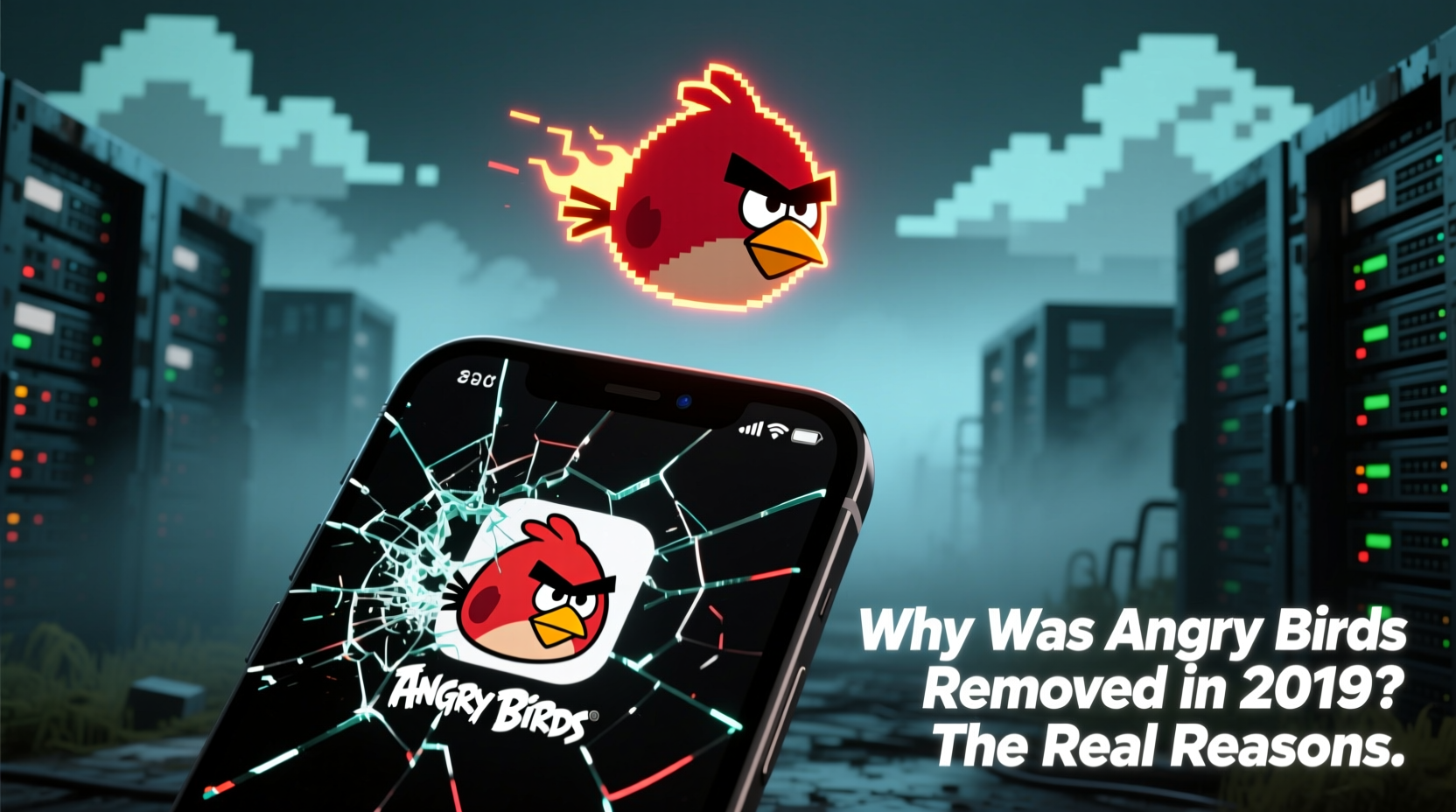
One of the primary but often overlooked reasons for the game’s removal was licensing. The original Angry Birds relied on third-party software libraries and tools that powered key features such as physics engines, ad integration, and analytics. Over time, some of these components became obsolete or their licenses expired.
Rovio had built the game using older development frameworks that were no longer supported or compatible with modern operating systems. Updating the codebase to meet current standards would have required a complete rebuild—not just a patch. Given that newer versions like Angry Birds 2 already existed, investing significant resources into reviving a legacy title didn't align with their long-term strategy.
Tip: When a digital product relies on outdated technology, maintenance costs can outweigh benefits—especially if newer alternatives exist.Platform Evolution and Compatibility Issues
Apple and Google continuously update their operating systems, deprecating older APIs and enforcing stricter security and performance standards. By 2019, iOS and Android had evolved far beyond what the original Angry Birds was designed for.
For example:
- iOS 13 dropped support for 32-bit apps, and the original Angry Birds was built on a 32-bit architecture.
- Android updated its privacy policies, requiring permissions rework and data handling compliance.
- Screen resolutions and aspect ratios had changed drastically since 2009, making the original game appear stretched or pixelated on modern devices.
Rovio acknowledged that maintaining compatibility across thousands of new devices would require a full redevelopment. Instead of patching a legacy product, they chose to focus on future-proof titles.
Rovio’s Strategic Shift Toward Modern Gaming Models
By 2019, Rovio had shifted its entire business model. The original Angry Birds was a premium download at launch ($0.99), later switching to free-to-play with ads. However, the sequel, Angry Birds 2 (2015), adopted live-service mechanics: daily challenges, in-app purchases, social features, and regular content updates.
This shift reflected broader industry trends. Players now expected ongoing engagement, not static single-player experiences. Rovio’s revenue increasingly came from in-game purchases and brand partnerships rather than one-time downloads.
As Jami Laes, former Chief Marketing Officer at Rovio, explained:
“We needed to evolve with our audience. The mobile gaming market rewards innovation, retention, and community. You can’t rely on nostalgia alone.” — Jami Laes, Rovio CMO (2014–2020)
Maintaining two parallel versions—one legacy, one modern—was inefficient. Retiring the original allowed Rovio to consolidate user bases and streamline marketing efforts.
The Role of Licensing and Merchandising Strategy
Interestingly, the removal of the game coincided with Rovio’s broader brand management decisions. In 2017, they sold the animation studio behind *The Angry Birds Movie* to Sega. While they retained IP rights, the partnership shift altered how they leveraged the franchise.
With fewer film and TV tie-ins active post-2018, the demand for the original game waned. Instead of keeping it available as a nostalgic artifact, Rovio began treating the classic version as part of a curated archive—available only through special re-releases or bundled editions.
This approach mirrors how other legacy franchises are handled—think of Nintendo’s Virtual Console or Sega’s Classics packs. Rather than letting outdated versions clutter storefronts, companies now prefer controlled reissues with updated compatibility.
Timeline of Key Events Leading to Removal
The removal wasn’t abrupt. It followed a gradual phase-out:
- 2015: Angry Birds 2 launches, positioned as the official successor.
- 2016: Original game receives its last major update; bug fixes become rare.
- 2017: Rovio discontinues several spin-offs (Angry Birds Go!, Angry Birds Epic).
- February 2019: Original Angry Birds is removed from App Store and Google Play.
- 2021: Rovio releases Angry Birds Reloaded as a soft reboot with modern mechanics.
This timeline shows a deliberate wind-down rather than a sudden cancellation.
Mini Case Study: A Longtime Fan Loses Access
Consider Mark T., a teacher from Helsinki who downloaded Angry Birds in 2010. He played it during commutes and breaks for years. When he upgraded his iPhone in 2019, he couldn’t reinstall the game. His frustration was shared by many:
“I didn’t care about leaderboards or in-app purchases. I just wanted that same satisfying slingshot feel. It was simple, fun, and stress-relieving. Now I can’t even pass it on to my kids.”
His experience highlights a gap in digital preservation. Unlike physical games or books, mobile apps can vanish overnight due to technical or legal constraints.
Do’s and Don’ts: Preserving Digital Games
| Do | Don’t |
|---|---|
| Back up APK or IPA files legally if you own the app | Use pirated versions or third-party stores |
| Support developers by purchasing remastered editions | Assume games will always be available for free re-download |
| Advocate for digital ownership rights | Ignore updates that preserve compatibility |
| Check developer websites for legacy downloads | Expect companies to maintain decade-old apps indefinitely |
Frequently Asked Questions
Can I still play the original Angry Birds today?
Yes, but not officially. If you previously purchased it, you may be able to redownload it on older devices or through account archives. Alternatively, Rovio released Angry Birds Reloaded in 2021, which brings back classic mechanics with modern enhancements.
Did Angry Birds go out of business?
No. Rovio Entertainment still operates and continues to develop new games and content under the Angry Birds brand. They were acquired by Sega in 2023, ensuring further investment in the franchise.
Why didn’t Rovio just update the old game instead of removing it?
The cost of rewriting the entire codebase to meet current OS requirements, security standards, and screen formats was too high compared to the return. Rebuilding it from scratch as a new product made more financial and technical sense.
What This Means for Gamers and Digital Ownership
The removal of Angry Birds underscores a growing issue in the digital age: the impermanence of software. Unlike a book or DVD, digital purchases are often licenses, not ownership. Platforms can delist products, and developers can discontinue support without recourse.
This raises concerns about cultural preservation. Angry Birds is more than a game—it’s a milestone in mobile history. Its absence from official channels means future generations may never experience it as intended.
Some experts argue for “digital heritage” policies. As Dr. Lena Patel, a digital culture researcher at Utrecht University, notes:
“We’re losing pieces of interactive history because we treat apps as disposable. Games like Angry Birds shaped how we use smartphones. They deserve archival status.” — Dr. Lena Patel, Digital Media Archivist
Conclusion: A Legacy Reimagined, Not Lost
The removal of the original Angry Birds in 2019 wasn’t the end of the franchise—it was a transition. Driven by technical limitations, licensing hurdles, and strategic refocusing, Rovio made a pragmatic choice to let go of the past to invest in the future.
While fans may miss the simplicity of the 2009 version, the spirit lives on in newer iterations. The slingshot, the grunting pigs, the triumphant explosion of blocks—these elements remain central to the brand.
💬 Do you remember your first time playing Angry Birds? Share your story in the comments and help keep the legacy alive. Whether it was on a cracked iPhone 3GS or a hand-me-down tablet, your experience matters.








