
Monstera deliciosa, with its dramatic, split leaves, has become a symbol of modern indoor greenery. When your plant fails to develop these iconic fenestrations, it can be frustrating—especially if you’ve been caring for it diligently. The absence of splits doesn’t necessarily mean your plant is dying, but it does signal that something in its environment or care routine isn’t quite right. Understanding the science behind fenestration and the conditions that trigger it is key to transforming your solid-leaved Monstera into a jungle-worthy specimen.
Fenestration—the development of holes and deep splits in mature Monstera leaves—is a natural adaptation. In the wild, Monsteras climb tall trees in tropical rainforests, where splits allow wind and light to pass through without damaging the foliage. But indoors, many plants remain juvenile, producing small, unsplit leaves indefinitely. The good news? Most of these issues are correctable with targeted adjustments.
Understanding Monstera Fenestration: Why Leaves Split
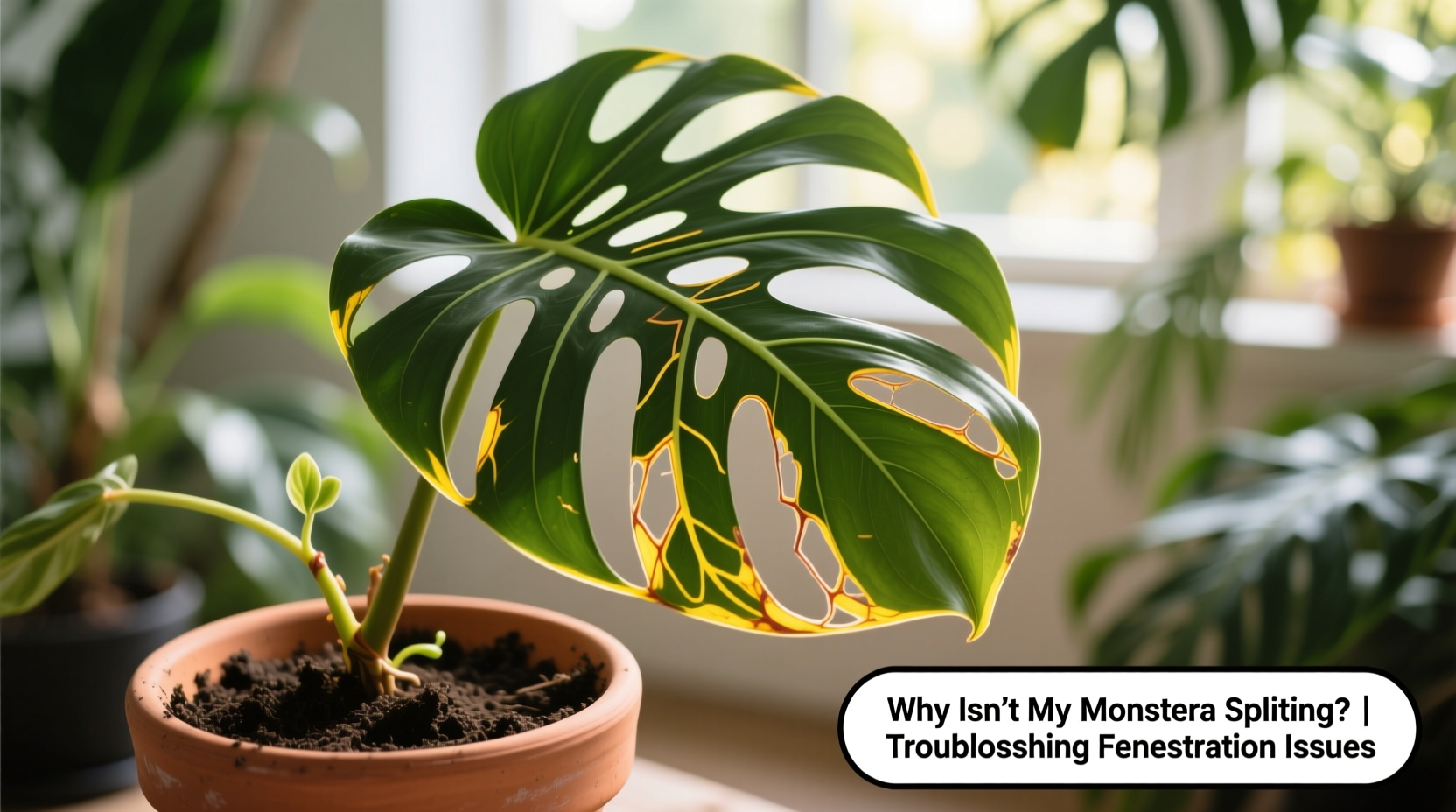
Fenestration is not a random trait—it’s a developmental milestone. Young Monstera plants produce smooth, oval-shaped leaves as part of their juvenile phase. As the plant matures and receives optimal growing conditions, it transitions into its adult form, which includes deeply lobed and perforated leaves.
This shift is triggered by a combination of biological maturity and environmental cues. According to Dr. Linda Chen, tropical horticulturist at the Royal Botanical Institute:
“Fenestration in Monstera is a response to light intensity and physical support. In nature, the plant only begins splitting its leaves once it reaches the forest canopy, where bright, dappled light and vertical structures promote structural development.” — Dr. Linda Chen, Tropical Horticulturist
Indoors, this transition often stalls because the conditions mimic the shaded understory rather than the sunlit upper layers of the rainforest. Without sufficient stimuli, the plant remains in survival mode, prioritizing leaf production over aesthetic complexity.
Top 5 Reasons Your Monstera Isn’t Splitting
1. Insufficient Light
Light is the most critical factor influencing fenestration. Monstera requires bright, indirect sunlight to initiate the energy-intensive process of developing split leaves. Plants kept in low-light corners or far from windows typically produce smaller, solid leaves with minimal growth.
Direct sunlight should be avoided, as it can scorch the foliage, but consistently dim environments prevent the plant from maturing properly. Aim for a spot near an east- or south-facing window where the plant receives several hours of filtered daylight.
Tip: Rotate your Monstera every few weeks to ensure even light exposure and balanced growth.2. Lack of Physical Support
In their native habitat, Monsteras are hemiepiphytes—they start on the forest floor and climb upward using aerial roots. This climbing behavior signals the plant to shift from juvenile to adult growth, including fenestration.
If your Monstera is growing horizontally in a pot without support, it may never receive the cue to mature. Installing a moss pole, coco plank, or trellis encourages upward growth and mimics natural climbing conditions.
3. Immature Plant Age
A young Monstera, especially one propagated from a cutting with only one or two leaves, will not produce splits immediately. It must first establish a strong root system and generate multiple leaves before entering its adult phase. This process can take 1–3 years, depending on care.
Patience is essential. Even under ideal conditions, a juvenile plant won’t fenestrate prematurely. Focus on building overall health before expecting dramatic leaf changes.
4. Poor Nutrition or Irregular Feeding
While Monsteras aren’t heavy feeders, they do require consistent access to essential nutrients—particularly nitrogen for leaf development, and potassium and phosphorus for root and stem strength. A lack of balanced fertilizer during the growing season (spring to early fall) can stall maturation.
Over-fertilizing, however, can cause salt buildup and root burn, which also inhibits growth. Use a balanced, water-soluble fertilizer (e.g., 10-10-10 or 20-20-20) diluted to half strength every 4–6 weeks in active growing months.
5. Suboptimal Watering and Humidity
Monsteras thrive in consistently moist (not soggy) soil and high humidity (60% or above). Underwatering stresses the plant, while overwatering leads to root rot—both conditions suppress new growth and delay maturity.
Dry indoor air, especially in winter, can also hinder development. Low humidity causes browning leaf edges and slows metabolic processes, making it harder for the plant to allocate energy toward fenestration.
Step-by-Step Guide to Encourage Monstera Splits
Transforming your Monstera into a split-leaf powerhouse requires a strategic approach. Follow this timeline to optimize conditions over several months:
- Assess Current Conditions (Week 1): Evaluate light levels, watering habits, humidity, and whether your plant has support. Note any signs of stress like yellowing, drooping, or slow growth.
- Upgrade Lighting (Week 2): Move the plant to a brighter location with indirect light. Use a sheer curtain to diffuse direct sun. If natural light is limited, consider a full-spectrum grow light for 10–12 hours daily.
- Install a Moss Pole (Week 3): Secure a moss pole or coco totem in the pot. Gently tie the main stem and aerial roots to the support using soft plant ties. Mist the pole regularly to encourage root attachment.
- Adjust Fertilization (Ongoing from Week 4): Begin a monthly feeding schedule with diluted balanced fertilizer during spring and summer. Skip fertilizing in fall and winter when growth naturally slows.
- Improve Humidity (Week 5): Place a humidifier nearby, group plants together, or use a pebble tray. Aim for 60% humidity. Avoid misting alone—it offers only temporary relief and can promote fungal issues.
- Monitor New Growth (Month 2+): Watch emerging leaves closely. The first sign of progress is larger leaf size. After several months, look for deeper lobes and small perforations along the midrib.
- Be Patient (3–12 Months): Significant changes take time. Consistency is more important than speed. Mature, fenestrated leaves may appear 6–12 months after implementing these steps.
Do’s and Don’ts for Healthy Monstera Development
| Do’s | Don’ts |
|---|---|
| Provide bright, indirect light for 6–8 hours daily | Place in dark corners or behind furniture |
| Use a moss pole or trellis for vertical support | Let the plant sprawl horizontally without structure |
| Water when the top 1–2 inches of soil are dry | Let the plant sit in waterlogged soil |
| Fertilize monthly in growing season (spring/summer) | Over-fertilize or feed during dormancy |
| Maintain humidity above 60% | Rely solely on leaf misting for moisture |
| Wipe leaves gently to remove dust | Use leaf-shining products or harsh chemicals |
Real Example: From Solid Leaves to Full Fenestration
Sarah, a plant enthusiast in Chicago, had owned her Monstera for nearly two years. Despite regular watering and a sunny living room window, all her leaves remained small and unsplit. Frustrated, she researched common issues and realized her plant lacked both support and consistent humidity.
She installed a 4-foot moss pole and began using a small humidifier during winter. She also moved the plant closer to the window (behind a sheer curtain) and started a mild fertilization routine. Within five months, new leaves emerged noticeably larger. By month eight, the first true splits appeared—shallow at first, then deeper with each subsequent leaf. Today, her Monstera towers at nearly 5 feet with fully fenestrated, adult-form foliage.
“I thought I was doing enough,” Sarah said. “But it wasn’t until I treated it like a climber, not just a potted plant, that it really transformed.”
Troubleshooting Common Setbacks
Even with proper care, setbacks happen. Here’s how to handle frequent issues:
- New leaves are smaller than old ones: Indicates stress—check for root binding, poor lighting, or inconsistent watering.
- Leaves emerge split but close up as they expand: Often due to rapid drying or low humidity during leaf unfurling.
- Brown tips on new leaves: Likely caused by low humidity, fluoride in tap water, or fertilizer buildup. Flush soil with distilled water every few months.
- No new growth for months: Could signal dormancy (normal in winter), but also check for pests, compacted soil, or inadequate light.
Frequently Asked Questions
Can I force my Monstera to split by cutting the leaves?
No. Cutting slits into existing leaves will not encourage natural fenestration and can damage the plant. Splits develop from within as part of the leaf’s genetic programming when conditions are right.
Will pruning help my Monstera start splitting?
Pruning itself doesn’t trigger splits, but removing dead or weak growth can redirect energy to healthier stems. Focus on encouraging upward growth by training the main vine onto a support rather than aggressive trimming.
Do all Monstera varieties split the same way?
No. Monstera deliciosa is the most well-known for deep splits, but other species like M. adansonii develop more perforations than lobes. M. dubia and M. siltepecana have less fenestration and change dramatically with maturity. Know your variety’s natural growth pattern.
Essential Care Checklist for Fenestration Success
Use this checklist monthly to stay on track:
- ✅ Is the plant receiving bright, indirect light for 6+ hours daily?
- ✅ Is it supported vertically with a moss pole or trellis?
- ✅ Am I watering only when the top inch of soil is dry?
- ✅ Have I fertilized during the growing season (every 4–6 weeks)?
- ✅ Is humidity consistently above 50–60%?
- ✅ Are there signs of pests or disease (spider mites, scale, yellowing)?
- ✅ Is the pot the right size? Roots should be snug but not escaping drainage holes.
Conclusion: Patience and Precision Yield Results
A Monstera without splits isn’t a failure—it’s a work in progress. The journey from juvenile foliage to dramatic, fenestrated leaves is one of the most rewarding transformations in houseplant care. By aligning your plant’s environment with its natural instincts—bright light, vertical support, consistent moisture, and seasonal nutrition—you create the conditions for maturity to unfold.
There’s no shortcut, but there is a reliable path. Every new leaf is a chance to observe, adjust, and improve. Whether your Monstera is one year or five years old, the potential for splits exists as long as the plant is alive and cared for.
💬 Have your Monstera leaves started splitting? Share your success story or ask a question in the comments—let’s grow together!








