A keratin treatment promises sleek, shiny, and manageable hair—often marketed as a \"miracle fix\" for frizz and volume. Yet many people find themselves staring into the mirror days or weeks after their salon visit, confused and frustrated: Why is my hair still frizzy? Despite the investment of time and money, frizz can creep back in, undermining the very results they hoped to achieve.
The truth is, a keratin treatment isn’t a one-and-done solution. Its effectiveness depends heavily on both the quality of the application and the aftercare routine that follows. Understanding the science behind frizz recurrence and adopting the right maintenance habits can make all the difference between lasting smoothness and short-lived results.
Understanding Keratin Treatments and How They Work
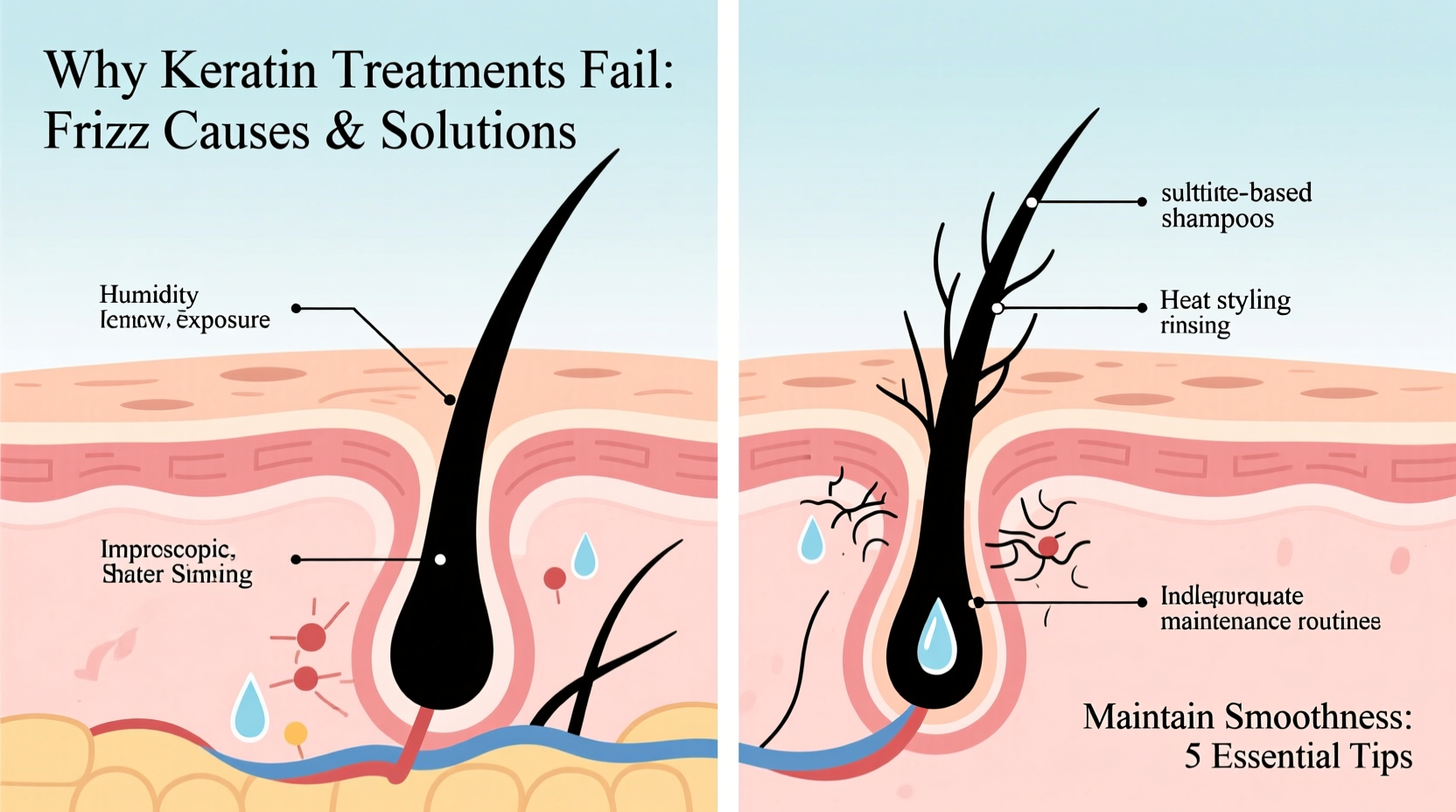
Keratin treatments are chemical smoothing processes designed to penetrate the hair shaft and temporarily alter its structure. The treatment infuses hydrolyzed keratin—a protein naturally found in hair—into each strand. This fills in gaps in the cuticle layer, sealing it down and reducing porosity. As a result, hair becomes less susceptible to humidity, which is a primary cause of frizz.
The process typically involves:
- Cleansing the hair with a clarifying shampoo to remove buildup.
- Applying the keratin solution evenly from roots to ends.
- Flat-ironing the hair at high heat (usually 400–450°F) to seal the keratin into the cuticle.
- Waiting 72 hours before washing the hair to allow full bonding.
While the treatment reduces curl pattern and eliminates frizz, it’s not permanent. Most formulas last between 8 to 16 weeks, depending on hair type, lifestyle, and post-treatment care.
Tip: Avoid swimming in chlorinated or salt water for at least two weeks post-treatment to prevent premature breakdown of the keratin bond.Common Reasons Hair Becomes Frizzy After Keratin Treatment
Even when applied correctly, frizz can return sooner than expected. Several factors contribute to this, ranging from product misuse to environmental exposure. Below are the most frequent culprits:
1. Premature Washing or Exposure to Water
The first 72 hours after treatment are critical. During this period, the keratin needs time to fully bond with the hair shaft. Getting the hair wet—even from sweat, rain, or a humid bathroom—can interfere with the bonding process, leaving sections untreated and vulnerable to frizz.
2. Using Sulfate-Containing Shampoos
Sulfates are harsh detergents commonly found in shampoos. They strip away natural oils and, more importantly, break down the keratin coating. Even if you wait the full 72 hours, using a sulfate-based shampoo will significantly shorten the lifespan of your treatment.
3. High Porosity or Damaged Hair
If your hair is already damaged from bleaching, coloring, or heat styling, it may absorb the keratin unevenly. Highly porous strands take in too much product, leading to over-processing, while low-porosity areas remain untreated. This imbalance causes patchy results and inconsistent smoothness.
4. Environmental Humidity
Humidity is the archenemy of smooth hair. While keratin treatments reduce moisture absorption, they don’t eliminate it entirely. In extremely humid climates, even well-treated hair can swell slightly, causing subtle frizz along the hairline or crown.
5. Incorrect Application Technique
At-home kits or inexperienced stylists may apply the solution unevenly or use incorrect heat settings during flat-ironing. Too little heat fails to seal the keratin; too much can damage the hair. Both scenarios lead to suboptimal results.
“Keratin treatments require precision—not just in application, but in aftercare. One wrong shampoo can undo three months of smoothness.” — Lena Torres, Master Trichologist & Salon Director
How to Maintain Smoothness After a Keratin Treatment
Maintaining the sleek finish of a keratin treatment goes beyond avoiding the shower for three days. It requires a consistent, thoughtful hair care regimen tailored to preserve the integrity of the treatment. Follow these best practices to extend your results:
Use Sulfate-Free, Chlorine-Free Products
Switch to a dedicated keratin-safe shampoo and conditioner. Look for labels that say “sulfate-free,” “salt-free,” and “for treated hair.” These formulations gently cleanse without stripping keratin.
| Product Type | Recommended | Avoid |
|---|---|---|
| Shampoo | Sulfate-free, pH-balanced | Sodium lauryl sulfate, ammonium laureth sulfate |
| Conditioner | Keratin-infused, lightweight | Heavy silicones, alcohol-based formulas |
| Styling Products | Heat protectants with keratin | Gels with alcohol, dry shampoos with starch |
Limit Washing Frequency
Washing too often accelerates keratin loss. Try co-washing (conditioner-only washes) between shampoo sessions or extend time between washes to every 4–5 days. When you do wash, rinse thoroughly but gently—avoid vigorous scrubbing.
Protect Hair While Sleeping
Fraying occurs overnight when hair rubs against cotton pillowcases. Switch to a silk or satin pillowcase to reduce friction. Alternatively, loosely braid or tie your hair in a silk scrunchie to minimize tangles and static.
Minimize Heat Styling
While your hair is already straightened, occasional touch-ups with a flat iron are okay—but always use a heat protectant and keep the temperature under 375°F. Overuse of heat tools degrades keratin over time.
Rinse After Swimming
Chlorine and saltwater erode keratin bonds rapidly. If you swim, wet your hair with clean water beforehand to reduce absorption, and rinse immediately after with fresh water and a leave-in conditioner.
Tip: Spritz your hair with a mix of water and a drop of keratin serum before bed to refresh smoothness and combat morning puffiness.Step-by-Step Maintenance Routine (Weekly)
Consistency is key. Follow this weekly schedule to maximize the longevity of your keratin treatment:
- Day 1 (Wash Day): Use sulfate-free shampoo and conditioner. Rinse with cool water to seal the cuticle.
- Day 2: Apply a lightweight leave-in conditioner or keratin mist to ends. Avoid roots to prevent greasiness.
- Days 3–4: Refresh with dry shampoo formulated for treated hair. Focus on the crown and part line.
- Day 5: Reapply heat protectant and lightly flat-iron only the front sections if needed.
- Day 6–7: Air-dry or diffuse on low. Avoid touching hair excessively to prevent oil transfer and frizz.
This rhythm minimizes disruption to the keratin layer while keeping hair looking fresh and healthy.
Real-Life Example: Maria’s Post-Treatment Journey
Maria, a graphic designer from Miami, got a keratin treatment before an important client presentation. She loved her sleek hair for the first week—until she went to the beach on day 10. She didn’t rinse her hair afterward. By day 14, her normally smooth waves had turned into a halo of frizz around her face.
She consulted her stylist, who explained that saltwater had stripped the keratin from her mid-lengths and ends. Maria switched to a strict routine: pre-wetting her hair before swimming, rinsing immediately after, and using only keratin-safe products. She also invested in a silk bonnet for nighttime wear. By her next treatment, she extended her smooth results from six weeks to nearly twelve.
Her experience underscores a vital lesson: location and lifestyle matter. In humid or coastal environments, extra diligence is non-negotiable.
Essential Checklist for Long-Lasting Results
Stay on track with this actionable checklist:
- ✅ Wait 72 hours before first wash
- ✅ Use only sulfate-free and sodium chloride-free products
- ✅ Avoid tight hairstyles (ponytails, buns) for the first week
- ✅ Sleep on a silk pillowcase or wear a silk bonnet
- ✅ Rinse hair after swimming and reapply conditioner
- ✅ Limit heat styling to once per week max
- ✅ Schedule touch-up treatments every 3–4 months
- ✅ Keep hair hydrated with keratin-friendly masks (once every 2 weeks)
Frequently Asked Questions
Can I color my hair after a keratin treatment?
Yes, but timing matters. If you plan to color, do it before the keratin treatment. Coloring afterward can lift the cuticle and strip keratin. If you must color post-treatment, wait at least two weeks and use ammonia-free dyes.
Why is my hair frizzy only at the crown?
The crown area is prone to friction from hats, headbands, and pillow contact. It’s also where body heat rises, increasing localized humidity. This combination can weaken the keratin bond faster in that zone. Try applying a targeted keratin serum to the area twice a week.
Do keratin treatments work on all hair types?
They work best on wavy to curly, frizz-prone hair. Very straight or fine hair may not see dramatic results and could become overly flat. For tightly coiled (Type 4) hair, keratin can loosen curls but won’t straighten completely. A customized formula from a skilled stylist is essential for textured hair.
Final Thoughts: Smooth Hair Is a Lifestyle, Not a One-Time Fix
Frizz after a keratin treatment isn’t a sign of failure—it’s often a signal that aftercare has slipped. The treatment itself is only half the equation. The other half lies in daily choices: what you put on your hair, how you style it, and how you protect it from environmental stressors.
By treating your hair like a high-performance surface—one that needs gentle cleaning, protective barriers, and minimal abrasion—you can stretch your smooth results far beyond the average timeline. Invest in the right products, adopt mindful habits, and respect the chemistry of the treatment.
Smooth, glossy hair isn’t magic. It’s maintenance. And with the right approach, it can be yours for months, not just days.
💬 Have a keratin success story or tip? Share your experience below and help others unlock long-lasting smoothness!








