Dogs are creatures of habit, and even minor changes in their environment can trigger anxiety or fear. One of the most common household fears among dogs is the sudden onset of terror toward the vacuum cleaner. What was once a neutral appliance may now send your dog scrambling under the bed, barking frantically, or trembling in the corner. This abrupt change in behavior often leaves pet owners puzzled and concerned. The good news is that this fear is both understandable and manageable with the right approach.
Fear of vacuums isn’t just about noise. It’s a complex reaction involving sensory overload, past experiences, and instinctual responses. Understanding why your dog developed this fear—and how to address it—can restore peace to your home and confidence to your pet.
Understanding Canine Fear Responses
Dogs perceive the world differently than humans. Their hearing is significantly more sensitive, capable of detecting frequencies up to 65,000 Hz, compared to the human limit of around 20,000 Hz. This means the high-pitched whine of a vacuum cleaner can be physically painful or deeply unsettling for a dog, even if it seems tolerable to you.
Sudden fear can also stem from associative learning. If your dog experienced a startling event—such as the vacuum turning on unexpectedly near them, or being startled while already anxious—the brain may link the vacuum with danger. Over time, this association strengthens, leading to avoidance behaviors and panic responses.
Additionally, some dogs are genetically predisposed to noise sensitivity. Breeds like Border Collies, German Shepherds, and Shetland Sheepdogs often display higher reactivity due to their working backgrounds and acute awareness of environmental stimuli. Age and life stage matter too: puppies may not yet have developed coping mechanisms, while senior dogs might experience cognitive decline that amplifies confusion and fear.
“Dogs don’t outgrow fear—they either habituate to it or escalate their response. Early intervention is key.” — Dr. Karen Overall, Veterinary Behaviorist
Common Triggers Behind Vacuum Fear
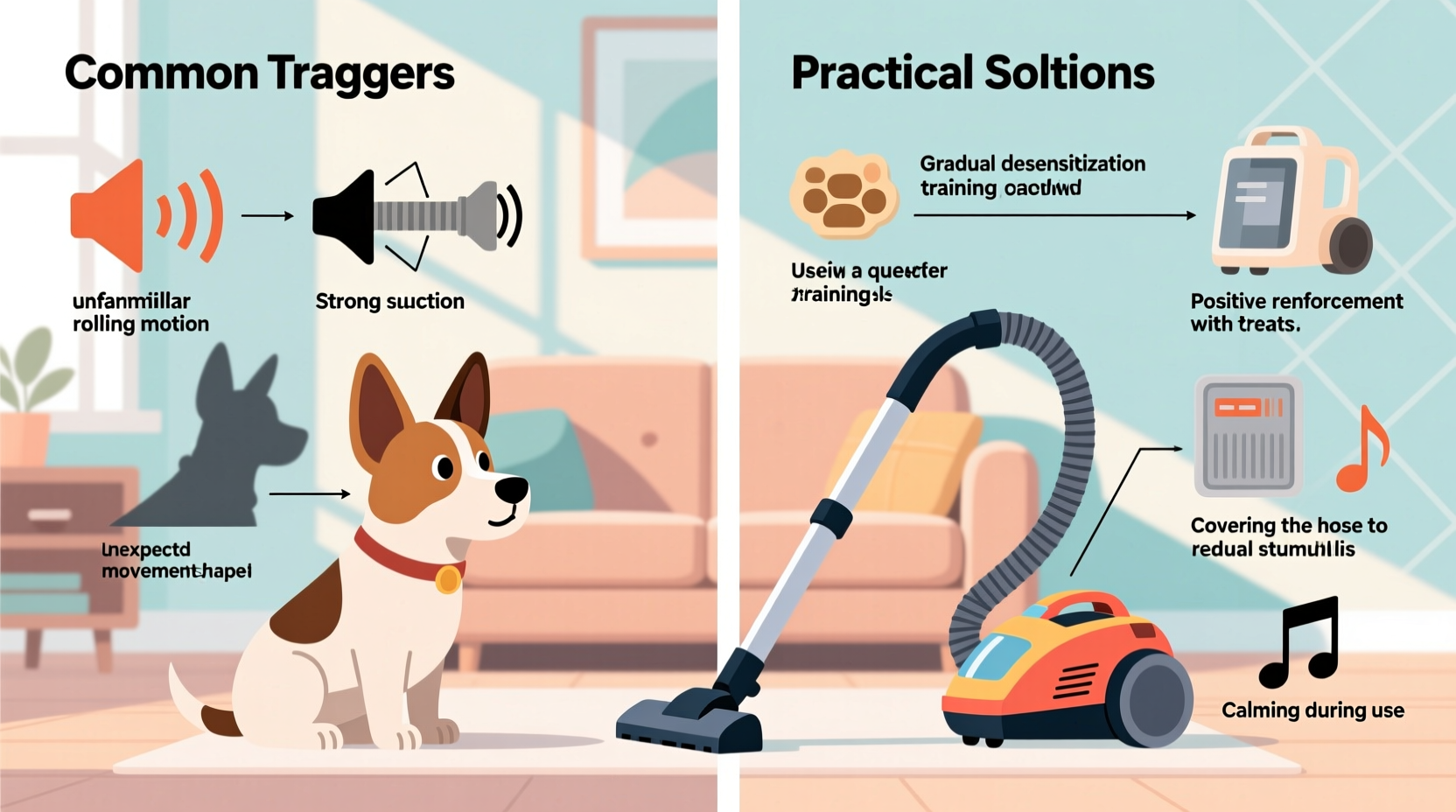
The vacuum cleaner presents a unique combination of stressors that few other household items replicate. Below are the primary triggers contributing to your dog’s sudden fear:
- Loud, unpredictable noise: The motor produces a constant, high-decibel hum that fluctuates as suction adjusts. Sudden starts and stops intensify the unpredictability.
- Unfamiliar movement: The erratic motion of the vacuum—being pushed forward, pulled back, turned corners—resembles a threatening creature to a dog.
- Vibrations: Many vacuums transmit vibrations through the floor, which dogs can feel through their paws, adding a physical dimension to the threat.
- Visual appearance: With hoses, brushes, and attachments, vacuums look alien and mechanical. A dog may perceive it as an intruder in their territory.
- Loss of control: Dogs value predictability. When the vacuum appears without warning and invades their space, it disrupts their sense of safety.
In multi-pet households, one animal’s reaction can influence others. If a dog sees another pet flee or react fearfully, they may mirror that behavior—even if they weren’t initially afraid.
Tip: Never force your dog to “get used to” the vacuum by holding them near it. This increases trauma and deepens fear.Step-by-Step Desensitization and Counterconditioning Plan
Overcoming vacuum fear requires patience and consistency. The goal is to change your dog’s emotional response—from fear to neutrality or even positive anticipation—through desensitization (gradual exposure) and counterconditioning (pairing the stimulus with something pleasurable).
- Start with the vacuum turned off: Place the vacuum in a common area when not in use. Let your dog investigate it at their own pace. Reward calm behavior with treats or praise.
- Introduce the sound gradually: Turn on the vacuum in another room while your dog is relaxed. Keep the door open so they hear the sound at a low volume. Immediately offer high-value treats (e.g., chicken, cheese) only during this time.
- Progress to closer exposure: Gradually decrease the distance over several days. Each session should last only a few minutes and end before your dog shows signs of stress.
- Add motion slowly: Once your dog remains calm with the sound, push the vacuum a few inches while running. Stop after two seconds and reward. Repeat and extend duration incrementally.
- Practice real cleaning sessions: Begin vacuuming in one corner of a room while your dog stays in another, ideally behind a baby gate. Continue pairing the activity with treats or a stuffed Kong toy.
- Increase proximity and duration: Over weeks, work toward vacuuming near your dog while they remain relaxed. Always monitor body language—ears back, tail tuck, or lip licking signal rising anxiety.
- Maintain consistency: Repeat short training sessions daily. Avoid skipping days, as regression is common without reinforcement.
This process can take anywhere from two weeks to several months, depending on the severity of fear and individual temperament. Rushing leads to setbacks; progress should be measured by your dog’s comfort, not your schedule.
Practical Solutions and Environmental Adjustments
Beyond behavioral training, modifying your routine and environment can significantly reduce stress for your dog.
| Solution | How It Helps | Implementation Tips |
|---|---|---|
| Use a quieter vacuum model | Reduces auditory stress at the source | Look for models rated under 70 dB. Robot vacuums are often less intimidating due to smaller size and consistent movement. |
| Establish a pre-vacuum routine | Provides predictability and reduces surprise | Give a cue like “vacuum time” followed by a treat before turning it on. Over time, this builds positive association. |
| Create a safe retreat space | Empowers your dog with control | Designate a quiet room with their bed, water, and a long-lasting chew toy where they can go during cleaning. |
| Play calming music or white noise | Masks vacuum sounds and lowers arousal | Use playlists designed for dogs (e.g., classical arrangements) during cleaning sessions. |
| Use pheromone diffusers | Reduces baseline anxiety | Adaptil diffusers release dog-appeasing pheromones that mimic maternal signals, promoting calmness. |
For dogs with severe noise phobias, consider using a snug-fitting anxiety wrap like a ThunderShirt. These apply gentle, constant pressure that can have a calming effect similar to swaddling a baby.
Real Example: Helping Max the Rescue Beagle
Max, a three-year-old rescue Beagle, began panicking every time the vacuum came out. His owner noticed he would bark, then freeze, and finally dart into the bathroom to hide. A veterinary behaviorist assessed Max and found no underlying medical issues but identified a history of inconsistent handling in his early life as a likely contributor to noise sensitivity.
The plan started with leaving the vacuum in the living room for two weeks while Max was rewarded for approaching it. Next, the owner played a recording of vacuum sounds at low volume during mealtime. After ten days, Max began eating normally during playback. They progressed to using a cordless handheld vacuum at the lowest setting, moving it slowly while offering boiled liver treats.
Within six weeks, Max tolerated full-room vacuuming from across the hall. By week ten, he remained lying on his bed five feet away, occasionally glancing at the machine but showing no signs of distress. The key was consistency and never pushing beyond his threshold.
When to Seek Professional Help
While many cases improve with at-home training, some dogs require professional intervention. Consider consulting a certified veterinary behaviorist or a force-free dog trainer if:
- Your dog self-injures during episodes (e.g., clawing at doors).
- They show aggression when approached near the vacuum.
- Progress stalls despite consistent effort over six weeks.
- Fear generalizes to other appliances (blenders, hairdryers, etc.).
In extreme cases, veterinarians may recommend short-term anti-anxiety medication to lower reactivity during behavioral therapy. Medication is not a standalone fix but can create the mental space needed for learning.
“Behavioral modification works best when the dog is below their fear threshold. Sometimes, we need pharmaceutical support to get there.” — Dr. Nicholas Dodman, Animal Behavior Specialist
FAQ
Can older dogs learn to stop fearing the vacuum?
Yes. While younger dogs often adapt faster, older dogs can overcome fears with consistent, patient training. Cognitive function and past experiences play a role, but neuroplasticity allows learning at any age.
Should I comfort my dog when they’re scared of the vacuum?
Comforting is acceptable if done calmly. Avoid frantic reassurance, which can reinforce anxiety. Instead, speak in a low, steady voice and offer a distraction like a treat-dispensing toy. The goal is to redirect, not enable avoidance.
Is it okay to vacuum when my dog isn’t home?
If your dog consistently panics, it’s better to clean when they’re absent—especially during early training stages. Forcing exposure worsens fear. Use the alone time to practice desensitization exercises when they return.
Checklist: Helping Your Dog Overcome Vacuum Fear
- ✅ Assess your dog’s current reaction level (barking, hiding, freezing).
- ✅ Choose a quiet time of day to begin training.
- ✅ Introduce the vacuum as a stationary object with treats nearby.
- ✅ Play recorded vacuum sounds at low volume during positive activities.
- ✅ Gradually increase sound volume and add motion in small steps.
- ✅ Pair each exposure with high-value rewards.
- ✅ Create a safe space where your dog can retreat during cleaning.
- ✅ Monitor body language and avoid pushing too fast.
- ✅ Consult a professional if fear persists or escalates.
Conclusion
A sudden fear of the vacuum cleaner is more common than many realize, and it’s rarely about stubbornness or defiance. It’s a legitimate stress response rooted in biology, experience, and environment. With empathy, structure, and time, most dogs can learn to tolerate—or even ignore—the appliance that once terrified them.
Start today by observing your dog’s triggers and designing a gentle, reward-based plan. Small, consistent efforts compound into lasting change. Your dog doesn’t need to live in fear of a household chore. With your guidance, they can regain confidence and comfort in their own home.
💬 Have success stories or questions about helping your dog with noise fears? Share your experience in the comments—your insights could help another pet owner find peace.








