It’s a familiar scene: you’re sitting on the couch, minding your own business, when your cat suddenly leaps into your lap, purring like a tiny engine, kneading your leg with soft paws, and gazing up with wide, trusting eyes. Or perhaps they follow you from room to room, chirping softly, rubbing against your ankles, or even licking your hair. If you’ve ever wondered, “Why is my cat so affectionate?” you’re not alone. While cats have long been stereotyped as aloof and independent, many form deep emotional bonds with their humans—some more demonstrative than others.
The truth is, feline affection isn’t random or whimsical. It’s rooted in biology, socialization, and trust. Understanding why your cat showers you with love can deepen your bond and help you respond in ways that nurture their emotional well-being.
The Evolution of Feline Affection
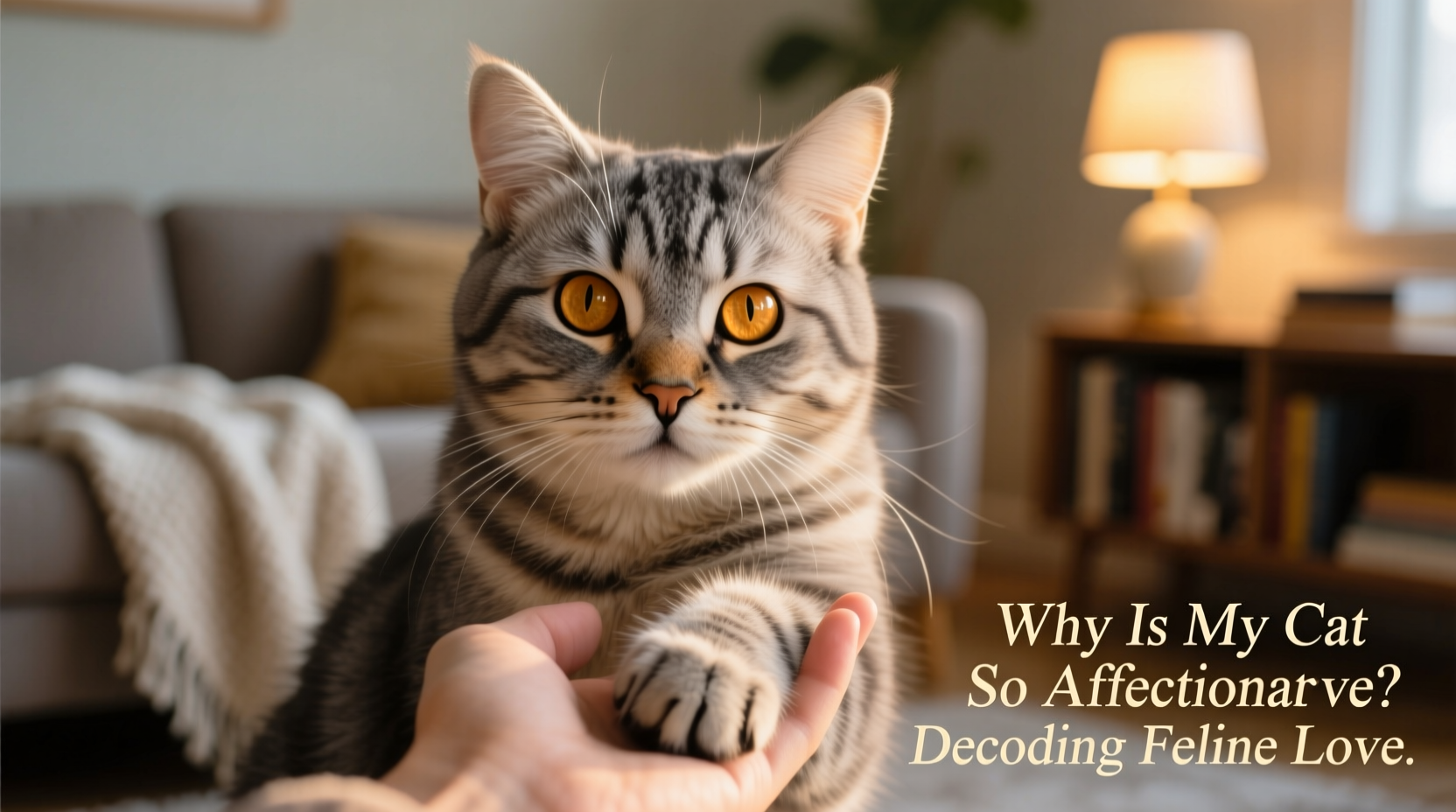
Cats were once solitary hunters, but domestication has reshaped their social behavior over thousands of years. Unlike dogs, who evolved through direct cooperation with humans, cats essentially self-domesticated by adapting to human agricultural settlements. As rodents gathered around grain stores, cats followed—and those less fearful of humans gained access to food and shelter.
Over generations, these bolder, more tolerant cats passed on their genes. Today’s house cats retain hunting instincts but also possess the capacity for complex social relationships—not just with other cats, but with people. Affectionate behaviors often mirror those seen in kitten-mother interactions, repurposed to strengthen bonds with humans.
When your cat rubs its head against your hand, it’s not just showing love—it’s marking you with scent glands located on its cheeks and forehead. This act, called bunting, signals that you are part of its safe social circle. Similarly, slow blinking—often dubbed a \"cat kiss\"—is a sign of relaxation and trust, indicating your presence doesn’t threaten them.
Tip: Return your cat’s slow blink with one of your own—a gentle, half-closed gaze—to reinforce trust and connection.Signs Your Cat Is Expressing Love
Cats don’t express affection the way humans do. They rarely hug or kiss, but they have a rich repertoire of subtle, meaningful gestures. Recognizing these signs helps decode their unique language of love.
- Purring: Often associated with contentment, purring can also occur when a cat is anxious or in pain. Context matters—purring while curled in your lap is likely a sign of comfort.
- Kneading: Also known as “making biscuits,” this rhythmic pushing of paws against soft surfaces harks back to kittenhood, when nursing stimulated milk flow. It’s a nostalgic gesture of safety and pleasure.
- Head-Butting (Bunting): As mentioned, this deposits facial pheromones and marks you as familiar and safe.
- Following You: A cat that trails you from room to room views you as a companion and source of security.
- Licking or Grooming: Allogrooming among cats strengthens social bonds. When your cat licks your hand or hair, it’s treating you as family.
- Sleeping Near or On You: Cats are vulnerable when asleep. Choosing to nap on your chest or beside your pillow means they feel deeply protected.
Why Some Cats Are More Affectionate Than Others
Not all cats are equally demonstrative. Personality, breed, early experiences, and environment all influence how openly a cat expresses affection.
Kittens socialized between 2 and 7 weeks of age—exposed to gentle handling and positive human interaction—are far more likely to grow into trusting, affectionate adults. Conversely, cats with limited early contact may remain cautious or reserved, even in loving homes.
Breed also plays a role. Siamese, Burmese, and Ragdolls are renowned for their clingy, vocal nature. Maine Coons and Scottish Folds often form strong attachments. Meanwhile, some breeds, like Norwegian Forest Cats or Japanese Bobtails, tend to be more independent, though individual variation always exists.
“Affection in cats isn’t about dependency—it’s about choice. A cat that seeks you out is making a conscious decision to connect.” — Dr. Sarah Ellis, Feline Behavior Specialist, University of Lincoln
How to Encourage Healthy Affection
You can’t force a cat to be affectionate, but you can create an environment where trust and closeness flourish. The key is respecting their boundaries while reinforcing positive interactions.
- Let the Cat Initiate Contact: Avoid grabbing or holding a cat against its will. Instead, sit nearby and let them approach when ready.
- Use Positive Reinforcement: Reward gentle behaviors—like sitting beside you or head-butting—with soft praise or a treat.
- Maintain a Predictable Routine: Cats thrive on consistency. Regular feeding, play, and quiet time build emotional security.
- Engage in Interactive Play: Daily sessions with wand toys mimic hunting and strengthen your bond through shared activity.
- Respect Their Need for Space: Even affectionate cats need solitude. Provide cozy retreats like cat trees or covered beds.
| Affection Sign | What It Means | How to Respond |
|---|---|---|
| Slow Blinking | Trust and relaxation | Return the slow blink; avoid direct staring |
| Tail Quiver at Base | Excitement and recognition | Greet warmly, allow sniffing |
| Rolling Onto Back | Vulnerability and invitation | Respect the gesture—pet only if solicited |
| Chattering at Windows | Frustration or excitement | Provide enrichment or supervised outdoor time |
Mini Case Study: From Feral to Family
When Maria adopted Luna, a three-year-old stray, the cat hid under the bed for two weeks. She flinched at sudden movements and refused to be touched. Maria didn’t force interaction. Instead, she placed food near her chair during dinner, spoke softly, and used a feather toy to engage Luna from a distance.
After a month, Luna began sitting at the edge of the room. Then came tentative head bumps. By week ten, she was curling up on Maria’s lap every evening. Today, Luna greets her at the door, sleeps beside her head, and even “talks” with chirps when she wants attention. Luna’s transformation wasn’t about changing her nature—it was about earning trust at her pace.
Tip: Never punish a cat for being distant. Withdrawal is often a stress response, not rejection.FAQ: Common Questions About Feline Affection
Why does my cat lick me and then bite me?
This common sequence—affection followed by a nip—is usually not aggressive. Overstimulation is the most likely cause. Cats enjoy petting in short bursts; prolonged touching can become irritating. Watch for tail flicking or skin rippling as warning signs and stop before biting occurs.
Can a cat love more than one person?
Absolutely. While cats often form a primary attachment to one caregiver, they can develop strong, affectionate bonds with multiple household members. How each person interacts—feeding, playing, grooming—shapes the relationship.
Is it bad if my cat is too affectionate?
Excessive clinginess can sometimes signal anxiety, especially if accompanied by vocalization, following into bathrooms, or distress when left alone. Rule out medical issues first, then consider environmental enrichment and behavioral support if needed.
Conclusion: Embracing the Quiet Language of Cats
Your cat’s affection isn’t accidental—it’s a deliberate expression of trust, safety, and emotional connection. Whether they curl beside you in silence or demand lap space with a determined meow, each gesture is a thread in the quiet tapestry of feline love. By learning to interpret their subtle cues and responding with patience and respect, you honor the depth of their devotion.
Understanding why your cat is so affectionate transforms everyday moments into meaningful exchanges. It shifts the narrative from “Why is my cat acting this way?” to “I see you, and I value our bond.” That shift changes everything.
💬 Does your cat have a unique way of showing love? Share your story in the comments—we’d love to hear how your feline friend says “I care.”








