
Cats are creatures of habit, and when they begin urinating outside their litter box, it's more than just a nuisance—it’s a signal. Whether stemming from a hidden health issue or an emotional trigger, inappropriate elimination is one of the most common reasons cats are surrendered to shelters. Understanding whether the cause is medical or behavioral is critical not only for resolving the problem but also for preserving your cat’s well-being and your home environment.
This guide breaks down the key differences between medical and behavioral causes, outlines clear signs to watch for, and provides actionable steps to identify and address the root issue. By learning to interpret your cat’s behavior and physical signals, you can respond appropriately and restore harmony in your household.
Medical Causes: When Health Is the Root Issue
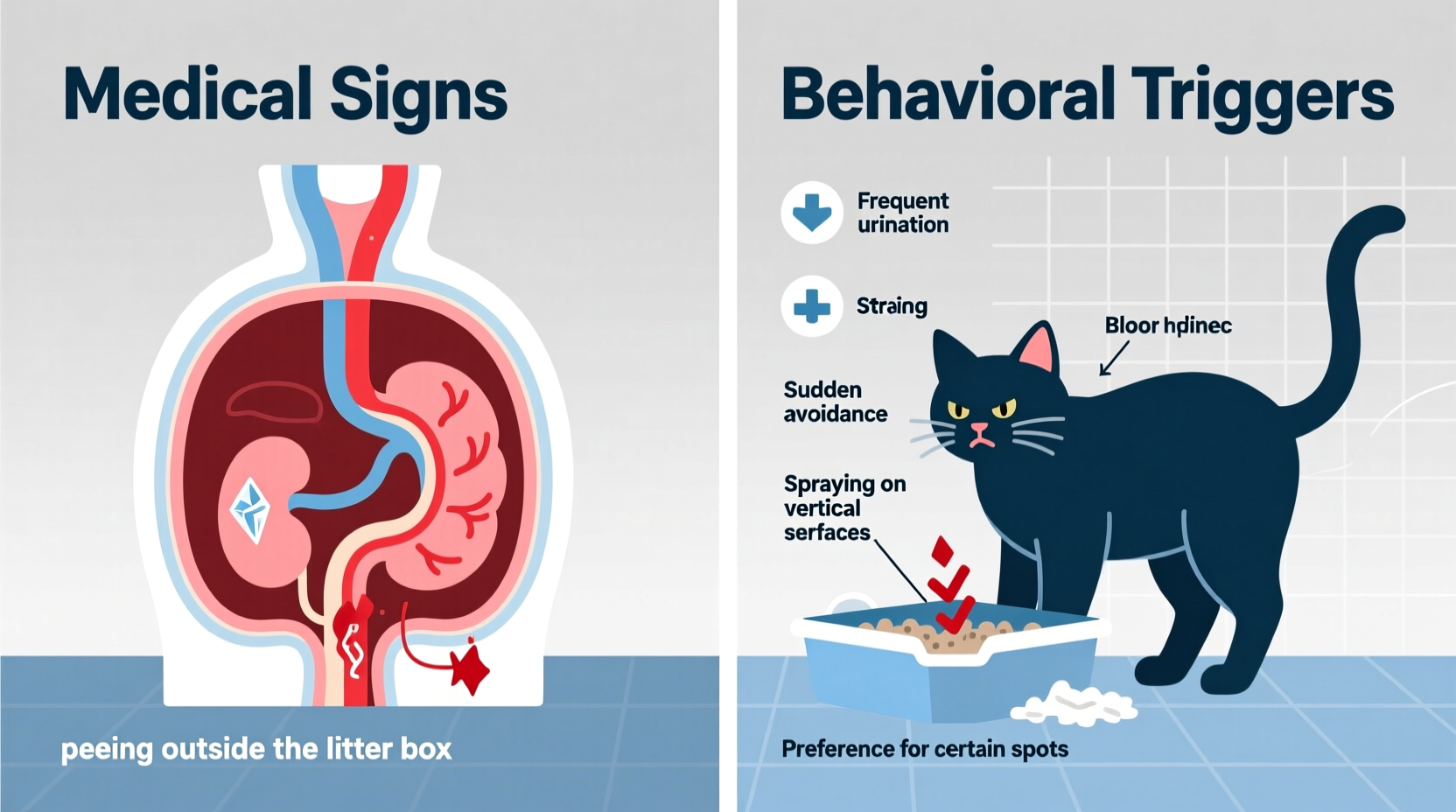
Inappropriate urination often begins with a medical condition that makes using the litter box painful, difficult, or uncomfortable. Cats instinctively hide illness, so changes in bathroom habits may be the first visible clue that something is wrong.
Common medical conditions linked to urination outside the box include:
- Urinary tract infections (UTIs): Pain during urination leads cats to associate the litter box with discomfort.
- Feline lower urinary tract disease (FLUTD): A broad term covering inflammation, crystals, or blockages in the bladder or urethra.
- Bladder stones or crystals: These can cause irritation and frequent, strained urination.
- Kidney disease: Increases urine volume, leading to accidents due to urgency or inability to reach the box in time.
- Diabetes: Excess thirst and urination may overwhelm normal routines.
- Arthritis: Older cats may avoid the box if climbing in is painful.
Medical issues often present with additional symptoms beyond location errors. These include:
Tip: If your cat vocalizes while urinating, licks the genital area excessively, or produces small amounts of blood-tinged urine, seek veterinary care immediately.When to Suspect a Medical Problem
Consider a medical origin if your cat shows any of the following:
- Straining or crying out in the litter box.
- Frequent trips to the box with little output.
- Blood in the urine (pink, red, or brownish tinge).
- Increased water consumption.
- Lethargy, loss of appetite, or hiding behavior.
- Sudden onset of accidents without prior history.
Veterinarians typically diagnose these conditions through a physical exam, urinalysis, blood work, and sometimes imaging like X-rays or ultrasound. Early detection is crucial—especially in male cats, who are at risk of life-threatening urethral blockages.
“Any change in litter box behavior warrants a veterinary visit. What looks like a behavioral issue might actually be a medical emergency.” — Dr. Rachel Henderson, DVM, Feline Internal Medicine Specialist
Behavioral Causes: Stress, Environment, and Territory
Once medical issues are ruled out, behavioral factors become the primary suspects. Unlike medical problems, which often appear suddenly, behavioral causes usually develop gradually and are tied to changes in the cat’s environment or routine.
Cats are highly sensitive to stress. They rely on predictability and control over their space. Disruptions—even minor ones—can lead to marking behaviors or litter box avoidance.
Common Behavioral Triggers
- Litter box aversion: Dirty boxes, strong scents, or unpleasant textures deter use.
- Location issues: Boxes placed near loud appliances, in high-traffic areas, or in isolated spots may feel unsafe.
- Multi-cat household tension: Dominant cats may guard boxes, causing others to avoid them.
- New pets, people, or furniture: Changes in territory can provoke anxiety-driven marking.
- Punishment history: Yelling or scolding after accidents teaches fear, not correction.
- Surface or scent preferences: Some cats prefer soft surfaces (carpets, beds) or avoid clumping litter.
Behavioral urination often occurs on vertical surfaces (spraying), though horizontal accidents happen too. Spraying involves a small amount of urine sprayed backward onto walls, doors, or furniture, typically with the tail erect and quivering. This is territorial communication. In contrast, squatting to urinate on the floor suggests discomfort with the box itself.
Distinguishing Marking from Elimination
| Feature | Marking (Spraying) | Elimination (Accident) |
|---|---|---|
| Posture | Tail up, back feet planted, backward spray | Squatting fully |
| Location | Vertical surfaces (walls, furniture) | Floors, rugs, bedding |
| Volume | Small amount | Full bladder release |
| Motivation | Stress, territory, social tension | Aversion, accessibility, preference |
| Frequency | Recurrent in same spots | May vary by location |
Step-by-Step Guide to Diagnosing the Cause
Resolving inappropriate urination requires a methodical approach. Follow this timeline to identify and address the underlying issue:
- Visit the veterinarian: Rule out medical conditions with a full check-up and urinalysis. Do not skip this step—even seemingly obvious behavioral cases can have hidden health components.
- Observe elimination patterns: Note where, when, and how your cat urinates. Use video monitoring if necessary. Is it spraying? Squatting? Only at night?
- Assess litter box setup: Ensure you have enough boxes (n+1 rule: one per cat plus one extra). Are they clean? Easily accessible? Placed in quiet, low-traffic areas?
- Review environmental changes: Has there been a new pet, visitor, move, or renovation? Even subtle shifts matter.
- Eliminate competition: In multi-cat homes, ensure no cat is being bullied away from the box.
- Remove odors: Clean soiled areas with enzymatic cleaners. Avoid ammonia-based products, which mimic urine scent and attract repeat marking.
- Adjust litter type: Try unscented, fine-grain clumping litter. Some cats dislike liners or covered boxes.
- Reduce stress: Use pheromone diffusers (like Feliway), provide vertical space, and maintain consistent routines.
- Consult a behaviorist: If problems persist, seek help from a certified feline behavior consultant.
Mini Case Study: Luna, the Anxious Apartment Cat
Luna, a 4-year-old female domestic shorthair, lived in a small urban apartment with her owner, Mark. Over two weeks, she began urinating on the bedroom rug—always in the same corner. Mark initially assumed she was upset about his recent work hours, but he noticed Luna also seemed to strain in the box and made frequent trips.
He took her to the vet immediately. Urinalysis revealed a urinary tract infection and microscopic crystals. After a course of antibiotics and a switch to a prescription urinary diet, Luna’s symptoms improved—but she still avoided the litter box.
Further observation showed the box was tucked behind the washing machine, a noisy and confined space. Mark moved it to a quiet corner of the living room and added a second box. He also installed a Feliway diffuser. Within ten days, Luna returned to consistent box use.
This case highlights how medical and behavioral factors can coexist. Treating the infection resolved the pain, but addressing environmental stressors was essential for full recovery.
Checklist: Action Plan for Cat Owners
Use this checklist to systematically address litter box issues:
- ✅ Schedule a veterinary exam to rule out medical causes.
- ✅ Perform a urinalysis and follow-up testing as recommended.
- ✅ Count your litter boxes—do you have at least n+1?
- ✅ Clean boxes daily; replace litter completely weekly.
- ✅ Place boxes in quiet, accessible, low-traffic areas.
- ✅ Remove odor traces with enzymatic cleaner.
- ✅ Avoid covered boxes or liners unless your cat prefers them.
- ✅ Observe interactions in multi-cat households for signs of conflict.
- ✅ Consider synthetic pheromones to reduce stress.
- ✅ Consult a veterinary behaviorist if unresolved after 3–4 weeks.
Frequently Asked Questions
Can spaying or neutering stop spraying behavior?
Yes, in many cases. Neutered males are far less likely to spray, and spayed females rarely mark. However, if spraying develops after being fixed, it’s usually due to stress or environmental factors, not hormones alone.
How long does it take to resolve litter box issues?
With proper diagnosis and intervention, improvement can occur within 1–3 weeks. Chronic or complex cases—especially those involving deep-seated anxiety or multi-cat dynamics—may take several months of consistent effort.
Is it okay to confine my cat during retraining?
In some cases, short-term confinement in a “safe room” with food, water, toys, and a clean litter box can help reestablish good habits. This is especially useful post-medical treatment. Gradually reintroduce access to the rest of the home once consistent box use resumes.
Conclusion: Take Action with Confidence
Your cat isn’t misbehaving out of spite—urinating outside the litter box is a symptom, not a character flaw. Whether rooted in pain or stress, the behavior is a plea for help. By approaching the issue with patience, observation, and a structured plan, you can uncover the true cause and restore your cat’s comfort and confidence.
Start with the vet. Then evaluate the environment. Make adjustments based on your cat’s needs, not assumptions. Small changes often yield big results. Most importantly, remember that persistence pays off—most cats can and do return to proper litter box use with the right support.
💬 Have you successfully resolved your cat’s litter box issues? Share your story in the comments—your experience could help another worried pet owner find hope and solutions.








