
If you’ve ever brought home a new appliance only to find your cat immediately claiming the cardboard box as their personal fortress, you’re not alone. Cat owners worldwide have observed this peculiar yet consistent behavior: cats don’t just like boxes—they seem utterly obsessed with them. From tiny shoeboxes to massive moving crates, no container is too big or too small for a curious feline to investigate, squeeze into, and ultimately claim as their own. But what drives this fascination? Beyond mere whimsy, a cat’s love for boxes is deeply rooted in biology, psychology, and evolutionary survival strategies. Understanding this behavior offers valuable insight into how cats perceive safety, manage stress, and express their natural instincts—even in modern domestic environments.
The Science Behind the Box Obsession
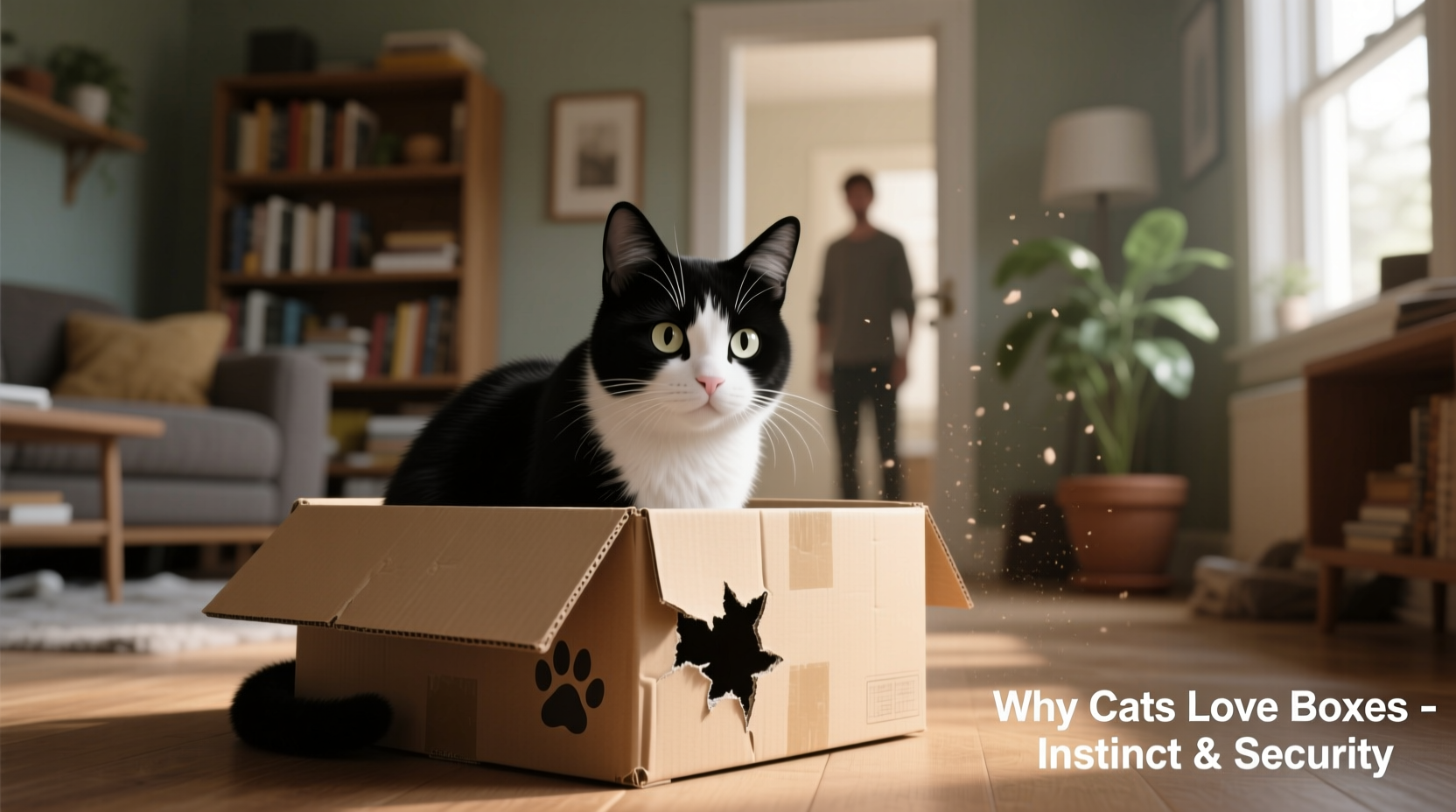
Cats are predators by nature, but they are also prey animals in the wild. This dual role has shaped their behavior to prioritize security and vigilance. Enclosed spaces like cardboard boxes provide a sense of protection from potential threats. When a cat enters a box, they gain a vantage point—hidden from above and surrounded on multiple sides—allowing them to observe their environment while feeling shielded. This aligns with ethological studies showing that cats seek out confined spaces when stressed or uncertain.
A 2014 study conducted at Utrecht University in the Netherlands explored stress levels in shelter cats and found that those given access to hiding boxes acclimated faster and exhibited lower cortisol levels than those without. The researchers concluded that “hiding is a coping mechanism for cats under stress,” reinforcing the idea that boxes aren’t just fun—they’re functional tools for emotional regulation.
“Cats are masters of micro-environment selection. A box isn’t just a space—it’s a psychological sanctuary.” — Dr. Sarah Ellis, Feline Behavior Scientist, University of Lincoln
This need for secure enclosures stems from their evolutionary past. In the wild, small cats like the African wildcat (the domestic cat’s ancestor) used hollow logs, dense brush, and rock crevices to hide from predators and ambush prey. Boxes mimic these natural shelters, offering similar sensory feedback: limited entry points, insulation, and tactile boundaries that help cats feel contained and safe.
Thermoregulation: Warmth and Comfort
Another compelling reason cats love boxes lies in temperature regulation. The average indoor temperature comfortable for humans—around 68–72°F (20–22°C)—is actually on the cool side for cats. Domestic cats prefer ambient temperatures closer to 86°F (30°C), which explains their attraction to warm, enclosed spaces.
Cardboard is an excellent insulator. Its fluted structure traps body heat, creating a cozy microclimate. When a cat curls up inside a box, they reduce heat loss through convection and radiation, conserving energy. This thermodynamic advantage makes boxes more than just hiding spots—they become efficient thermal nests.
Tip: During colder months, place a soft blanket inside a box to enhance warmth and comfort—your cat will likely claim it immediately.This preference for warmth is especially pronounced in kittens and older cats, who have less ability to regulate body temperature. Even in homes with consistent heating, cats will often choose a cramped box over a spacious cat bed simply because it feels warmer and more secure.
Predatory Instincts and Play Behavior
Beyond safety and warmth, boxes tap directly into a cat’s predatory drive. The act of peering out from a concealed position mirrors stalking behavior. A cat in a box can watch household activity—birds outside, people walking by, other pets—without being seen. This satisfies their instinct to observe and anticipate movement, a critical skill for hunting.
Moreover, the process of entering, adjusting, and kneading the cardboard engages their tactile senses. Cats use their paws and whiskers to assess spatial dimensions and surface texture. The crinkly sound of cardboard may even stimulate auditory curiosity, encouraging further exploration.
Boxes also serve as impromptu playgrounds. A simple cardboard container becomes a launchpad for pouncing, a tunnel for chasing toys, or a fortress during solo “battles” with imaginary foes. This playful engagement supports cognitive development and physical exercise, both essential for mental well-being.
How Boxes Support Natural Feline Behaviors
| Behavior | How Boxes Facilitate It | Benefit to Cat |
|---|---|---|
| Hiding/Security Seeking | Enclosed sides and limited entry points create a safe zone | Reduces anxiety and stress |
| Thermoregulation | Cardboard insulates and retains body heat | Maintains optimal body temperature |
| Stalking/Predation | Peephole effect allows observation without exposure | Fulfills hunting instincts |
| Scratching/Kneading | Rough surface satisfies claw-maintenance needs | Relieves stress and marks territory |
| Play and Exploration | Variable shapes encourage climbing, jumping, and squeezing | Promotes physical and mental stimulation |
Stress Reduction and Environmental Enrichment
In multi-cat households or homes with frequent visitors, noise and social interaction can overwhelm even the most confident cat. Boxes offer a quick escape—a private retreat where they can decompress. This is particularly important in urban apartments or busy family homes where quiet corners are scarce.
Animal behaviorists recommend providing accessible hiding places as part of environmental enrichment. According to the American Association of Feline Practitioners (AAFP), “Hiding opportunities are essential for promoting emotional well-being in cats.” Boxes are a low-cost, highly effective way to meet this need.
Interestingly, the size of the box matters less than its enclosure quality. A study published in *Applied Animal Behaviour Science* found that cats showed no preference between boxes large enough to stretch out in versus those just big enough to squeeze into. What mattered most was the presence of walls and a sense of seclusion.
Tip: Rotate boxes weekly to maintain novelty. Cut different-sized openings to encourage exploration and motor skills.Mini Case Study: Reducing Anxiety in a Shelter Environment
In a cat adoption center in Portland, Oregon, staff noticed that newly arrived cats were slow to interact with potential adopters. Many remained crouched at the back of their cages, avoiding eye contact and refusing treats. After introducing plain cardboard boxes into each enclosure, behavior changed dramatically within days.
One particular cat, a three-year-old tabby named Milo, had been at the shelter for over two weeks without showing interest in people. Once given a box, he began using it daily, eventually sitting at the front with his head poking out, watching visitors. Within a week, he was adopted. Staff attributed the shift not to medication or intensive training, but simply to the availability of a secure hiding space.
“The box didn’t change Milo—it gave him the confidence to be himself,” said Rachel Nguyen, lead caregiver. “It was the difference between survival mode and socialization.”
Practical Tips for Cat Owners: Making the Most of Box Behavior
While it may be tempting to remove boxes once they’ve served their packaging purpose, consider repurposing them as enrichment tools. With minimal effort, you can turn everyday waste into high-value cat resources.
Checklist: How to Optimize Boxes for Your Cat
- Leave boxes unpacked for at least 24 hours before offering them—let your cat investigate the lingering scents of delivery.
- Cut one or two large openings for easy access, or leave one side closed for maximum privacy.
- Place boxes in quiet areas (e.g., bedrooms, hallways) or near sunny windows for added appeal.
- Add soft bedding like fleece blankets or self-warming pads to increase comfort.
- Use non-toxic markers to draw “virtual” boxes on the floor if physical ones aren’t feasible—some cats respond to the suggestion of boundaries.
- Introduce puzzle elements: hide treats inside or attach dangling toys to the edges.
- Replace boxes regularly if they become soiled or structurally unsound.
What Not to Do with Cat Boxes
| Don’t | Why |
|---|---|
| Use tape-heavy boxes | Residual glue and plastic strips can be ingested or cause paw injuries. |
| Place boxes in high-traffic zones without escape routes | Cats may feel trapped and stressed if approached suddenly. |
| Force your cat into a box | Coercion undermines trust and increases anxiety. |
| Use chemically treated cardboard (e.g., shipping containers with industrial coatings) | May contain toxic residues harmful if licked or chewed. |
Frequently Asked Questions
Do all cats like boxes?
Most cats show some interest in enclosed spaces, but individual preferences vary. Shy or anxious cats are more likely to seek out boxes consistently, while bold, outgoing cats may use them occasionally for play or napping. Age and health also influence usage—older cats may avoid tight spaces due to joint stiffness.
Is it safe for my cat to chew on cardboard?
Occasional nibbling is generally harmless and may stem from curiosity or teething in kittens. However, excessive chewing could indicate boredom, nutritional deficiency, or pica (a condition where animals eat non-food items). If your cat regularly consumes cardboard, consult your veterinarian.
Can I use alternatives to cardboard boxes?
Yes. Fabric tunnels, plastic igloos, wooden cat caves, and even upside-down laundry baskets can serve similar purposes. The key is providing an enclosed, low-distraction space. Some cats prefer soft-sided options, while others favor rigid structures. Observe your cat’s preference and rotate options to prevent habituation.
Understanding Your Cat Through Simple Behaviors
The humble cardboard box is more than a quirky internet meme—it’s a window into feline cognition and emotion. By observing how your cat interacts with boxes, you can learn about their stress levels, confidence, and daily rhythms. Does your cat immediately dive into a new box? That suggests a strong need for security. Do they rearrange the contents or carry toys inside? This indicates territorial marking and nesting behavior. Are they avoiding boxes altogether after a move or visitor? That may signal underlying anxiety.
Respecting these behaviors doesn’t require expensive gear or complex routines. Sometimes, the best thing you can do for your cat is leave a box out and let them decide what to do with it. In doing so, you honor their instincts and support their psychological well-being in a human-dominated world.
“The simplest things often meet the deepest needs. A box costs nothing, but to a cat, it might mean everything.” — Dr. Tony Buffington, Veterinary Medicine Professor, Ohio State University
Final Thoughts: Embrace the Box
Your cat’s obsession with boxes isn’t random or silly—it’s a sophisticated response to environmental stimuli shaped by thousands of years of evolution. Whether they’re using it as a den, a lookout post, or a nap pod, the box fulfills fundamental needs for safety, warmth, and control. As cat owners, we can either fight this instinct (by tossing boxes immediately) or work with it—to the benefit of our pets’ mental health and happiness.
So next time you bring home a package, resist the urge to recycle the box right away. Set it down, step back, and watch. Chances are, your cat will thank you—in their quiet, mysterious way—by curling up inside and claiming it as their own.
💬 Have a story about your cat’s favorite box? Share your experience in the comments and join the conversation about understanding feline behavior—one cardboard corner at a time.








