
Most people have experienced the sudden, sharp pain of a muscle cramp—often in the leg—especially after physical exertion or during sleep. Commonly referred to as a \"charley horse,\" this condition affects millions worldwide. But why is it called a *charley horse*? The phrase sounds whimsical, even outdated, yet it remains deeply embedded in American English. Despite its widespread use, the true origin of the term is shrouded in mystery, folklore, and competing theories. This article explores the most credible explanations behind the name, traces its historical roots, and separates fact from myth.
The Charley Horse: A Painful Phenomenon
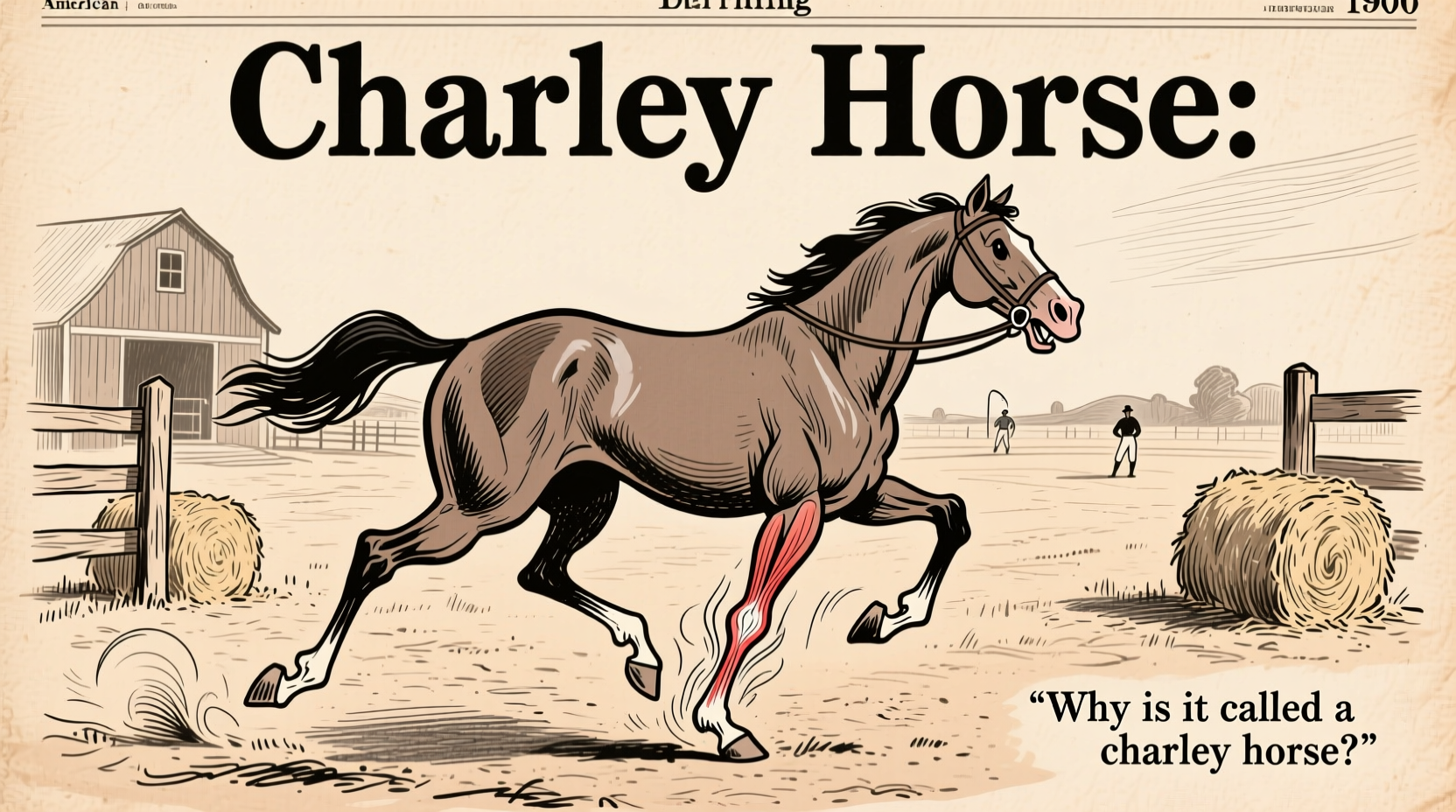
A charley horse refers to an involuntary, painful muscle spasm or cramp, typically occurring in the calf but also affecting thighs, feet, or arms. These spasms can last from a few seconds to several minutes and are often triggered by dehydration, electrolyte imbalances, overuse, or poor circulation. While not usually dangerous, they can be intensely uncomfortable and disruptive—especially when they strike at night.
The term “charley horse” is almost exclusively used in the United States. Outside of North America, people generally refer to these cramps simply as “muscle cramps” or “spasms.” Its uniquely American flavor suggests a cultural or linguistic origin tied to 19th-century vernacular.
Historical Roots: When Did the Term Emerge?
The earliest known printed use of “charley horse” dates back to the 1880s, specifically within the context of American baseball. Newspapers from that era began using the phrase to describe players who were sidelined due to leg injuries or stiffness. By the 1890s, it had entered mainstream slang.
One of the first documented uses appeared in the Washington Post in 1886, describing a pitcher with a stiff leg: “He’s got a charley horse in his thigh and can’t pitch today.” At the time, baseball was becoming a national pastime, and players’ injuries were widely reported. The colorful nickname likely stuck because it softened the seriousness of the injury with humor—a hallmark of sports jargon.
Possible Origins of the Name
Despite decades of speculation, no single theory about the origin of “charley horse” has been definitively proven. However, several plausible explanations have emerged over time, each rooted in cultural, occupational, or linguistic history.
1. The Old Nag Theory
The most commonly cited explanation ties the term to aging workhorses. In the late 1800s, older horses used for pulling streetcars or plowing fields would often develop stiff, sore muscles—particularly in their legs. These animals, sometimes named “Charley,” were said to move slowly and painfully, much like a person suffering from a muscle cramp.
Baseball players, many of whom came from working-class backgrounds, may have drawn a parallel between their own leg pain and that of an old, limping horse. Over time, “riding Charley’s horse” could have evolved into simply having a “charley horse.”
Tip: If you experience frequent charley horses, consider increasing your intake of potassium, magnesium, and calcium—key minerals involved in muscle function.2. The Pitcher Charley Radbourn Theory
Another popular theory centers on Charles “Old Hoss” Radbourn, a star pitcher for the Providence Grays in the 1880s. Known for his durability, Radbourn once pitched an astonishing 678 innings in a single season (1884), including every game of the World Series.
As he aged, Radbourn reportedly suffered from chronic leg pain and stiffness, possibly due to arthritis or overuse. Some sportswriters allegedly began referring to leg cramps as “charley horses” in his honor—or mockery. However, there is little direct evidence linking Radbourn’s name to the term’s emergence, and timelines don’t always align perfectly.
3. The Groundskeeper’s Horse Theory
A lesser-known but persistent story involves a lame horse named Charley that wandered the grounds of the Chicago White Sox ballpark in the early 20th century. According to legend, the horse was used to pull maintenance equipment but was so slow and stiff that players joked about “feeling like Charley” after sliding into base or running sprints.
While charming, this anecdote lacks verifiable documentation. It may be a later invention meant to explain a quirky term with a tidy story—a common pattern in folk etymology.
4. Slang Corruption or Mispronunciation?
Linguists have also considered whether “charley horse” evolved from other phrases. One suggestion is that it derives from British slang terms like “Charlie,” a generic name used similarly to “Joe” in American English (e.g., “Average Joe”). “Charlie” was sometimes used in expressions related to discomfort or misfortune.
Additionally, some researchers speculate a connection to “charley,” a slang term for a police officer in the 19th century, though no clear link to muscle pain has been established. Others propose it may be a corruption of “chalybeate,” meaning iron-rich (as in mineral springs), implying a remedy for weak muscles—but this theory lacks widespread support.
“Language often preserves the echoes of labor, sport, and daily life. ‘Charley horse’ likely emerged from the physical realities of working bodies—whether human or animal.” — Dr. Rebecca Langston, Historical Linguist, University of Illinois
Medical Understanding vs. Folk Terminology
While the name may be folksy, the physiology behind a charley horse is well understood. Muscle cramps occur when a muscle contracts involuntarily and cannot relax. Contributing factors include:
- Dehydration
- Low levels of electrolytes (potassium, calcium, magnesium)
- Nerve compression (e.g., spinal issues)
- Poor blood flow
- Muscle fatigue or overuse
- Certain medications (e.g., diuretics)
Nighttime leg cramps, in particular, are common among older adults and pregnant women. Though the term “charley horse” isn’t used in clinical settings, doctors recognize it as a layperson’s description of benign fasciculation or nocturnal leg cramps.
Do’s and Don’ts During a Charley Horse
| Do | Don't |
|---|---|
| Gently stretch the affected muscle (e.g., pull toes toward shin for calf cramps) | Forcefully massage or rub the area aggressively |
| Walk around to promote circulation | Remain completely still if possible |
| Hydrate with water or an electrolyte drink | Ignore recurring cramps without investigating causes |
| Apply heat after the spasm subsides | Use ice during the active cramp (can worsen contraction) |
Real-Life Example: The Marathon Runner’s Setback
Sarah Thompson, a recreational runner from Denver, trained for months to complete her first marathon. On race day, she started strong but began experiencing severe calf cramps around mile 18. “It hit me like a bolt of lightning,” she recalls. “I had to stop and stretch, but I didn’t know what it was called until my coach said, ‘Looks like you’ve got a real charley horse.’”
After the race, Sarah learned that inadequate hydration and low magnesium levels contributed to her cramps. She now follows a structured nutrition plan before long runs and includes dynamic stretching in her warm-up routine. Her next marathon was cramp-free—and she finished under four hours.
Preventing Charley Horses: A Practical Checklist
- Stay hydrated throughout the day, especially during exercise.
- Eat foods rich in potassium (bananas, sweet potatoes), magnesium (spinach, almonds), and calcium (dairy, fortified plant milks).
- Stretch regularly, particularly before bed and after workouts.
- Avoid prolonged sitting or standing in one position.
- Wear supportive footwear that promotes proper alignment.
- Review medications with your doctor if cramps are frequent.
- Consider a nightly magnesium supplement if deficient (consult a physician first).
Frequently Asked Questions
Can a charley horse cause lasting damage?
In most cases, no. A typical charley horse resolves within minutes and doesn’t lead to long-term harm. However, repeated or severe cramps may indicate an underlying condition such as nerve compression, peripheral artery disease, or metabolic imbalance, which should be evaluated by a healthcare provider.
Is a charley horse the same as a blood clot?
No, but the symptoms can feel similar. A charley horse causes sudden, intense pain that subsides relatively quickly. A deep vein thrombosis (DVT), or blood clot, often produces a persistent ache, swelling, redness, and warmth in the affected limb. If you suspect a clot, seek medical attention immediately.
Why do I get charley horses at night?
Nocturnal leg cramps are common and may result from muscle fatigue, nerve issues, or lying in positions that shorten calf muscles (like sleeping with feet pointed down). Age, pregnancy, and certain health conditions increase the risk. Regular stretching before bed can help reduce frequency.
Conclusion: More Than Just a Quirky Name
The term “charley horse” is more than a colorful expression—it’s a linguistic relic of America’s industrial and sporting past. Whether born from sympathy for aging workhorses or coined on dusty baseball fields, the phrase endures because it captures a universal human experience in a memorable way. Understanding its origins adds depth to everyday language, while recognizing the science behind muscle cramps empowers us to prevent them.
💬 Have you ever wondered about the strange words we use every day? Share this article and spark a conversation about the hidden stories behind common phrases!








